 ChatGPT Ads
Should we continue the ChatGPT Ads test, fix the destination or change the product offer? If you can finish the report without knowing the recommendation, the numbers have left the hardest work to you.
Impressions, clicks and a colourful trend may all be accurate. They still don't decide what the business should do with its money and time next.
A useful report leads with a decision and lets you inspect the reasoning. While you're learning a new acquisition route, the aim is to judge what the evidence justifies now. You don't need a definitive verdict on every future use of the channel.
Remind everyone what you funded
Begin with the agreed commercial task and scope. Name the product range, intended customer action and approved commitment. These give you a reference point for assessing everything else in the report.
Record material changes to the plan. If the offer, destination or operating conditions changed substantially, the result may answer a different question from the original one. Don't describe the objective as though the campaign never evolved.
Keep this part brief enough to guide the conversation. You should be able to understand why each later observation matters. A large selection of available metrics won't compensate for failing to decide which evidence belongs to the question you actually paid to investigate.
Say what you recommend, and how confident you are
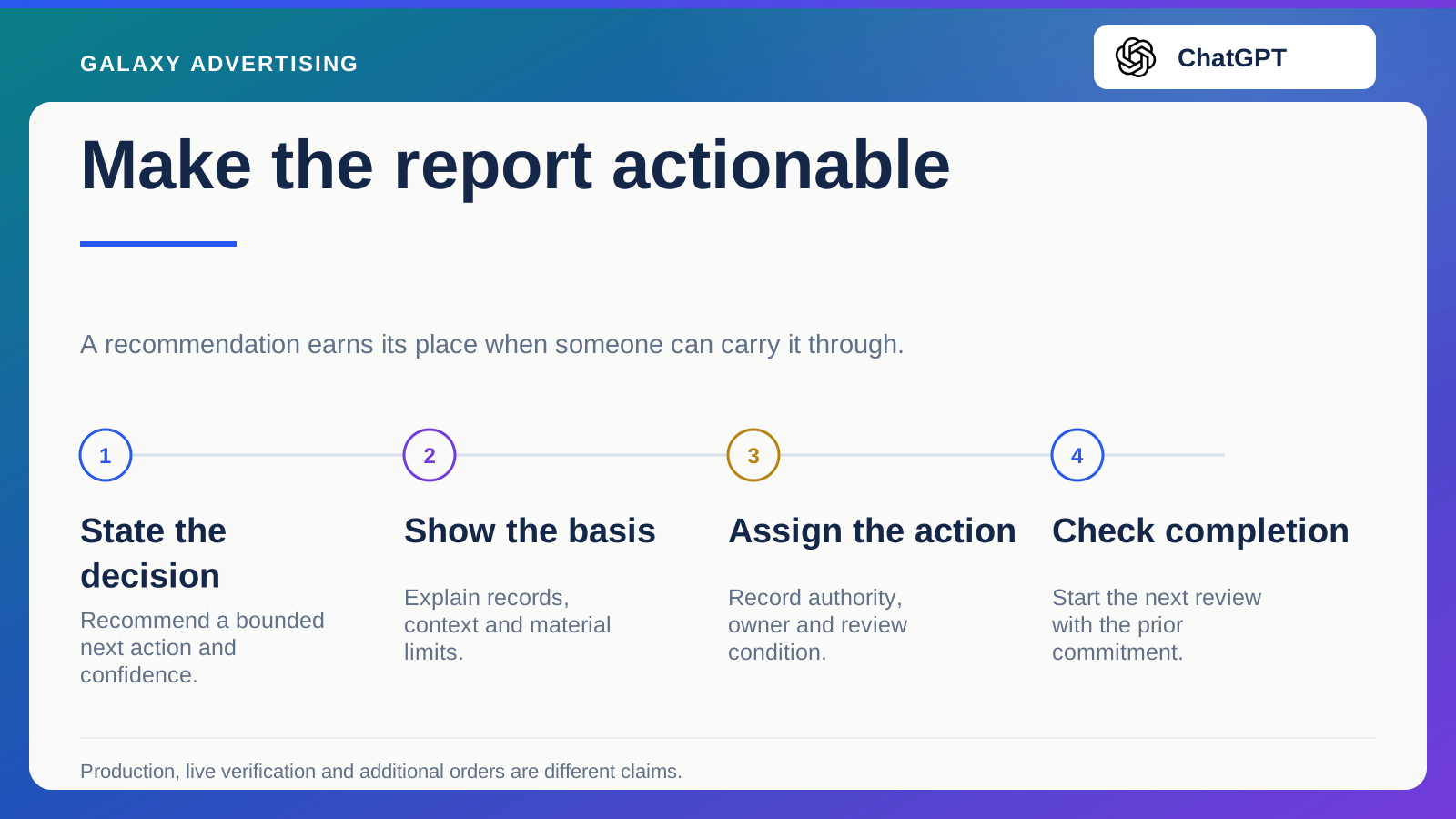
State whether the recommendation is a bounded continuation, a specific correction, a narrower scope or stopping. Explain the main observation supporting it and the limitation that most affects confidence. Put those together so you can judge the choice fairly.
Be careful with certainty. Encouraging enquiry quality in an early test doesn't establish mature acquisition economics. It can be useful without proving the channel. Say what has been learned and where that learning stops.
Limitations shouldn't become a way to avoid judgement altogether. You still need to decide. A cautious, practical recommendation can explain the cost of uncertainty and make the next choice explicit. You don't have to know everything before acting, but you should know what you're accepting.
Bring the figures back to business records
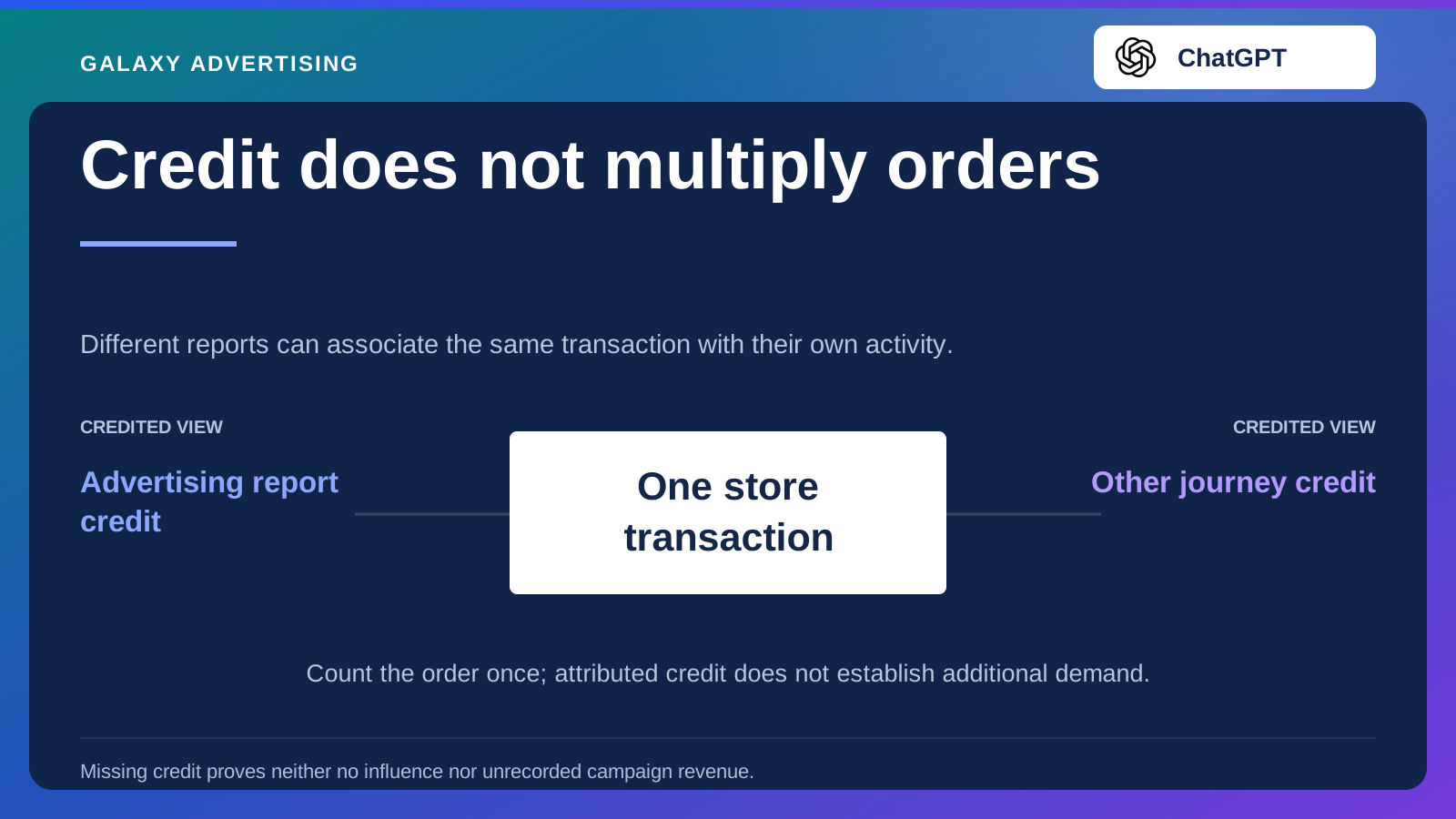
Use consistently defined spend, orders or enquiries. Explain the revenue basis and the treatment of material cancellations or returns where they affect the review. Campaign attribution, the rules assigning credit to activity, belongs beside the store's transaction count rather than being confused with it.
Show the relevant product mix. A few higher value orders can move the account average while leaving other promoted items' economics unresolved. The average isn't the whole explanation of what the campaign brought you.
Include the operating context. Stock changes, service constraints and simultaneous promotions may explain some movement. Make those alternatives visible rather than assigning every favourable change to the campaign. The decision needs an account of the conditions around the figures, as well as the figures themselves.
Explain the purpose of the work completed
Describe what the team did in terms of the question it addressed. A new asset might test another product argument. A destination correction might resolve package ambiguity. Knowing why the work mattered is more useful than receiving a production list.
Keep delivery separate from impact. Completing a correction establishes that the work occurred. Verifying it establishes that the customer route changed. Neither automatically proves how many additional orders that change produced.
Keep work that challenged an assumption in the report. If an attractive looking proposition brought unsuitable enquiries, show the observation and the resulting change. Only displaying favourable examples makes it harder to decide what the next campaign should do differently. The uncomfortable finding may be the most useful one.
Look at the response behind the count
Where appropriate, use an agreed sample of enquiries or product exploration. Did people understand the offer, reach the relevant configuration and raise questions your business could help answer? These observations help explain the quality of the route.
Make the classification understandable. Saying lead quality improved needs a definition and examples showing the distinction, with identifying details removed. Otherwise you replace a vague marketing judgement with a vague sales judgement and call it progress.
Don't assume the advertising source reveals a customer's private conversation or complete motivation. Describe the interaction your business observed. A relevant question supports an interpretation of route quality. It doesn't establish every earlier stage of the person's decision. Keep the claim close to the evidence that supports it.
Give uncertainty somewhere useful to go
List unresolved issues only where they materially affect the recommendation. Missing measurement explanations, uncertain stock and insufficient order evidence need different responses. A long list of general qualifications won't help you choose.
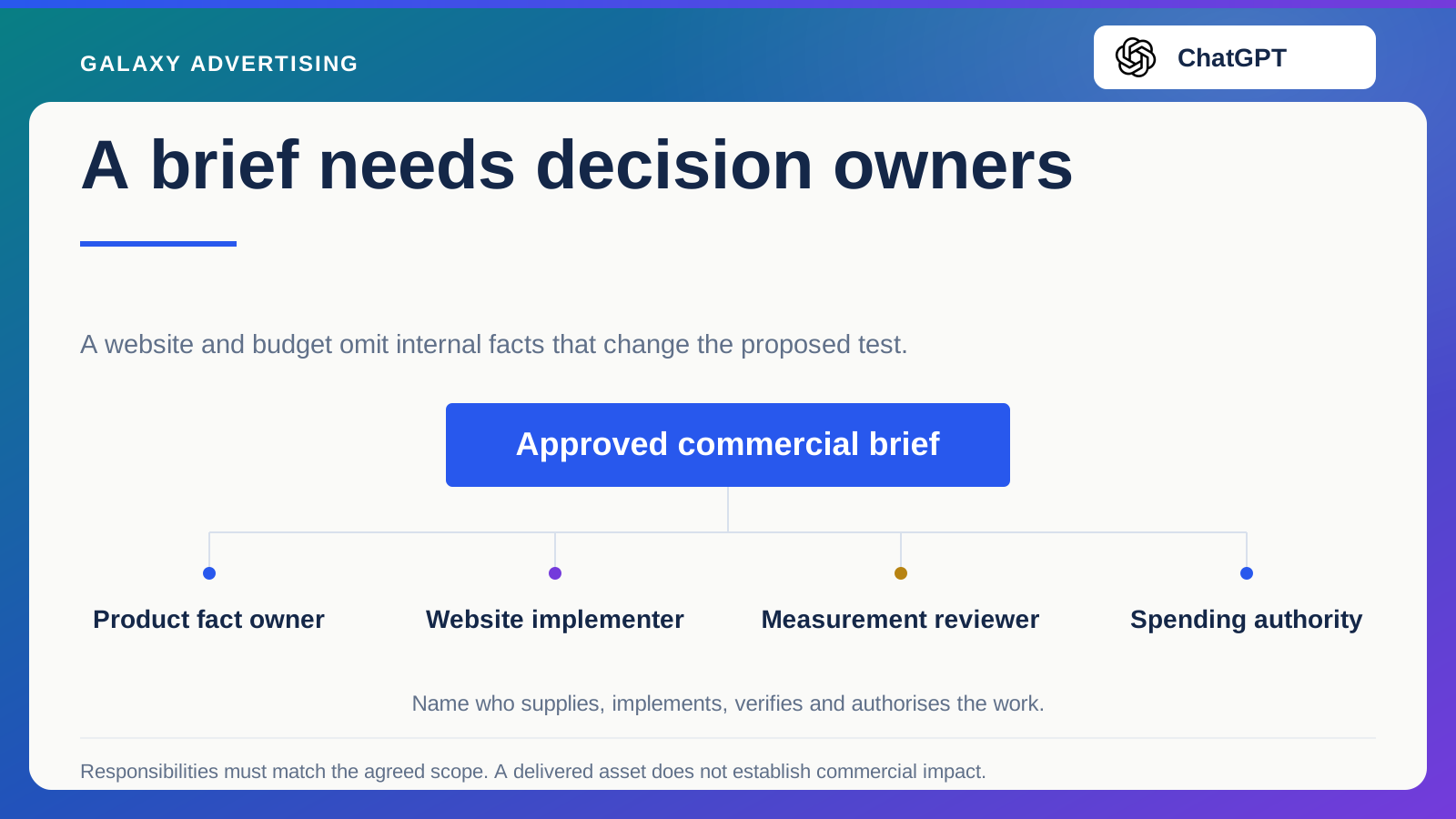
For each issue, identify the information needed and the person who can supply it. Either create a route to resolving the limitation or make a conscious choice to operate within it. Repeating the same caveat at every review doesn't move the business forward.
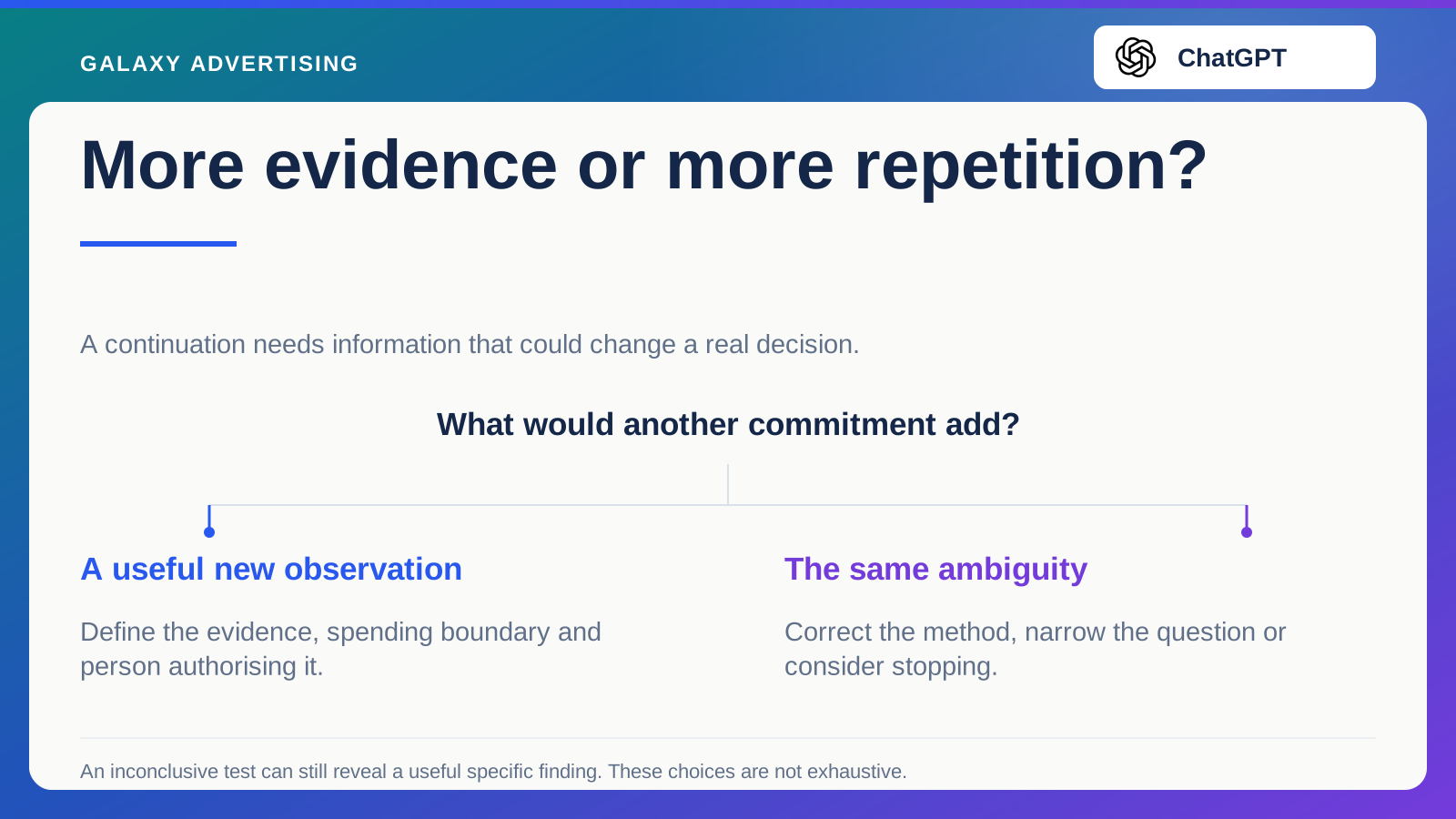
Explain when more data would help. If the package remains unclear, more traffic may simply repeat the ambiguity. A targeted correction can be a better investment than extending a test nobody can interpret. Ask what a further commitment would actually make easier to decide.
Finish with an action somebody owns
Record the authorised next action, owner and review condition. Make client dependencies visible, including approval for another offer or provision of a verified fact. The agency shouldn't imply it can complete work that requires your decision.
Keep the reasoning with the campaign record. Future reviewers need to distinguish the conclusion reached then from a later retelling shaped by subsequent results, especially when staff or agency responsibilities change.
At the next meeting, check the previous commitment first. Was the destination corrected, the product fact supplied and the authorised test run under the intended conditions? Without that check, recommendations can return in increasingly polished presentations while the customer's experience stays the same. A report earns its place when it helps you finish a meaningful action and assess what happened afterwards.