 ChatGPT Ads
What if increasing your ChatGPT Ads spend brings more suitable garden building enquiries just as specialist replies slow down and installation dates become uncertain? You could buy more demand and expose an operating limit at the same time.
An encouraging first result makes expansion worth investigating. It doesn't prove that the next commitment will attract the same customers or produce the same commercial outcome.
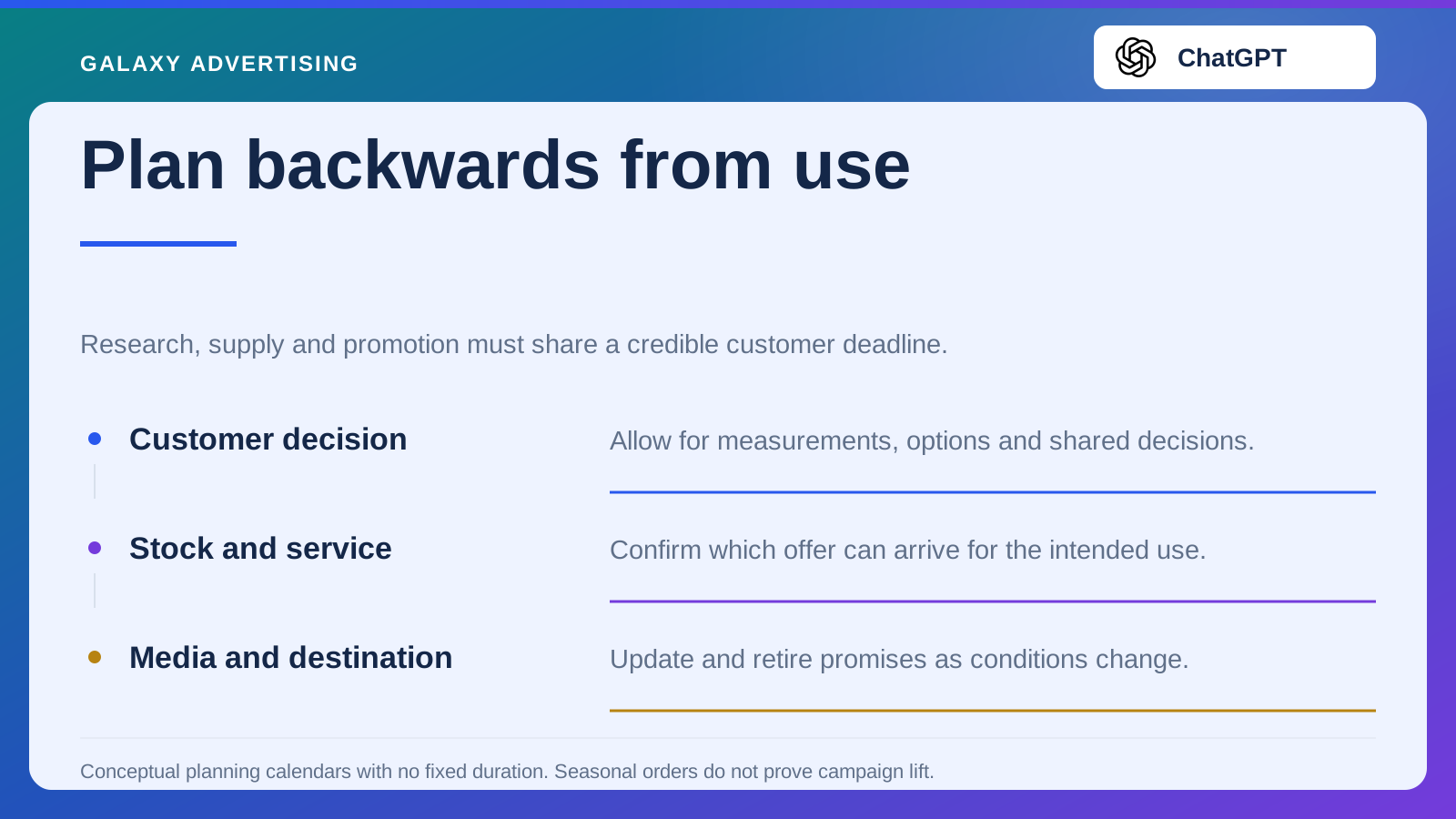
Scaling readiness belongs to the whole offer. Before increasing spend, ask whether the conditions behind that early response can remain credible as activity grows. The advert is only the beginning of the promise.
Find the conditions behind the result
Record the product range, pricing, service arrangement and campaign proposition actually in place. Keep evidence of suitable enquiries or orders on the agreed reporting basis. You need to know which offer produced the observation, under which circumstances.
Identify temporary advantages. Perhaps the initial offer had unusually strong stock, a limited promotion or a small group of configurations that are now less available. Those details affect whether the early result can guide further investment.
Don't turn an account average into a permanent property of the channel. Explain the offer and its conditions in terms merchandising and operations can verify. That gives them something useful to check before the media commitment changes, rather than a broad request to support growth.
Can the next customer buy the same promise?
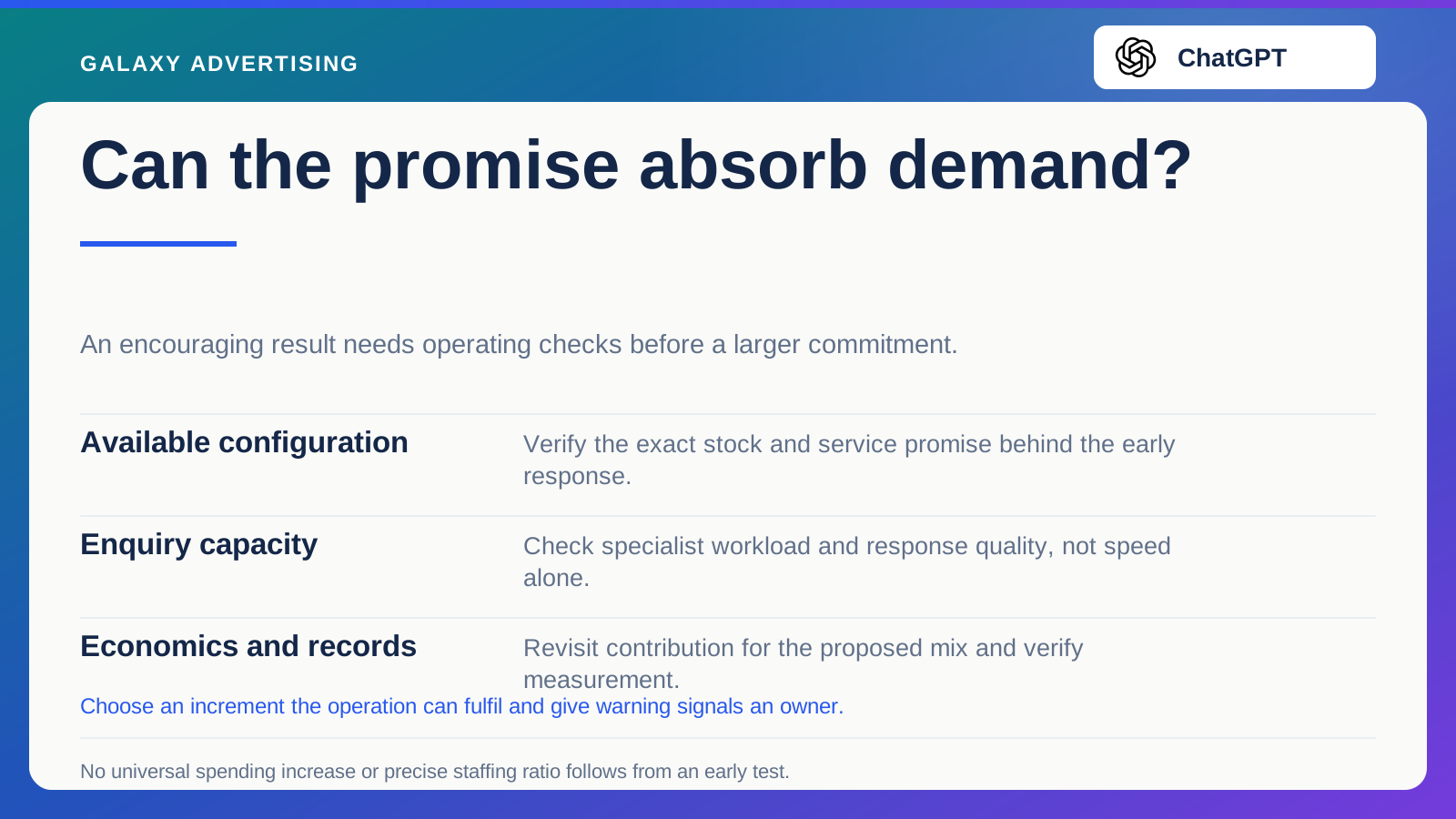
Have the product owner check availability at configuration level. A range marked in stock can contain very few of the options that attracted the initial interest. The general stock label doesn't settle what the next person can buy.
Verify the service promise too. For the hypothetical garden building, installation capacity and delivery arrangements may matter as much as the building itself. Don't leave an earlier arrangement implied in the campaign after the operational position changes.
Decide in advance how constrained capacity affects promotion. You could narrow the range, offer an accurate later arrangement or pause a particular proposition. Choose deliberately. Discovering the constraint through disappointed enquiries after committing more spend is a costly way to find out that the offer has changed.
Look at the human work demand creates
Review what enquiries require from sales, product specialists and customer service. A campaign can appear efficient in media terms while creating questions your business lacks the time or information to answer well.
Check response quality alongside speed. A quick generic reply can leave the actual configuration or service question unresolved. Identify information you could publish more clearly and interactions that genuinely need a person. They are different kinds of work.
Use a small sample of recent enquiries to understand the workload. An early test isn't a basis for inventing a precise staffing ratio. You're looking for an obvious capacity constraint and a sensible response before more people encounter it. That can be a useful conclusion without pretending the sample predicts every future demand on the team.
Rework the order economics for the proposed mix
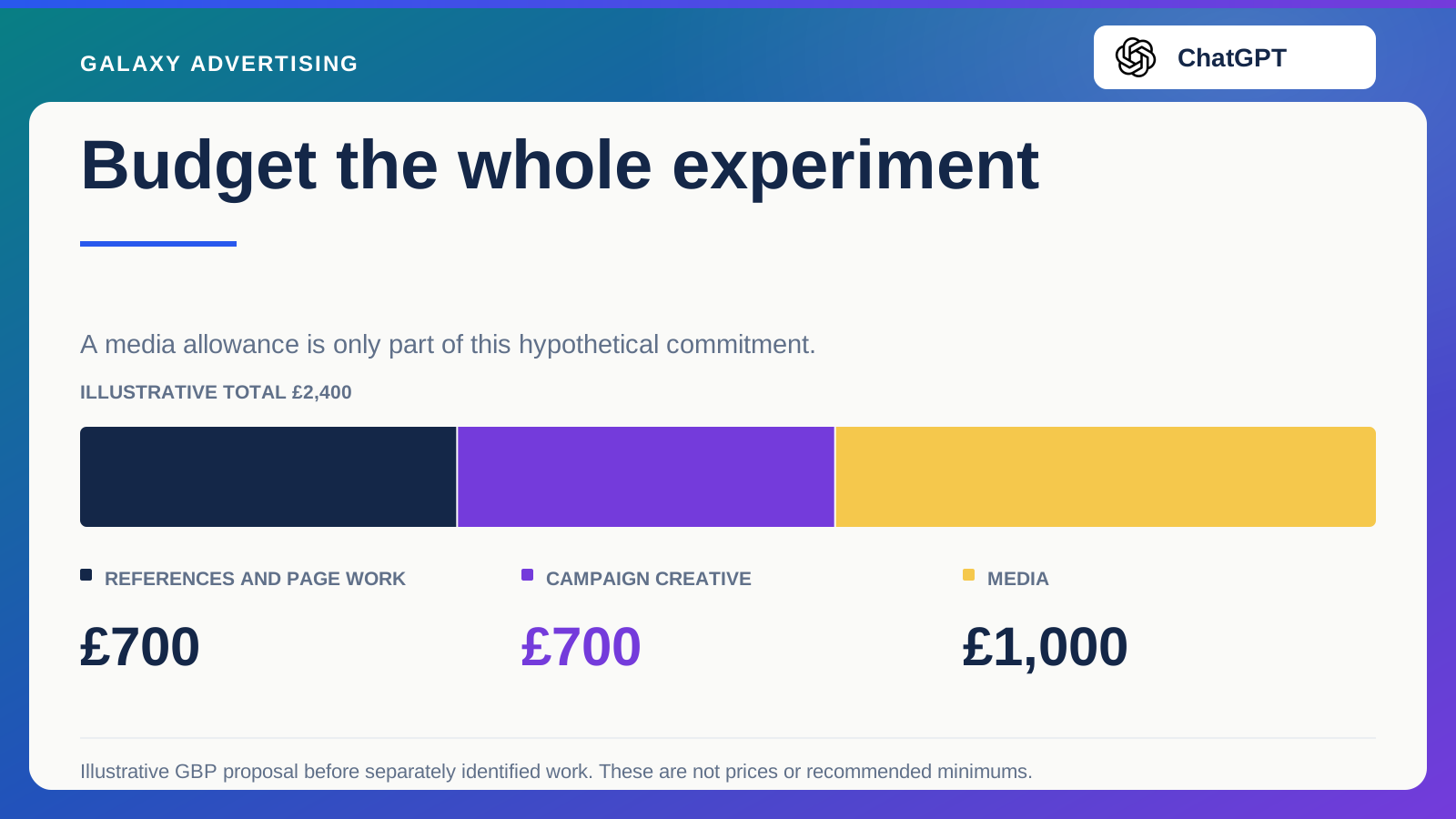
Expansion may bring different products, configurations or customer requirements. Review the relevant contribution assumptions, meaning the money remaining after the costs included in your calculation. Don't apply the first campaign's average to every new order.
A larger package can increase revenue while changing fulfilment or support costs. A new delivery area can alter the economics too. Make these differences visible to the person approving the budget, rather than letting them disappear into a blended result.
Don't assume scale automatically reduces costs or creates more repeat purchases. Those possibilities need evidence. Work from assumptions you can defend today. Show how the recommendation changes if an uncertain input turns out less favourably than expected. The decision should survive a clear look at its assumptions.
Make sure the reporting still means the same thing
Before increasing activity, confirm measurement still records the intended actions and values. A new configuration, checkout route or enquiry process can change what reports mean even if the dashboard looks familiar.
Keep the comparison period and material changes visible. Expansion combining a new range, message and destination is a broader commercial test. Evaluate it that way, rather than pretending budget was the only thing that changed.
Agree review conditions for the increment. You're trying to establish whether the next commitment remains worthwhile. You don't need every day to match an earlier average. Give the business a practical rule for investigating faults and reconsidering scope without reacting mechanically to ordinary variation. Otherwise monitoring can become a source of unnecessary changes rather than useful judgement.
Choose a step the operation can absorb
There is no universal percentage increase that suits every advertiser. Match the next commitment to the evidence, the cost of uncertainty and the capacity behind the offer. Those are the conditions the budget has to respect.
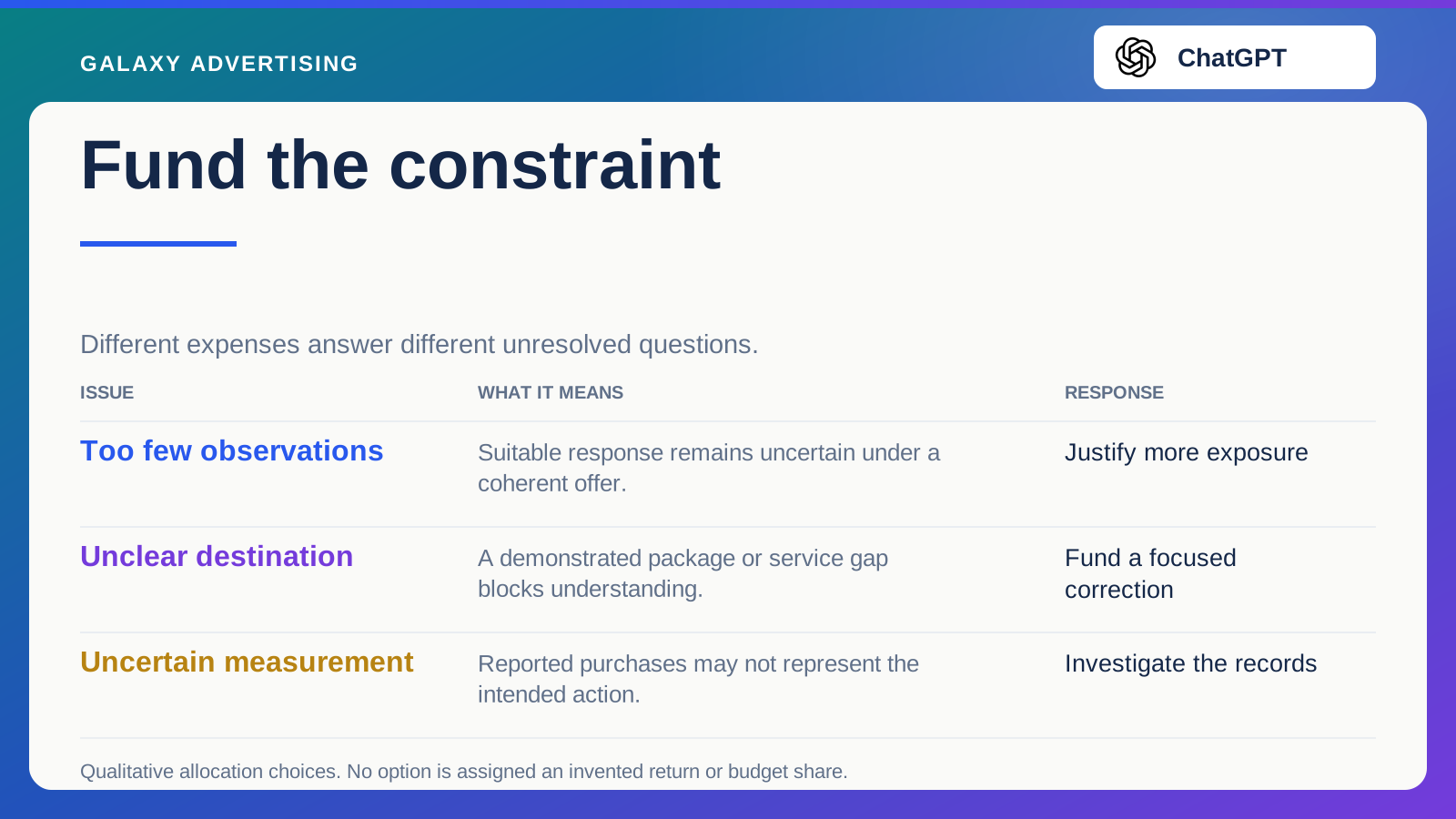
Sequence essential work where there are dependencies. Clarify a service arrangement or improve enquiry handling before paying for substantially more demand through the same route. Give the correction a chance to support the promise being promoted.
Assign responsibility for watching operational consequences. The account manager can review delivery of the campaign. Somebody also needs to identify changes in stock, installation capacity or response quality and pass those signals to the person controlling spend.
Ask operations for the first observable sign that the new commitment is becoming hard to fulfil. It could be a configuration losing availability or enquiries waiting for specialist answers. Connect the signal to a person who can act. That's more useful than general reassurance that the business can cope, because it gives the team a practical reason to narrow or pause a specific promise.
Keep a narrower programme available
Expansion can focus on the strongest verified product group instead of spreading across the catalogue immediately. That may preserve the conditions that made the initial offer understandable and supportable.
If the next step disappoints, compare actual conditions before dismissing the first result. The offer, customer mix or operation may have changed. Equally, investigate rather than using those possibilities to excuse every weak outcome.
Worthwhile scale means a larger commercial promise you can evaluate and fulfil. A larger advertising bill attached to an operation already struggling with its enquiries isn't the same achievement.