A retailer publishes a sizing guide and spots several readers ordering afterwards. The team assigns those orders to the content project, although the recorded journey cannot tell them what those people would have done without it.
The guide could have helped. That still leaves a different question unanswered: how many additional sales did it create?
You can recognise a page that is used, appreciated and associated with orders without treating that as an isolated measure of extra demand. Keep those claims separate when deciding what deserves further investment. Practical value does not need an exaggerated revenue claim to become worth discussing.
Say exactly which claim you are making
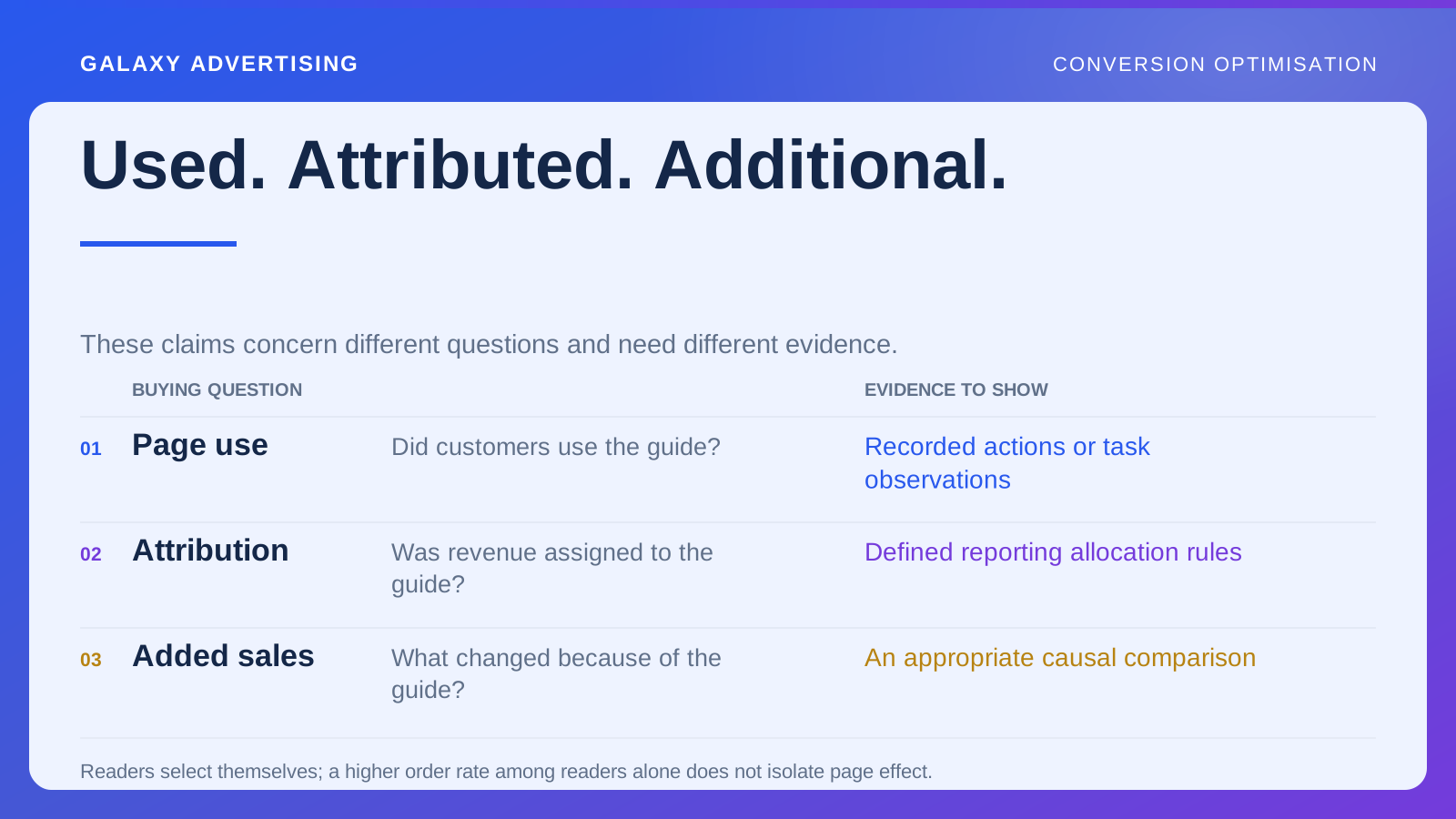
Write the conclusion plainly. “Customers used the guide” is an observation. “The guide received attributed revenue under our reporting rules” describes a modelled allocation. “The guide caused additional purchases” concerns what would otherwise have happened.
Ask which statement your evidence can support. A path report may show the sequence of recorded actions. It cannot reveal every unrecorded influence or the alternative route somebody would have taken without the page.
Keep the distinction in stakeholder conversations. An analyst could be explaining an attribution model while a commercial director hears a promise of incremental profit. Clear wording prevents useful evidence becoming an investment case it cannot support. Everyone needs to know which question the report has actually answered.
Consider who chooses to read the guide
Readers of detailed information can differ from non-readers. They may be more engaged, more uncertain or considering more complicated purchases. Comparing eventual order rates mixes those differences with any effect the page has.
For the hypothetical sizing guide, somebody close to purchase could use it to confirm a detail. Another person could discover the product is unsuitable. Both interactions can be useful while producing different outcomes.
Page users are not automatically a randomly selected group. How people arrive at the information matters when interpreting what they do afterwards. A segment comparison can generate useful questions without settling every causal question the business wants answered. Keep that selection issue visible before treating a higher order rate among readers as proof.
Check the money remaining behind the order value
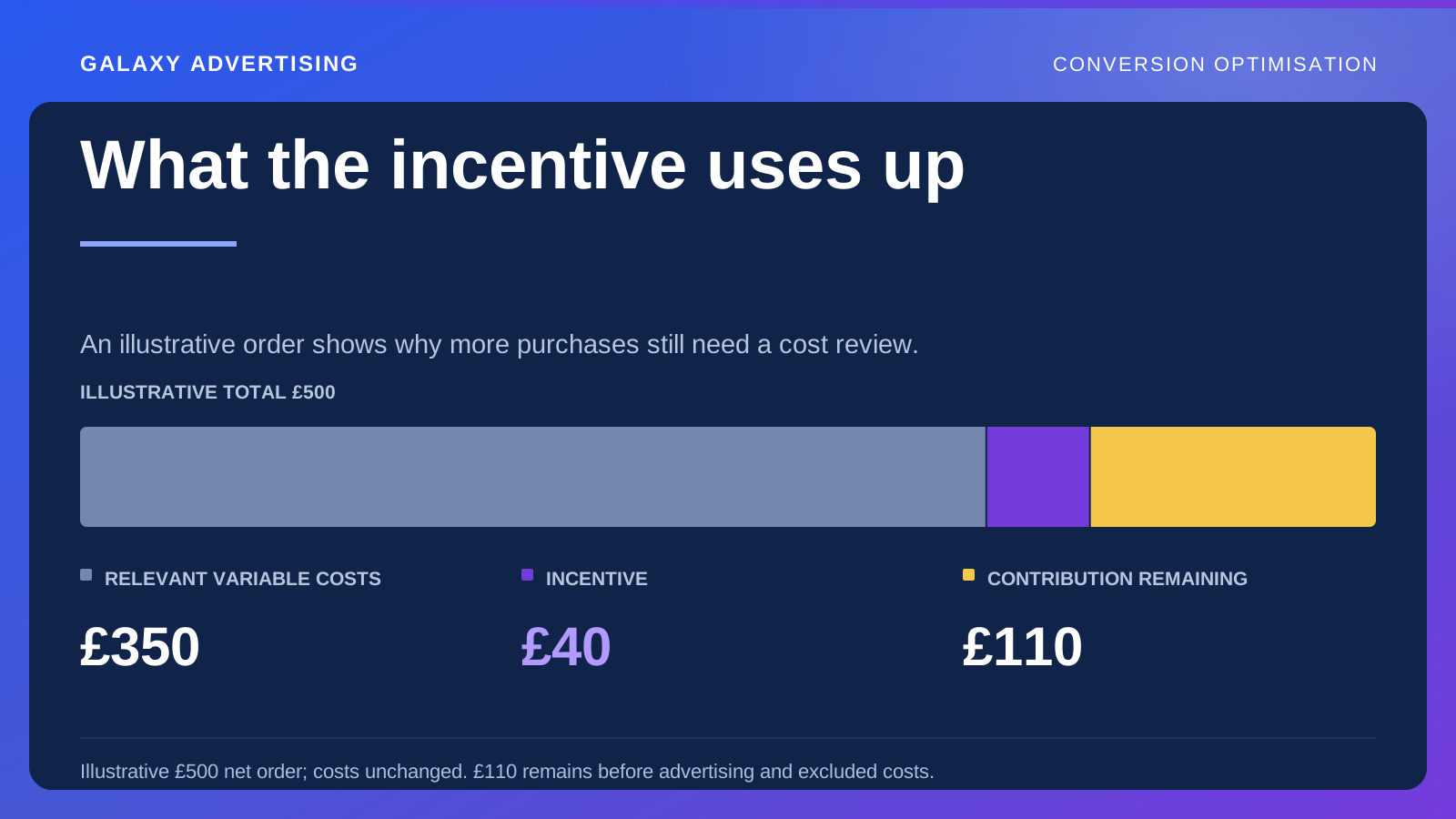
Even when associated orders increase, inspect the products and costs involved. You could be seeing a different configuration mix, more service enquiries or purchases carrying a higher expected return cost.
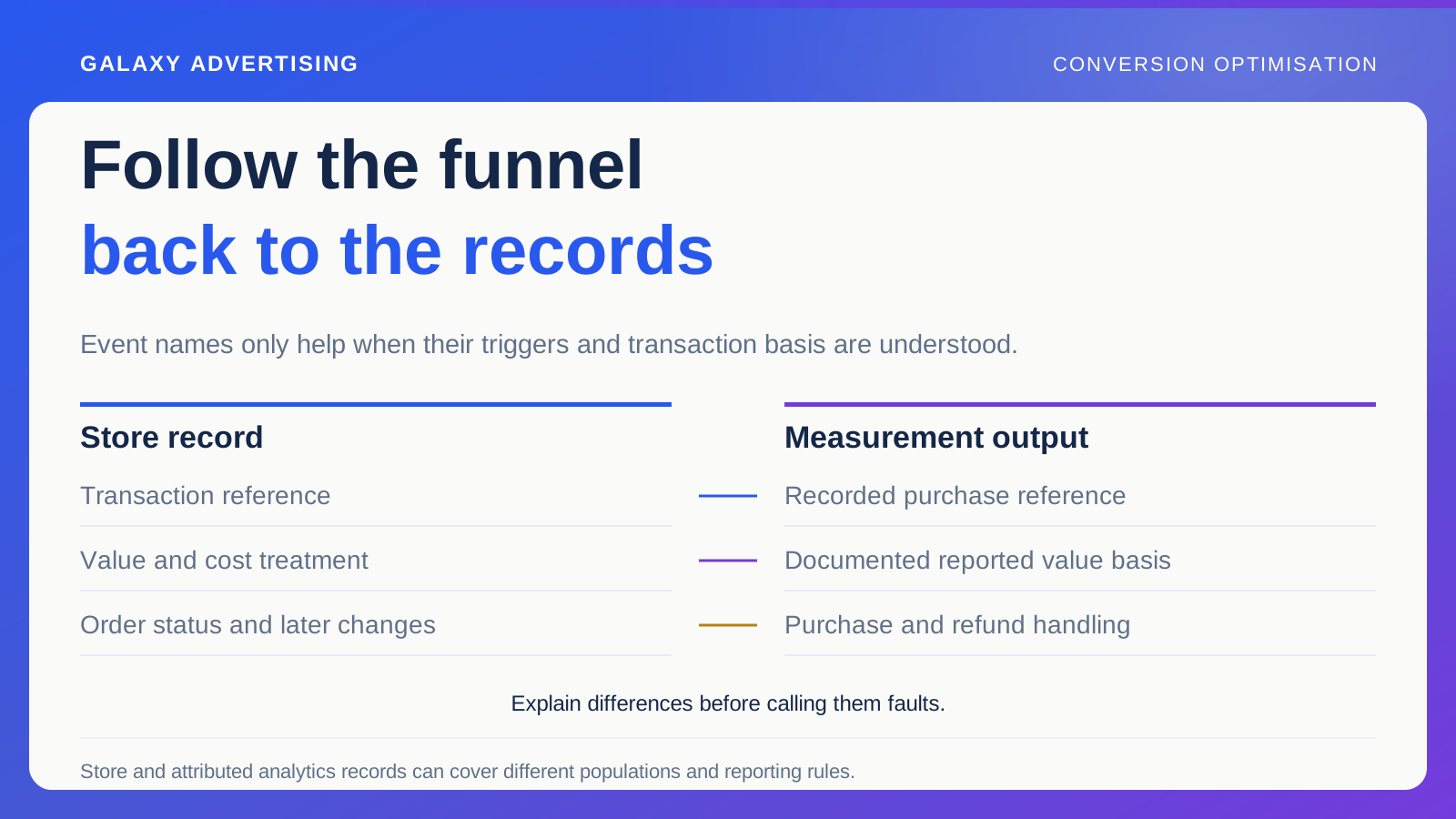
Use the business's agreed definitions of revenue and contribution, meaning money remaining after the costs included in its calculation. Explain differences before comparing attributed gross values with a net commercial target. A persuasive revenue number can conceal an unhelpful change in what you retain.
Label assumptions where costs are estimated. The aim is a proportionate commercial check, rather than perfect accounting for every interaction. Make that check before approving more work or claiming the project has paid for itself on the basis of an associated revenue total.
Use a suitable comparison for a causal question
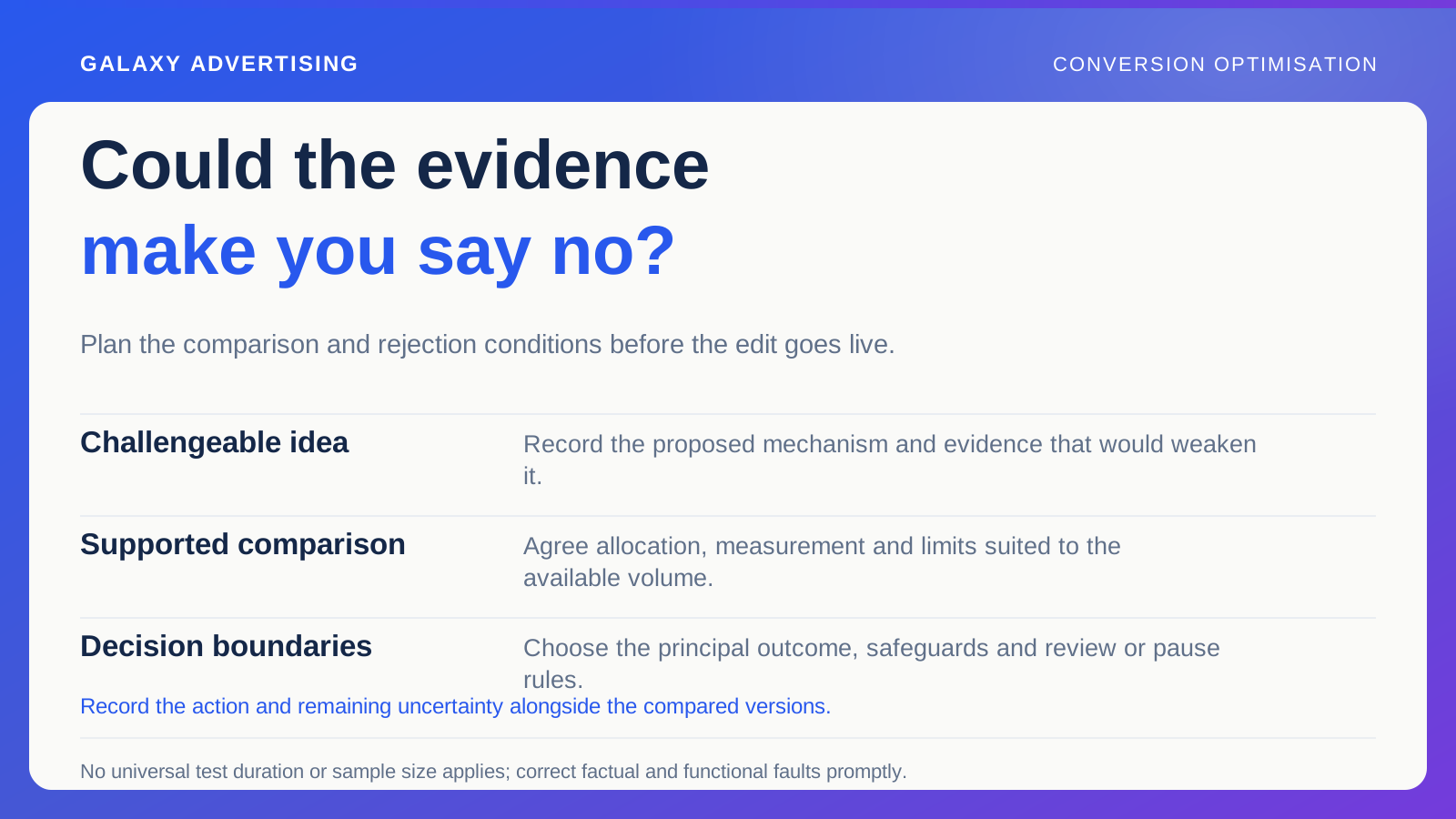
If the decision needs an estimate of additional effect, ask whether an appropriate controlled comparison can be designed. Have people capable of assessing volume, allocation method and relevant uncertainty plan the implementation and analysis.
Do not choose a convenient comparison group simply because its result makes a clear story. Traffic sources, availability and customer needs can differ. Explain why the comparison should be informative about the particular question.
If a controlled approach is impractical, say so and narrow the claim. You can still assess usability, factual accuracy, customer questions and the coherence of the buying route. Those observations could justify retaining a page without establishing a precise count of additional orders. Different decisions need different kinds of evidence.
Keep the benefits a revenue report may miss
Customer feedback can explain how information helped an individual. A task review can show whether somebody finds and understands an answer. Support records can identify recurring questions that have become easier to handle.
These sources cannot replace a suitable causal comparison. They can establish practical benefits it would be a mistake to overlook. A guide helping unsuitable customers avoid an incorrect purchase could reduce a costly problem without an attractive immediate conversion increase.
Describe each source at the right level. One quotation is an individual account. A repeated support issue is a pattern to investigate. Neither provides a precise explanation of all behaviour across the website. Preserve that scope while explaining why the observation matters.
Put the changing offer beside the page result
Record material changes in the range, stock, pricing, service and acquisition activity. A stronger period after release could partly reflect those conditions rather than the page itself.
Use the record to aid interpretation, rather than collect excuses for disappointing results. Identify which changes could plausibly affect the specific comparison and how they limit its conclusion. Context should have a clear connection to the question.
If measurement changes at the same time, verify that before and after records describe equivalent actions. A cleaner event definition can alter the chart without changing the customer route. Establish that distinction before arguing about the commercial story, or the discussion could be based on a reporting change rather than a trading one.
Decide what precision is worth paying for
Before commissioning a more elaborate evaluation, ask how much the decision depends on a precise estimate. A costly comparison may suit a major rollout while being disproportionate for a small factual clarification.
Match the standard to the consequence of the decision. A limited evaluation can support a limited conclusion; spending less on the evaluation does not make a stronger claim acceptable. Be deliberate about both the cost of learning and what that learning could change.
Give the business a conclusion it can act on
State what is established, what remains uncertain and why the next action is proportionate. You might keep an accurate guide because it resolves a documented information gap, while separately evaluating its effect on suitable orders.
If the evidence does not isolate additional revenue, do not manufacture a return by assigning every associated order to the project. Explain the useful observations and the limits directly.
A mature programme can recognise value without converting every interaction into a claimed sale. That restraint makes stronger findings more credible. The business can see what customers were helped to do, which outcomes were observed and what evidence would be needed before committing to a wider investment.