 Google Ads
Your seasonal campaign is ready to go, but the promoted furniture range takes longer to fulfil than the message suggests.
The creative has been approved and the business expects stronger demand. Now the customer is arriving with one expectation and discovering another when they investigate the item. More interest isn't much comfort if the promise has become difficult to explain.
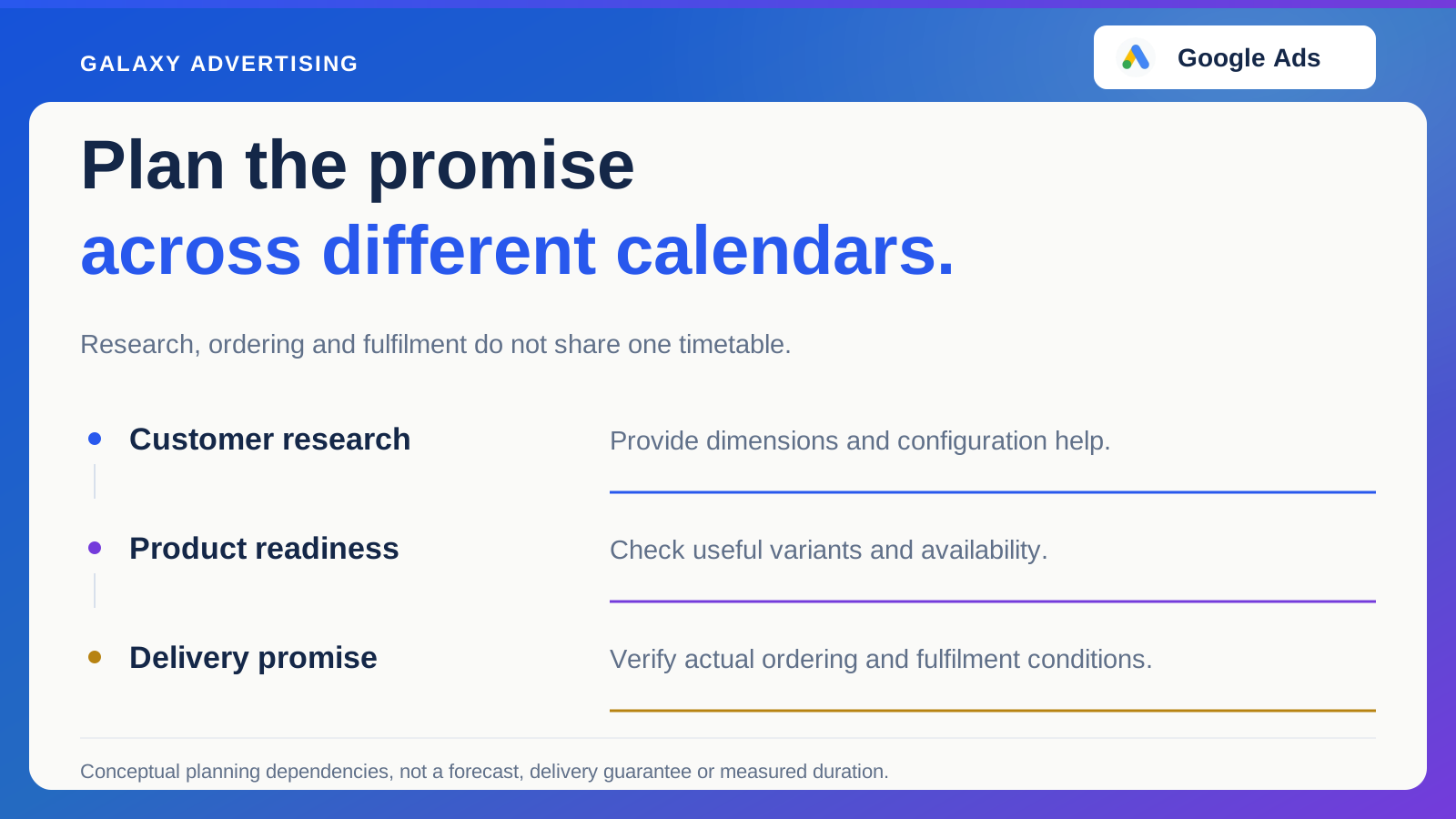
Seasonal planning needs to connect when people research, when they want to use the purchase and when you can supply it. Those calendars can overlap without being the same.
When does the customer actually need the furniture?
Start with the event or need behind the purchase. A household preparing a dining space for guests could compare tables before the point it wants the furniture in place. Advertising around the intended use date alone could miss part of that work.
Treat that as a plausible pattern, not a universal rule about customers. Use your order history, enquiries and product interest to build a working view of timing. Your own evidence gives the plan a firmer basis than a seasonal assumption presented with confidence.
Separate materially different fulfilment models. A stocked chair and a made to order table can attract related interest while needing different promises and operating decisions. The shared room doesn't give them a shared delivery timetable.
What else was happening during last year's strong period?
Read previous activity alongside stock, price, promotions and investment. A strong period could reflect a particular product arrival or incentive rather than a seasonal effect you can expect again.
Look at product mix too. A substantially changed range can make direct comparisons misleading even when the calendar dates appear equivalent. You need to know what customers could actually buy in each period before using the comparison to justify spending.
State forecast uncertainty. Imperfect evidence can still support a sensible plan. It shouldn't become a guaranteed demand curve that has to be funded regardless of whether the business is ready. A prediction doesn't acquire stock or delivery capacity on your behalf.
Work backwards from a promise operations can support
Establish verified fulfilment information for the range. Where a customer has an intended use period, explain actual ordering and delivery conditions without inventing a guarantee.
Plan destination, product data and creative updates before bringing in extra interest. A message can become inaccurate when an important condition changes, even if it was entirely correct when approved. Approval is about the offer at the time, not permanent permission to repeat the wording.
Give operations a clear route to tell marketing. Production or delivery capacity changes need to affect the promise promptly. They shouldn't wait for the next routine performance report while the old message keeps circulating.
Give people the answers they need while they're comparing
A significant furniture purchase can require dimensions, configuration guidance, materials information and delivery explanations before someone is ready to buy.
Make those answers accessible during research. A more urgent headline isn't automatically the most useful seasonal improvement. The customer could need a clearer explanation rather than another reason to hurry.
Choose the destination for the question. A precise product search could need the item page. A broader configuration decision could need a focused collection or guide. Help someone move towards a suitable purchase without suggesting timing you can't support. That keeps useful research content connected to the offer you're actually able to supply.
Watch what is still available as interest grows
Availability can narrow during a stronger trading period. A range ready for promotion at the start could later be missing useful configurations or carry a different delivery proposition.
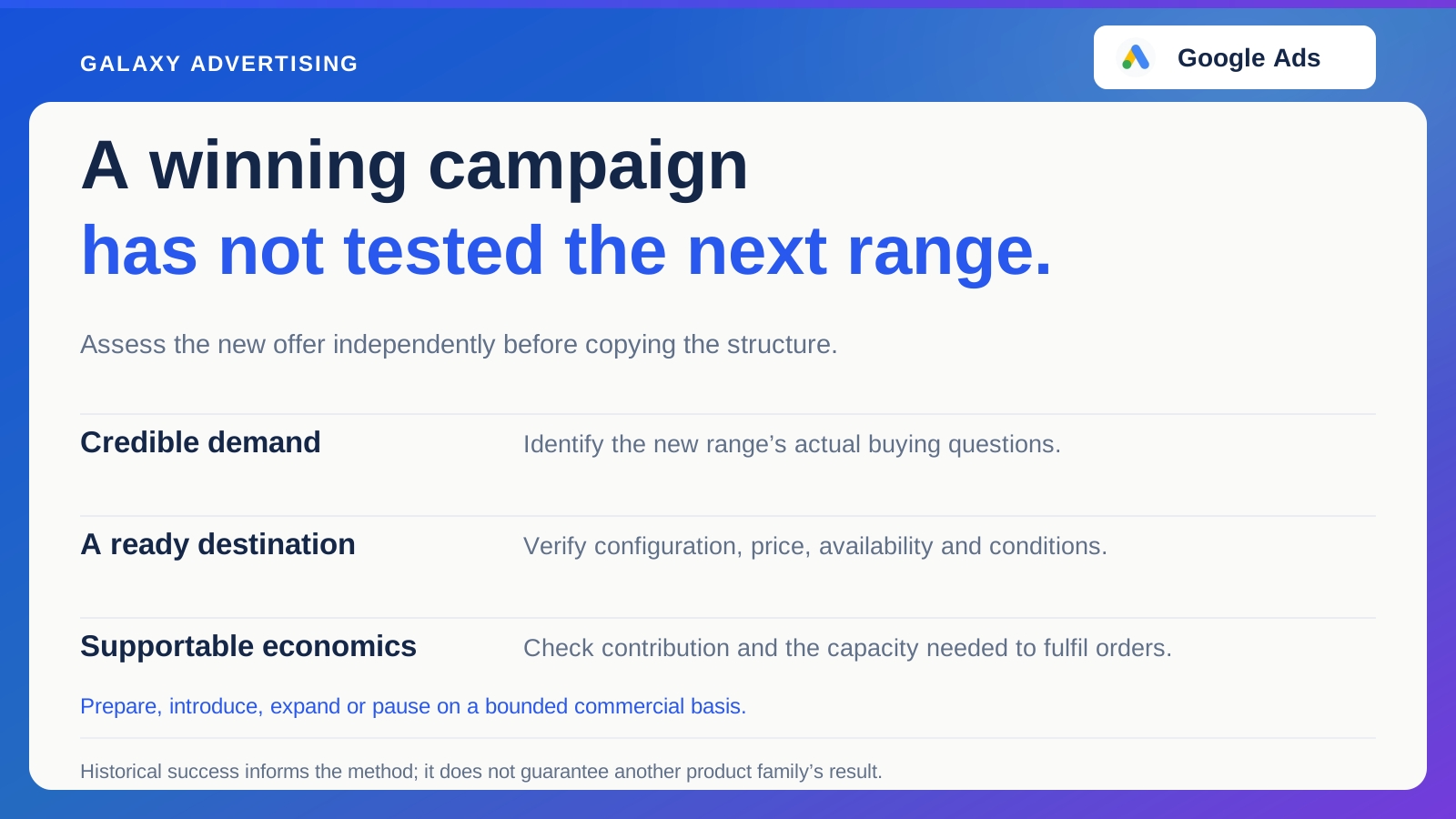
Inspect what remains purchasable and change emphasis where appropriate. Strong historical results don't make a product a continuing priority when the offer itself has changed.
Prepare relevant alternatives before somebody reaches an unavailable item. Explain meaningful differences. A substitute isn't equivalent just because it belongs to the same broad collection. The customer still needs to decide whether the changed configuration meets the original need.
Internal pressure isn't a customer deadline
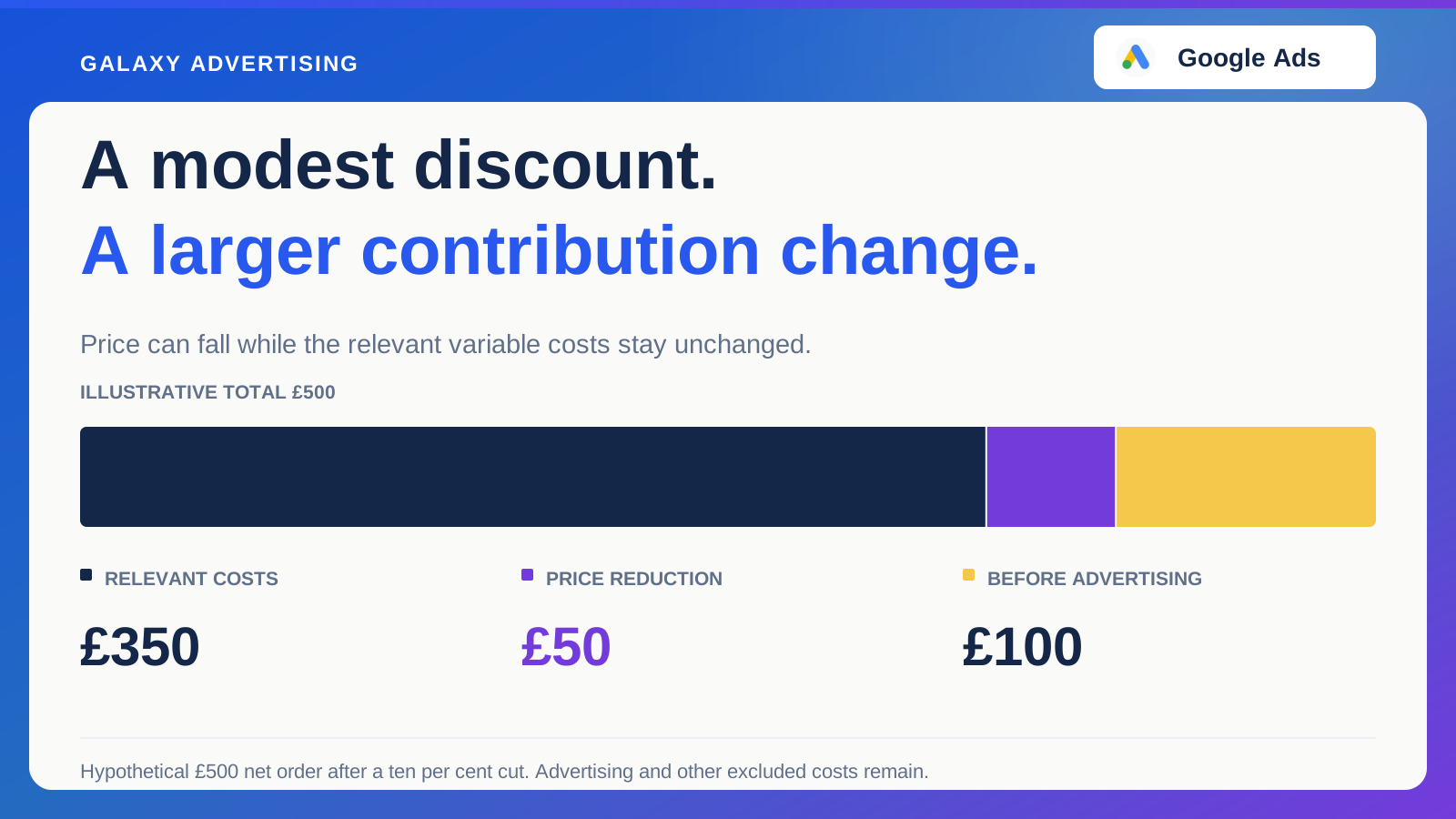
If you're offering an incentive, calculate its effect on contribution, the money remaining after the relevant costs in your calculation. Represent its genuine conditions clearly. Don't manufacture a deadline to compensate for uncertainty in the seasonal plan.
Operational urgency can require faster coordination. It doesn't automatically justify an urgent customer claim. Marketing needs verified information about the offer, rather than pressure converted into a promise the business can't support.
Record material changes as you go. Later, you'll need to distinguish the offer, investment and fulfilment situation when explaining results. Without that record, a useful seasonal lesson can disappear inside the total.
Put the dependencies on a calendar
Use separate rows for customer research, product availability, content readiness and supported fulfilment conditions. They don't need matching milestones. You want to see when a message would be premature or outdated.
For each promoted range, name whoever verifies availability and whoever approves the delivery explanation. List the connected assets that need changing when the promise changes. That makes the work visible before the team assumes another person has covered it.
If an intended guarantee can't be confirmed, the calendar should trigger a narrower message or a request for verified information. It shouldn't turn the assumption into a promise. Check a small sample of actual customer routes before increasing activity.
This is an operating tool, not a forecast dressed as certainty. It shows dependencies early enough to respond and preserves the conditions you'll need when actual trading differs from the plan.
Judge the result against what you could deliver
Review completed orders and relevant contribution beside cancellations, unavailable configurations and timing questions. Attributed revenue, the revenue reporting rules credit to advertising, can rise while the operating result becomes less satisfactory.
Don't judge a defined research period solely on immediate orders if the task concerned a longer decision. Equally, a long buying cycle doesn't excuse a plan without evidence or review conditions.
Look at what the customer needed, what you supplied and where timing assumptions held or failed. That's more useful for the next plan than comparing calendar totals alone.
Google Ads needs to support your actual trading opportunity. The moment worth planning for isn't just when somebody clicks. It's when the promise in that message meets the furniture the business can deliver.