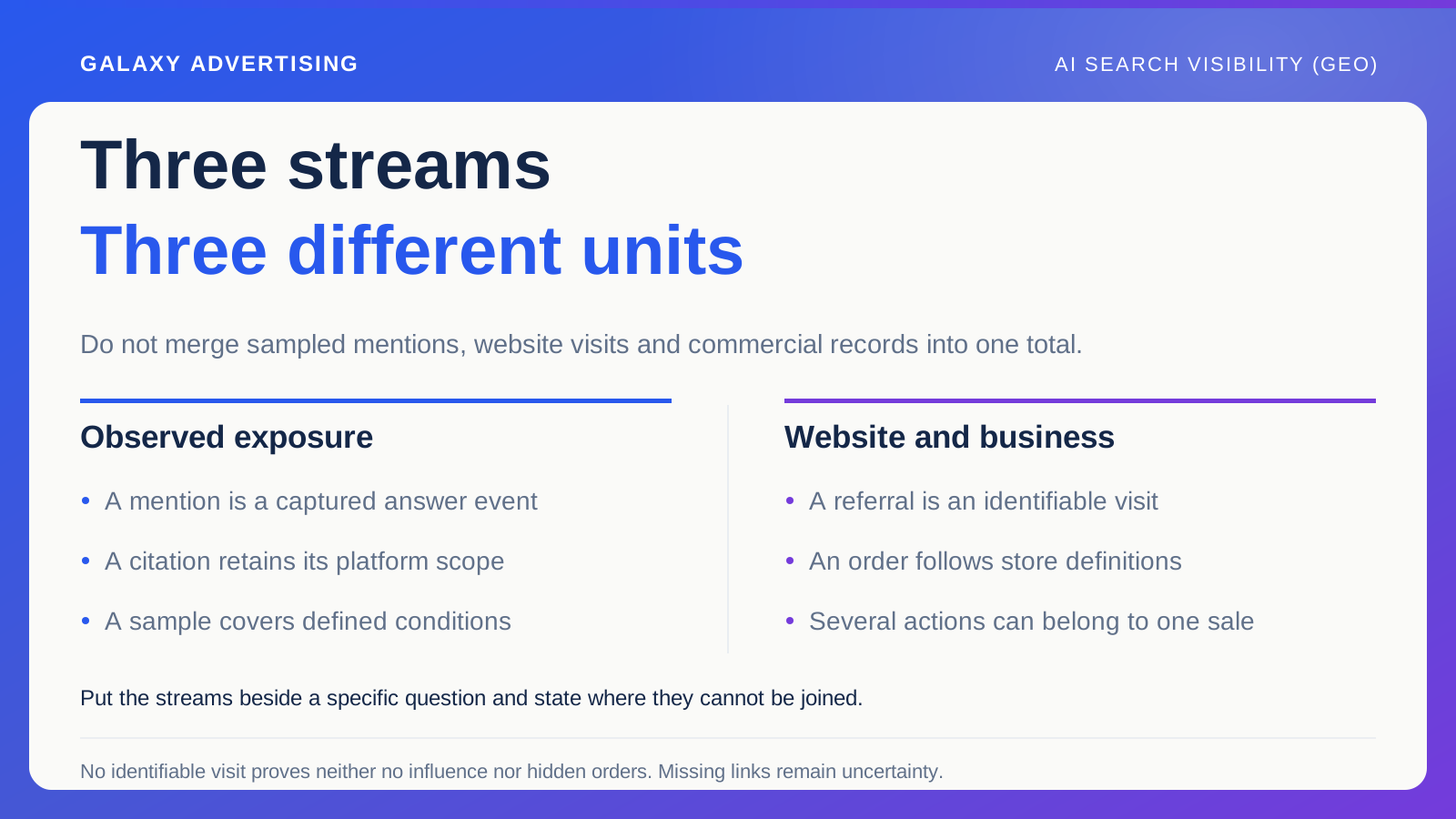
What if the upward line in your AI visibility report combines brand mentions, platform citations and website visits? It can look encouraging while leaving you unsure what, exactly, increased.
The observations concern different things: generated content, a platform's reporting scope and an arrival at your website. Putting them on the same chart doesn't make their units interchangeable.
Keep the evidence streams distinct and explain how they can inform each other. You don't need a perfect reconstruction of every customer journey. You need a defensible record for deciding which information to improve and whether the customer response is commercially useful.
Say what one unit actually means
For each measure, define one unit before recording the number. A manually observed brand mention, cited URL and analytics session are different observations, even when the same product guide is involved. Give the reader the distinction without making them infer it.
Record the source and boundary. A platform report covers the experiences its definition includes. It doesn't cover every AI system. A manually selected question sample covers the questions and conditions your team checked, rather than every possible customer query.
Avoid a broad label such as AI reach for incompatible measures. The unit shouldn't depend on a chart legend or a caveat from an earlier presentation. A precise label is part of the measurement itself. Without it, even an accurate number can invite an interpretation it cannot support.
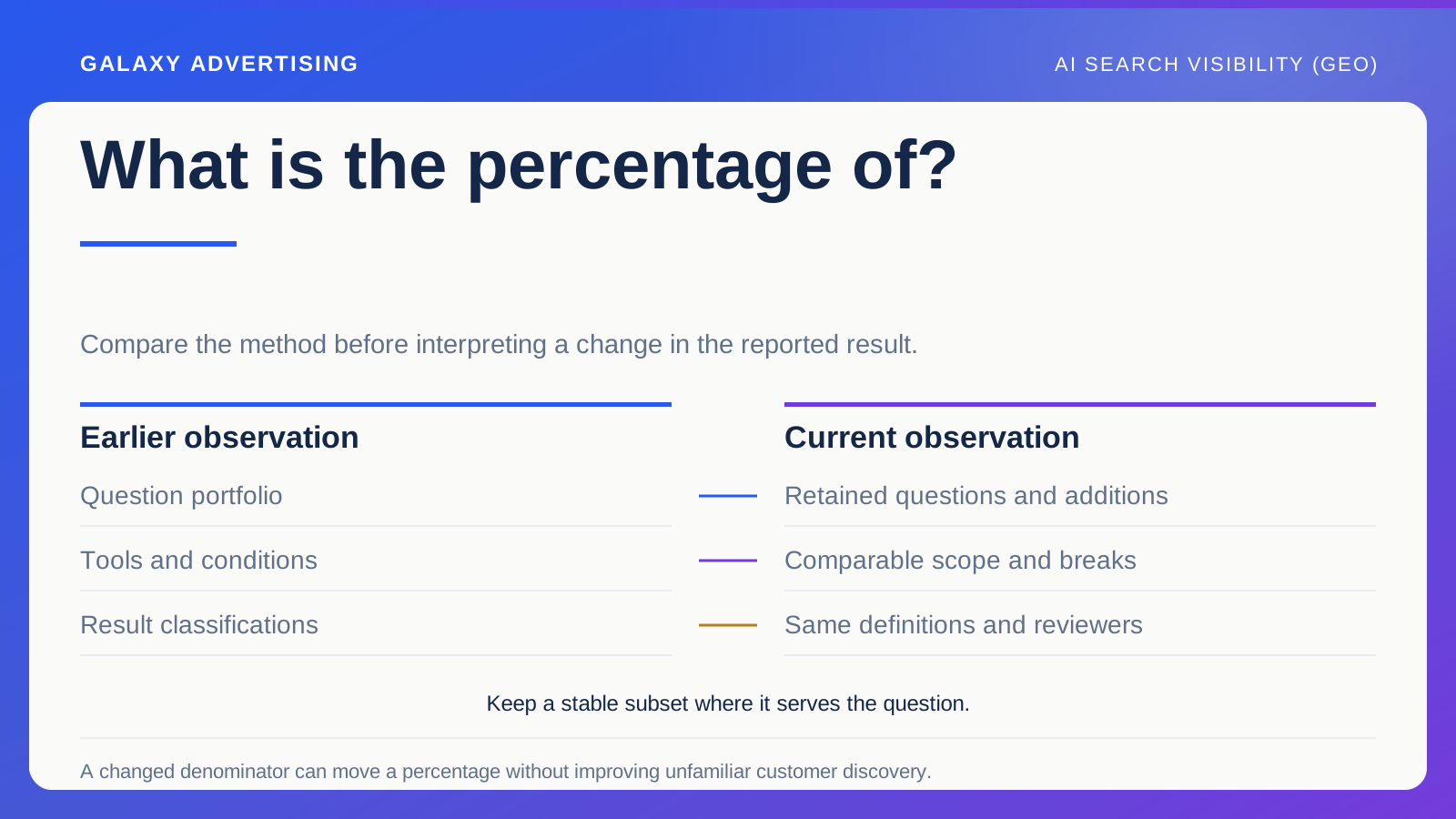
Keep the method behind the sample
Retain the question, tool, relevant conditions and captured response. Classify what the brand or link does using definitions another reviewer can understand. The observation needs more context than appeared or didn't appear.
A brand name might be an example, a comparison option or the question's subject. A source link can support one narrow fact without recommending your whole offer. Don't give every appearance the same meaning simply to make the sample easier to total.
Ask a second reviewer to inspect a small selection where classification is ambiguous. Disagreement can expose unclear definitions. Resolve the method before expanding, or a bigger exercise could produce more inconsistent judgements rather than better evidence. A smaller sample understood properly is a more useful starting point than a larger one with shifting meanings.
Read platform figures within their scope
Where a platform offers relevant reporting, inspect its current documentation and definitions. Record the experiences covered, the unit counted and limitations that matter to comparison. These details explain what its figures can reasonably establish.
Don't rename a platform measure as a universal ranking position. A citation count and a position in a traditional results list describe different things. A tool's own observation can be useful without translating it into a more familiar but inaccurate metric.
Keep reporting changes visible. Added coverage or an altered interface can affect apparent trends. Before interpreting movement as business performance, check whether the observation basis stayed comparable between periods. Otherwise you can end up discussing an improvement that began with the reporting method rather than the customer.
Treat an identifiable referral as website activity
Use available analytics to identify relevant referral visits and their destinations. Check classification with the person responsible for measurement. A familiar source label isn't necessarily complete or error free just because everyone recognises it.
Inspect what those visitors do. They might explore a configuration, continue to a product, make an appropriate enquiry or order. Define actions consistently. Several steps in one journey shouldn't become separate commercial outcomes in the report.
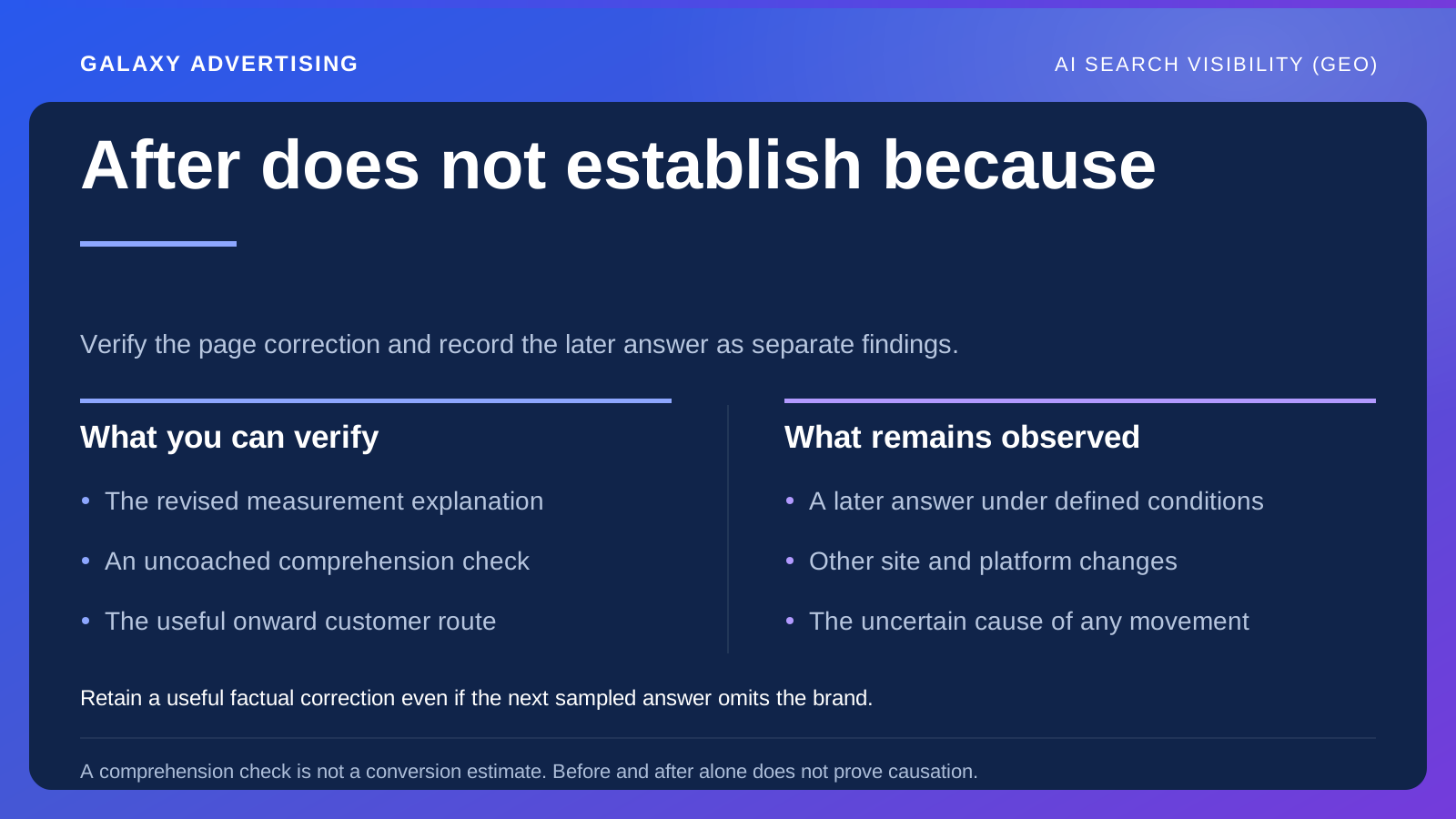
A referral is stronger evidence of an actual site visit than a mention screenshot. It still doesn't reveal complete prior research or prove a content edit caused the visit. Keep the action you observed separate from your explanation of it. The record can be useful without claiming to know everything that led somebody there.
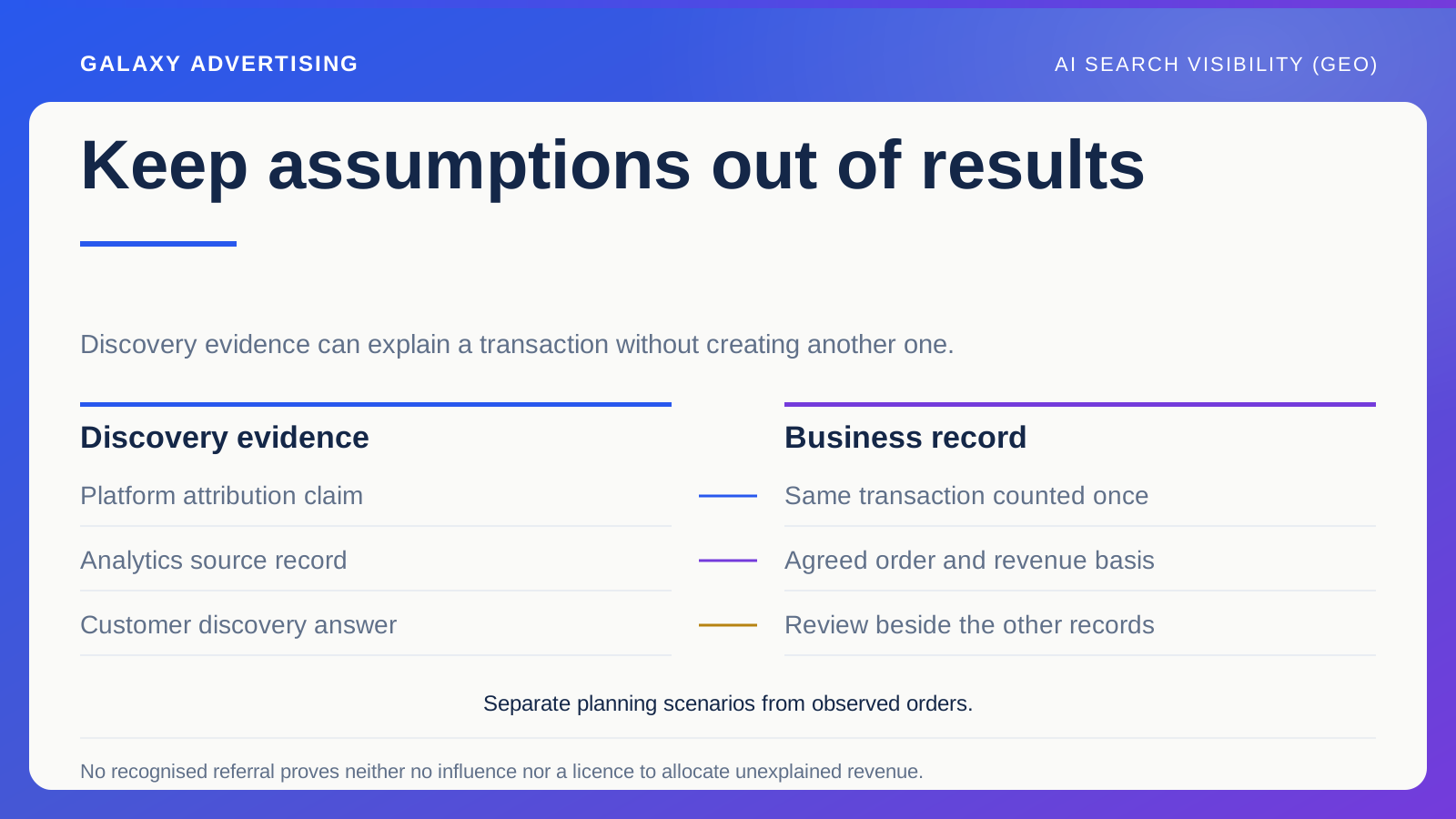
Reconcile the commercial result with your records
Use established business definitions and relevant records for attributed enquiries or orders. Identify cancellations, returns and material order changes where they affect the review. The commercial record needs the same care as the referral label.
Keep revenue and cost assumptions consistent. An attractive attributed order value can leave a different contribution after product and fulfilment costs. Contribution is the money remaining after the costs included in the calculation. That economic question is separate from whether you identified the source accurately.
Don't assign unexplained store growth to AI visibility because some referrals exist. Website evidence may support particular transactions or useful interactions. It doesn't establish the source of every sale without a clearly recorded route. Keep the claim within the transactions or observations your records actually support.
Put the streams beside a specific question
A guide can gain more sampled source links while identifiable visits remain stable. That invites investigation. It doesn't prove a contradiction or a hidden commercial success. Look at the destination and what the content was intended to help somebody do.
A factual citation may not invite the same visit behaviour as a product comparison. Say where the streams cannot be joined reliably. A missing connection limits the conclusion; it doesn't permit an estimated relationship without a defensible basis.
Consider an illustrative guide with a source link in a recorded answer but no identifiable visit during review. You can establish the link and the absence of recognised referrals on your chosen basis. You cannot establish that nobody read or remembered the brand, or that hidden orders occurred. The next action might concern the destination or a broader observation period. It shouldn't begin by assigning financial value to the gap.
Give the measurement a consequence
Choose an action: correct a fact, investigate referral classification, improve an unhelpful destination or continue bounded observation. A measure with no possible consequence can consume attention without helping the business.
Keep unfavourable and unchanged observations. Selecting attractive answers produces a gallery of examples rather than a credible view of the route.
What appeared, what reached the site and what the business received can inform the same commercial judgement. Keep their different meanings intact, and the record remains honest enough for somebody to challenge the decision it supports.