Launching your seasonal guide at the right moment doesn't finish the job. Months later, it can still recommend garden furniture that cannot be supplied under the delivery promise customers are reading.
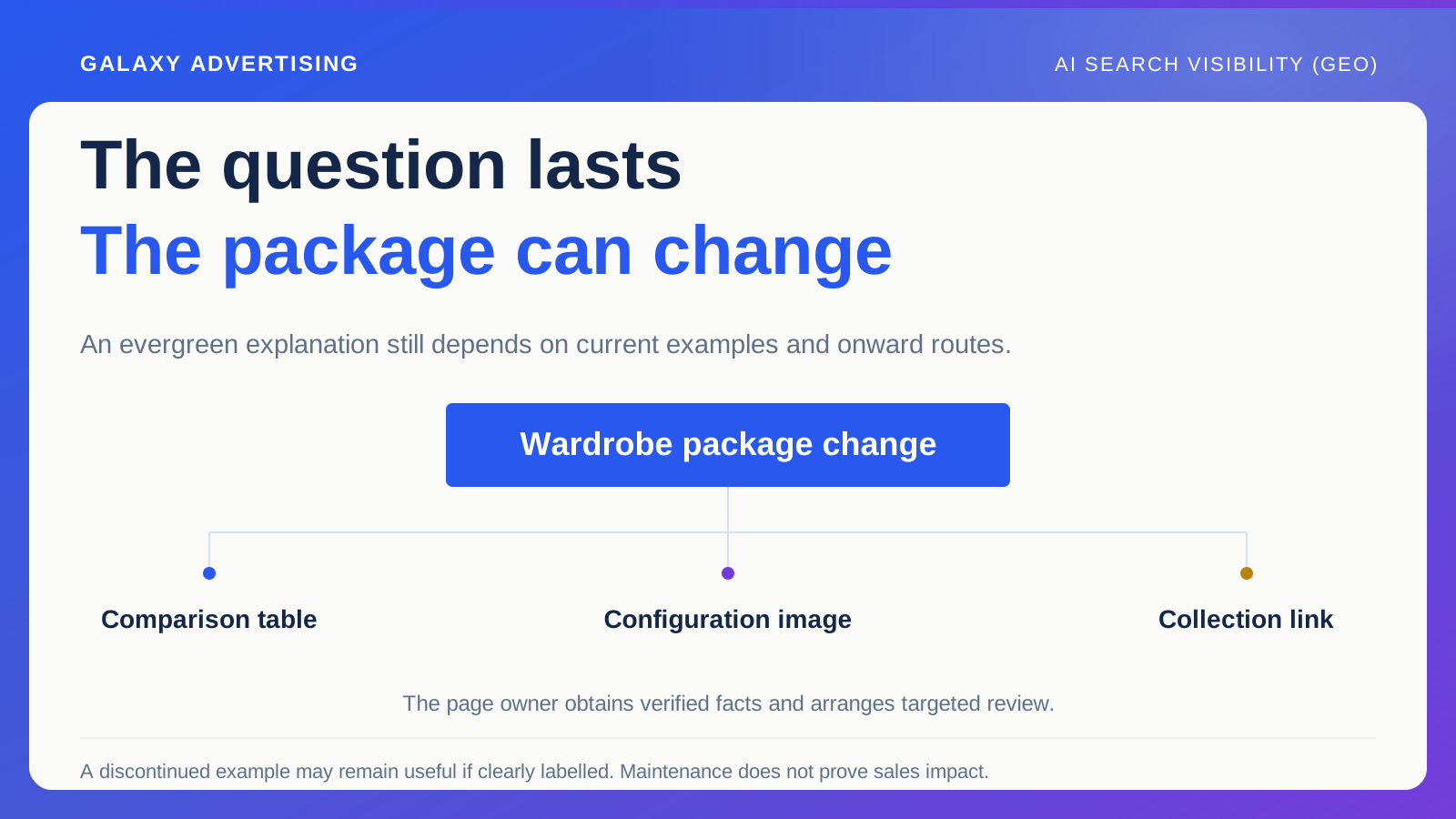
The buying question remains useful. The live offer no longer matches the example, and people arriving through saved links, search or generated answers won't know that from your campaign calendar.
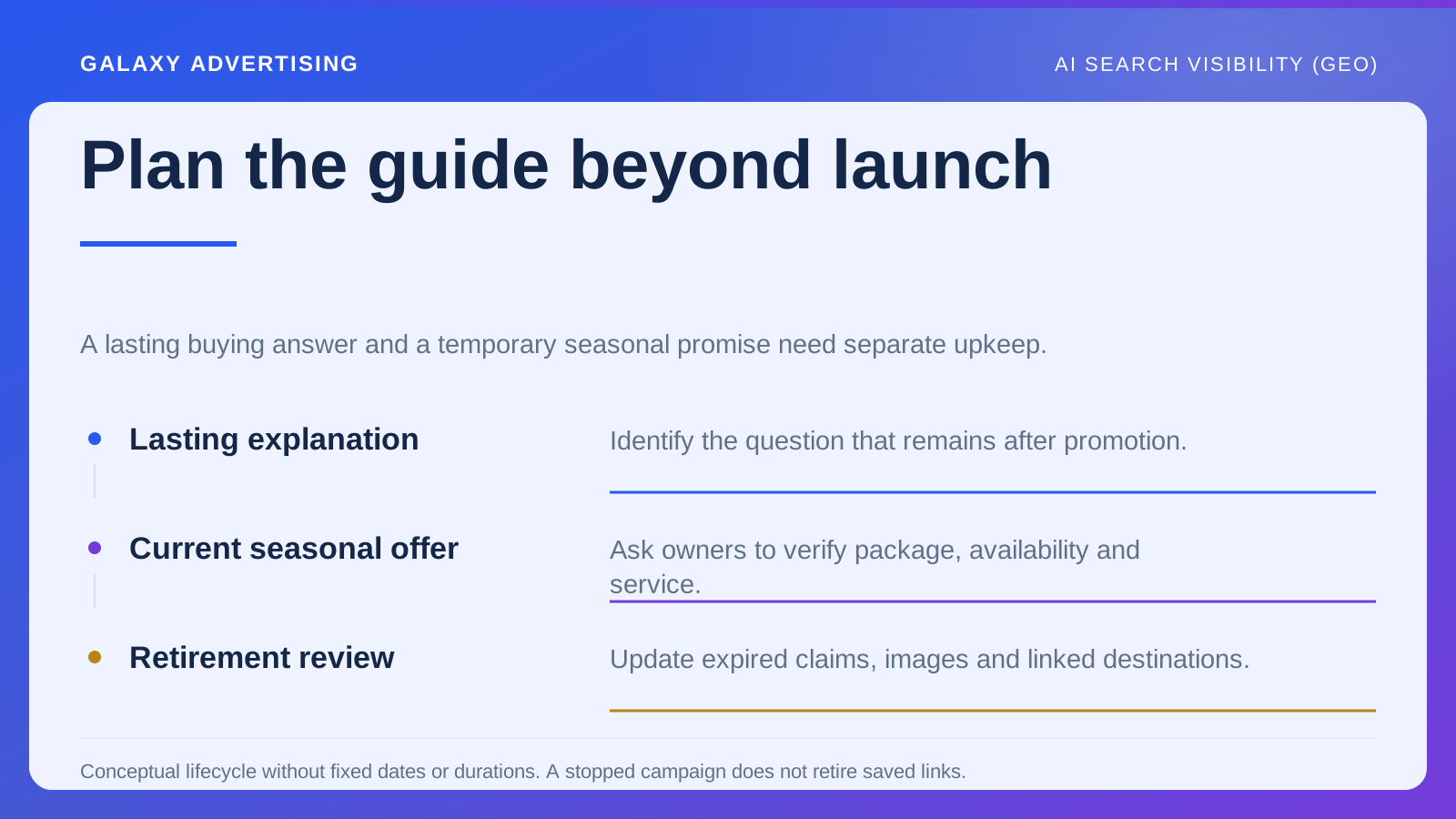
Give the lasting explanation and temporary commercial information different responsibilities. Keep the guidance useful while updating or removing the seasonal promise. A retirement plan belongs beside the launch plan, rather than becoming something to improvise after conditions change.
Find the question that lasts beyond the calendar
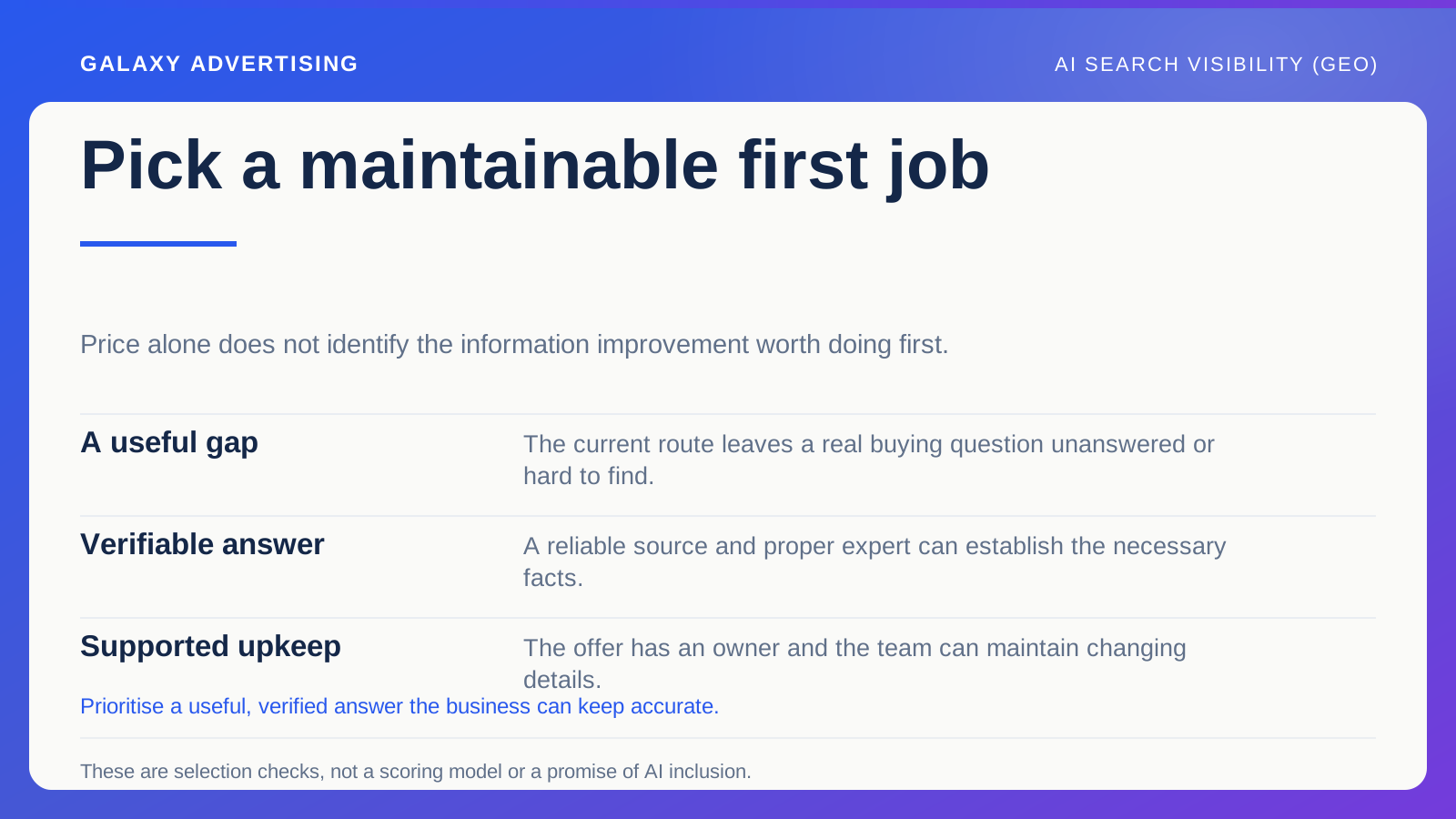
Ask what customers need to decide independently of the promotion. Table configuration, storage and package differences can remain relevant after one campaign period. Start with that enduring task, rather than a seasonal phrase for the headline.
Separate the explanation from temporary prices, stock and deadlines. Then stable guidance can stay useful while the offer changes. You shouldn't have to dismantle the whole answer to remove a short lived commercial condition.
Don't pad an ordinary article with seasonal language just to create another page. If the question and answer stay the same, a maintained guide may help more than several versions under different calendar headings. That also gives the team a clearer answer to maintain instead of multiple pages competing to explain the same task.
Work backwards from when customers want to use it
Identify the intended use period and decisions required before ordering. Measurements, household agreement and service questions can all take place before the purchase. Help customers establish suitability while they still have time to act.
Use actual enquiries and operating knowledge to frame plausible timing. Don't invent one research window for everyone or assume all visitors share a buying stage because the season has started. The calendar doesn't settle their individual situation.
Put practical information where it can help before the deadline or loss of availability. A strong promotional introduction adds little if the useful explanation arrives too late for the relevant configuration. The page needs to support the timing of the decision, rather than merely announce that the season has begun.
Confirm the promise with the people who own it
Ask merchandising and operations to verify the package, availability and service arrangement. Distinguish confirmed conditions from expected replenishment or uncertain capacity. That uncertainty belongs in the plan rather than disappearing during the writing brief.
Name who tells the content team when the position changes. A guide may remain live long after the advert supporting it. The media schedule alone can't maintain its accuracy, so give the content its own update route.
Keep material qualifications understandable. A deadline for one configuration or service shouldn't read as a promise applying to the whole range. Customers need the relevant condition before committing. Clear scope matters as much as the date when the offer is only available under particular circumstances.
Build a page that can survive the offer ending
Decide where temporary details belong and what replaces them. Stable guidance shouldn't rely on a promotional banner whose removal leaves the article incomplete. The buying explanation needs to make sense when the campaign has finished.
For a hypothetical outdoor dining guide, explaining fixed and extending arrangements can be the lasting section. Current offers can link from it with accurate package and service details. That keeps the relationship between advice and today's offer clear.
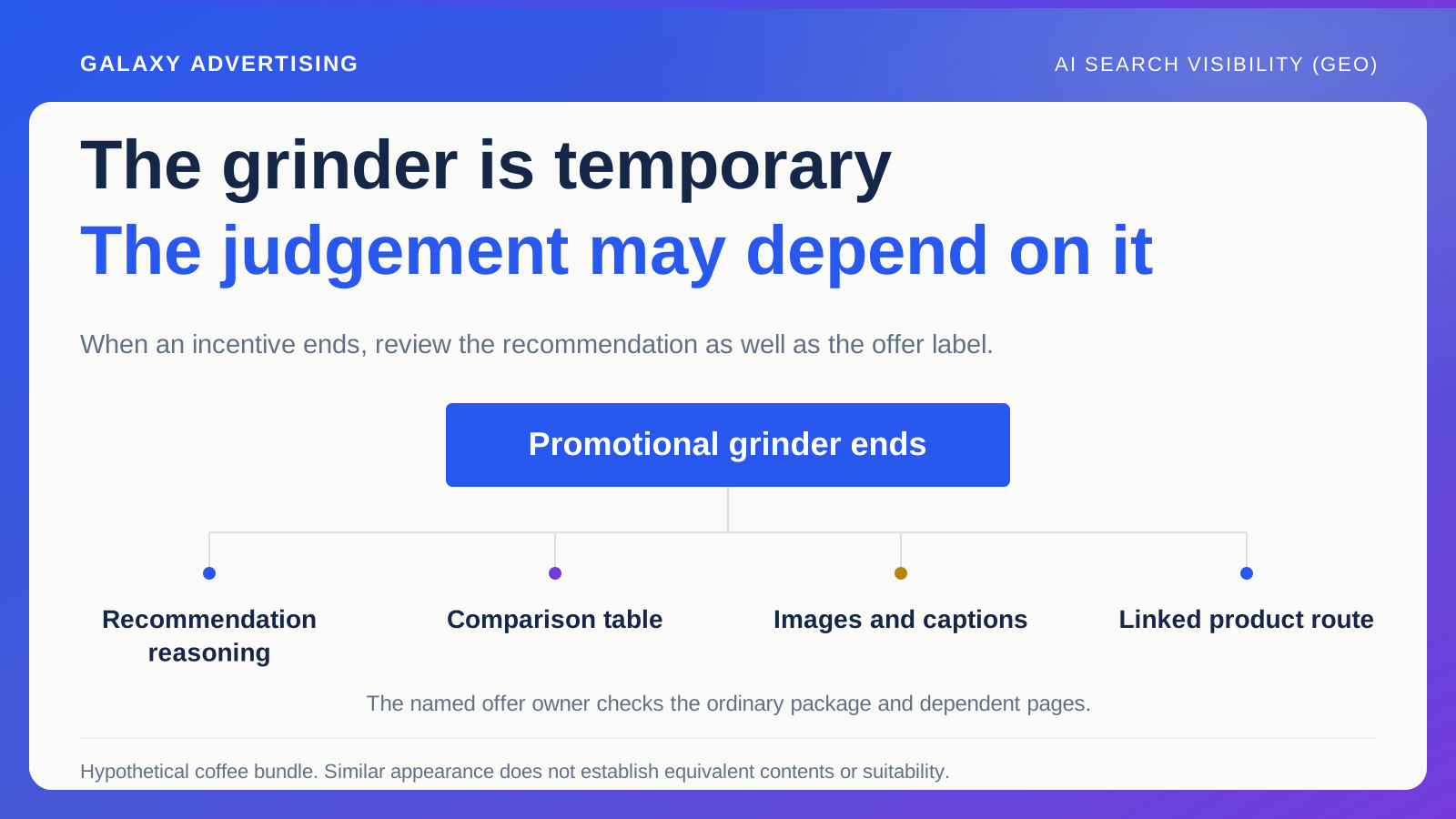
If the original configuration becomes unavailable, choose an honest status, revised example or relevant alternative according to the task. Don't silently substitute another product because it looks similar. The reasoning may depend on a difference that replacement would conceal. Review the meaning of the example before asking another offer to inherit its place.
Check pictures and links as part of the promise
Inspect whether images imply more than the text. Accessories can suggest inclusion. A seasonal caption can imply immediate availability unsupported by the product record. Consider the overall impression, rather than checking each statement in isolation.
Use verified references for diagrams and configuration illustrations. An attractive image isn't a source for approximate measurements or unsupported suitability claims. Its details need the same factual basis as the written explanation.
Follow the phone links to actual selected offers. An accurate guide can lead to a different variant, the selected size, colour or configuration, or an obsolete promotion. Check the customer journey beyond the published article. The useful answer and its next step need to describe a coherent offer together.
Observe the season without claiming every order
Keep product changes, demand conditions and other promotion visible when interpreting visits or commercial response. A naturally stronger period can affect orders independently of the guide or an appearance in a generated answer.
Use defined visibility observations and identifiable referrals for their different purposes. A sampled link establishes one response under recorded conditions. It doesn't establish how many seasonal purchases the page caused.
Keep the questions people ask. If enquiries shift from comparison to service timing, a clearer current explanation may help. That's an editorial decision you can make without a precise revenue attribution claim. You don't need certainty about every influence on demand to correct information customers now need.
Retire the temporary promise deliberately
At the appropriate point, check expired conditions across the guide, images and linked destinations. Remove or clearly update them. A stopped campaign doesn't guarantee saved routes describe the ordinary offer.
Record what should happen earlier next time: verified stock information, a clearer update owner or a more stable distinction between guidance and promotion. These are practical decisions, rather than a general request to launch sooner.
Test retirement before the main release. Follow a saved link as though the featured configuration has lost its original delivery position. Identify wording, image and destination changes, and resolve any missing owner. Then the page has a plan for preserving an honest offer when trading conditions move beyond the original brief.