What if the most useful page to improve isn't for your most expensive product? A lower value range could contain a recurring comparison problem while the premium page already explains its offer clearly.
Starting an AI content programme at the top of the price list feels commercially sensible. Price alone doesn't tell you where better information would help someone choose.
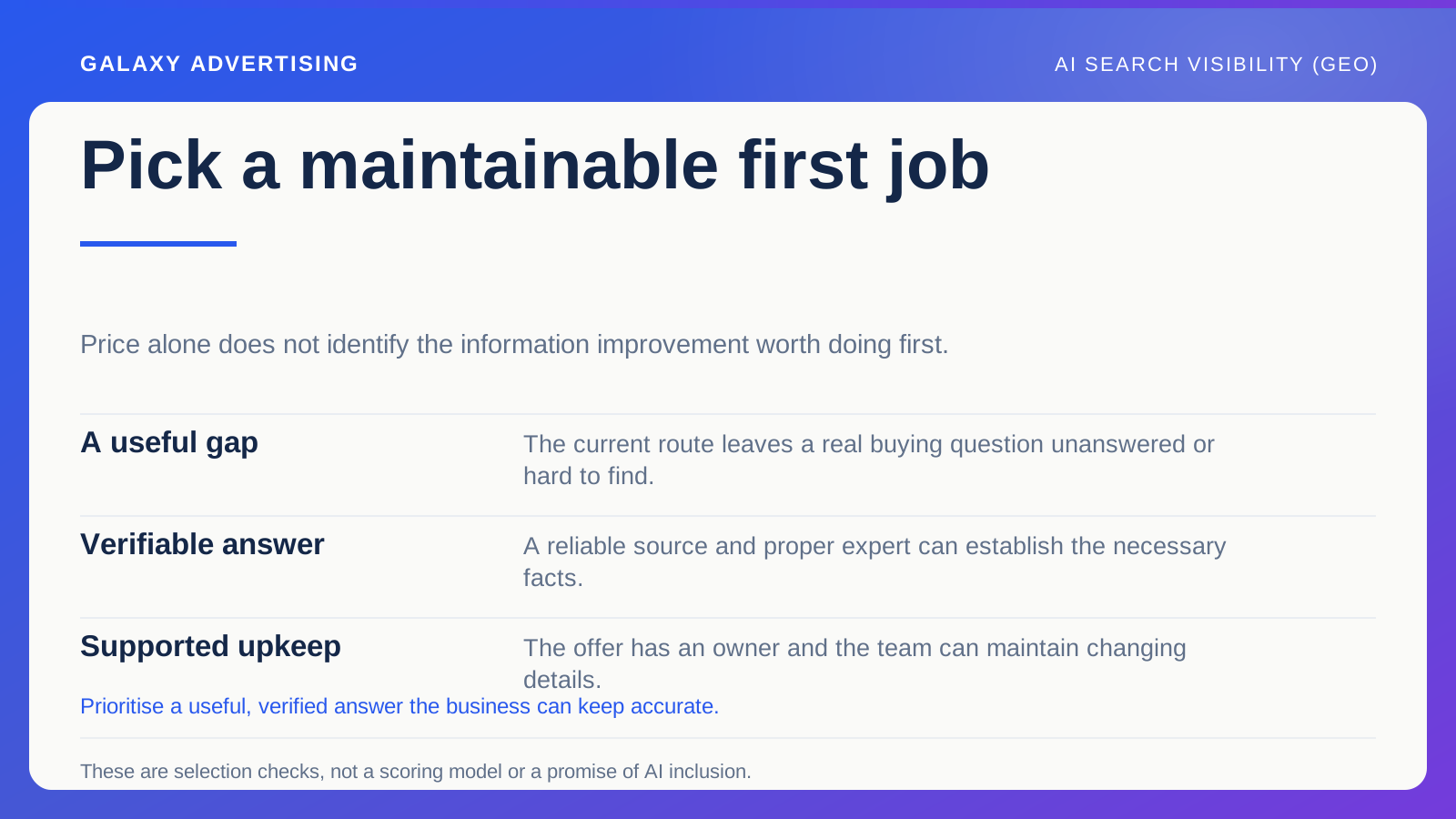
Prioritise the gap in the buying decision and the commercial route behind it. The best first job is useful, verifiable and maintainable. You need a better answer where it matters, rather than the most words about the highest priced item.
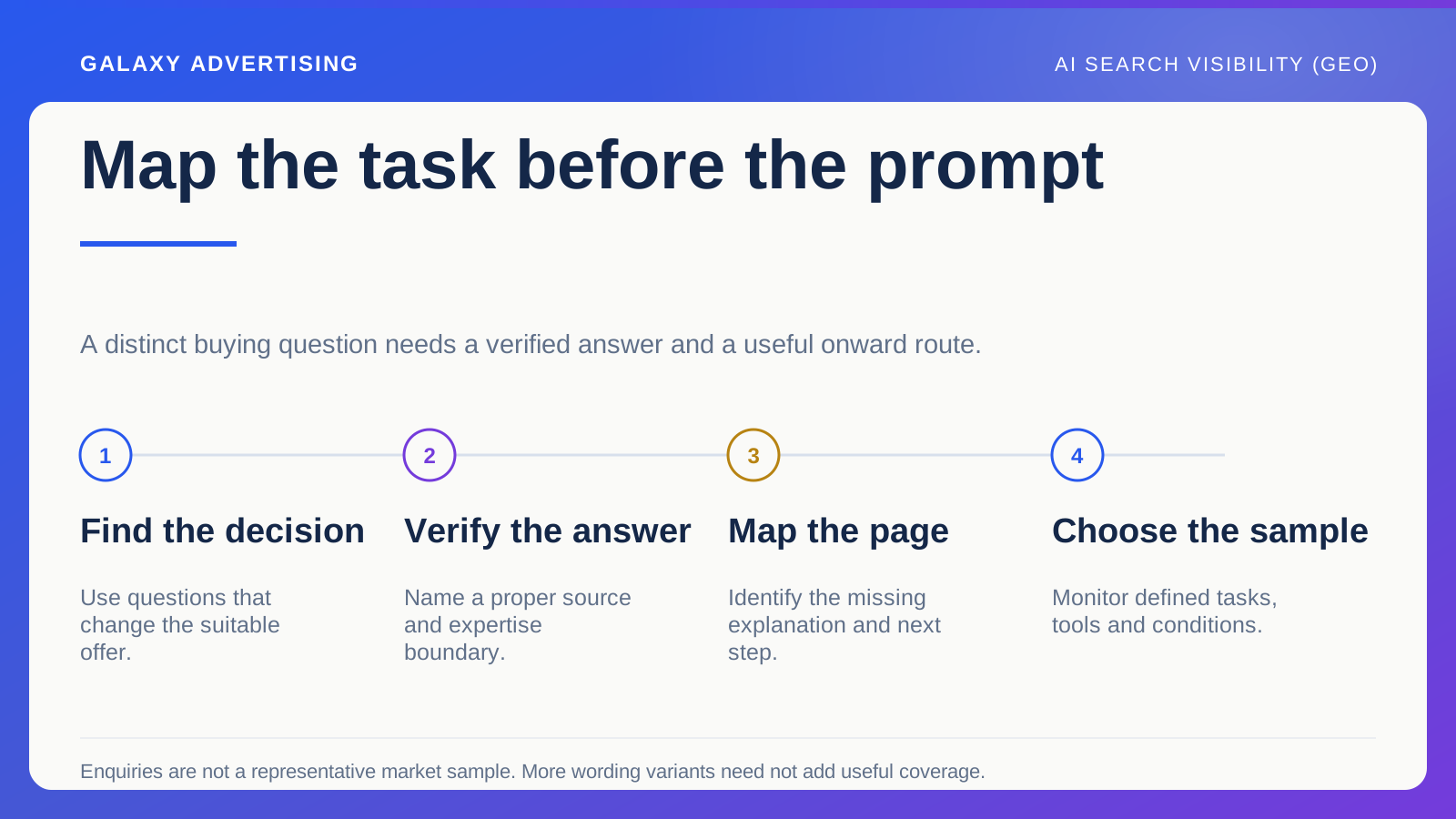
Find a question your current pages don't answer well
Collect questions sales and customer service answer repeatedly. Inspect whether the relevant page gives a clear answer and whether people can find it where they need it. Missing information and hard to find information can require different corrections.
Take a hypothetical wardrobe range where customers struggle with internal configurations. That's more concrete than wanting visibility for wardrobes. It could call for a product diagram, focused comparison or clearer option descriptions.
Don't treat every enquiry as proof of a missing page. Some people want reassurance despite adequate published information. Others need personal help with their circumstances. Review examples before choosing content, labelling, navigation or a better response process. The repeated question tells you to investigate. It doesn't decide the format of the answer for you.
Verify the answer before allocating writing time
Identify the source for dimensions, package contents and compatibility details. Use reliable product or business records and name who owns uncertainty. The writer needs somewhere dependable to resolve a factual question.
A commercially appealing topic can be a poor starting point if the necessary facts aren't confirmed. An approximate published answer may create more problems than leaving the question clearly unresolved while you obtain proper information. Apparent completeness isn't worth a misleading product claim.
Keep specialist boundaries intact. You can explain what you supply without inventing structural, electrical or safety advice. Where the decision requires manufacturer instructions or professional assessment, direct the customer to the right source. A page doesn't become more useful by claiming authority your business cannot support.
Give each page the right job
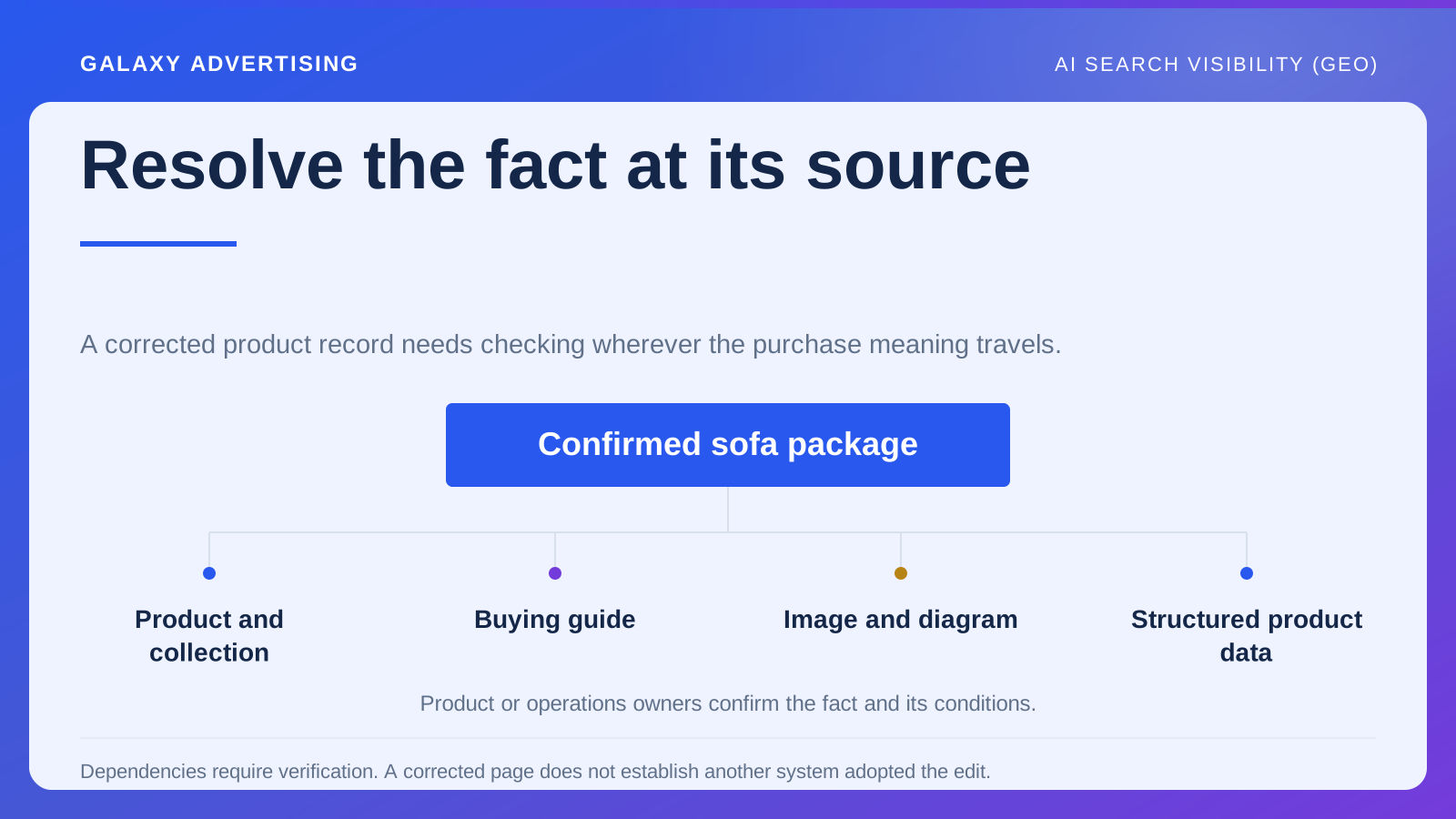
A product page establishes one exact offer. A collection supports comparison across a relevant range. A guide explains a decision spanning several products. Choose according to the task, rather than putting every answer into another blog article.
For the wardrobe, included shelves belong in its package description. Comparing two internal arrangements may need a comparison. Planning storage more broadly gives a guide a different role again. Keep those distinctions visible in the plan.
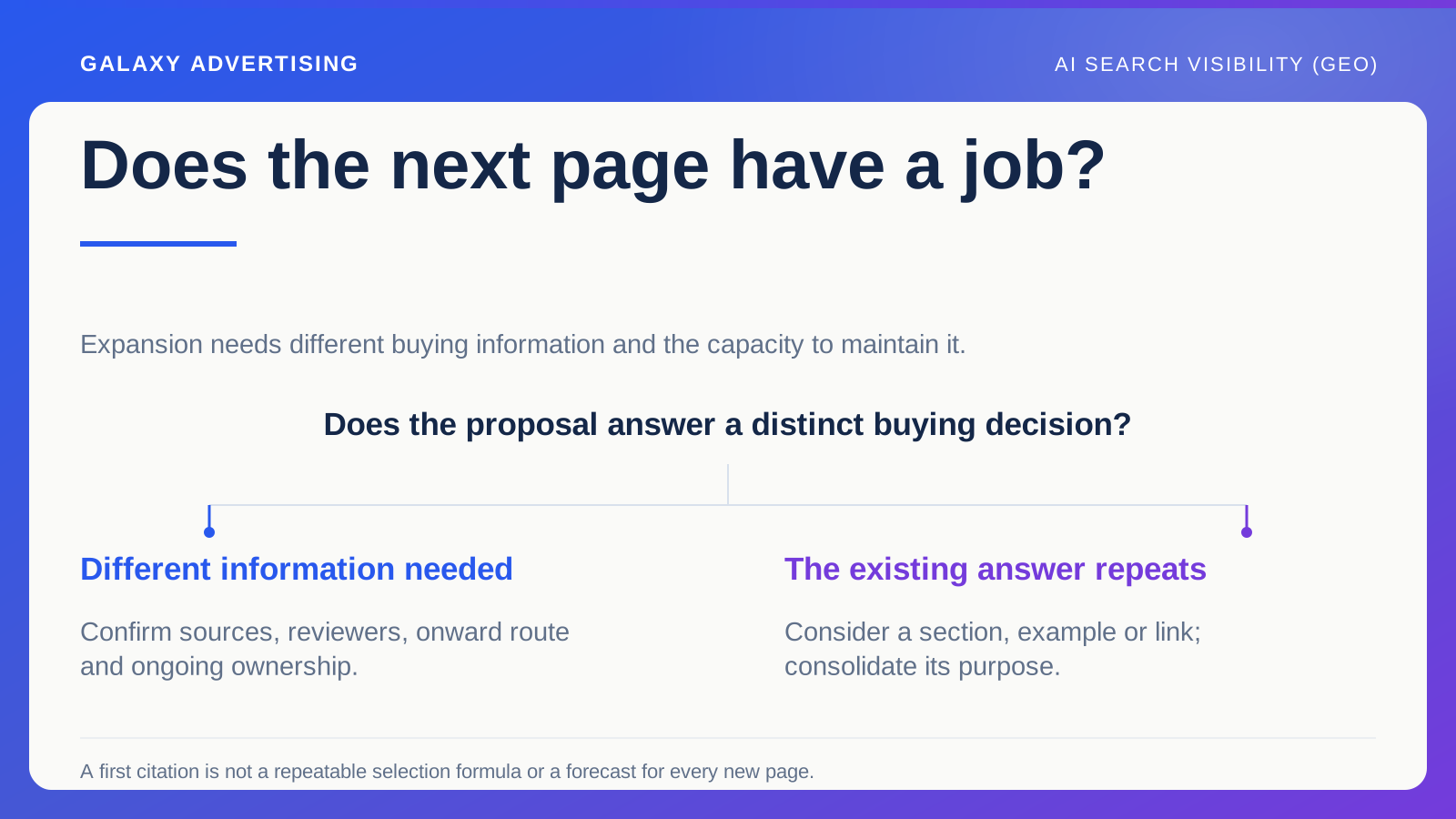
Map the roles before production. If two pages would contain the same explanation and lead to the same product route, consider combining the work. A coherent set of pages serves people better than superficially different URLs trying to answer the same question. It also makes the proposed release easier to assess as a whole.
Look at the offer behind the information
Check availability, fulfilment and the product's role in your range. A page can answer accurately while leading to an offer the business cannot currently support as expected. Information quality doesn't remove a supply constraint.
That doesn't mean deleting every unavailable product page. A stable reference or honest sold status can remain useful, depending on the product and the customer's task. Decide from the purpose of the route rather than applying a blanket rule.
Don't use content to conceal an unresolved commercial position. If the described or advertised configuration isn't available, correct that information first. A more persuasive article cannot make the package purchasable or its service promise reliable. The business needs to settle what can be supplied before asking the page to explain it more convincingly.
Ask what keeping it accurate will require
Find out how often the facts change and who maintains them. A stable comparison and a list of current configurations, prices and delivery arrangements need different review processes. Include that difference when choosing initial scope.
A smaller maintained portfolio can give customers a clearer experience than a broad schedule whose details become inconsistent shortly after release. Choose work the team can keep accurate, rather than making maintenance somebody's problem after publication.
Look for shared dependencies. If many pages inherit an unreliable product record, fixing that source may be more valuable than rewriting each destination. The plan should expose the common cause instead of assigning it all to the writer.
Compare two wardrobe proposals. One explains a stable distinction between storage arrangements using verified diagrams. Another lists every current configuration with changing prices and availability. Both may help, but they require different operating commitments. If you can verify the first and cannot maintain the second, the first may be the responsible initial release. That follows from the facts and capacity here. It isn't a universal preference for guides.
Use observations to inform the priority
Search queries, referral activity and defined AI answer samples can identify questions worth examining. They don't automatically prescribe another page or prove a guaranteed visibility opportunity. Ask what the observation actually establishes.
A citation may use a page for a narrow fact without recommending the retailer. A missing mention can have causes beyond a product description. Keep those limits beside the observation before turning it into a production instruction.
Combine that context with usefulness and factual readiness. You should be able to explain the priority without a mysterious score. If the work has no clear value to a suitable customer, reconsider its position near the top of the programme.
Release a group with distinct responsibilities
Record each page's task, verified source, owner and onward route. Review the group for contradictions and unnecessary repetition before publication. Afterwards, check that the information is present and the customer route works.
Inspect available observations over an appropriate period while retaining each method's limits. The first favourable answer doesn't prove your prioritisation formula established.
The foundation is information you can support and maintain, tied to real buying decisions. That gives the next page a reason to exist beyond its place on the price list.