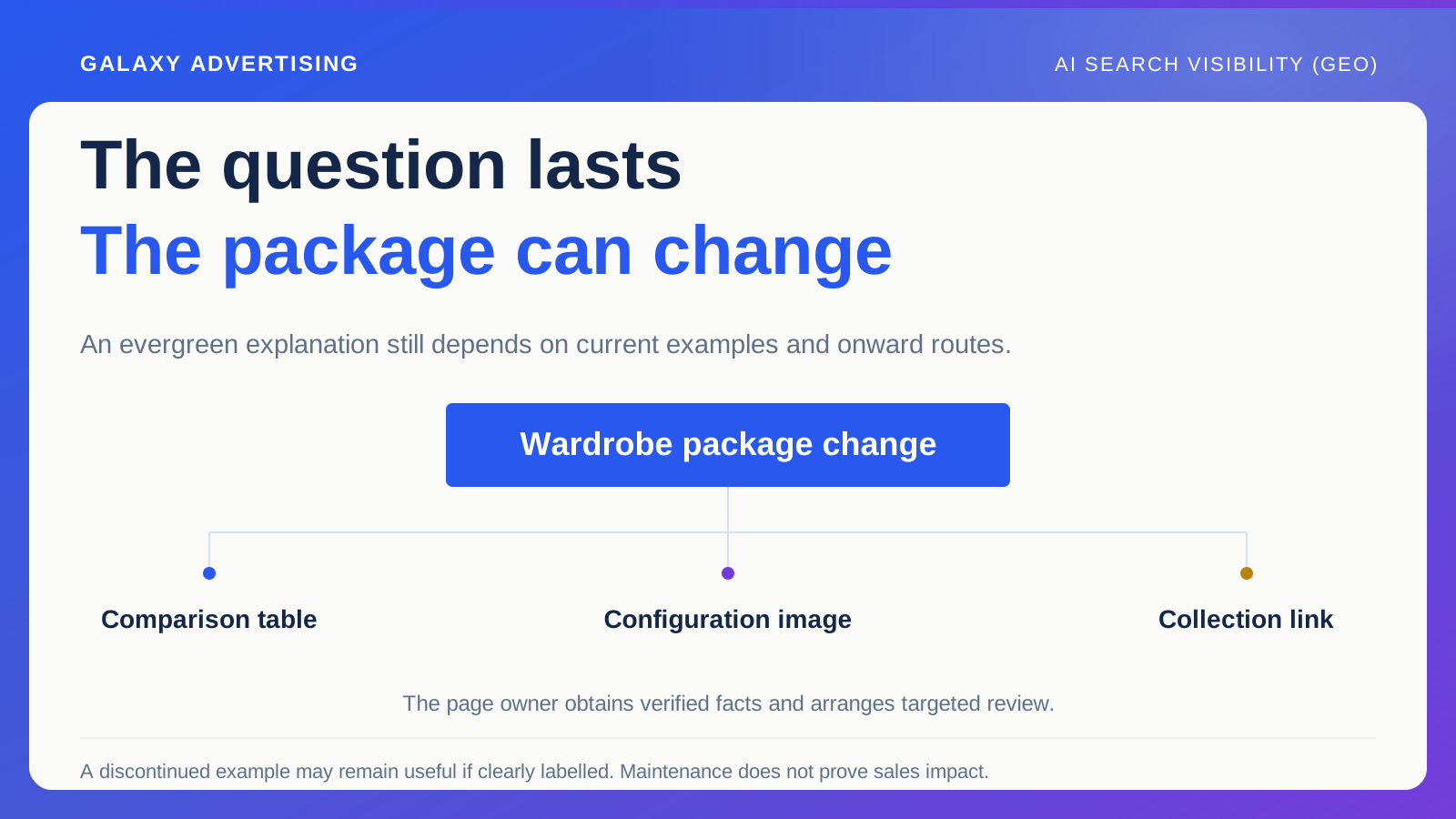
Which description should a customer believe when your sofa is modular on its product page, fixed in a guide and shown in a configuration the catalogue no longer supplies? Writing another article could simply give them a fourth version.
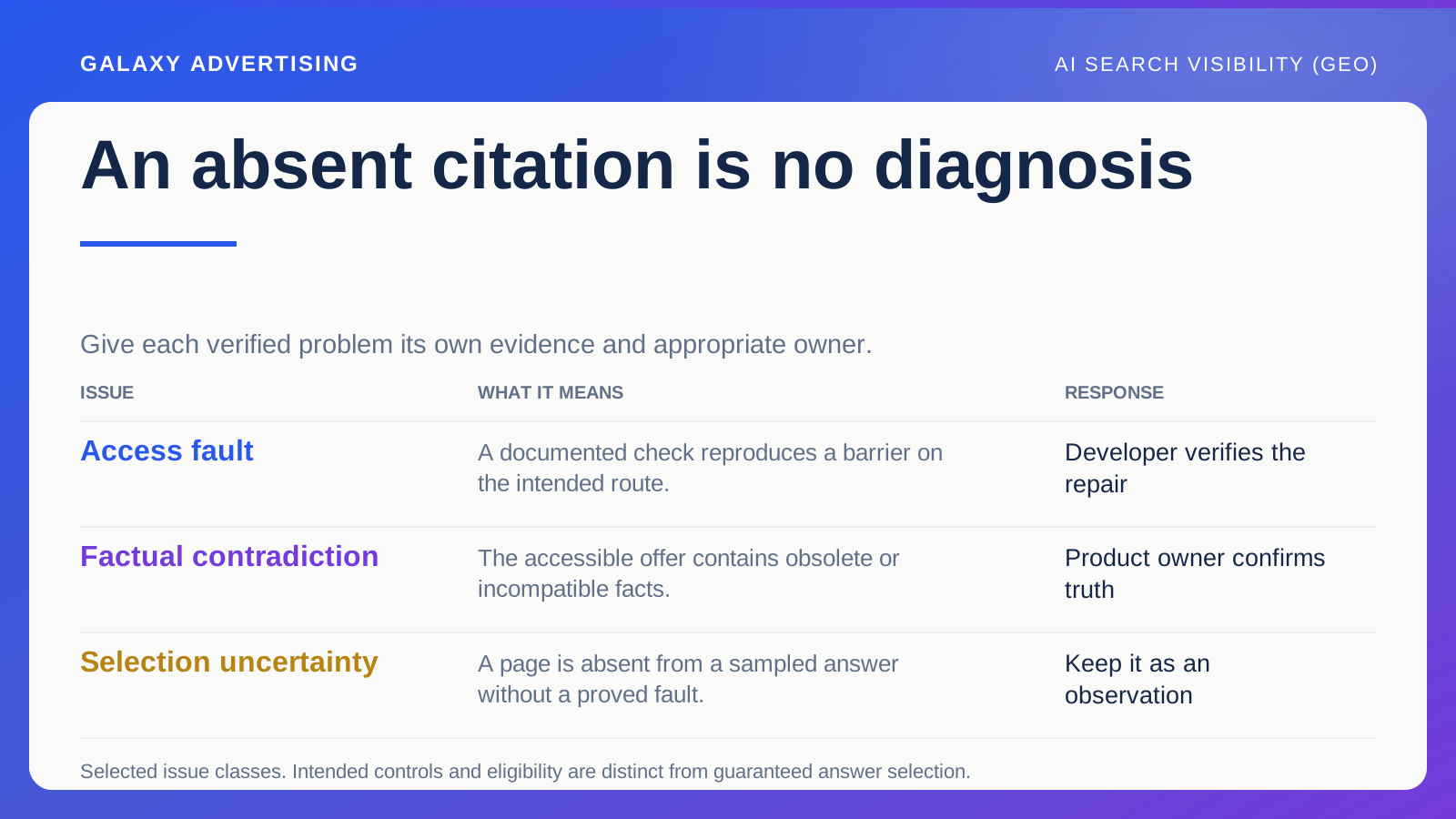
An inaccurate AI answer can draw attention to the problem. It doesn't tell your team which of its own conflicting descriptions is correct.
Start with ownership of the underlying fact. Establish it, find the important places that express it and correct the conflicts. Your first job is an accurate customer offer. Any later change in generated answers needs observing separately, rather than assuming it follows from the edit.
Start with a fact that changes the purchase
Prioritise contradictions affecting what a customer thinks they're buying or how the service works. Dimensions, package contents, availability and delivery arrangements usually deserve attention before minor differences in style. These are details that can lead to incompatible expectations.
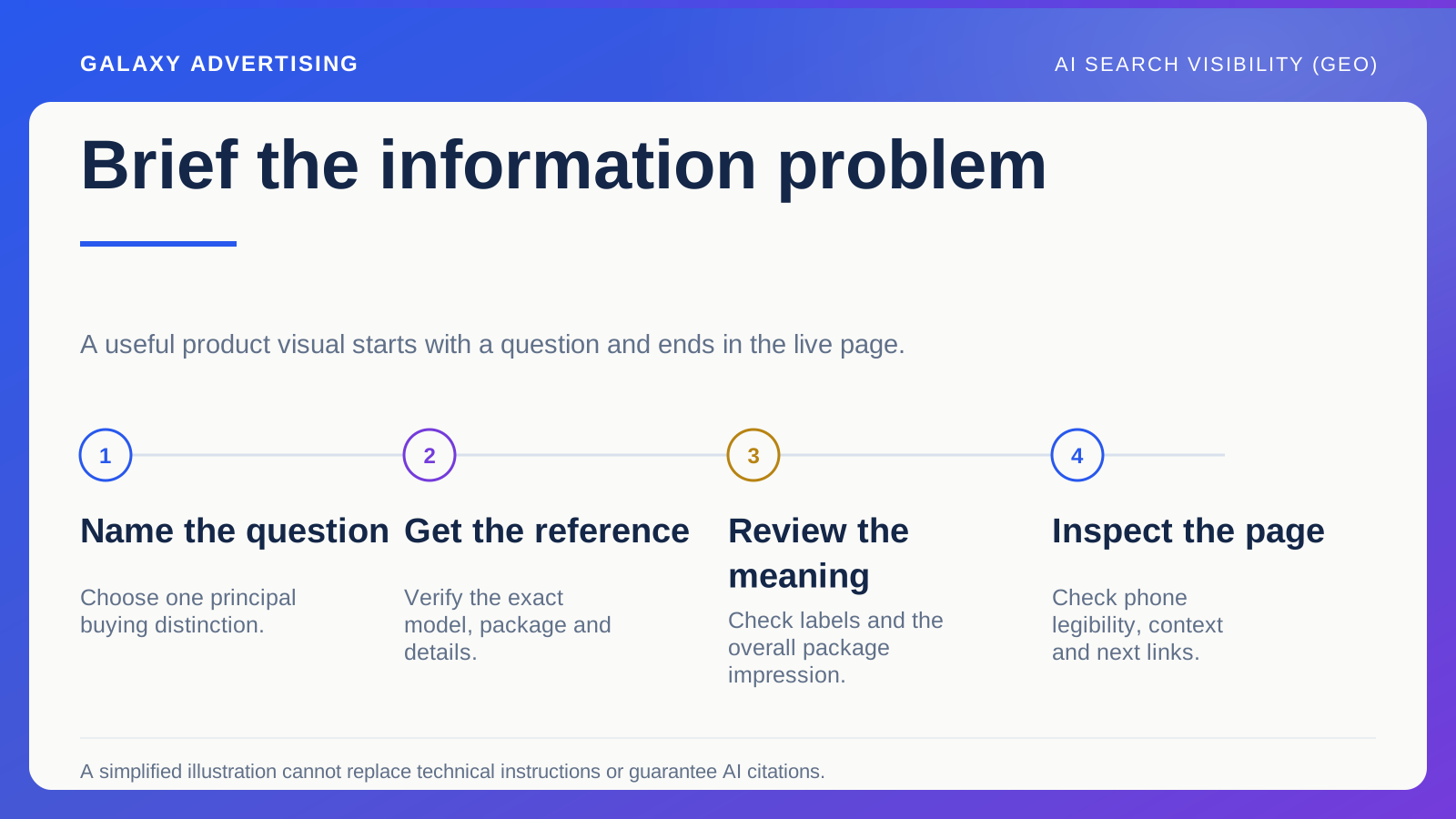
For a hypothetical modular sofa, identify the exact configuration and the source defining its components. Keep the item reference beside the customer facing label. A general range name can hide different versions of the offer.
Don't classify every wording difference as an error. Different pages can explain the same fact in different ways for different tasks. The problem is a reasonable customer reaching incompatible conclusions about what you supply or how the product can be used. That distinction helps keep the review focused on meaning.
Find who can confirm the underlying fact
Match the authority to the claim. Manufacturer documentation might establish a dimension. Your business owns the package and delivery service it provides. Ask the appropriate product or operational owner to resolve the uncertainty before rewriting surrounding copy.
Don't choose an existing page as the authority simply because it is convenient and already published. That page may be where the contradiction began. Publication doesn't establish that its version is correct.
Record the confirmed fact and its conditions. A dimension could describe the complete arrangement rather than one module. A delivery statement might apply only to a defined service. Removing those qualifications can turn an accurate reference into an inaccurate summary. Keep the conditions attached when the fact moves into a shorter explanation.
Map where customers meet that information
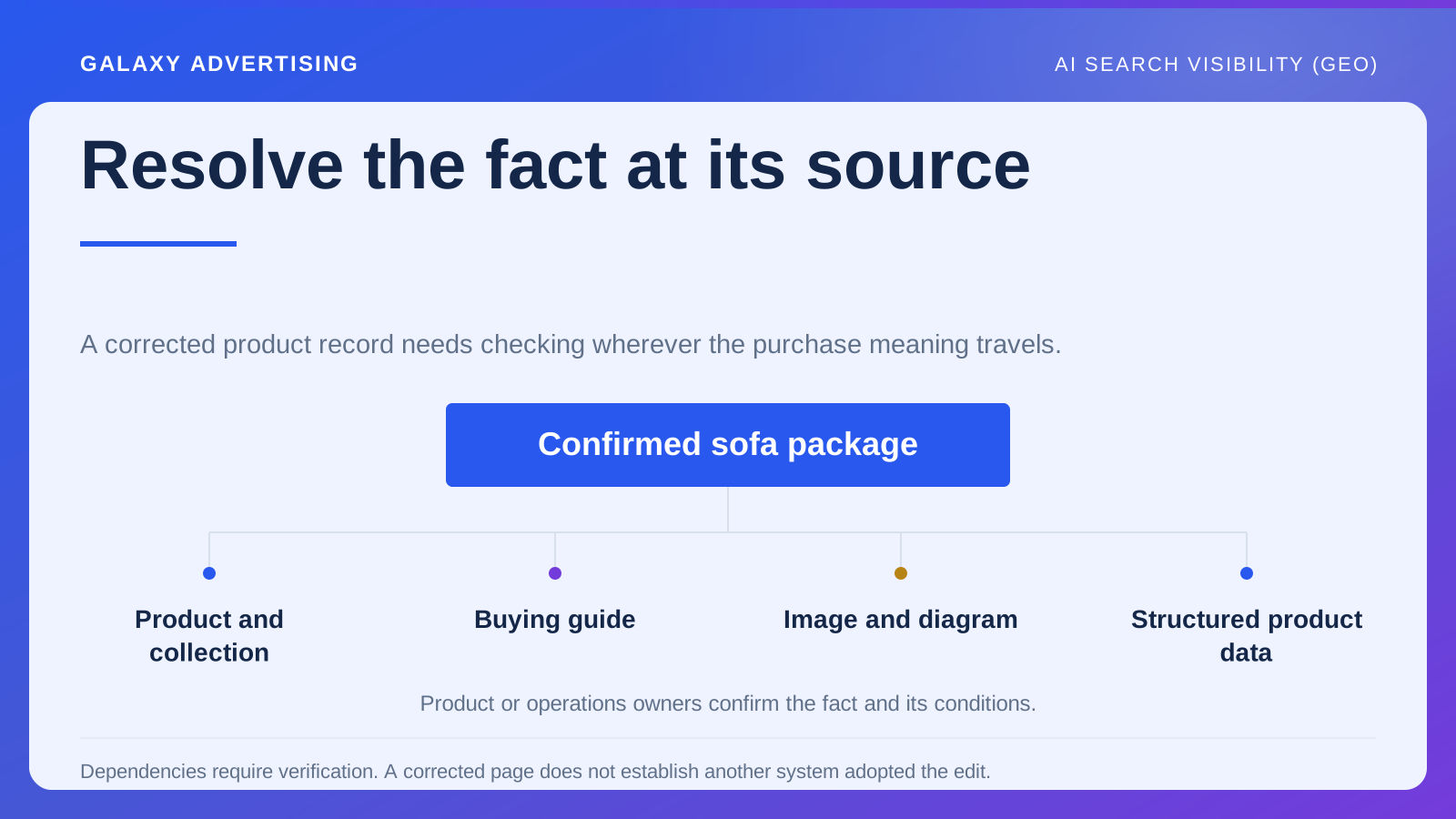
Inspect relevant product pages, collection introductions, buying guides and service explanations. Include maintained product data your business uses to describe the offer elsewhere. The same information can travel beyond the most obvious paragraph.
Start with important destinations people can reasonably encounter while purchasing. Searching every historical reference can become expensive before fixing the live route. Expand when a shared source or repeated contradiction points to a wider problem. You need a useful boundary for the investigation.
Record each discrepancy's location and meaning. Inconsistent copy is too vague to assign. Say whether a page describes another package, omits a condition or uses an obsolete configuration name. A precise observation gives its owner something they can actually verify and correct.
Fix the source, then follow it through
If several pages draw on a maintained record, correct that record first. Verify how the change reaches its destinations. Editing a visible paragraph alone can leave the underlying error waiting to reappear in a later update.
Other explanations may still need individual judgement. A guide might need a revised comparison after a configuration changes, while the product page needs a new package list. One replacement sentence won't necessarily serve both tasks properly.
Check images too. A diagram or lifestyle photograph can show an obsolete arrangement after every written fact has been corrected. Customers form an impression from the combination. Passing the paragraph through proofreading doesn't resolve a contradictory picture beside it. Keep the whole route in view when deciding whether the correction is complete.
Match technical information to the visible offer
Ask the responsible technical person to inspect relevant structured information, facts supplied in a format systems can read, and product data. Does it describe the same offer people can see and purchase? That's the consistency question to settle.
Don't create hidden claims solely for automated systems. Technical information shouldn't contradict the visible product or inflate the promise beyond what the business supports. Another format doesn't justify another version of the offer.
Use current platform documentation for implementation and validation. There isn't one code pattern suitable for every website. A maintained commerce system and a static catalogue may require different technical work even where the commercial fact is identical. Let the technical owner determine the appropriate implementation against the actual setup.
Verify what changed without promising another system's response
Follow the customer route after the update. Inspect relevant pages, option selections, images and supporting records. Confirm the contradiction is resolved, rather than merely edited in one source document. The verification belongs where the customer encounters the information.
Keep the approved reference and verification result. Another team member should be able to identify the current version and understand why earlier wording changed. That makes the correction usable beyond the person who performed it.
If a later AI observation remains inaccurate, record it precisely. Don't assume the platform immediately retrieved or adopted your correction. You can verify what you publish. Your own correct page doesn't reveal another system's update process, so keep that uncertainty separate from the work you've completed.
Treat recurring mismatches as an operating problem
Look for the cause: an outdated supplier feed, separate teams maintaining the same fact or a guide without an owner. Improving that process can prevent the next contradiction more effectively than another proofreading round.
Assign responsibility for material product changes and keep a small dependency record. Someone changing a package needs to know which guides and diagrams rely on it. You don't need a complicated administration system to retain those relationships.
Test the process with a sofa module removed from a package. Which product record changes first? Which diagram depends on it, and who reviews the guide? Follow the dependencies until the route is coherent, then keep the references for next time.
Reliable published information gives every discovery route a sounder foundation. More content before the source is resolved can leave you with more descriptions and a truth that's harder for anyone to identify.