You're comparing dining chair pages and keep meeting the same supplier description: elegant, comfortable and versatile. Your own page says much the same. Then a new AI visibility brief asks for a longer version.
More adjectives won't give customers a clearer basis for choosing. They already have several copies of that answer to read.
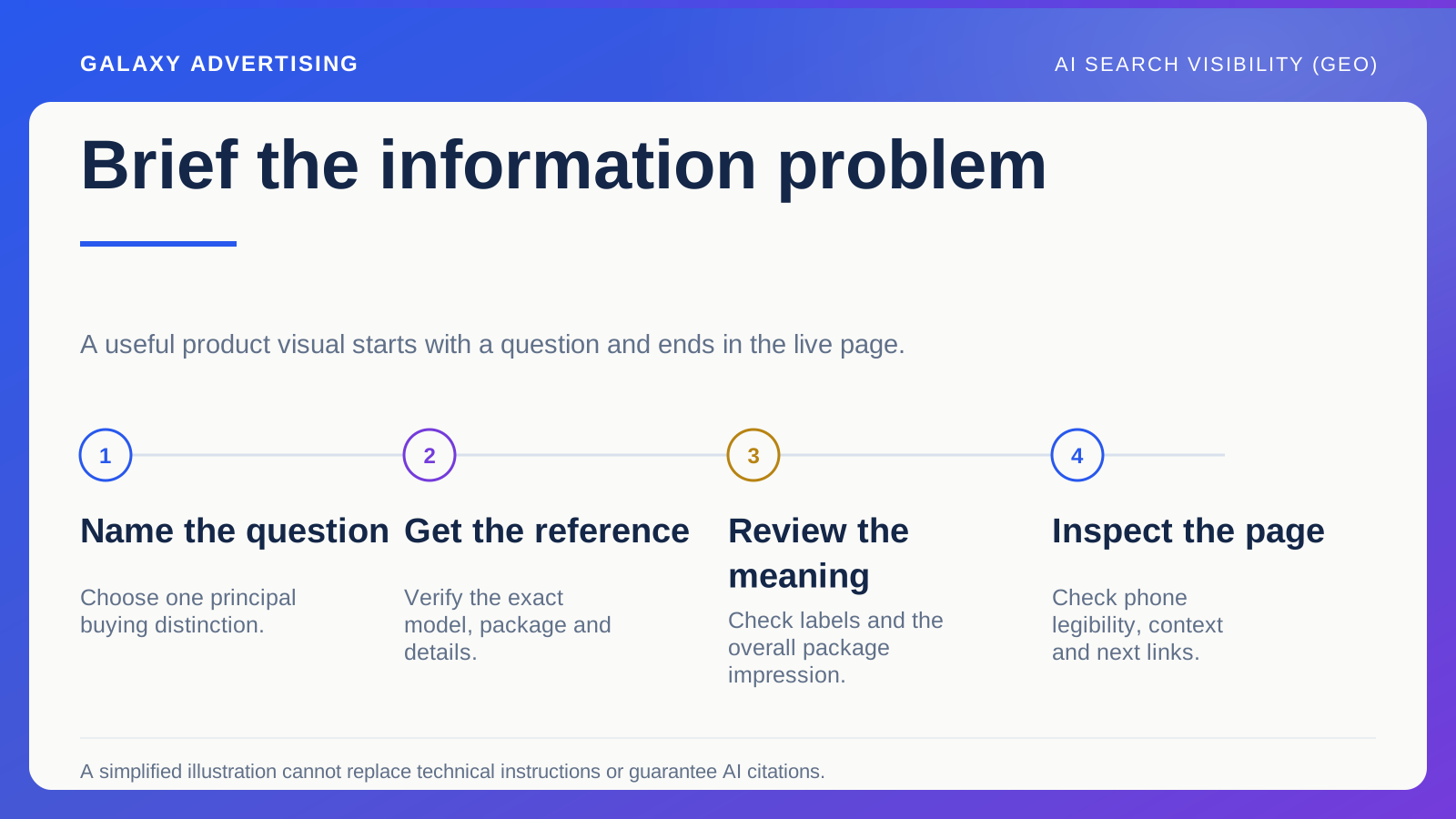
Start with what your business genuinely knows. The exact package you supply, a documented product distinction or a recurring selection problem can give the page something worth adding. Useful original value doesn't need a dramatic claim. It needs relevant knowledge and evidence somebody can inspect.
Begin with what you can verify directly
List what your operation and product records establish. Package contents, available configurations, the service you provide and questions your team regularly helps resolve are all possible starting points. Keep the scope tied to things the business can support.
Separate direct experience from supplied information. Manufacturer specifications can support a product fact. They don't establish that you independently tested performance. Make the provenance clear so the reader can understand where the explanation comes from.
Don't manufacture a personal story to make the article sound authoritative. If nobody performed a comparison, don't describe it as though it happened. You can still explain a documented difference carefully and identify where specialist guidance belongs. The page doesn't need an invented anecdote to make useful knowledge readable.
Choose a recurring question that affects the purchase
For a hypothetical dining chair range, customers may need help distinguishing two upholstery options or understanding which accessories are included. Those questions can change the order, so they give an explanation a practical purpose.
Use the answer to identify documented materials, relevant care information and available configurations. Don't jump from a technical fact to an unsupported promise about durability or suitability. Explain the difference people can actually use.
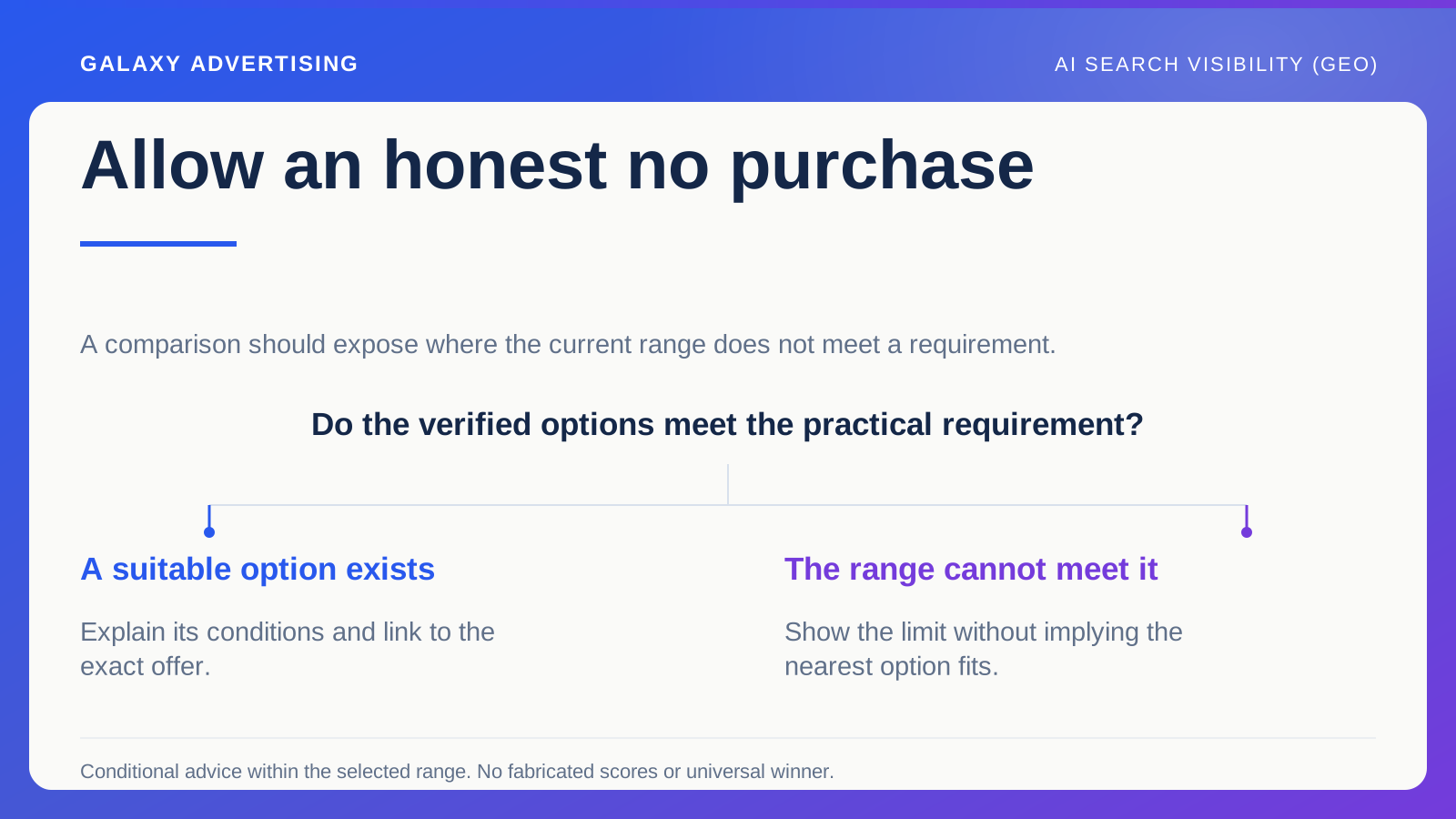
Make the limit visible too. You can help somebody compare options without guaranteeing which suits every household. A specific conditional explanation is more useful than an absolute recommendation ignoring the circumstances behind the question. The aim is to make a decision clearer, rather than remove every possible qualification from the copy.
Match the evidence to the claim
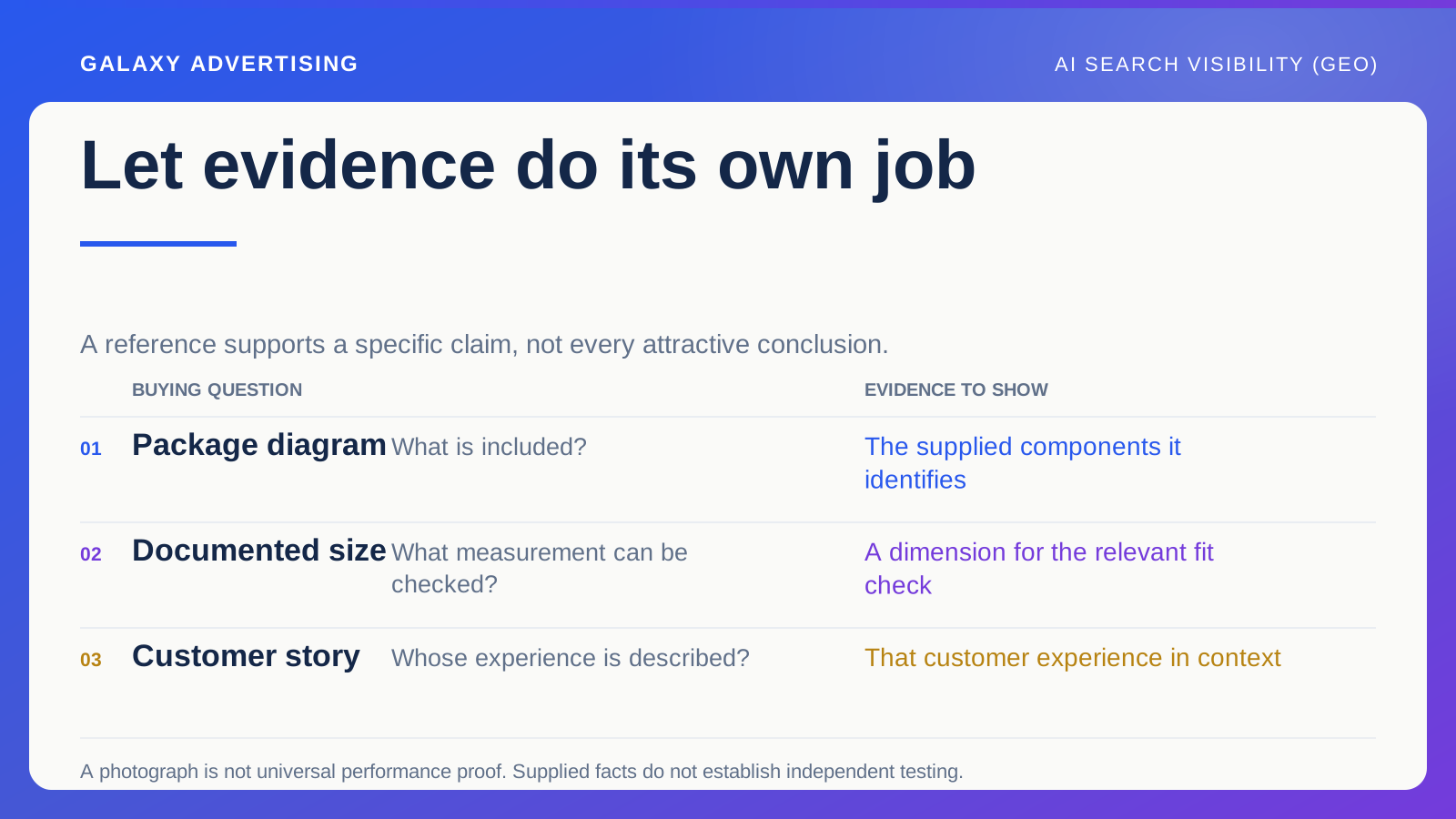
Choose references for the point you're making. A package diagram can establish included components. A documented dimension supports a fit check. A customer's account describes their own experience when kept in its proper context.
Don't ask evidence to prove something else. An attractive customer photograph doesn't establish universal performance. A founder's confidence isn't a technical source. The brief should say what each reference can responsibly support, before the writer turns it into a broader claim.
Keep supporting information close enough to inspect. A labelled reference beside the explanation may help more than a generic sources list detached from the relevant point. The customer needs to understand why that evidence belongs there, rather than simply see that the page has accumulated references.
Offer judgement with its conditions visible
You can explain why you stock a range and which practical differences you think customers should consider. Keep it clear that the page comes from a business selling those products. Useful advice doesn't require pretending the commercial interest isn't there.
Explain when the recommendation applies. If a chair configuration suits a particular arrangement, state the relevant facts and the situations where another option could be more appropriate. Conditional advice helps the reader assess their own circumstances.
Don't arrange every comparison so the most expensive product wins. Helping an unsuitable customer recognise a limit before ordering can avoid disappointment or unnecessary support work. That's part of sound commercial judgement as well.
Ask during editorial review what someone can now decide that supplier copy didn't help them decide. Perhaps the precise package is clearer or documented options can now be compared. If you've added only a more confident opinion, obtain the missing reasoning before publication. This protects the author's name from a claim sounding experienced without inspectable judgement, and helps you commission knowledge rather than merely a longer article.
Arrange the page around the question
Put the answer where readers can find it. Use headings describing practical questions and enough context for each section to make sense. Don't make a long promotional introduction the price of understanding an option.
Give each paragraph a specific job. If it could move unchanged to another product family, ask whether it names the actual distinction, evidence or next action. General encouragement about informed choices doesn't itself inform a choice.
Use diagrams or images where text explains something poorly. Label the configuration or detail accurately. A decorative picture can support the visual experience, but it isn't evidence of an unchecked product fact. Keep the role of the image clear in the surrounding explanation so appearance doesn't quietly become a claim.
Keep visibility promises within the evidence
Google's published guidance for its generative search features emphasises useful, distinctive content and established search foundations. That supports focusing on the customer's task. It doesn't promise a citation for any particular page.
Treat later mentions and links as observations under a defined method. Responses can change for reasons the content team cannot isolate. Adding an experience based paragraph doesn't guarantee a preferred position across AI systems.
Check the value of the improvement independently too. Can customers distinguish options, identify the package or ask better informed questions? Those checks remain worthwhile when answer visibility is uncertain. You can judge whether the explanation became more useful without pretending to control how a system will respond.
Keep the knowledge behind the wording
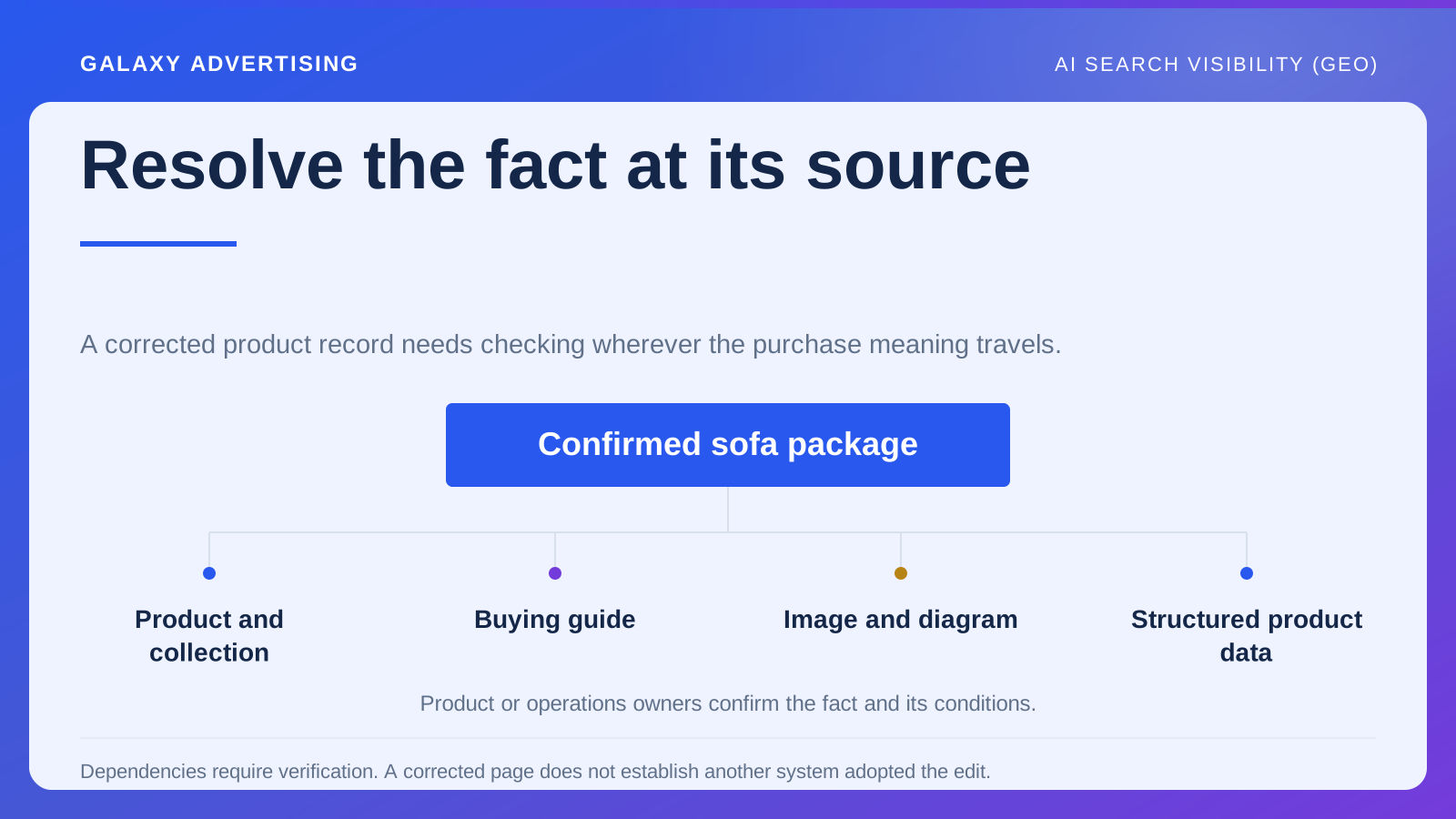
Retain product sources, the responsible owner and the reasoning behind important recommendations. The content becomes easier to maintain when the range, service or staff changes, because the next person can find its basis.
Invite the product team to challenge claims made too broad during editing. Polishing can turn a conditional explanation into a universal promise. Accuracy review needs to check meaning alongside spelling.
The page earns attention when useful knowledge becomes clear. It doesn't need to pretend you've tested every alternative or discovered a secret ranking instruction. Helping a real customer understand a precise decision gives the content something a longer version of familiar promotional copy cannot supply.