A garden furniture guide can praise three materials and still leave the customer unable to choose between them. If every section offers positive adjectives and the conclusion favours the highest price, storage, care and intended use can get lost along the way.
The page looks like a comparison. The reader may have gained little beyond several reasons to admire your range.
Make the boundaries visible instead. Define the question, preserve conditions from reliable sources and explain where an option may not fit. That gives customers a buying resource, rather than another page repeating best garden furniture in different forms.
Say exactly what you are comparing
State the selection and its limits. You might compare materials in your current range, configurations of one product or complete packages available from your business. Each is a legitimate scope if the reader understands it.
Don't imply you've evaluated the whole market when you've considered only stocked products. A bounded commercial guide can be useful. It needs a clear explanation of why those alternatives were selected, rather than a broader claim the work doesn't support.
Compare equivalent units where needed. A complete package and a single component shouldn't appear as directly comparable price choices without explanation. Help the reader understand a meaningful difference instead of manufacturing one through inconsistent definitions. The apparent price comparison is useful only when people can see what each price actually includes.
Pick the differences that affect suitability
Use the practical questions customers bring to your range. For a hypothetical outdoor furniture guide, storage, manufacturer care information and available configurations may matter. Explain why each criterion affects the choice the customer needs to make.
Don't rank attributes simply because they're easy to describe. A lengthy list can obscure the few distinctions that change suitability. More categories don't automatically make the judgement better informed.
Keep criteria consistent across alternatives where that's fair. Discussing one material mainly through appearance and another only through maintenance can be persuasive without informing a fair comparison. The customer needs enough stability to understand the tradeoff. Make the reasoning visible rather than letting unequal treatment quietly steer the conclusion towards your preferred option.
Keep the conditions attached to the claim
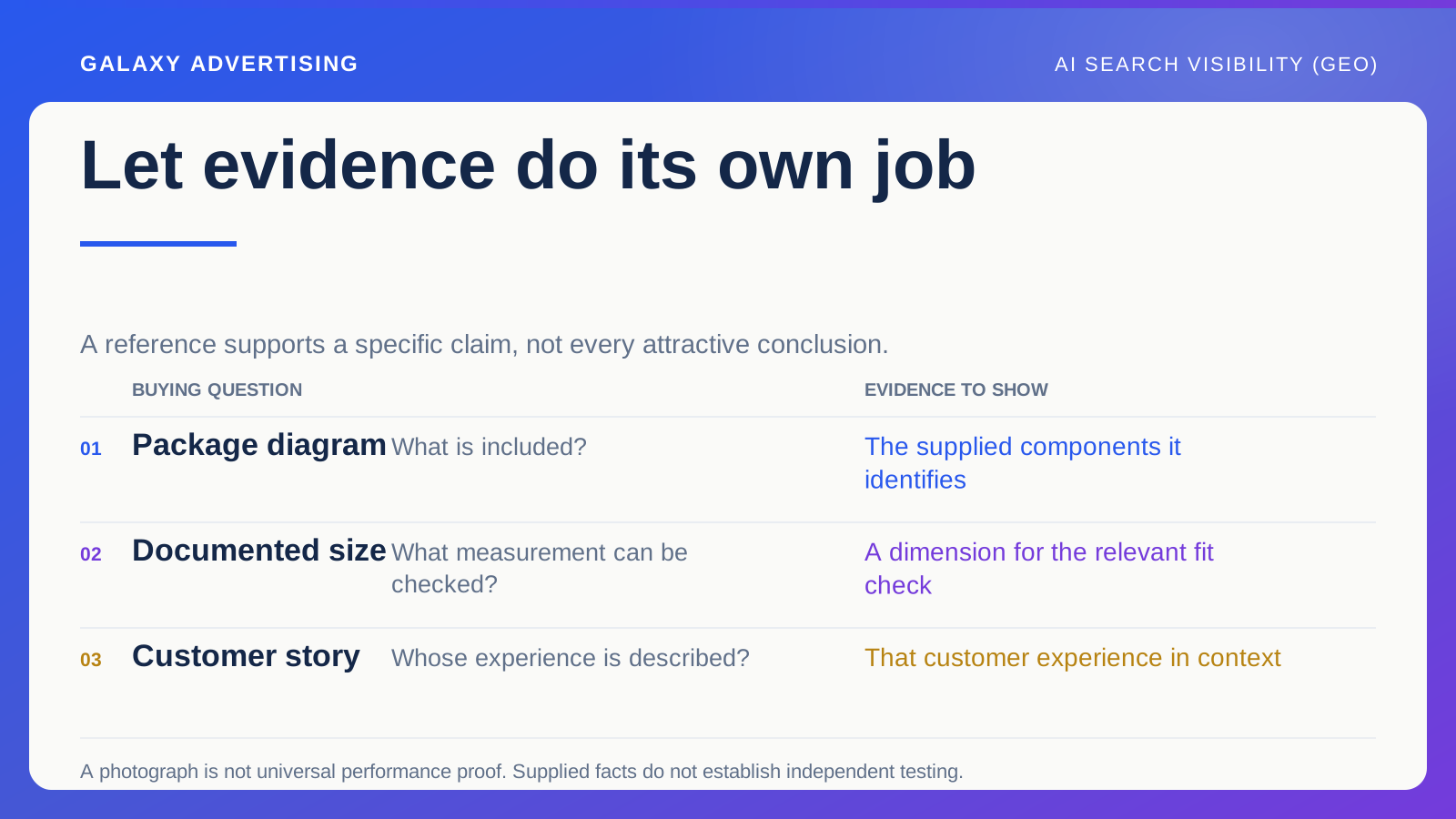
Use reliable product or manufacturer information for factual distinctions. Retain qualifications that materially affect meaning, even when they make a comparison less compact. Shortening a table isn't a good reason to remove the condition that makes its claim accurate.
Don't turn a care instruction into a durability promise the source doesn't support. A material description doesn't establish suitability for every climate, household or use either. Stay within what the reference can actually tell you.
Say when information is incomplete or not directly comparable. An honestly explained blank field helps more than an invented score. Apparent precision can make a weak comparison harder for customers to challenge, particularly when they can't see how a judgement was reached. Give them the boundary as well as the result.
Explain when each option deserves consideration
Use documented characteristics to describe a sensible case for each alternative. Then identify the practical question that might make it less appropriate. That's what turns a list of features into conditional buying advice.
You don't have to pretend every option is equally strong for every purpose. Tie judgement to the customer's task rather than the price point your business would prefer them to choose. A useful recommendation needs circumstances, not just enthusiasm.
For the hypothetical range, restricted storage may require checking dimensions and the actual arrangement. A broad material category cannot settle that. Recognise when the decision moves to configuration level, so the category guide doesn't claim to answer more than its explanation supports. Point people towards the detail that can settle their remaining question.
Separate your service from the material
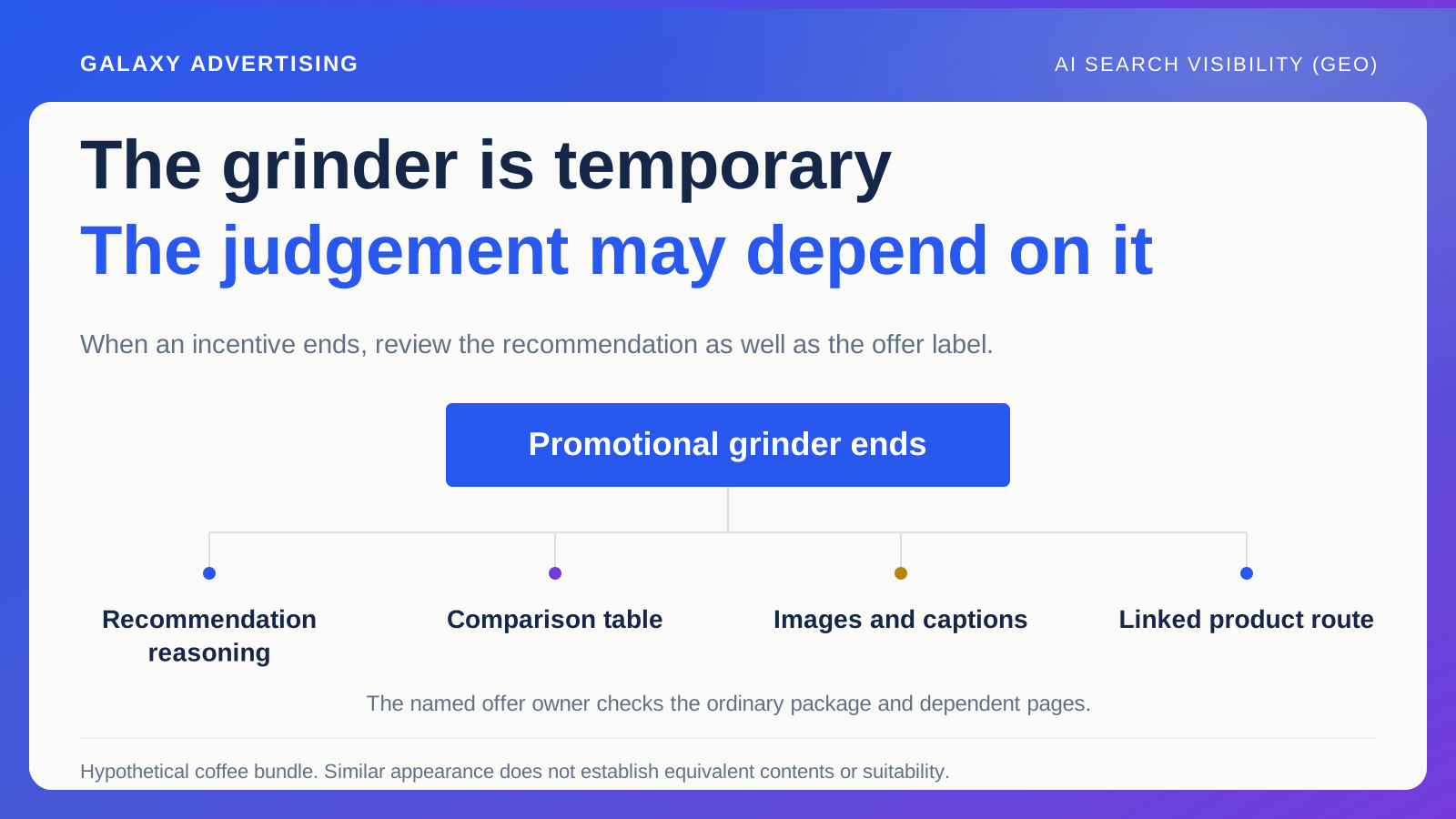
Delivery, package contents and support can change the complete offer without altering its underlying material. Explain them separately. The customer should understand whether you're comparing product characteristics or what your business provides around the product.
Attributing your delivery benefit to the material itself makes later reuse confusing. Another item in that category may not receive the same service. Keep the relationship precise enough to remain meaningful beyond the immediate example.
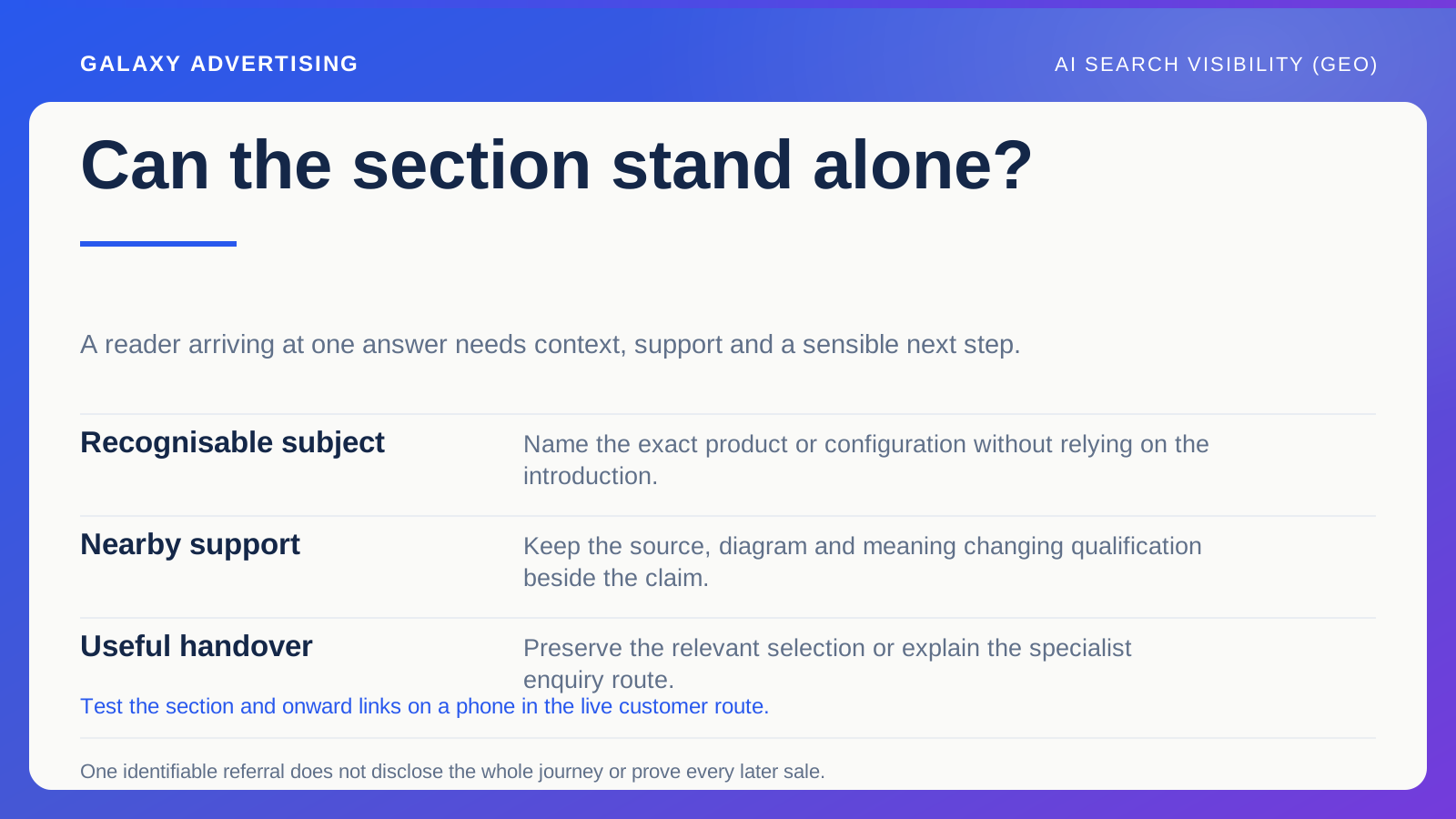
Link to exact offers where package details and current conditions can be checked. Don't send every conclusion to an unfiltered catalogue. That makes customers repeat the selection process the guide was supposed to help them complete. The next step should preserve the relevant distinction while allowing them to inspect the actual purchase.
Can the guide honestly lead to no purchase?
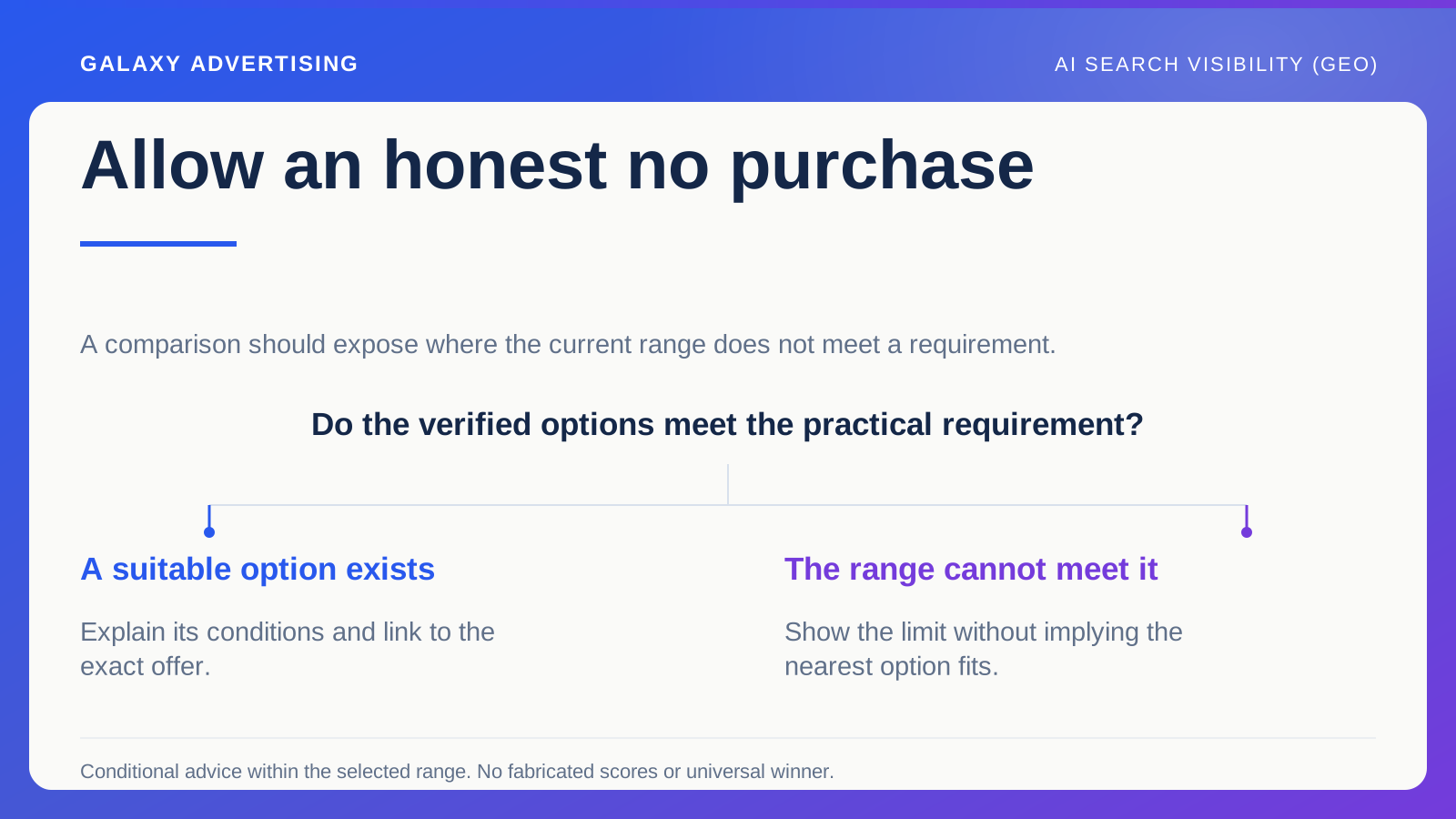
Ask whether a plausible customer could conclude that none of these options meets their needs. If the page makes that impossible, it may be concealing its own limits. Suitability includes recognising when your current selection isn't right.
An unsuitable order can create disappointment, returns or support work. Helping someone recognise they need another arrangement can therefore make commercial sense even without an immediate sale. That gives honest boundaries a practical purpose for the business too.
Have a product specialist challenge the reasoning. Which qualification was lost? Which criterion received too much weight? Does the recommendation follow from the information? Approval should examine judgement, rather than merely agree that the prose sounds knowledgeable.
Try a customer needing a configuration or documented service you don't supply. Does the guide reveal that limit or invite them to assume the nearest option will suffice? Revise the boundary if needed. You don't have to promote a competitor to be honest about your own range and the information required to proceed responsibly.
Judge usefulness beyond the citation
After publication, inspect relevant enquiries, product exploration and the accuracy of the live route. Defined AI answer observations can add context, but they shouldn't become the only test of value.
If cited, record the role and whether the linked section supports the statement. Referencing one fact isn't the same as recommending the retailer or preferring the whole range.
A thoughtful comparison earns its usefulness through verified distinctions and practical judgement. It doesn't need a universal winner or fabricated score. The customer should leave better equipped to select an appropriate offer, including the possibility that your current range isn't the fit they need.