Several hundred AI search prompts can give a furniture retailer very little guidance about what customers need before choosing. Repeating best furniture shop with a different adjective makes the list longer. It doesn't necessarily make the customer task clearer.
The content team can look busy covering phrases and still miss the uncertainty holding up a purchase. Comprehensive looking isn't the same as useful.
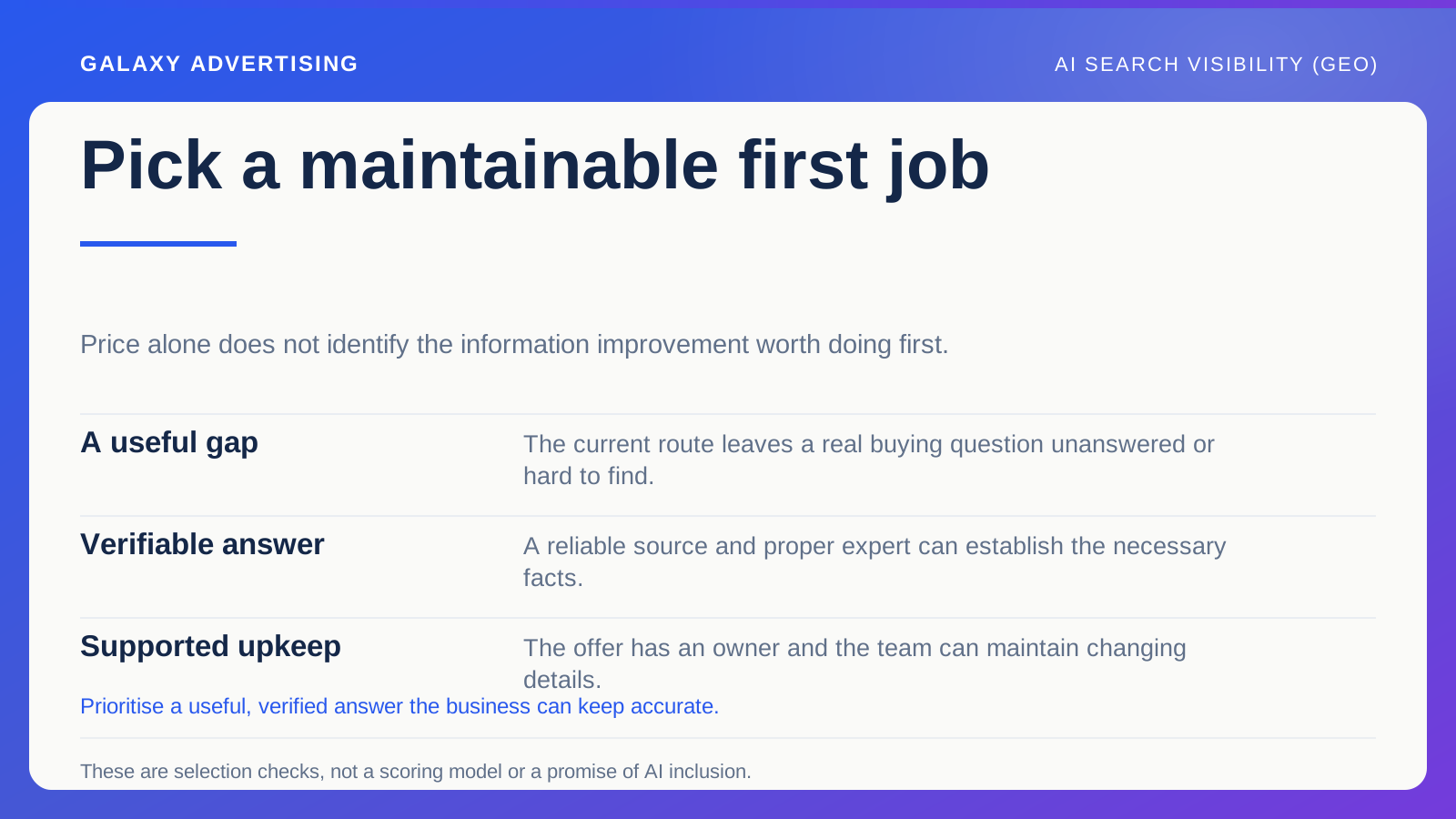
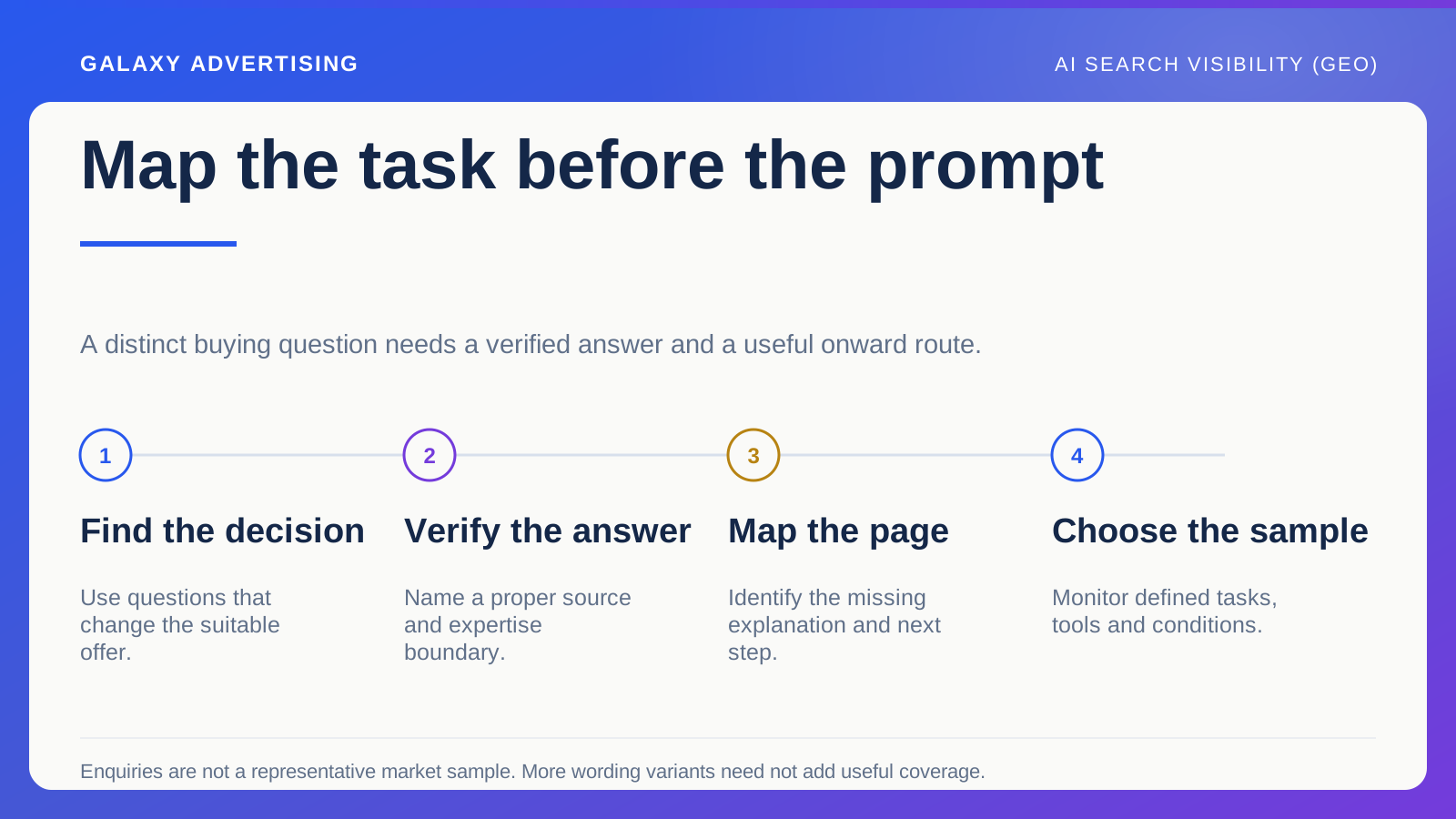
Start with the decision the customer needs to make. Build a question portfolio, a set of distinct buying questions, around answers you can verify and the commercial route each should support. The value lies in useful coverage, rather than the largest possible list.
Look for questions that change the choice
Review enquiries, sales conversations and information people request before ordering. Look for questions that change the suitable size, material, configuration or service arrangement. Those distinctions give your information work something practical to do.
A hypothetical dining table retailer might hear questions about extending mechanisms, seating arrangements and delivery access. Each can require a different explanation or destination. Rephrasing best dining table five ways doesn't necessarily add that variety of useful tasks.
Keep the source of each question internally without circulating unnecessary customer details. A handful of enquiries can expose an information gap. It isn't a statistically representative account of the whole market. Use it to identify work worth investigating, while keeping the limits of that evidence visible to the people commissioning content.
Separate choosing a type from checking an item
Someone comparing fixed and extending tables needs a different explanation from someone checking one model's dimensions. Keep category choice and exact offer checks distinct. The customer has already done different amounts of selection work.
That gives pages clear roles. A guide explains the tradeoff, a focused collection supports selection and a product page supplies the details of one purchase. Connect them instead of making each repeat the same introduction.
Don't push every question towards a general service or collection page. The right route depends on what remains undecided. If a visitor knows the model, give them the direct factual answer they need. Another broad explanation of why dining furniture matters simply places extra reading between them and their decision.
Check which answers belong to your expertise
Some questions fall within your product knowledge. Others need manufacturer guidance or specialist assessment. Draw that boundary before commissioning the content, so the writer knows which facts can responsibly be established.
You can explain the configuration supplied and documented dimensions without improvising a structural recommendation or safety assessment. A useful answer can direct the customer to the appropriate source and explain what information they need to obtain.
Mark unsupported assumptions in the brief. If accessory compatibility is unconfirmed, the next task is verification. Smooth persuasive wording doesn't resolve missing evidence, even when it resembles other online answers. A paragraph can sound complete and still contain a question nobody has properly answered. Don't mistake confidence of expression for a verified product fact.
Keep brand checks separate from discovery
A question naming your retailer helps you assess how the business is described. It doesn't assess the same thing as an unfamiliar customer's category research. Both can have a purpose, provided the purpose remains visible.
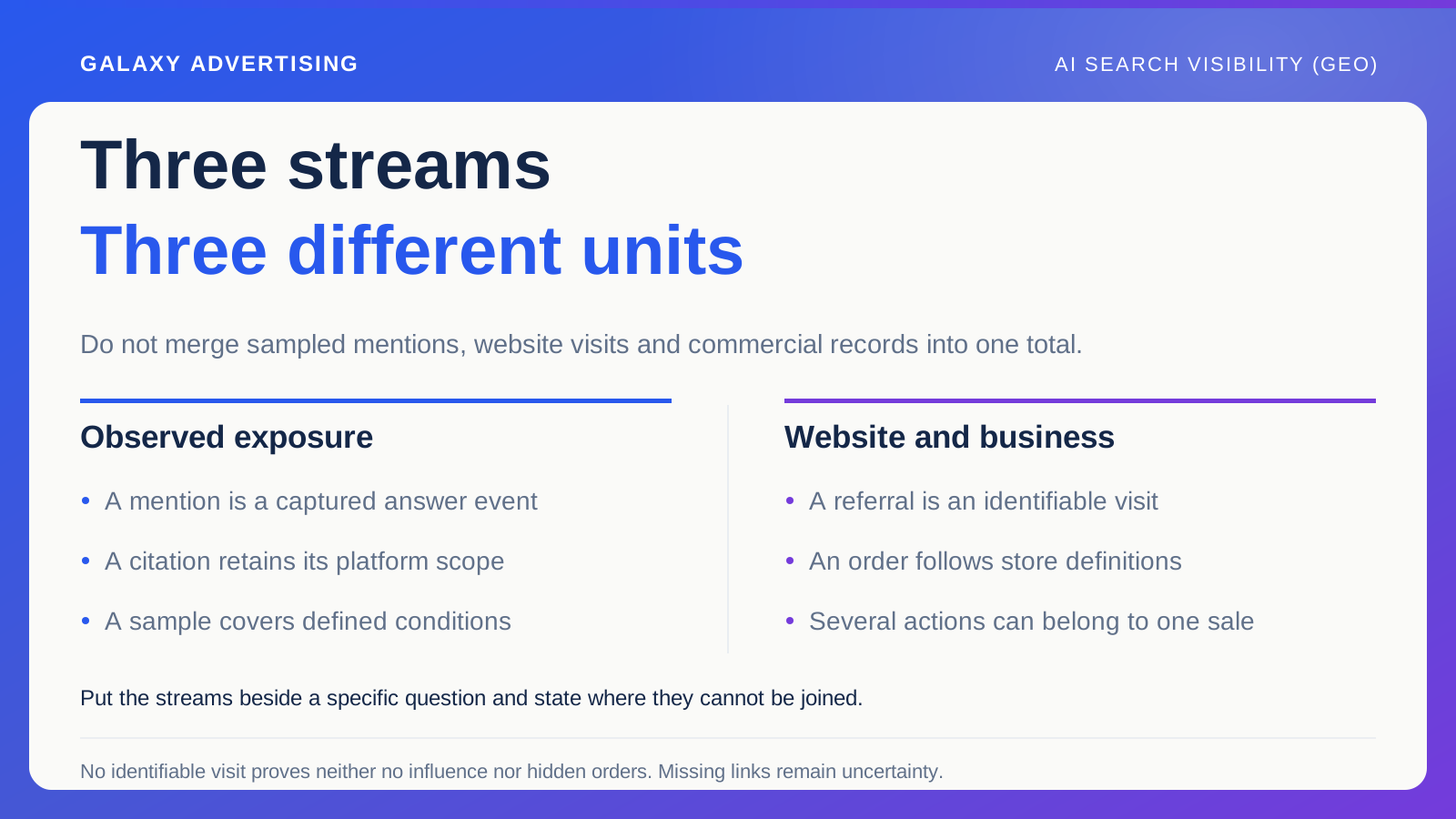
Don't combine them into an unexplained visibility percentage. Your brand might appear often when explicitly named and rarely in broad comparisons. That difference becomes commercially informative only when you preserve the categories instead of blending them.
Separate product identity checks from recommendation questions too. Confirming that a model's package is described accurately is valuable information quality work. It doesn't establish that your brand has earned an independent preference over every competing offer. Report the task you actually checked, rather than assigning a stronger meaning because the answer was favourable.
Map the question to an answer and next step
For each distinct task, name the existing page that should answer it. Record what's missing, which source can verify it and where a suitable customer should go next. This gives the proposed work a clear place in the route.
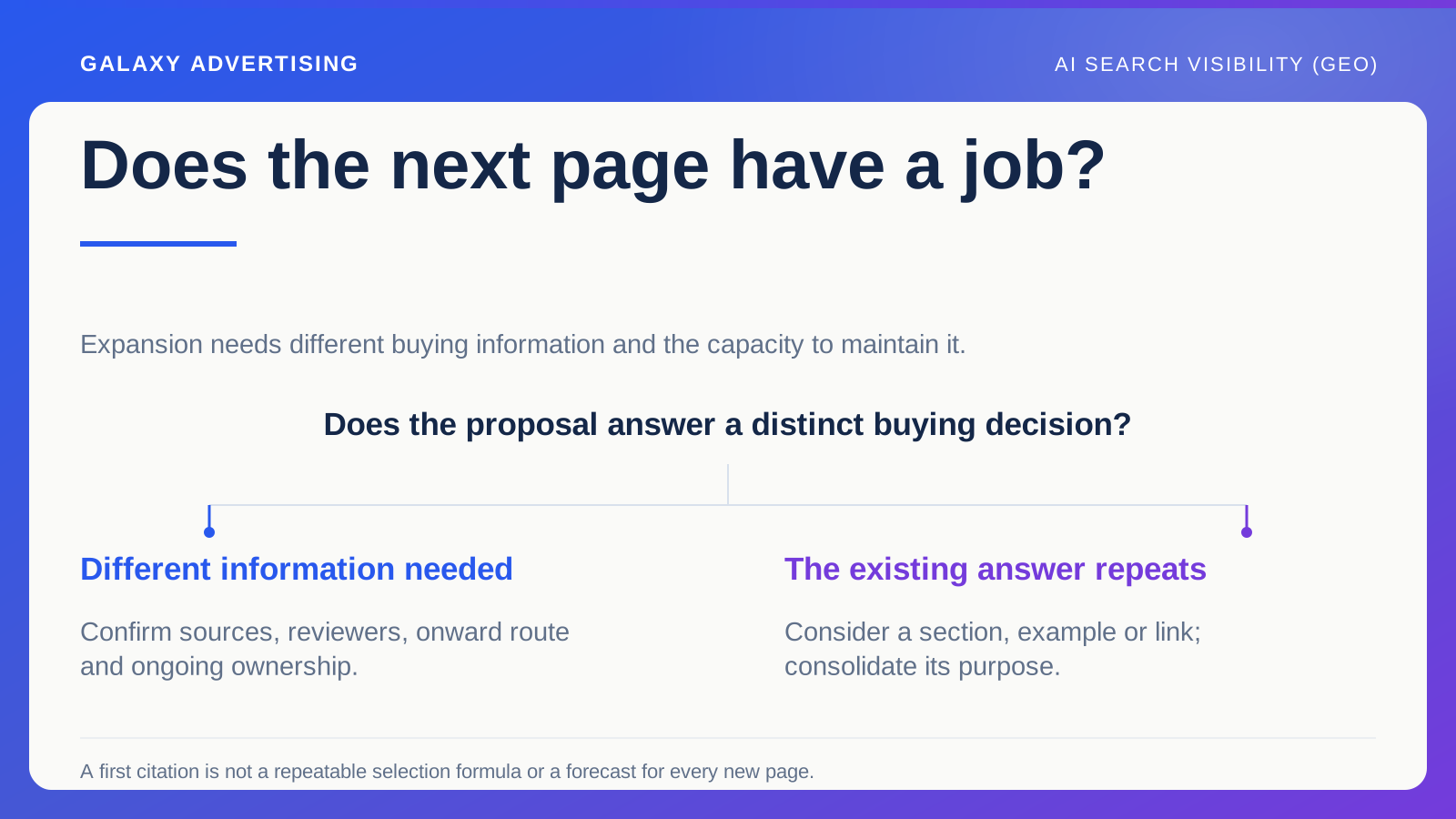
Don't automatically commission another article. An option label, configuration diagram or clearer service explanation may be the right answer. A separate guide needs a distinct job the current pages don't perform well.
Use the map to prevent overlap. If proposed pages answer the same practical question with similar examples, combine their purpose before production. Fewer useful pages are easier to maintain and give people a clearer way through the range.
Try the map on one concrete enquiry before expanding. If someone asks whether an extending table remains suitable when closed, identify the exact configuration information and product route needed. A guide explaining only how attractive extending tables are has lost the task. That check gives reviewers a practical way to challenge the proposed page before it becomes another broad introduction.
Observe a sample you can inspect properly
Once the question portfolio is defined, select a manageable monitoring sample. Record why each question belongs and which decision observing it might inform. The choice should make sense to another person reviewing the work.
Keep the boundary visible, including tools and observation conditions. The sample doesn't prove that every customer asks those words or receives that answer. It's an instrument for monitoring a defined set of checks.
Expand when new questions add a practical uncertainty, product family or buying situation. Another adjective can generate another output without adding another customer task. More observation is useful when it extends coverage, rather than simply producing more material to review.
Turn the finding into a specific correction
When an observation reveals missing or inaccurate information, specify the page, verified fact and owner. That's an actionable correction. A general instruction to improve AI visibility leaves the underlying job unclear.
Check that the corrected page helps the customer and preserves a coherent onward route. Later answer observations can provide context, but a changed response doesn't automatically prove one edit caused it.
A useful question portfolio connects what you monitor with information you can improve. Its strongest question is one whose answer changes somebody's understanding of a purchase, rather than merely creating another entry in the tracking spreadsheet.