 ChatGPT Ads
Which customer question is this advert actually helping you answer? If you're selling garden rooms, “beautiful garden rooms” leaves a lot unresolved. An office versus an extension, room for equipment and a difficult garden corner are different buying situations, even if they lead to the same product category.
Your useful starting point is the task your offer can help with. You don't need access to someone's private conversation to choose it. You need an honest view of the product and the practical decisions customers already bring to your business.
Start with the questions you already receive
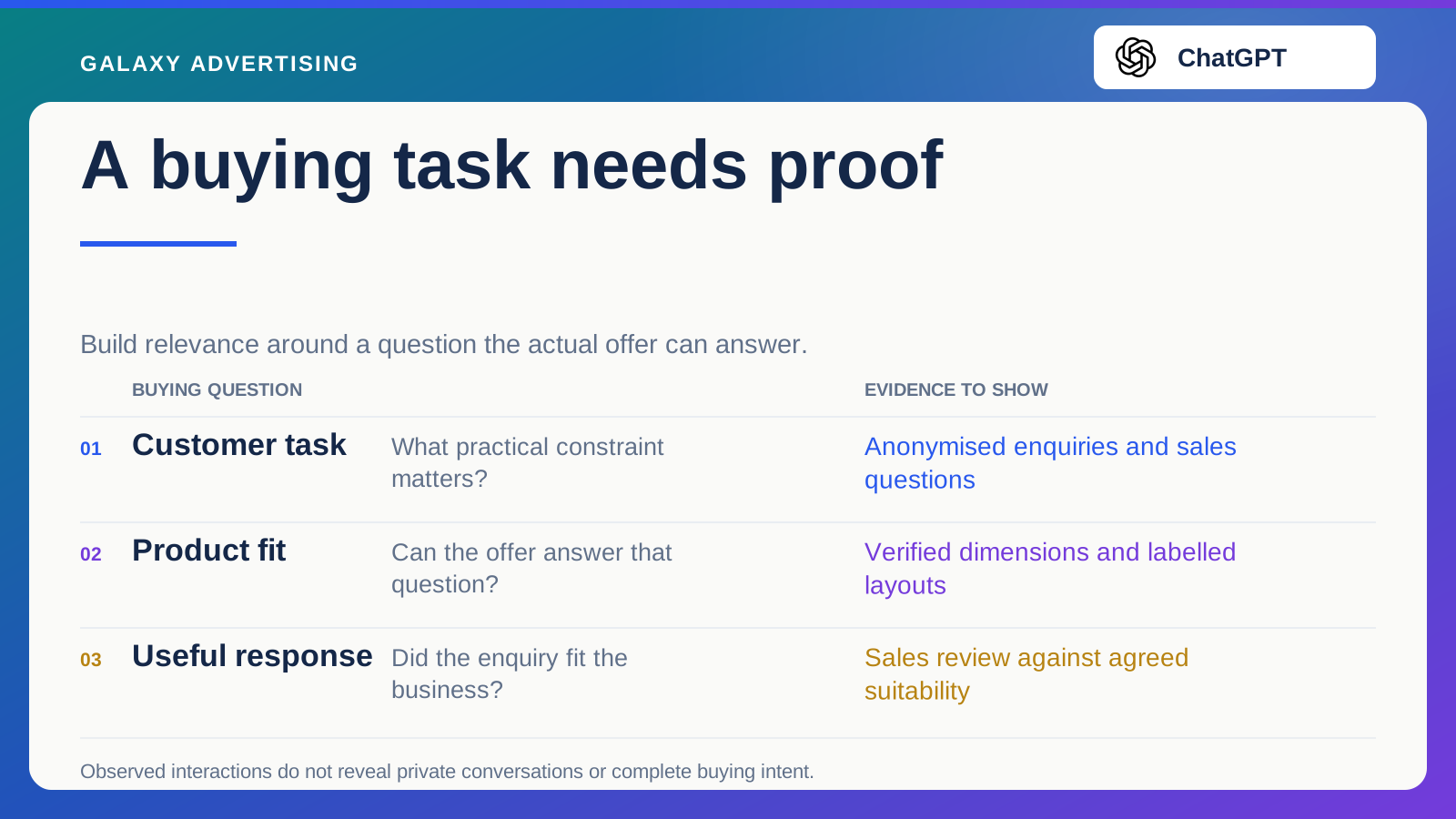
Read enquiries, sales conversations and website questions. Capture the customer's wording under your internal privacy controls, then strip identifying details out of the creative brief. Understanding a recurring task doesn't require circulating someone's personal circumstances.
Be careful with the leap from question to conclusion. Several insulation enquiries suggest something worth explaining. They don't establish that every garden office buyer values insulation above price, installation or available space. Note where the question came from and how often you encounter it.
Look for situations that change the product choice. Occasional hobby use can lead to a different discussion from daily work. You don't need an elaborate personality profile when a practical constraint already gives you a clearer way to communicate.
Give the advert a decision it can realistically help
Complete this sentence: the customer needs to establish whether this offer is suitable because of a particular constraint. That should point to concrete information. If it fits almost everything you sell, it needs sharpening.
In a hypothetical garden office example, the question might be whether there is working space for two desks. You would need the actual model, internal dimensions and a sensible route to installation information. A lovely exterior photograph leaves the central question unanswered.
Keep the task manageable. An advert cannot settle every planning, construction and household decision. It can introduce an accurate offer and help someone find the facts for their next stage. Name that stage in the brief. An immediate order isn't the only action worth supporting.
Relevance doesn't mean you know the private conversation
OpenAI explains that advertisers don't receive users' private conversations. Don't promise that your team can inspect each buyer's exact discussion or tailor a page around undisclosed personal details.
Use the campaign controls and reporting your account actually has. Your commercial hypothesis can concern a type of buying question without claiming complete knowledge of each visitor's motivation. Keep that distinction intact in the proposal, creative brief and performance explanation.
The same care belongs in your interpretation. A visit to a dimensions guide could indicate a fit question. It doesn't reveal the person's complete situation. Call it an observed interaction, rather than claiming you know what they said or intended.
Put evidence beside the promise
For a proposition about space, use verified dimensions, clearly labelled layouts and an explanation of what each measurement includes. If optional furniture appears in the room visual, distinguish the illustrative layout from the package someone would buy.
Keep that evidence close to the claim it supports. Then ask a product specialist to challenge the brief. Can you supply the configuration shown? Have you left out an important qualification? Has simplifying a practical constraint made the offer look more suitable than it really is?
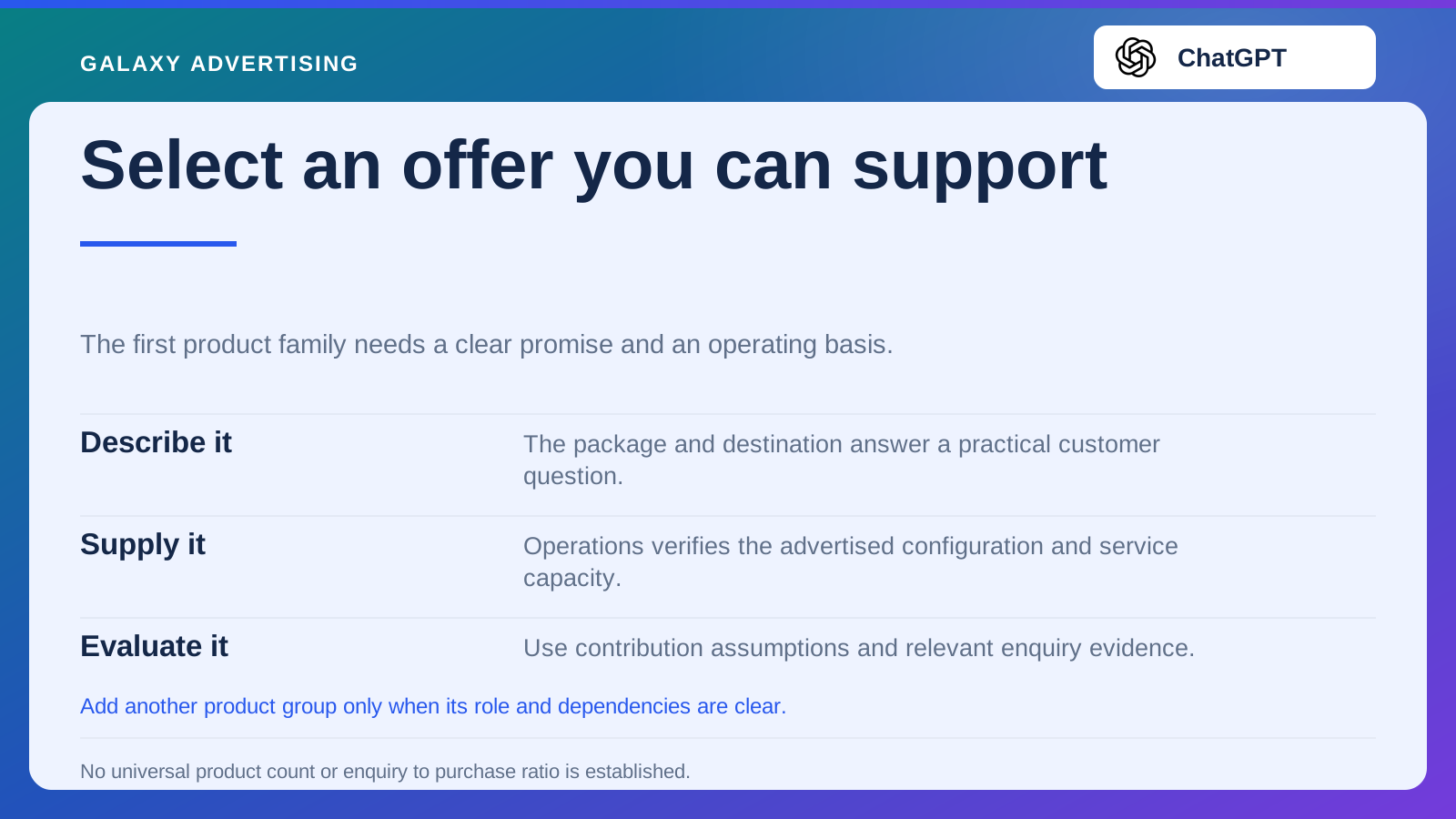
You may need to change the idea. If an appealing claim cannot be supported accurately, find another useful proposition. Paying to attract attention to a question your product page cannot responsibly answer gives neither you nor the buyer much to work with. A narrower, supported argument is easier to judge.
Record another possible explanation for the original enquiry as well. Someone asking about insulation could be comparing specifications without planning to order soon. They could be checking an existing purchase. Neither possibility makes the question irrelevant.
It does stop a single piece of customer language becoming a supposedly guaranteed purchase signal. It also helps your writer choose information useful across plausible situations, rather than building the whole advert around an assumption nobody has checked.
Let the page carry on with the same question
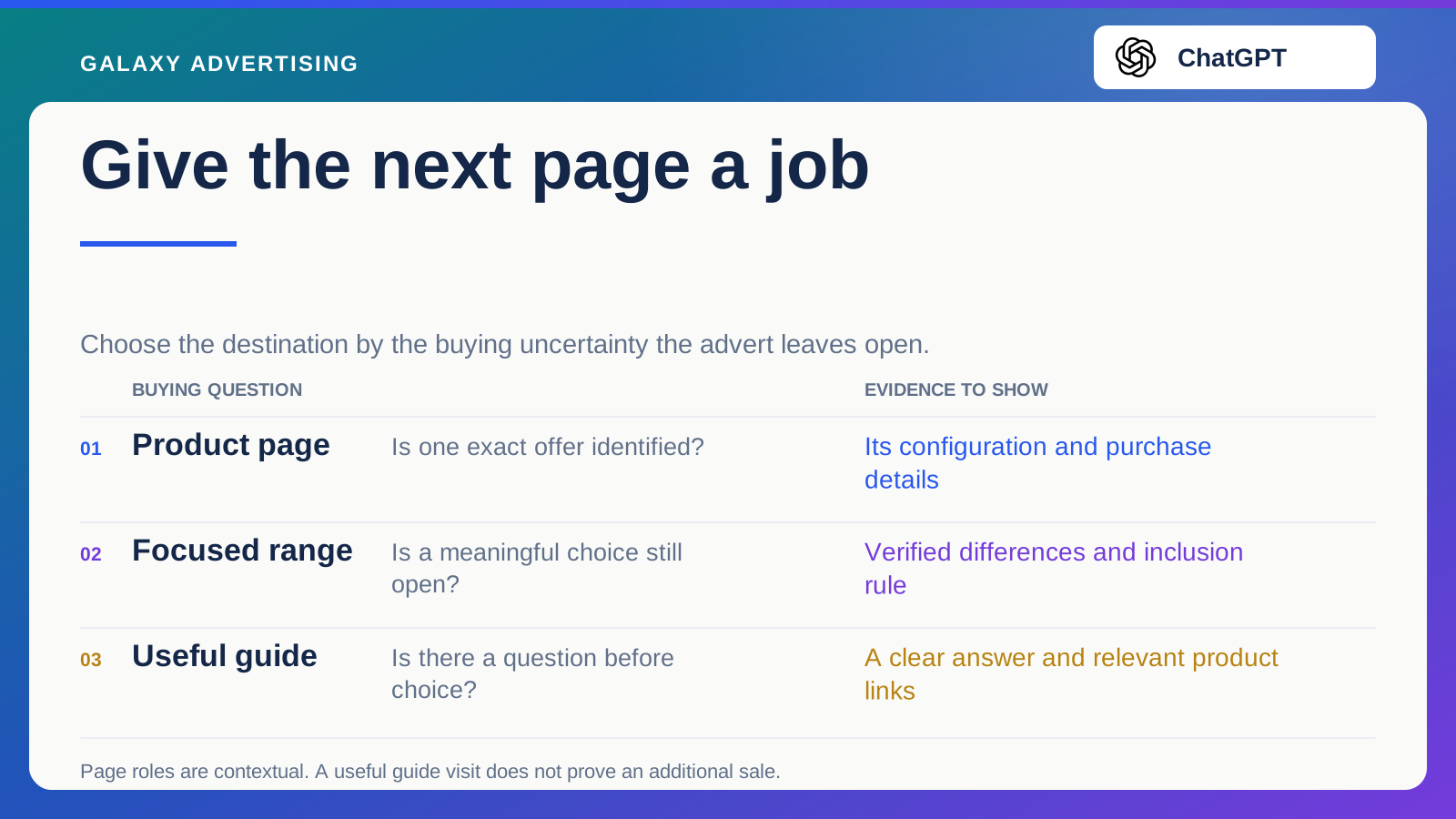
Follow the message through to its actual destination. Someone interested in space for two desks should find the relevant model and measurements without hunting across your range. Use descriptive headings and show the available configuration consistently.
Help with the next practical question, too. Once dimensions make sense, access, installation or package contents may matter. Link to the appropriate explanation, and keep specialist advice and product facts within your business's actual expertise.
Resist putting every uncertainty behind a lead form. Basic buying information should not be a reward for giving you contact details. Publish the reliable facts you can explain clearly, then make the enquiry route useful for questions that need human help.
That distinction matters for the customer and for your team. A submitted form is easier to count than a better informed decision, but the count alone doesn't tell you whether your offer has become clearer.
Look at what the enquiry tells you
Before launch, agree what a commercially suitable enquiry looks like. For the hypothetical garden office, that might involve the intended model, a realistic delivery area and a question you can help resolve. Define relevance to your business instead of chasing the largest lead count.
Review a sample with sales or customer service. Have people understood the offer? Are they asking a sensible next question, or trying to correct a misunderstanding your advert created? Both observations help. They lead to different production decisions.
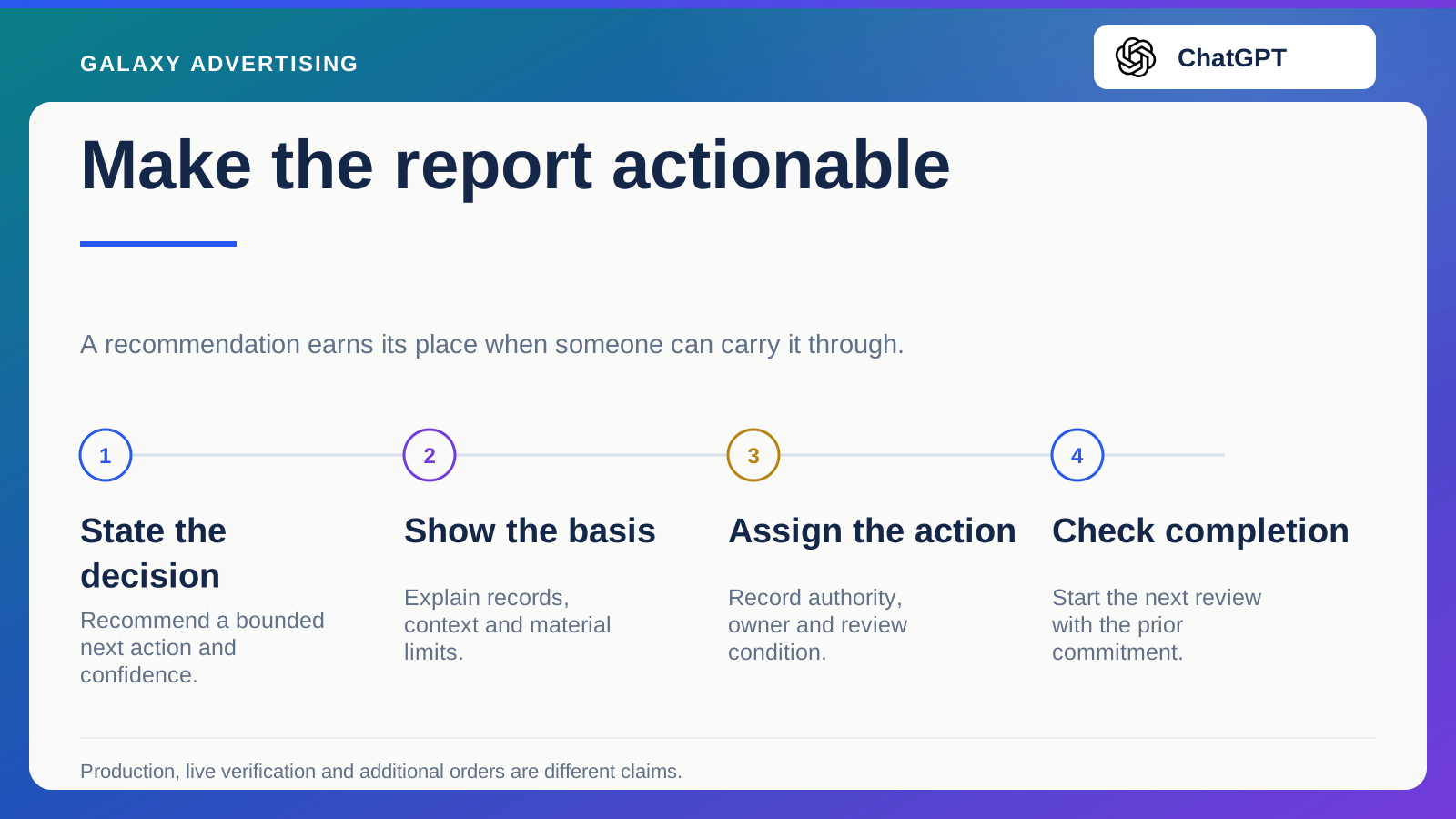
Keep your eventual conclusion just as specific. The campaign could suggest that a particular proposition deserves more investigation. It cannot give you complete knowledge of conversational intent.
The buying question is useful because it gives your offer a purpose. Keep that purpose grounded in what customers ask, what the product can support and what you can actually observe. You can make the next decision clearer without pretending to know the conversation that brought someone to it.