Fluent advertising copy cannot establish which children's bed package your business is actually selling.
An agency can receive a supplier catalogue and room images, yet find different package names in each and a website arrangement that isn't clearly identified in either. It can write persuasively. It can't responsibly resolve those missing relationships by looking at the pictures.
The brief needs to establish who verifies the offer and how facts reach creative, website and campaign teams. Communicating product information and determining technical suitability are different responsibilities. Make that boundary clear before production begins.
Explain the business problem before listing activities
What needs improving? Adults could misunderstand bundle contents, an available range could attract unsuitable enquiries, or configuration context could disappear before staff answer a question. Give the agency the actual task.
Keep it separate from a predetermined production list. More adverts could be useful, but the team needs room to identify information that should be resolved before extra attention arrives. Otherwise, the campaign can simply send more people towards the same ambiguity.
Define the adult buying route your business serves. Help that person investigate an actual offer. Don't invent assumptions about children to make the creative feel more specific. The buying task gives the agency practical context without creating a household story the evidence doesn't support.
Supply a product record somebody can verify
Provide exact model and configuration references, current contents and relevant manufacturer material. Identify the authoritative source and the person who can resolve uncertain or conflicting details.
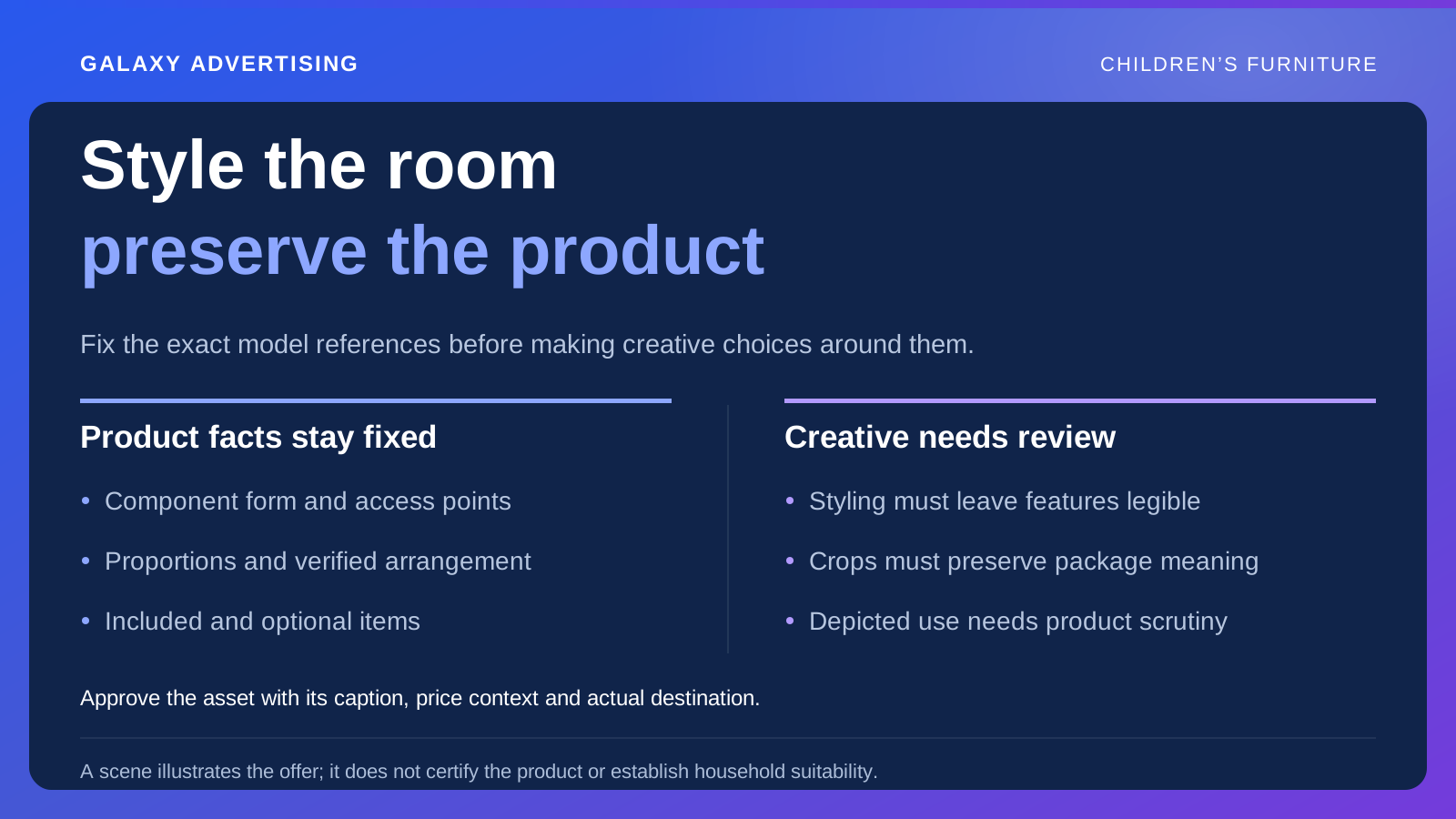
An unlabelled folder isn't an instruction to choose whichever photograph or document seems most complete. A confident description won't establish the relationship between the pictured arrangement and the package available to order.
Keep obsolete references distinguishable from current ones. History can explain a change, but it shouldn't sit beside approved production material without context. Reduce ambiguity before it becomes a polished public promise. The agency needs to know which information it can use, rather than infer approval from where a file was saved.
Make the approval boundary explicit
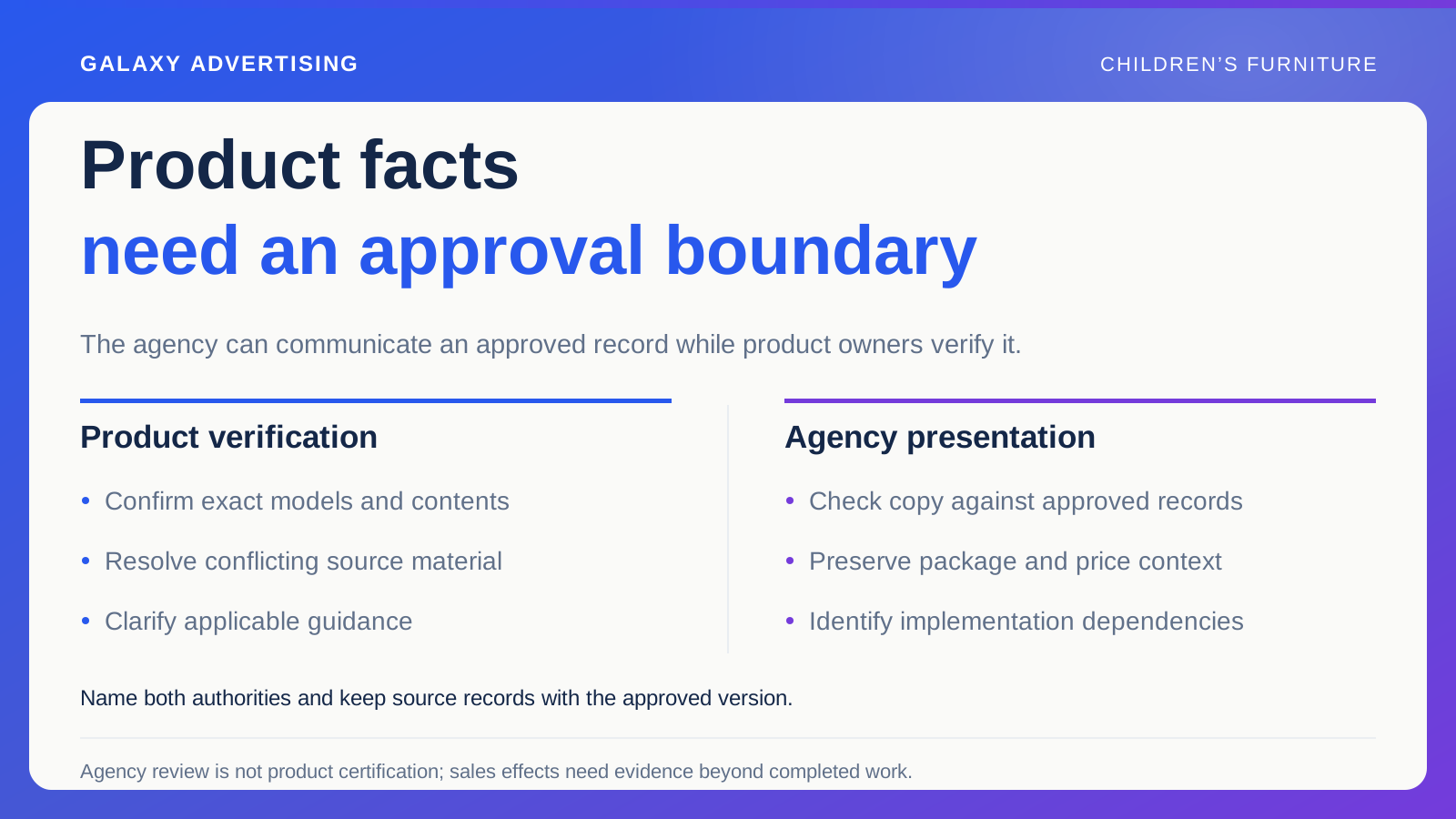
Name who verifies product statements and who approves their commercial presentation. One person can do both in a smaller business. The responsibilities still need separate consideration.
The agency can check copy and imagery against the approved record. That doesn't make the review product certification or a replacement for technical judgement from the responsible source. Describe the check accurately so nobody misunderstands what approval established.
For manufacturer guidance questions, retain relevant wording and conditions or obtain clarification through the product owner. Don't ask a writer to guess what most models probably need in order to simplify an uncertain requirement. The precise product deserves its own verified answer, rather than a familiar category assumption.
Explain the offer behind the room image
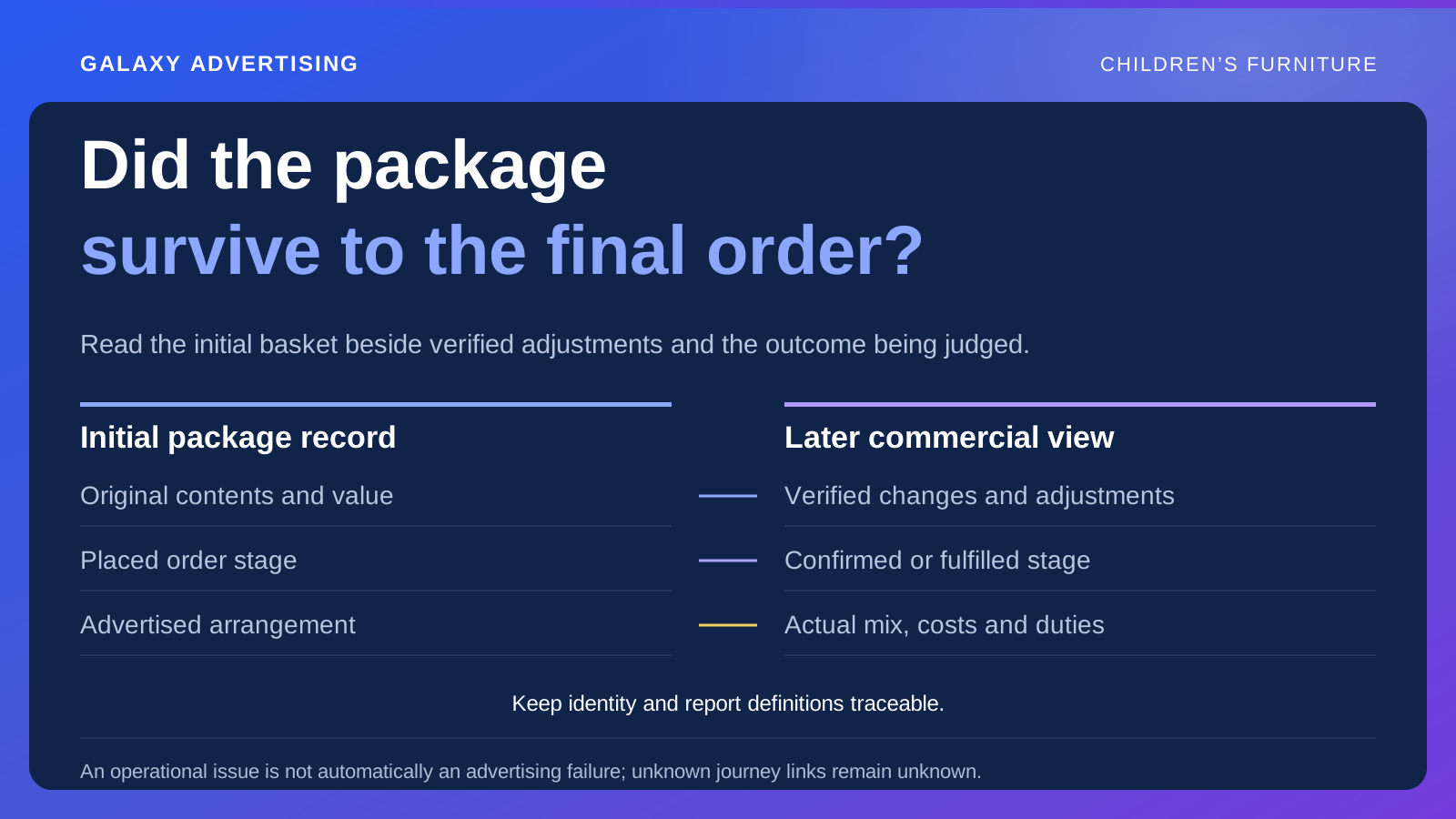
Supply price basis, included components, optional choices and relevant services. A room campaign can imply a broader package than the basket contains unless those boundaries are clear from the start.
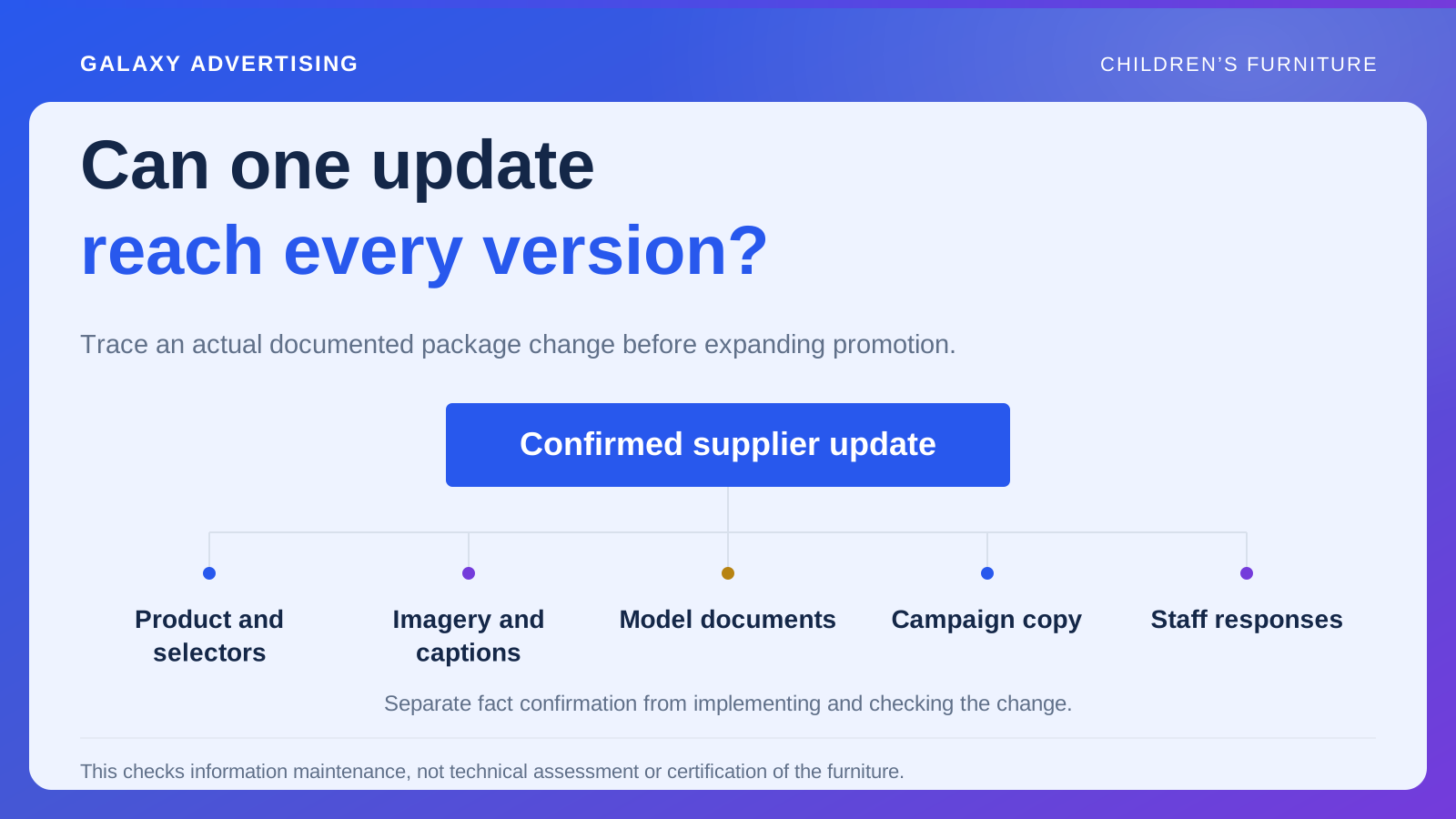
Identify changeable facts and how the agency will hear about updates. Availability, a revised bundle and a changed document link could each require different action in creative and destination. The brief needs an operating route for those changes, rather than assume initial approval lasts indefinitely.
Share the relevant economic basis. Meaningful contribution differences, the money left after the costs included in your calculation, and operational constraints affect which packages deserve promotion. Revenue alone might not justify an acquisition recommendation when included items differ materially between offers.
Follow an adult's question through to its answer
Walk through a representative enquiry with the agency. What model and options reach the receiving team? What information has the customer already supplied? Where does a question requiring verification go?
This supports useful pages and calls to action. A destination inviting a precise package question needs a receiving process that preserves the context. Sending it to a general inbox shouldn't make the adult explain the selection again from the beginning.
Keep information sharing proportionate to the task and your established responsibilities. An anonymised example of a missing component reference can explain the problem without unrelated household details. More personal information doesn't automatically give the agency better commercial understanding. Often, the exact offer context is what was missing.
Share earlier learning without turning it into certainty
Provide relevant creative versions, customer questions and conditions behind earlier decisions. “That bed type doesn't convert” explains less than product mix, availability and information problems behind the observation.
Separate facts from interpretation. Repeated contents questions could justify clearer presentation without proving every unsuccessful visit left for that reason. Keep the useful evidence and the limit together so the next recommendation doesn't overreach.
Let the agency challenge assumptions within its role. Preserve knowledge without turning an unexplained old preference into a permanent rule. Another reviewer should be able to inspect the evidence behind it.
Include a worked document mapping: selected model, available configuration and applicable verified information. This shows how the record is structured. Similar file titles shouldn't be treated as evidence that the documents can be used interchangeably. One traceable example can make that distinction far easier to maintain.
Ask for work you can review and approve
The response should connect proposed work with your task. Name dependencies requiring product confirmation, website implementation or spend approval, with owners. A plan becomes more useful when everyone can see what must happen before another part can proceed.
Agree separate reporting for completed work and commercial observations. An accurate package page is a deliverable. Additional sales require appropriate evidence and limitations. The first shouldn't automatically be presented as proof of the second.
Reliable boundaries let the agency apply creative and commercial judgement without improvising the product facts. That saves uncertainty being discovered halfway through production. Your marketing language should help adults understand the furniture, rather than cover the gaps in what the team can verify about it.