A convincing bedroom image is not proof that it shows the furniture you sell. Move the bed's access point, reshape the storage and add a desk beneath the frame, and an inviting scene can become a different arrangement altogether.
Creative should help an adult recognise and inspect a real offer. To do that, your brief needs to separate the fixed product from the choices you can make around it. Otherwise visual production quietly becomes unapproved product design.
Give the image one useful job
Choose a practical question the asset can help answer. You might show how included components relate, provide a useful view of the arrangement or help people recognise a product first seen in a collection image.
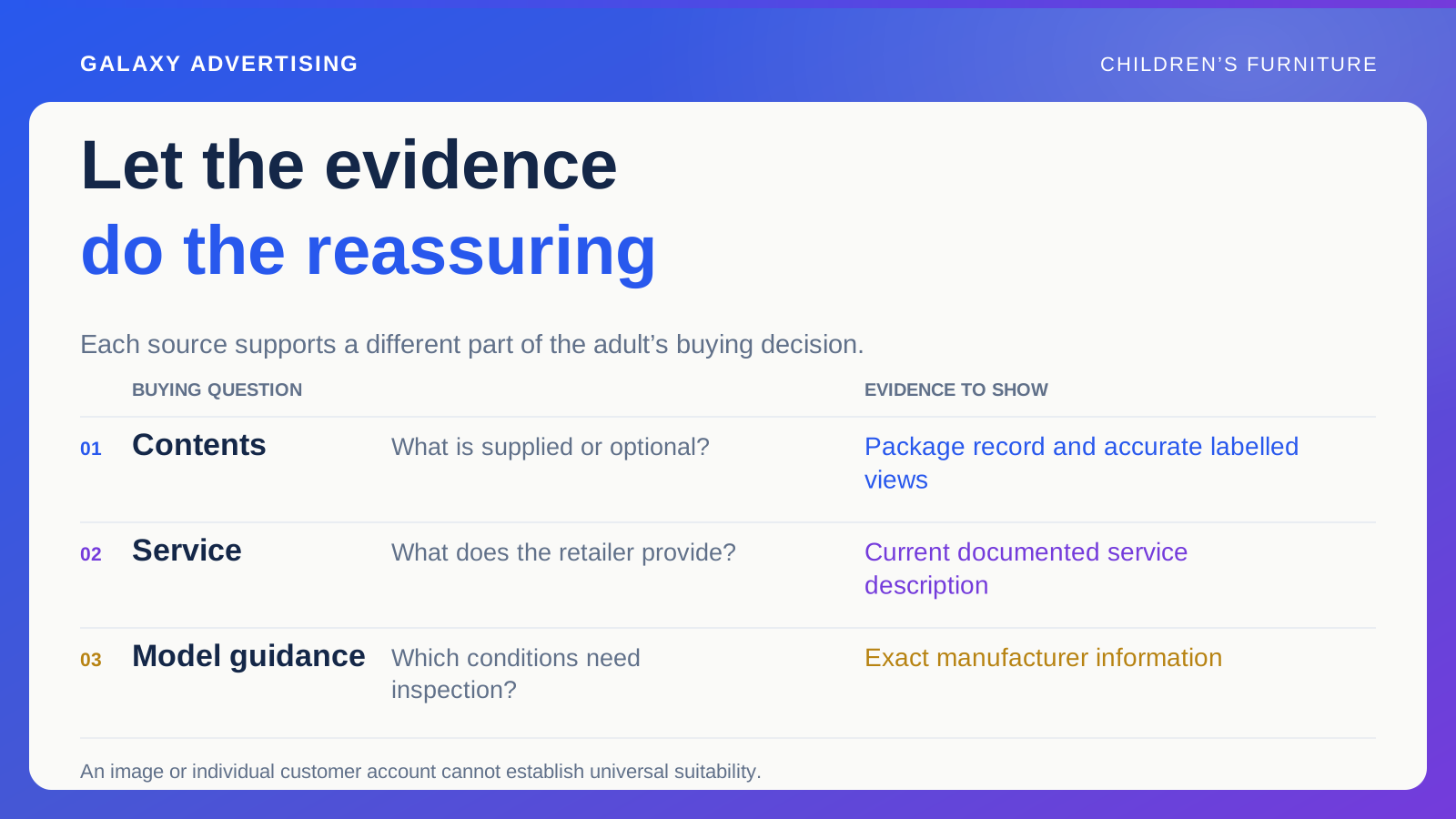
Don't ask a room scene to establish every aspect of suitability. It cannot replace exact specifications, manufacturer guidance or advice relevant to a particular household's question. A picture has a job, and that isn't every job.
Write its intended meaning before choosing the mood. Asking for a joyful premium bedroom gives aesthetic direction, but says little about what must remain verifiable. A clearer task gives styling a purpose without making it carry unsupported assurances.
Fix the product references before production
Supply approved views of the exact model and identify the configuration, meaning the arrangement being promoted. Add reliable component references and any important characteristics the producer needs to preserve.
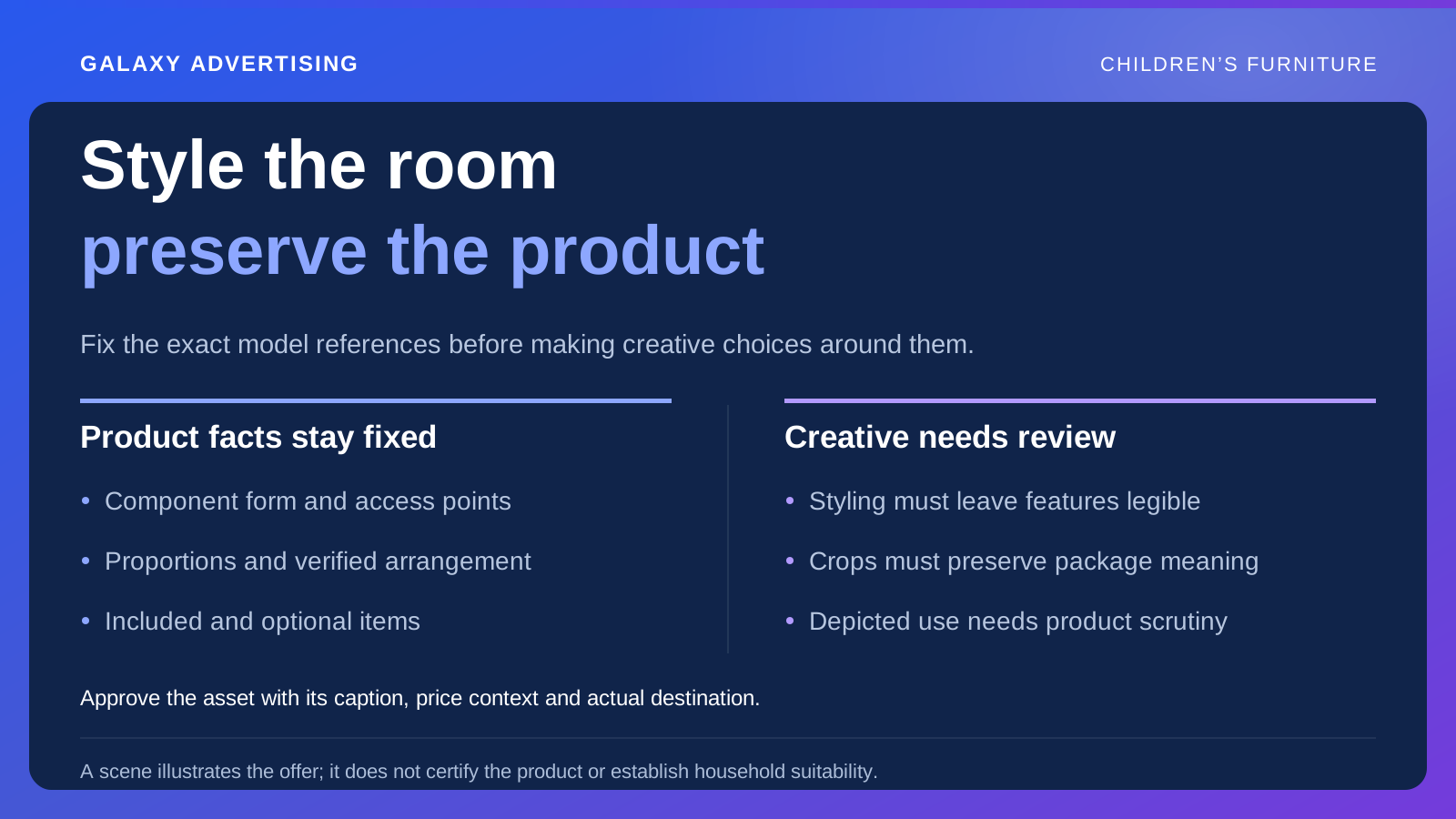
Mark fixed features explicitly. The position and form of visible components cannot change just because another layout balances the picture better. If an alternative arrangement really is available, establish that from approved product information first.
Keep inspiration apart from factual references. A different room can suggest colour or atmosphere. It cannot become the authority for the furniture's structure or contents. Make that boundary obvious in the brief, rather than expecting a producer to infer it.
Be clear about what the price includes
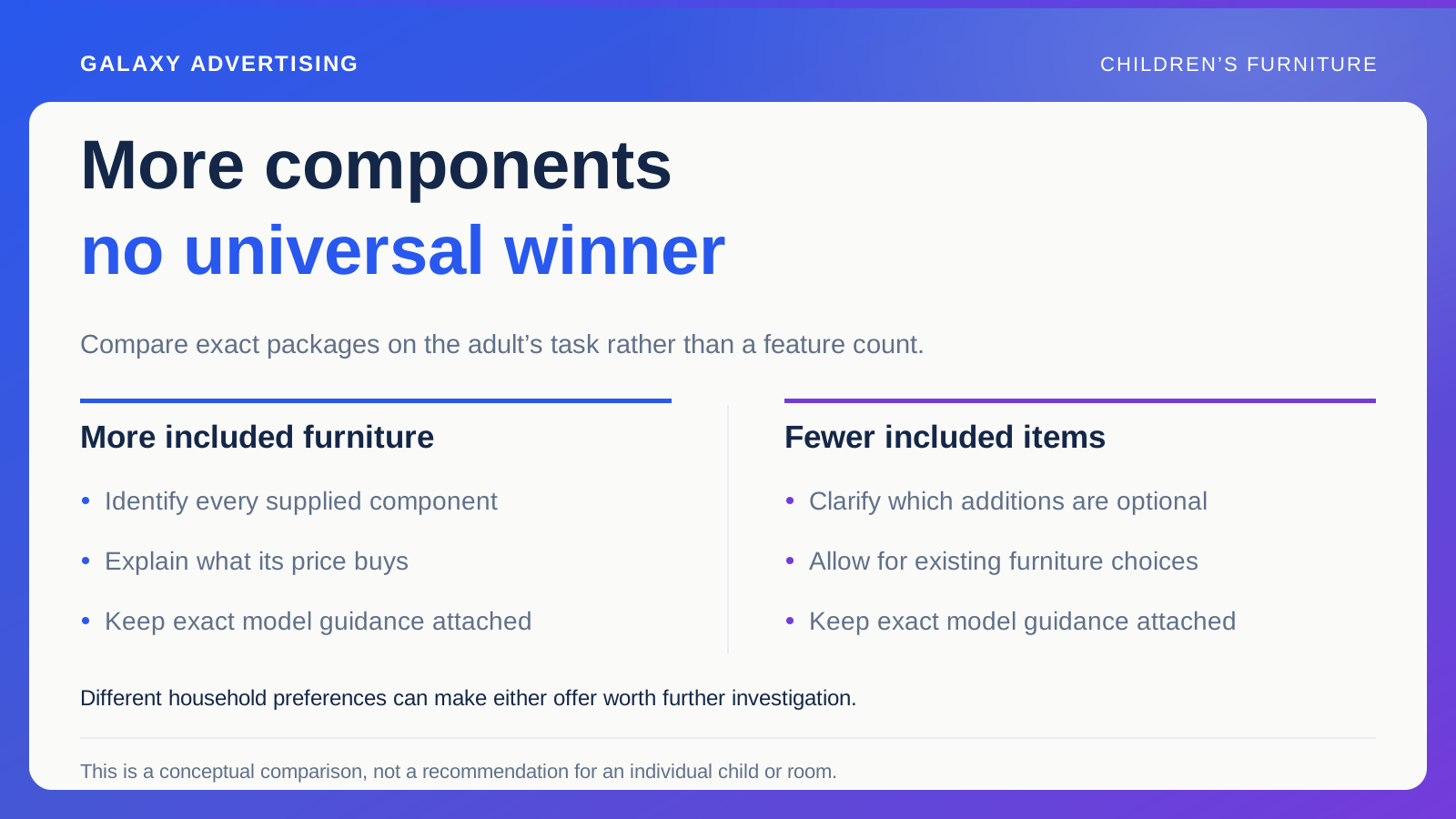
List the included items, optional products and decorative objects. A scene can contain plenty of attractive furniture while your offer concerns only one piece. The customer needs to understand that relationship.
Look at the main impression the image creates. A small note may not repair a composition strongly suggesting a complete package. Ask the production team to explain plainly how the scene relates to the purchase.
If styling conceals an important feature or gives a misleading impression of scale, change the composition. The attractive room still needs to leave the real arrangement recognisable. Otherwise the decoration is getting in the way of the offer.
Preserve proportions as well as individual features
Use accurate references and keep product proportions intact. Shrinking furniture or changing the relationship between components to make a room seem more accommodating changes what the buyer is being shown.
Where dimensions or installation information for the model are needed, give a clear route to the applicable documents. Don't write general clearance or compatibility instructions into the creative brief on your own authority.
The scene can suggest a setting and make the arrangement understandable. The customer still needs to assess their circumstances. An appealing example should not imply that the furniture fits every similar looking room or establishes suitability for another household.
Check what happens between the opening and the export
With moving assets, inspect the product across important frames. An accurate opening can become inaccurate during a transition or camera movement. Look at distinctive features, rather than trusting the overall impression of a convincing video.
Review crops and adaptations individually too. Removing context can make an optional object look included, or remove the reference that communicated scale. An export working technically doesn't establish that it communicates the same clear offer.
Make feedback precise. Saying that the storage component differs from the selected package identifies something to correct. Asking for a more realistic room leaves the producer guessing whether you mean furniture, styling or lighting.
Remember what a depicted person can imply
Someone shown using the furniture can imply intended use or suitability even without an explicit caption claim. Ask the relevant product owner to check those implications against the exact manufacturer's information.
A depicted activity cannot stand in for guidance about the model. Questions about age, restrictions or compatibility still belong with applicable documentation and an appropriate qualified response. They cannot be answered by inference from a pleasant scene.
Make the asset's role clear to the adult buyer. It illustrates a verified offer in a setting. It does not certify the furniture or provide personalised advice about a child's circumstances.
Practise a correction you can verify
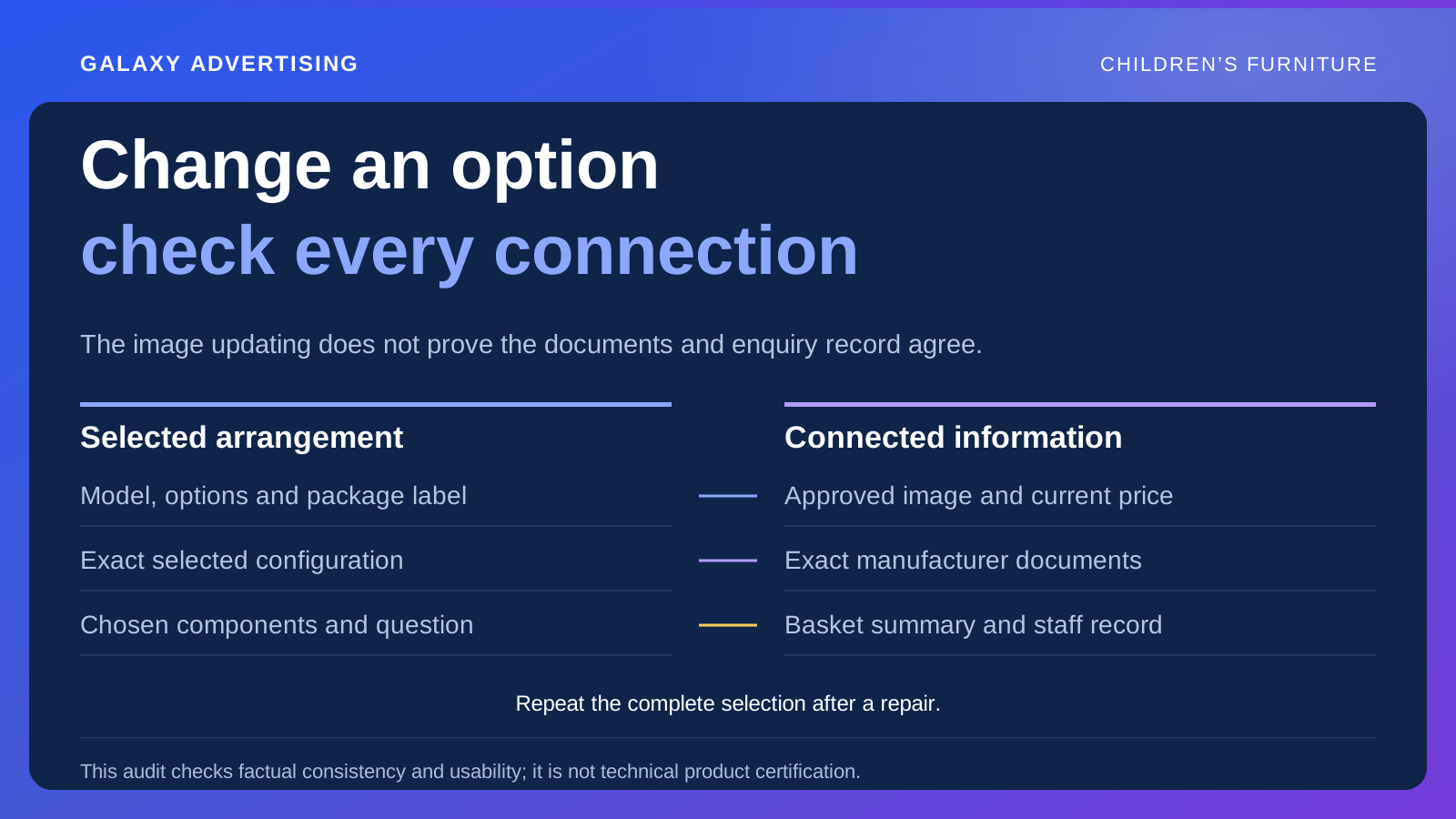
Suppose a draft puts the desk into an arrangement absent from the approved references. Give the producer the exact model view and specify the relationship that needs changing. A general request to fix the desk leaves too much open.
Then inspect the revised scene for connected changes to surrounding components. Correcting one local detail can create another mismatch if the rest of the arrangement remains untouched.
Save the accepted output with its supporting references. That makes approval repeatable and helps stop a later adaptation reverting to the attractive but inaccurate version still sitting in the working folder. Approval should be recoverable, rather than something only the original reviewer remembers.
Approve the offer as someone will actually see it
Review the finished image or video alongside its caption, price context and destination. Accurate visuals cannot compensate for unsupported wording. Equally, careful wording cannot automatically repair a materially altered product.
Keep the accepted version and approved source pack together. A later editor needs to know which model and arrangement supported the scene before adapting it for another campaign. That information should survive the handover.
Warmth, imagination and attractive surroundings can all belong in children's furniture creative. Their value rests on keeping the actual construction and offer intact. Give the room scene permission to help someone recognise the purchase, while leaving the questions it cannot answer with verified product information.