We sometimes approve the first view of a product page and forget to follow what happens when someone makes a choice. A parent adds storage, changes the layout and opens the documentation, only to find guidance for the original selection.
The photograph updated. The enquiry form lost the options. A useful conversion audit, a review of the route towards an enquiry or purchase, follows those changes and checks factual consistency. It is not a technical assessment or certification of the furniture.
Choose a selection somebody can actually make
Pick a meaningful route through available options and state what the adult wants to establish. That could be comparing two documented layouts or distinguishing a frame from a package containing additional furniture. Give the audit an actual buying task.
Use the product records defining the available configurations, meaning the different arrangements offered. Don't invent a hypothetical combination simply to make a selector test more elaborate. The review should represent choices your business genuinely sells.
Record the starting product, selected options and source of relevant information. A finding then becomes reproducible. Developers or merchandising can investigate without asking you to reconstruct the original sequence later from memory.
Follow the identity as each option changes
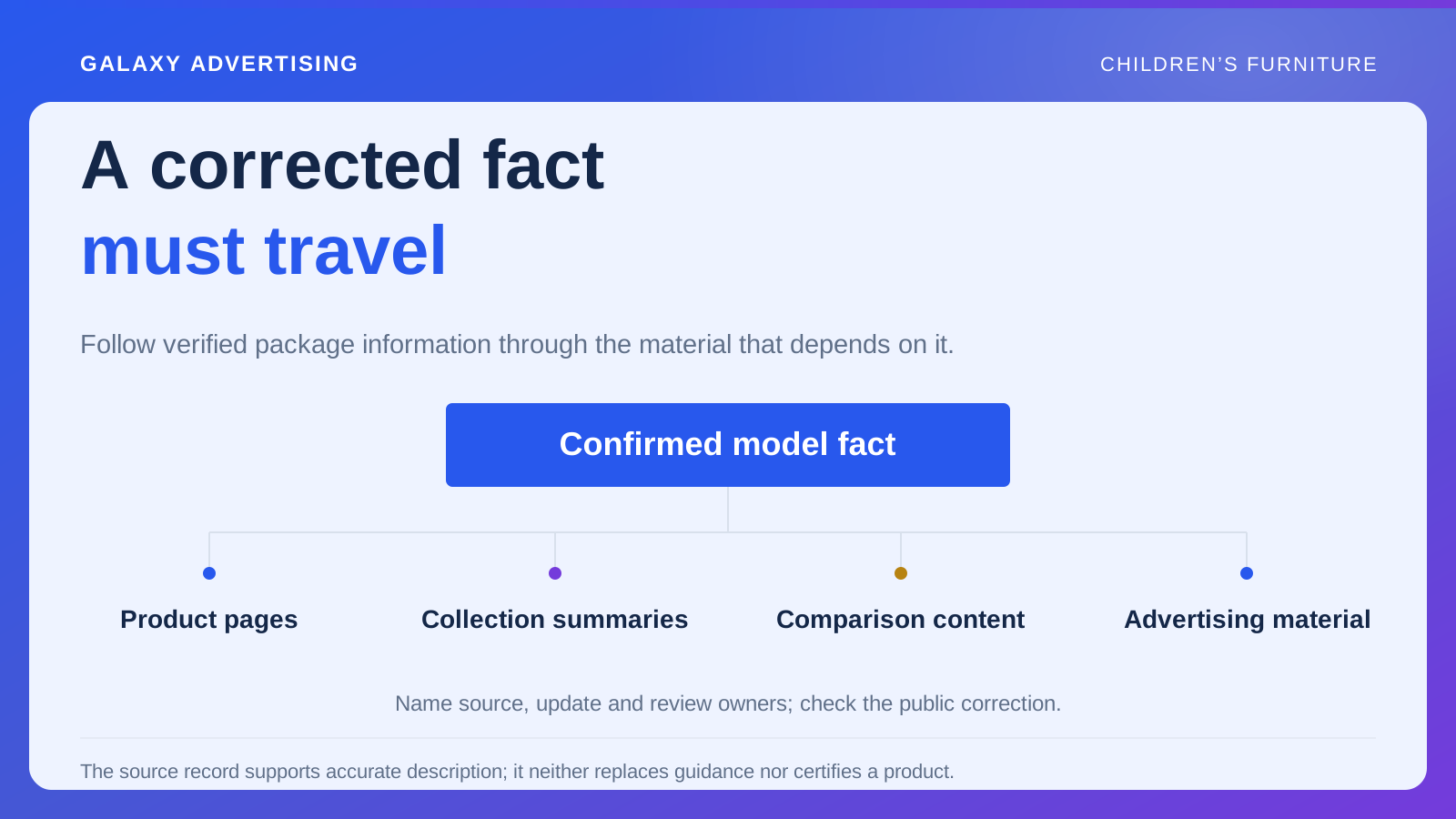
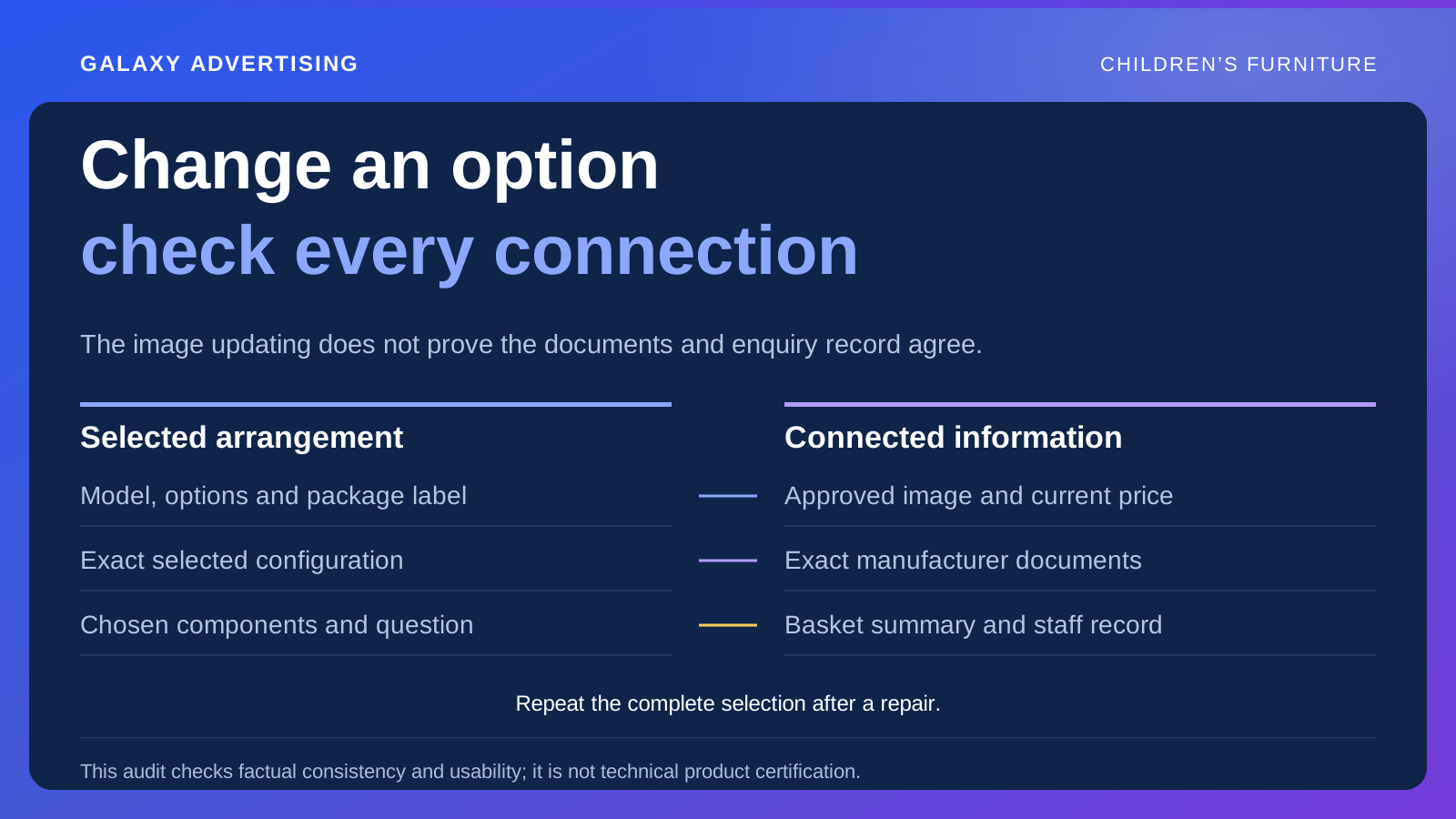
Check the product or arrangement label, image and price after meaningful selections. Use approved information to establish which facts should change and which remain shared. Otherwise you cannot tell a correct shared detail from an overlooked update.
An updated photograph doesn't prove the whole route changed. A label could still name the earlier package while another part of the page shows the new one. The customer needs a single coherent understanding, rather than several individually plausible fragments.
Check unavailable options too. A control that looks selectable but cannot produce the represented order differs from a legitimate restriction explained clearly before commitment. Record what actually happens rather than grouping both under a vague selector problem.
Open the documents for the selected arrangement
Follow the instructions and product information from each selection. Confirm with the responsible product owner which documents apply and whether the page maintains that relationship. A working link can still lead to the wrong information.
Don't decide technical suitability from a photograph or familiar model name. Your task is to establish whether an adult can reach verified information for the exact product and understand what still needs confirmation.
Make a wrong or ambiguous link a specific finding. State the selected option, the document shown and the source establishing the correct relationship. Asking for more reassurance isn't an adequate repair for a mismatched product reference.
Inspect the summary before the customer commits
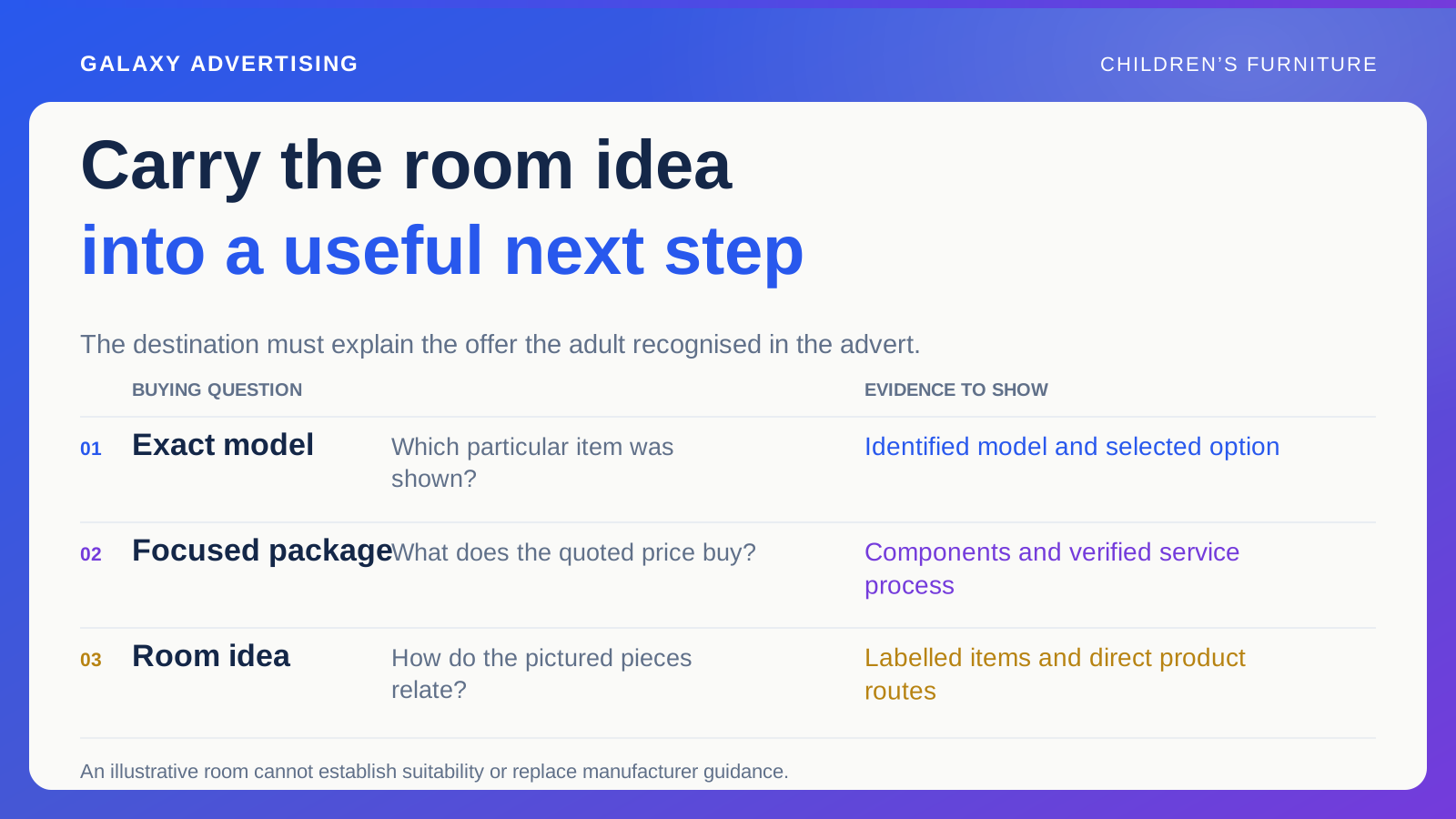
Can someone understand the selected frame, additional furniture, mattress choice where offered and relevant services? Keep included items distinct from optional products and styling objects. A summary needs to identify the purchase, rather than merely sound familiar.
Continue into the basket or other appropriate stage. Wording can shorten, but it must preserve the distinctions defining the order. A plausible total price doesn't establish that the right components are recorded underneath it.
Where the live system requires verification, use a representative authorised test. Establish what operations receives without creating an unintended order. A button animation cannot prove that the resulting record is accurate, however reassuring it looks on screen.
Try a question and an ordinary correction
Check whether a clarification request reaches staff with the selected model and options intact. A parent shouldn't have to repeat the configuration because the form accepted their message but discarded the context needed to answer it.
Try correcting an incomplete field. Does valid information remain? Error recovery is part of the buying task, especially after somebody has spent time comparing a complex package. Losing their work creates another obstacle beyond the original missing field.
Where a response requires individual confirmation, check the message explains what happened and what to expect under the actual business process. Don't prescribe a response promise operations has never agreed to support.
Decide what kind of finding you have
Separate factual mapping errors, interface defects, operating gaps and testable presentation ideas. All can frustrate a customer. They need different owners, different evidence and different acceptance conditions, rather than one large redesign brief.
A document attached to the wrong arrangement needs verified correction. A control failing on a phone needs a reproducible implementation report. An accurate but unclear label might need focused wording work. Let the observed issue determine the repair.
For each material finding, state the problem and what must be true afterwards. The implementer needs to know what an adult should be able to establish, not just which part of the page you disliked.
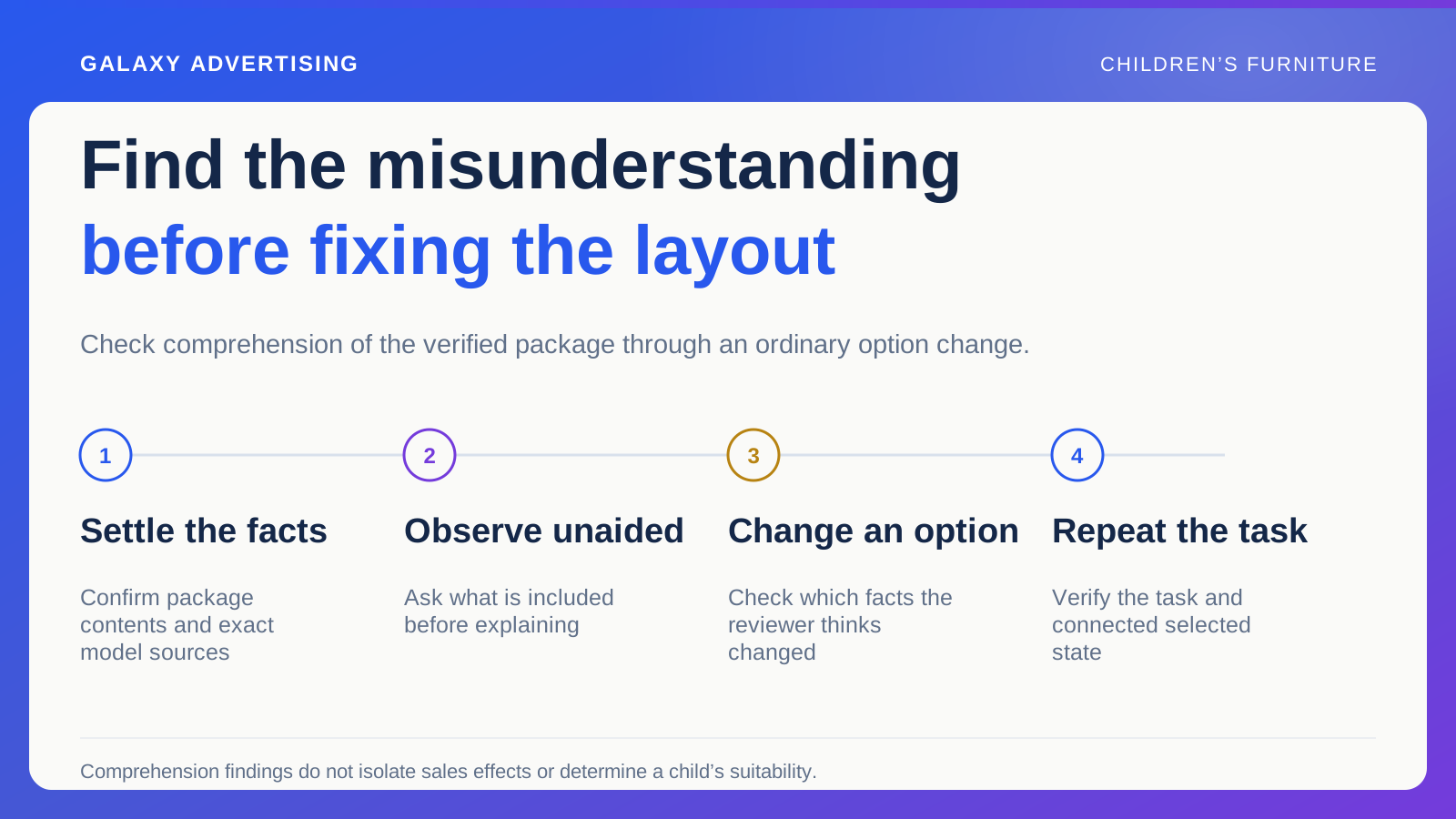
Include a second reviewer who didn't create the page. Ask them to explain the selected package and which document they would consult. They can expose ambiguity staff miss because supplier names and range conventions already feel obvious to them.
Repeat the complete selection after the fix
Recreate the original sequence and check the connected information again. Repairing one option doesn't prove the related document, summary label or enquiry record now agrees. A local change can leave another part of the route untouched.
Keep source references and the tested version with the acceptance note. Later editors then have a record of why the relationship matters, helping prevent the same mismatch returning when another package joins the range.
The adult needs room to investigate, and the auditor needs to respect the limits of the role. Make the actual purchase and relevant information easier to follow without inventing technical answers. A dependable page remains understandable when someone changes an option, not only while they admire its opening photograph.