Your team is reviewing a cleaner summary for a bed page, with the long description ready to come down. It looks easier to scan. But can somebody unfamiliar with the range tell the frame, optional storage and photographed furniture apart?
A shorter page can preserve the same misunderstanding in less space. Start by deciding what an adult should be able to establish, which verified facts must stay accurate and what observation would challenge the proposed design. Essential guidance isn't optional material to test away.
Pick one question the page needs to answer
Make the task precise. For example, ask someone to identify the components included in a named package and locate the manufacturer information for that exact model. That gives the review something definite to examine.
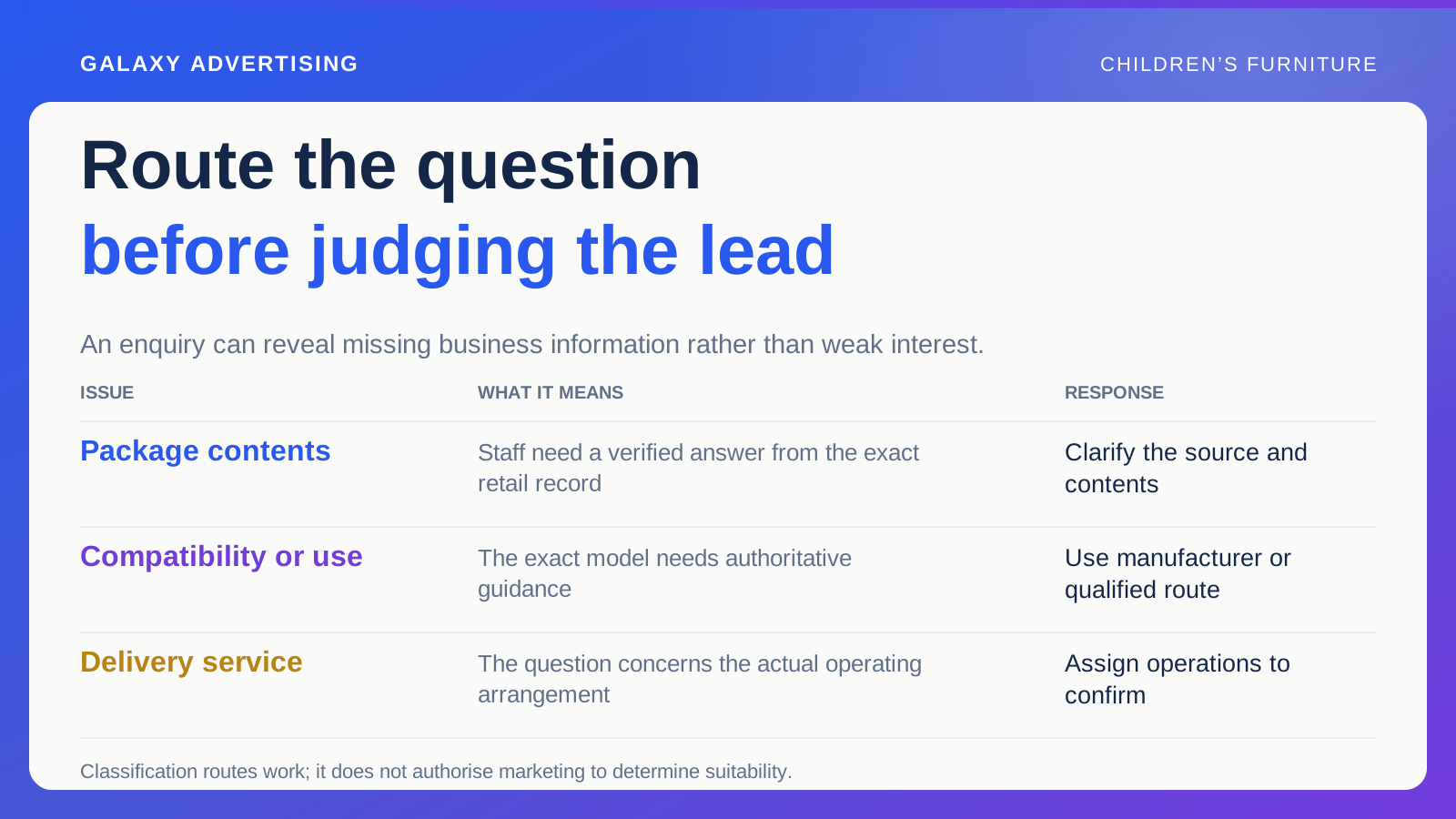
Don't bundle every uncertainty into the same exercise. Contents, product comparisons and delivery services can involve different information and different owners. A broad task makes it harder to see which explanation needs attention.
Keep the expected result within the page's role. Ask reviewers to find documented guidance, rather than determine suitability for an individual child. A marketing evaluation cannot substitute for model specific instructions or the appropriate qualified response.
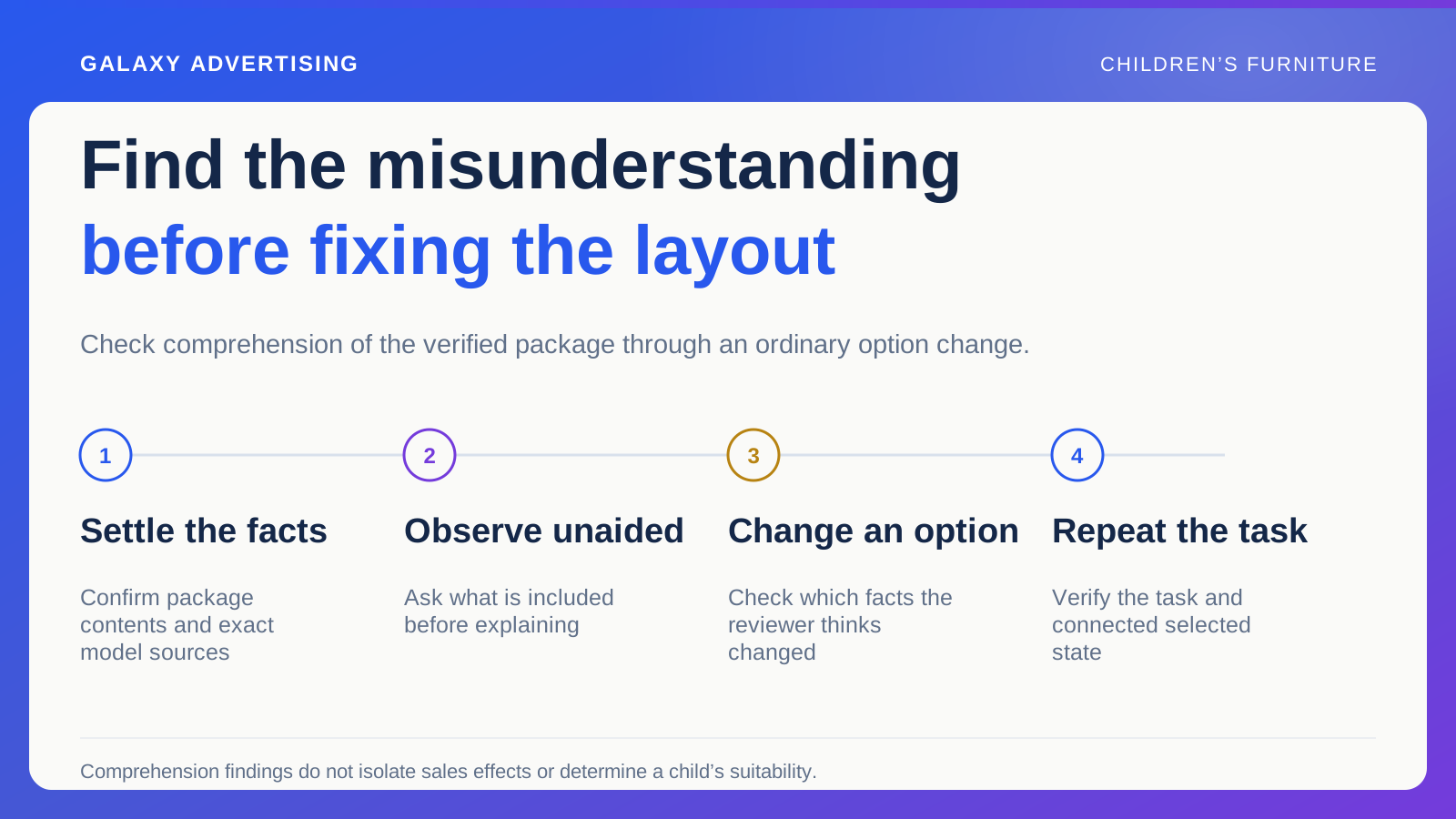
Settle the facts before testing their presentation
Confirm contents, configuration, meaning the selected arrangement, and relevant documents with the product owner. Consistent understanding does not turn an uncertain description into an accurate one. People could all understand the same incorrect promise perfectly well.
If the current page contains a factual error, repair it. Don't keep an inaccurate statement live just to provide a comparison with the clearer version. That is a correction, not a layout hypothesis.
Record which changes concern verified information and which concern presentation. Otherwise you can end up comparing a complete offer with an incomplete one, then reporting the result as though you isolated a design preference.
Give the reviewer a realistic starting point
Provide the context someone would reasonably have from the chosen advert or collection link. Don't teach them the catalogue first, then credit the page for knowledge you supplied. The exercise needs to reveal what the presentation actually explains.
Ask what they think the price includes and how they would continue if they had a question. Images, option labels and the relationship between summary and detail can all create assumptions worth hearing in their own words.
Handle collected information appropriately. You don't need a detailed account of a real child's circumstances to examine this route. A bounded hypothetical purchase question can often test understanding without asking for unrelated personal material.
Watch before you explain
Notice where the reviewer looks, which labels they choose and whether they connect an answer to the selected arrangement. One brief hesitation is not proof of a universal problem. Reproducible confusion, though, deserves to stay in the record.
If you help, note exactly what you explained. Completing the task after somebody points out the correct option is different from understanding the page independently. Both observations can be useful, provided they aren't reported as equivalent.
Ask for a final explanation in the reviewer's own words. Finding a section called contents does not establish that the contents make sense. Difficulty locating information and difficulty interpreting it can require different corrections.
Change an option and see whether clarity survives
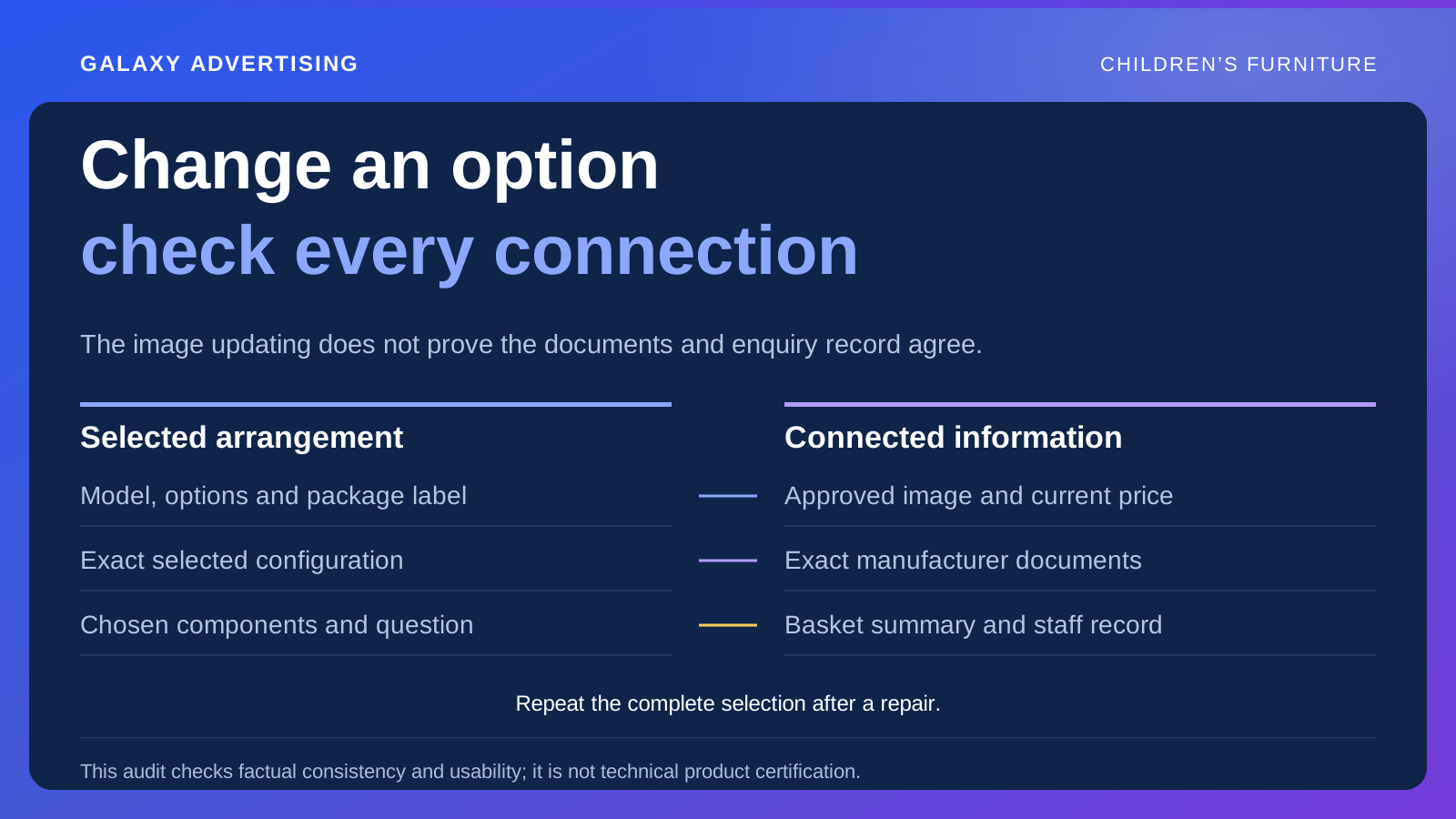
After the first task, change a relevant option or open another available arrangement. Can the reviewer tell which facts changed and which still apply? A default page can work while the ordinary selection route falls apart.
Image, price and summary may look clear individually until a choice changes their relationship. Inspect that connected understanding, rather than approving each element in isolation.
Use verified, available configurations. Don't invent a convenient test package or ask the reviewer to infer whether an unsupported combination is appropriate. You need dependable product facts so the findings concern presentation, rather than gaps in product knowledge.
Match the commercial evaluation to the question
If you want an estimate of the effect on orders, consider whether a suitable controlled comparison is practical for your volume and implementation. A universal test duration or budget cannot answer that without understanding the actual question.
A comprehension review can identify a particular information obstacle without isolating additional sales. That narrower finding is still useful. It doesn't need an exaggerated revenue claim to justify correcting an unclear purchase.
Where appropriate, review order progression, relevant enquiries and later corrections beside available campaign evidence. Clearer information could reduce basic contacts while helping suitable buyers proceed. One interaction measure shouldn't automatically overrule the broader buying task.
Explore the wrong answer before correcting it
If somebody confidently describes the wrong contents, ask what led them there before giving the intended answer. Perhaps it was the dominant room image, an ambiguous selector or a summary carried over from another configuration.
Record the route to the misunderstanding, not merely an unsuccessful task. Keep the exact product and selected state so another reviewer can reproduce the issue and the team can investigate the same presentation.
You are not challenging the person's catalogue knowledge. You are discovering how the page created an impression different from the verified offer. That distinction makes the observation much more useful to the people doing the repair.
Leave a finding another team can act on
State the configuration reviewed, what the adult misunderstood, which source establishes the fact and what presentation change you propose. Include what remains uncertain instead of writing the result as a universal verdict.
After implementation, repeat the relevant task and ordinary option change. Check that the correction improves the intended route without producing another contradiction elsewhere.
An attractive summary may still obscure the package. A small label change may also provide the clarity everyone expected from a larger redesign. Testing gives you a way to discover which assumption holds, with an honest boundary around what the evaluation established.