What if your low cost per enquiry is rewarding a page that leaves people confused? Some messages concern an unavailable arrangement, others omit the model, and several ask for information already buried on the product page.
The campaign has generated activity. Whether that activity helps the business is another question. Follow the enquiry far enough to understand what it requires, with clear definitions and useful product context, rather than inventing an elaborate label for every parent who contacts you.
Count different stages as different things
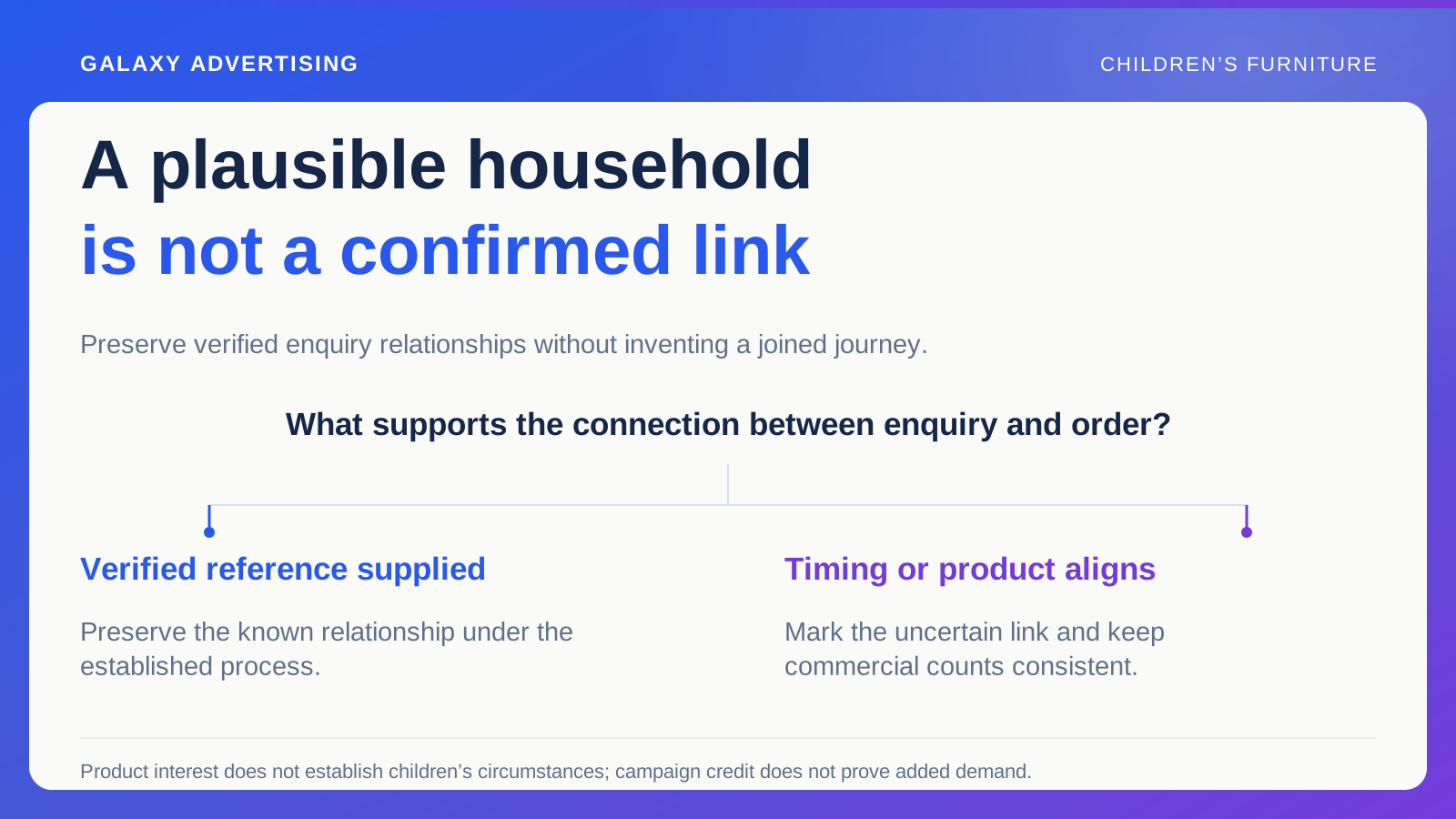
Submission, receipt, understanding, an answer and a connection to a later order are separate stages. Keep them distinct, linking orders only where your available records can establish that relationship appropriately.
A form confirmation doesn't prove the receiving team has enough information to respond. The message can arrive perfectly well while omitting the configuration, meaning the selected arrangement, or referring to an image nobody can identify.
Choose stages that help your actual decision. A small retailer might need a simple review of usefulness, rather than a complex scoring system. The definition should make action consistent without creating administration whose purpose nobody can explain.
Keep the product attached to the question
Connect the enquiry to the relevant model, chosen arrangement and destination where appropriate. Staff shouldn't have to guess which product someone means by the bed with storage. That reconstruction is work the contact count never shows.
Distinguish site supplied information from staff assumptions. A default reference is not necessarily the customer's deliberate selection if the interface never made that selected state clear. Otherwise a tidy record can imply more certainty than it deserves.
Identify what staff actually need to answer. Useful product context does not require unrelated information about a child's circumstances. Agree handling and access with the people responsible for the underlying records.
Classify the next piece of work
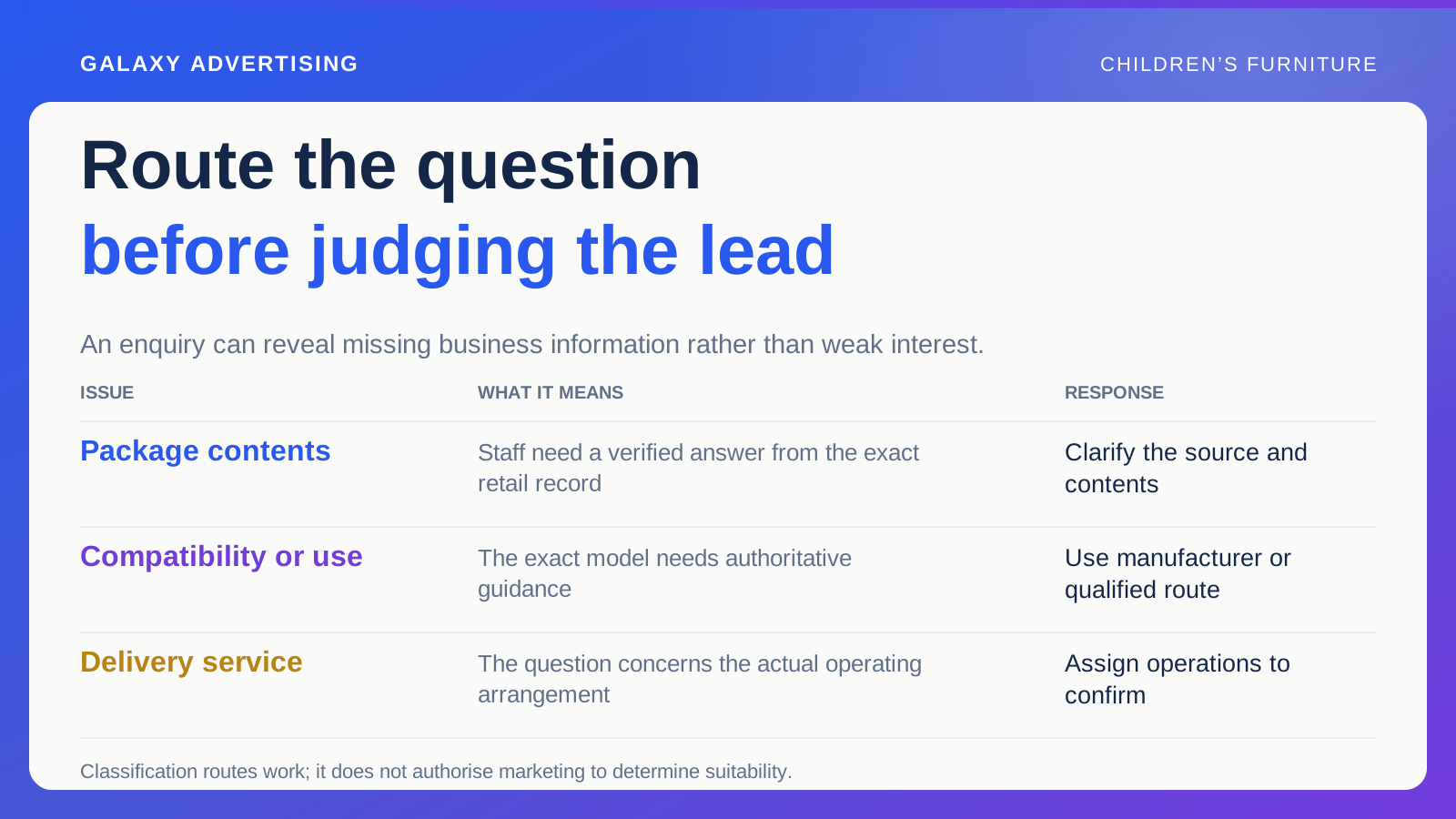
Package contents might be answered from verified retail records. Compatibility or intended use for an exact model might need manufacturer information or the appropriate qualified response. Delivery service could belong with operations.
These distinctions route work. They do not give a marketing score authority to determine suitability. A classification should point to the next responsible action, without prescribing an answer beyond the team's evidence.
Record unresolved source issues separately. If staff cannot establish whether a component is included, the enquiry has exposed an information dependency. Calling it a weak lead can hide something you need to resolve before paying for more demand.
Try the definitions on a manageable sample
Review a proportionate set of messages and check which definitions you can apply reliably. Use the sample to test classification and find obvious gaps. It cannot describe every future contact exactly.
Ask another colleague to apply the same definitions. If you disagree about qualified or high intent, the labels are not yet doing a consistent job. Resolve the difference in ordinary language rather than adding another impressive sounding category.
For example, a useful definition could identify an enquiry about an available, clearly referenced arrangement that staff can progress. That isn't a promise of purchase or a judgement about personal household circumstances the business cannot substantiate.
Read the enquiry pattern beside the offer
Identify the campaign and creative version where measurement supports the connection. Check that the advertised arrangement and destination remained coherent during the review period. Otherwise you may be comparing contacts generated by different effective offers.
More enquiries could mean more confusion about the package. Clearer information could reduce basic questions while suitable orders remain healthy. You need both the contact pattern and the offer context to interpret that sensibly.
Don't promise complete attribution when the setup cannot establish it. Distinguish identifiable referrals, reported associations and additional orders. A missing connection is not permission to complete the report with the most favourable story.
Reconcile orders using the same commercial basis
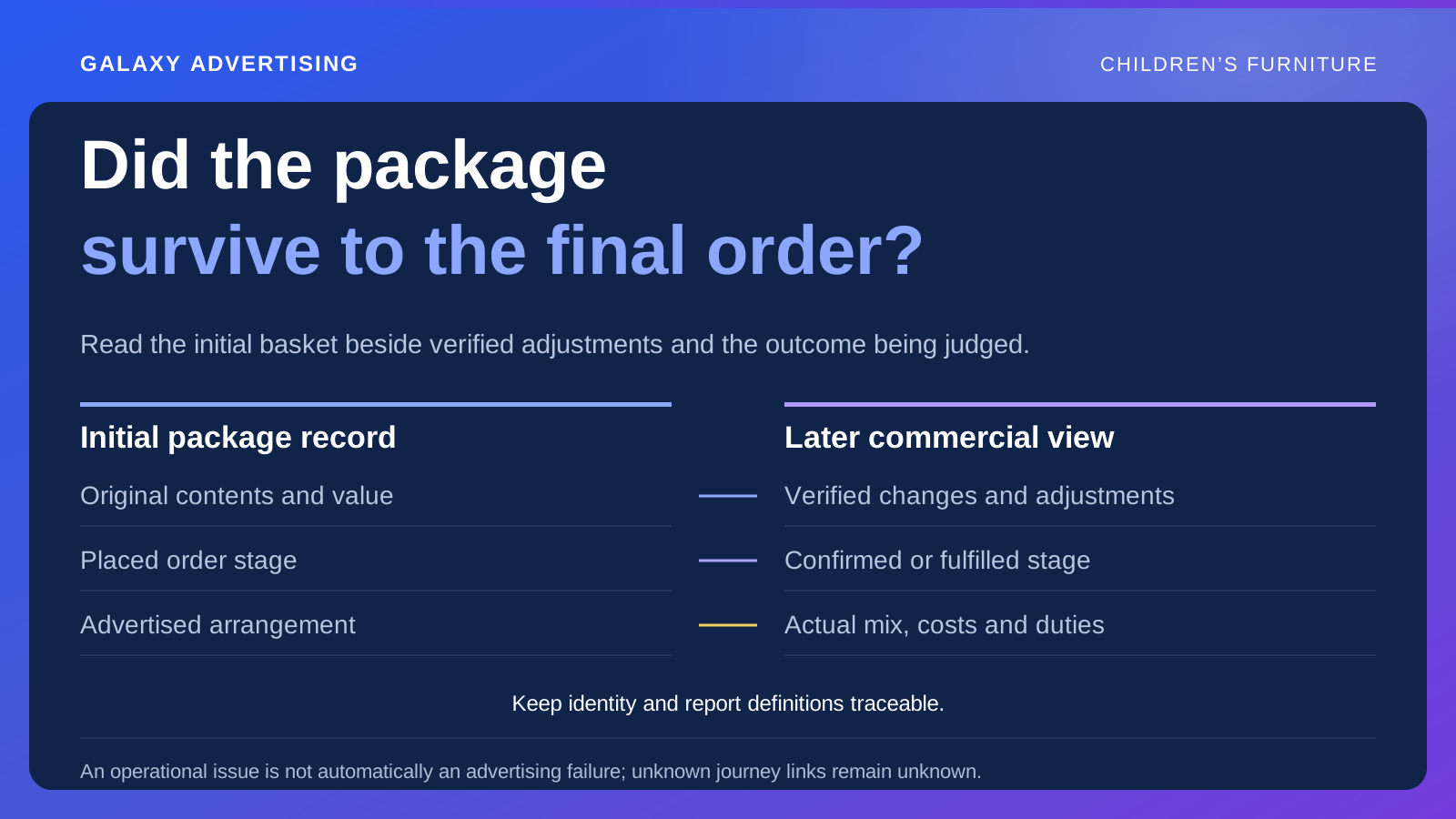
Where an enquiry has an identifiable order, use appropriate business records to understand package and status. Keep placed orders separate from later fulfilled or corrected outcomes where those distinctions matter to the decision.
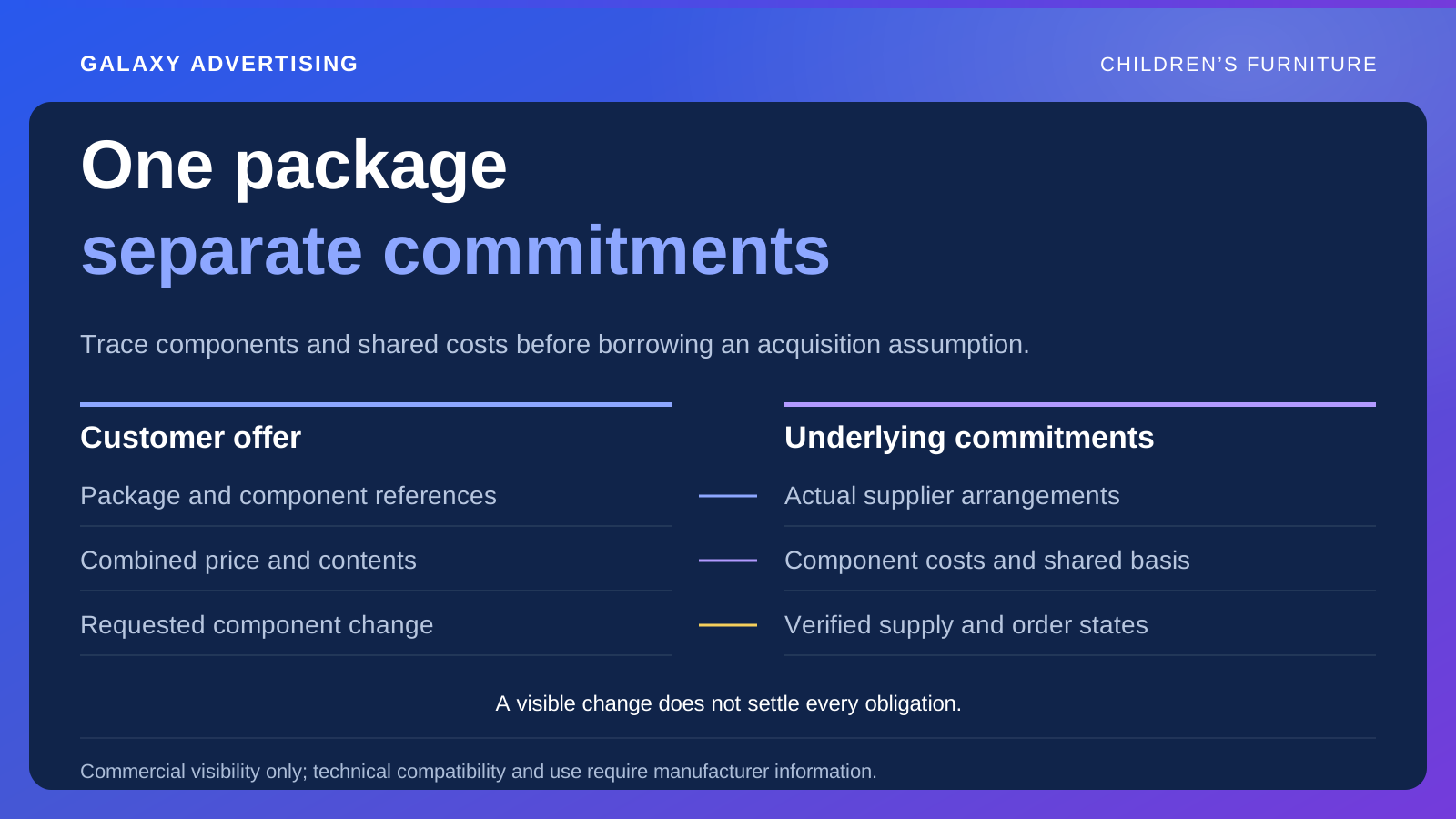
Review contribution, the money remaining after the costs included in the calculation, using consistent revenue and relevant cost definitions. Several components and specialist fulfilment can produce a different commercial result from the headline order value.
Label estimates and unresolved costs. You don't need perfect accounting for every conversation. You do need to avoid presenting contacts or attributed gross value as the complete measure of worthwhile business. Repeated clarification also has handling costs worth operational attention.
Don't punish an enquiry for exposing your missing answer
Suppose a message identifies the exact available package and asks whether a pictured item is included. Staff then discover that the public page and supplier record disagree. That's an information issue, with a source clarification to assign.
Calling it low quality because it doesn't immediately become an order misclassifies the work. The customer has given you useful evidence about the presentation of your own offer.
After correcting the source, check whether the question becomes easier to answer or disappears from similar contacts. Measurement then leads to an owned improvement, rather than rewarding staff for filtering out questions the business should resolve.
Give the finding somewhere useful to go
Choose a specific action: clarify contents, obtain a supplier fact, repair a destination or change which available arrangement receives promotion. Name the responsible person and state how the correction will be verified.
Keep enquiry quality separate from the customer's value as a person. An incomplete message can expose an unclear interface. A question outside your current range can still deserve a helpful, accurate response.
The report should make the next responsible action clearer to advertising, merchandising and support. A considered household purchase deserves more than celebration of a cheap submission that nobody can interpret or progress.