We can put so much effort into the first visit that we leave the returning shopper to reconstruct the whole purchase. An adult shares a screenshot of a bed arrangement, comes back later and finds another configuration selected with a different looking price.
Now they have to establish whether it is even the same offer. Supporting that return means giving people useful context back, without assuming earlier interest is a commitment or collecting an unnecessary picture of their family circumstances.
Work out what needs to survive the visit
The useful detail might be the exact model, chosen configuration, meaning the selected arrangement, package contents or an unanswered supplier question. Use relevant enquiries and realistic page reviews to identify the task before deciding what to build.
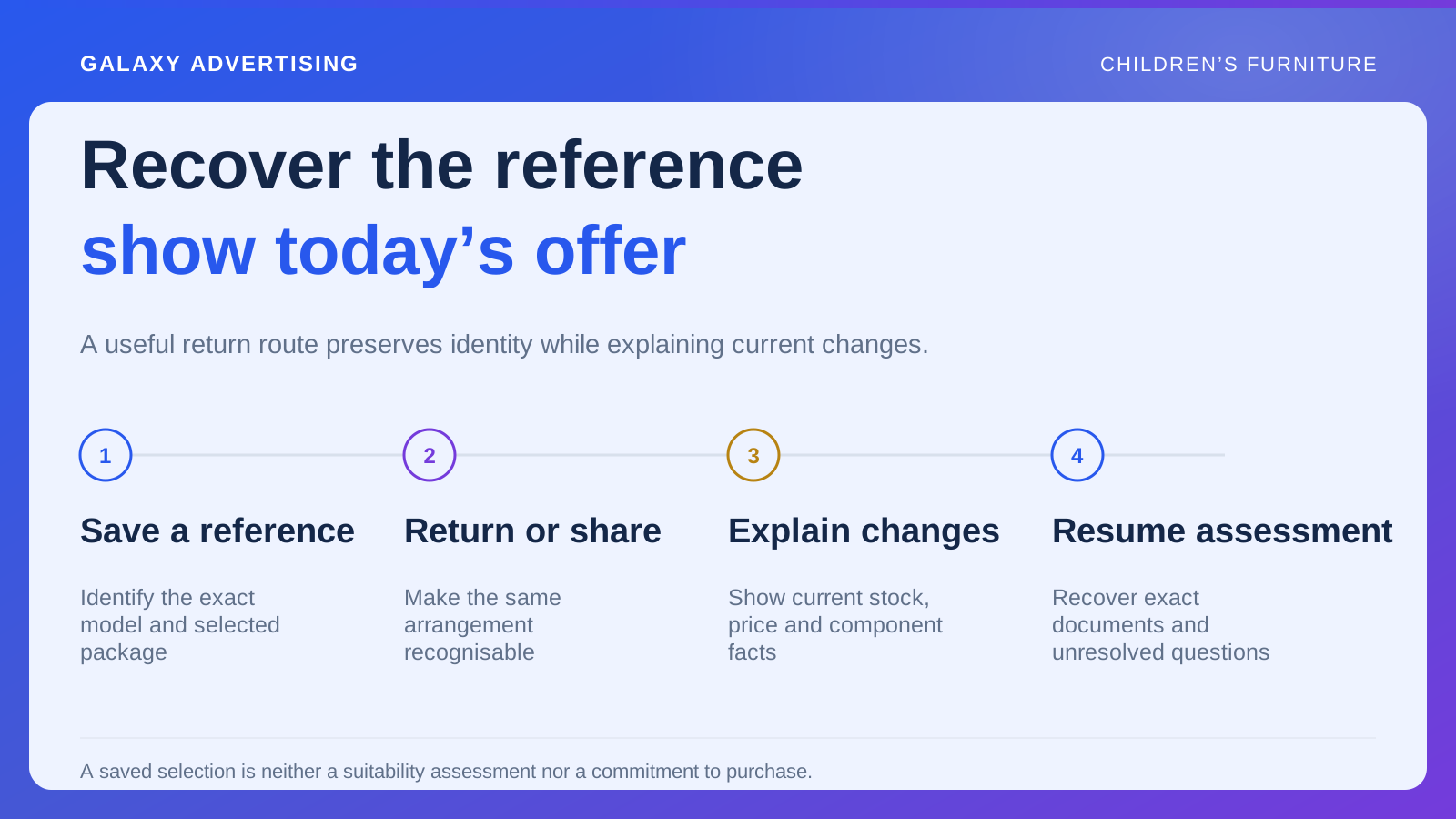
Keep a shortlist separate from technical assessment. Saving a reference does not establish that the arrangement suits a particular room or child. People still need the route to manufacturer information for that exact model.
Don't start with an elaborate account feature. A recognisable name, stable link and clear selected state may remove much of the repeated work. Choose the simplest maintainable answer to the actual task. A return visit is not automatically a request for personalisation.
Make the reference work in somebody else's hands
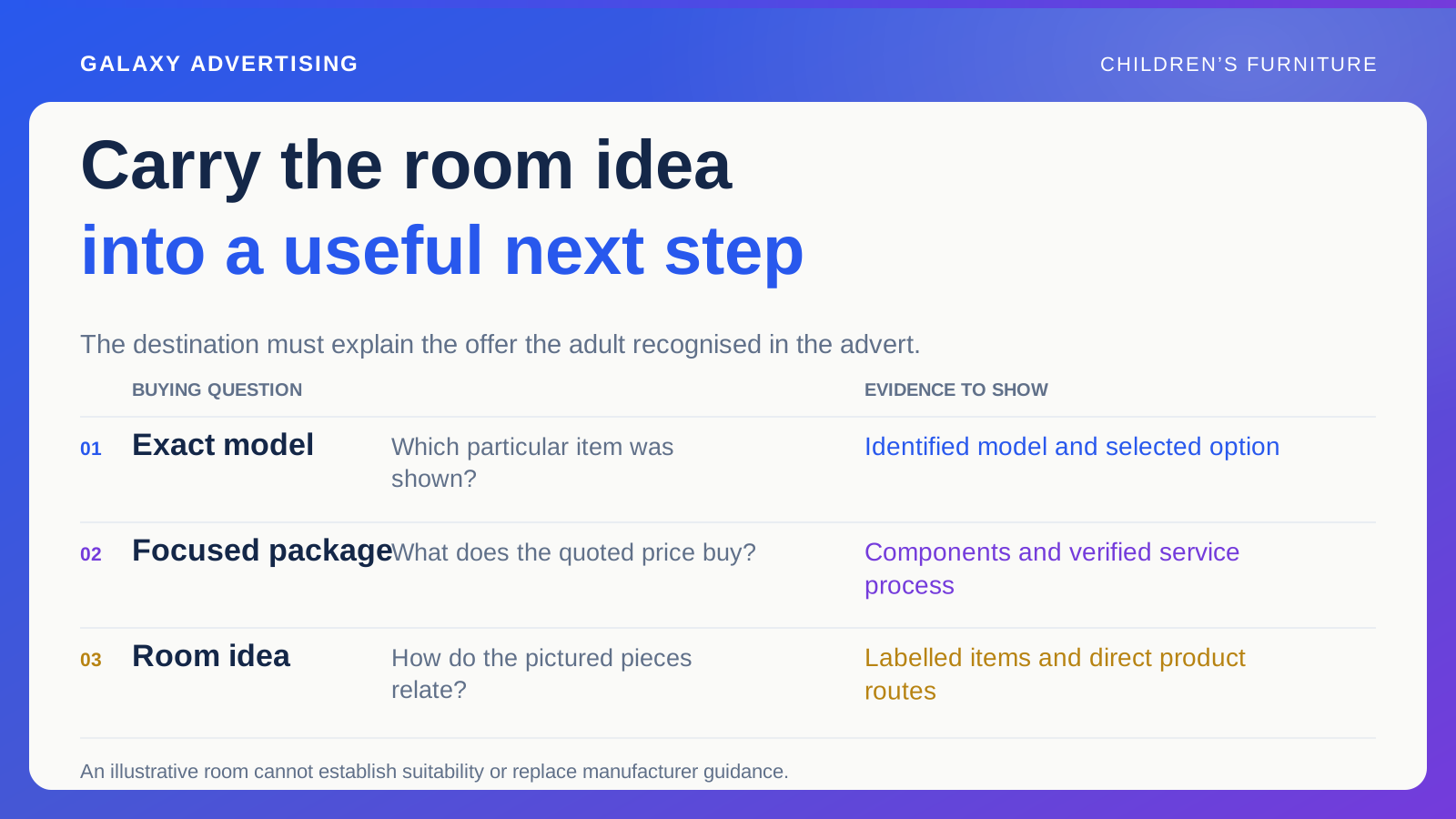
Can an adult share a link or product reference another person will recognise? The destination should identify the relevant arrangement, rather than only a family containing several different configurations. Otherwise sharing just passes the search to somebody else.
Use consistent names in pages, helpful content and enquiry replies. A package with one campaign title and another customer service title is harder for a household to discuss accurately, even when both teams know what they mean.
Where a link cannot preserve a selection, explain the limitation. Don't let a saved route appear to remember every option when it doesn't. Clear instructions for identifying the current arrangement can help more than an unreliable promise to restore it.
Preserve identity without preserving an outdated offer
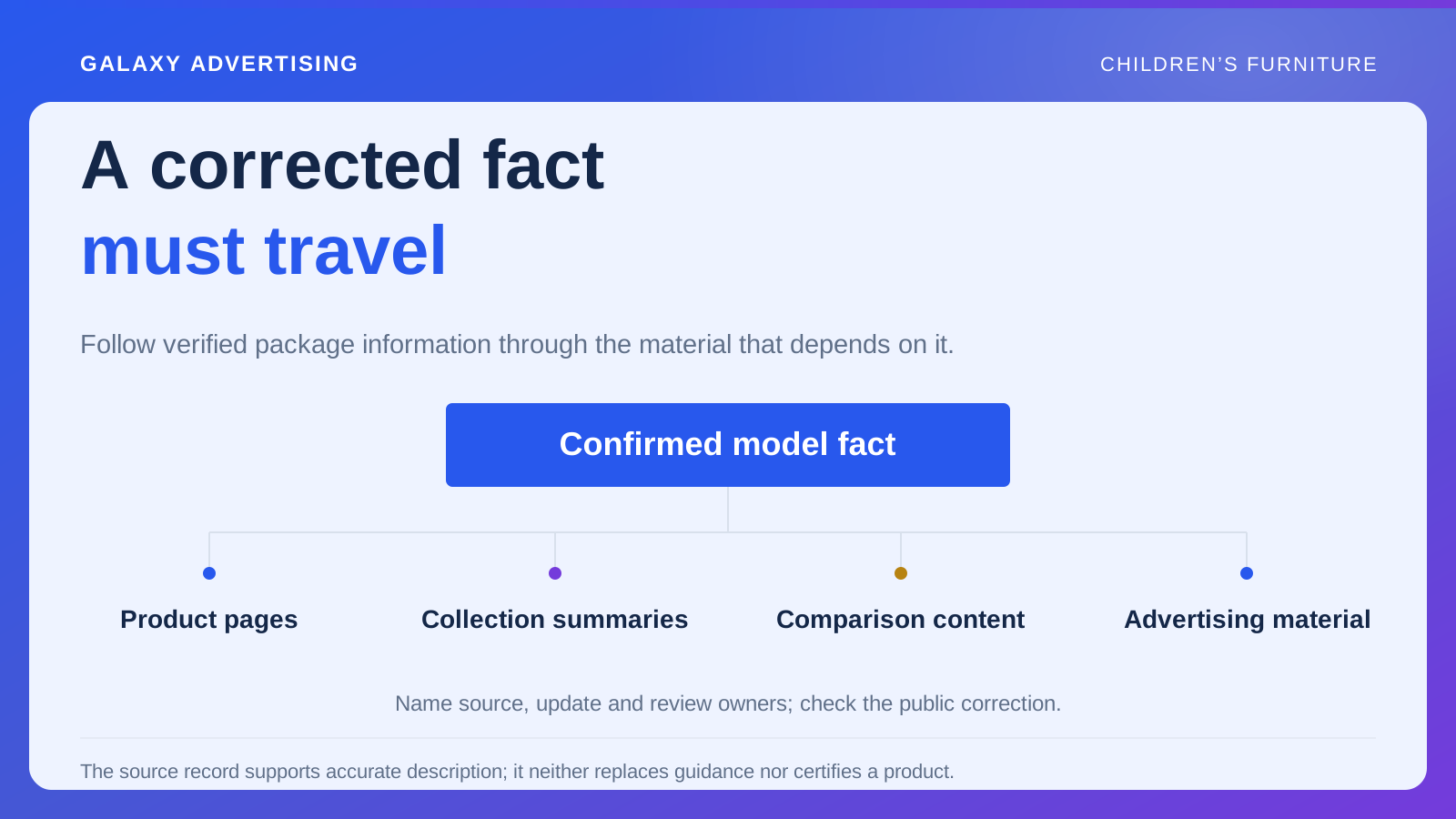
Prices, components and stock can change while people consider furniture. Your returning route needs to keep the product identifiable and show the current facts clearly. Those are related tasks, but they are not the same thing.
Don't quietly substitute a similar looking package. Its dimensions, contents or documents could differ. The customer needs to inspect those differences rather than discover that visual resemblance was treated as agreement with their original requirement.
Suppose, hypothetically, a saved package contains an optional desk that is no longer available. Explain that state and offer accurate alternatives where appropriate. Keeping the old photograph as though the whole arrangement remains orderable leaves an avoidable misunderstanding waiting for the return visit.
Let people recover the right documents
Make verified package information and documentation for the exact product easy to find again. A returning adult shouldn't have to repeat a broad search through unrelated furniture guidance to recover a source they already inspected.
Explain what a link leads to. A general category guide and manufacturer information for the chosen model answer different questions. One should not be presented as a substitute for the other just because both concern beds.
For an unresolved question, provide a dependable route to the appropriate product owner or qualified response. Preserve the question and reference where appropriate. Saving a room scene should not encourage somebody to infer suitability from the image.
Help an enquiry continue from where it left off
Carry enough context with an enquiry for staff to identify the selected arrangement. Ask for information relevant to the product question, rather than unrelated household details. Better product identity can be useful without a broader personal profile.
Agree personal information handling with the responsible people. Wanting to understand the buying journey doesn't justify retaining everything a customer happens to mention during the conversation.
Keep answers connected to the current offer. If a supplier clarifies a configuration or service fact, the adult should understand which product and version that answer concerns. A free floating reassurance can become another ambiguity when the household returns to the page.
Return after something has changed
In a controlled review, save a realistic reference, alter a relevant package or availability condition and follow the link back. Can the adult identify the same product and understand its changed state? That's the task to verify.
Where sharing is supported, include another reviewer. A link working for its creator but opening unpredictably for somebody else may not support the household conversation as intended.
Record the expected behaviour and source dependencies. Development and merchandising then have a specific check, rather than a broad instruction to improve returning visitor conversion. Success means an accurately resumed decision, not automatic restoration of an obsolete offer.
Look at a screenshot as well as a link
Take one representative product screenshot and ask what another adult could establish from it alone. If model and package identity are missing, a clearer reference near the image might help more than a new saved account feature.
The screenshot doesn't need every specification or instruction. It needs to help people recognise the offer and return to its dependable record. Keep that distinction explicit in the design brief.
Portable recognition supports a conversation. Current product information and manufacturer guidance support the later assessment. Neither guarantees that the earlier arrangement remains available unchanged, and the design should not imply otherwise.
Learn from continuity without inventing the household story
Useful observations include whether an enquiry identifies the package and whether someone can find documents mentioned in a response. Those can guide improvements without claiming to explain every household's decision process.
A repeat visit doesn't necessarily mean the same person returned. A saved item isn't proof of a future order. Keep the conclusions within the evidence available.
Give adults their useful context back, with today's facts and relevant guidance still visible. They can then reassess, choose another arrangement or decide the original product doesn't meet their requirements. Making the decision easier to resume should leave that freedom intact.