A seasonal theme cannot finish preparing your furniture offer for you. A room refresh campaign can show a lovely bed, desk and storage arrangement while leaving adults unable to tell what is included or when its separate pieces are available.
The occasion might be relevant. The buying route still needs work. Give households time to identify the furniture, inspect manufacturer information and plan receipt, rather than asking urgency to carry an uncertain purchase.
Start with the room project, not an assumed age group
Describe the practical task. A household could be reorganising storage, creating a study area or replacing furniture within a wider room project. You don't need to invent a child's needs to explain those tasks.
Use actual adult enquiries to identify planning questions. Repeated questions about included storage can inform useful content. They do not establish that every household needs the same arrangement or wants to approach the room in the same way.
Keep suitability distinct from the seasonal theme. A place in the calendar cannot determine whether a bed or configuration, meaning a particular arrangement, is appropriate. Relevant manufacturer guidance needs to stay connected to the exact product throughout the route.
Establish the arrangement before producing it
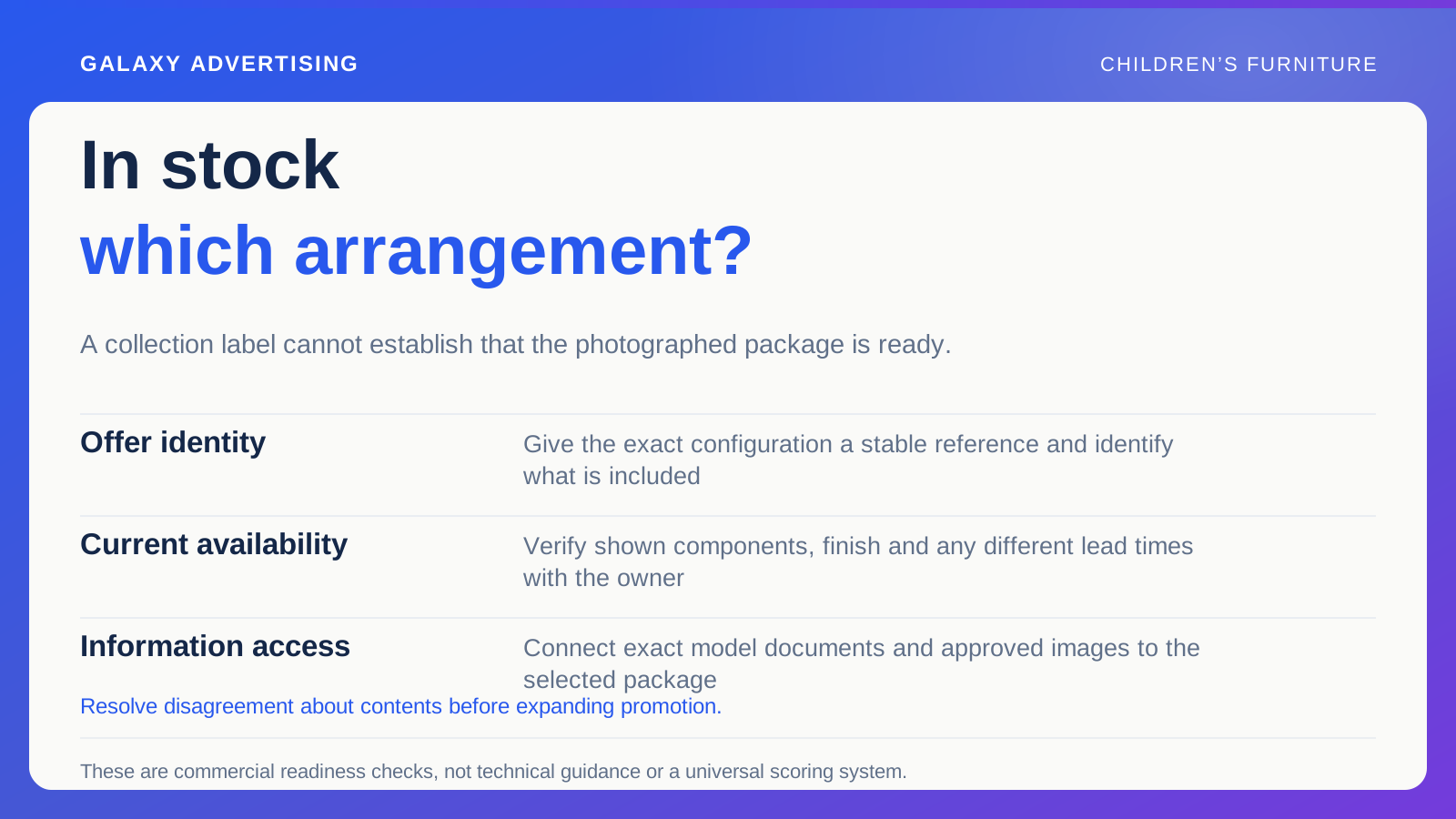
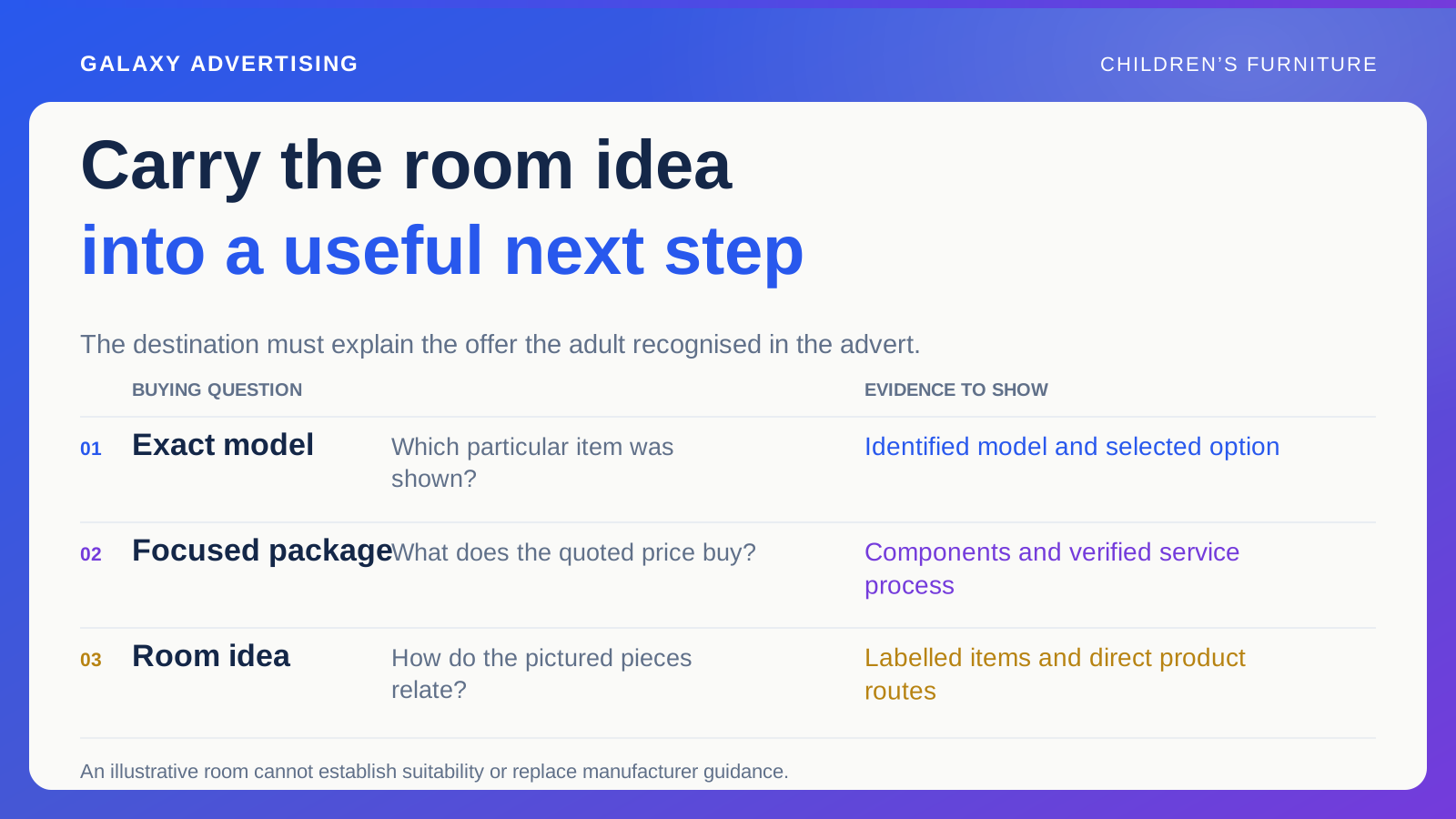
List the products and options visible in the creative. Identify the package components, items sold separately and objects used for styling. Otherwise the room photograph can suggest a complete offer that the displayed price does not buy.
Give those items stable references so merchandising, creative and fulfilment discuss the same purchase. A label such as study bedroom doesn't distinguish a frame from a bundle containing additional furniture. Agreeing the name isn't enough if the contents remain vague.
Confirm the selection before production. If an important component isn't available under the intended terms, revise the arrangement or message. Don't create one expectation in the campaign and leave the destination to explain a materially different purchase.
Build the stock calendar from the pieces
Check the frame, finish and included items individually. A package can look available at range level while one component follows another timetable. Your campaign needs the position for the arrangement someone actually sees.
Ask the operating owner what those differences mean for an order. Communicate the verified process. Don't invent an assurance that every package arrives together because it makes the seasonal message neater.
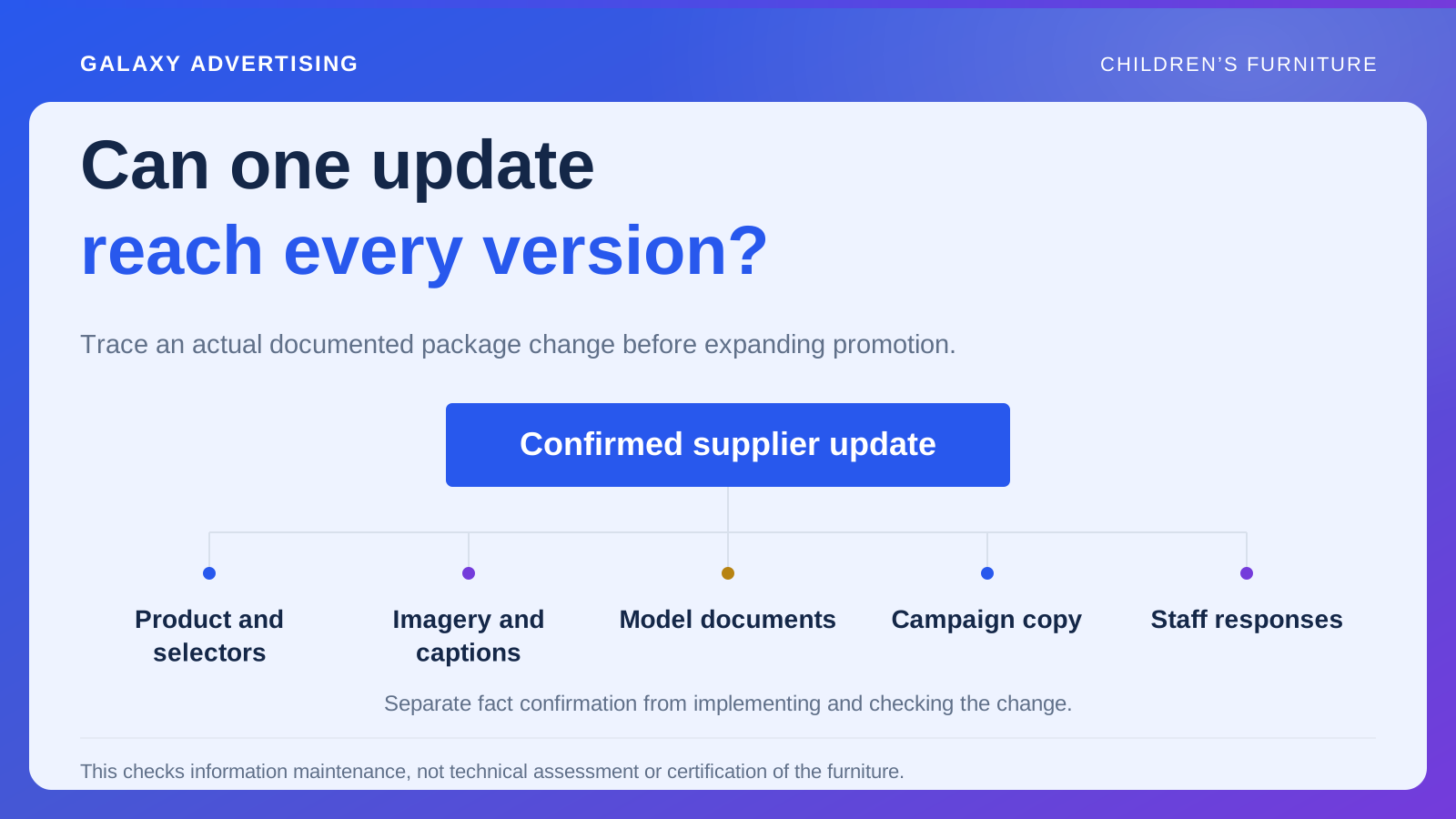
Keep the source of availability information visible and assign its update route. Changes must reach advertisements, pages and customer replies during the campaign. One current record is more useful than forwarded messages with unclear dates and product scope.
Allow time for the decisions before the order
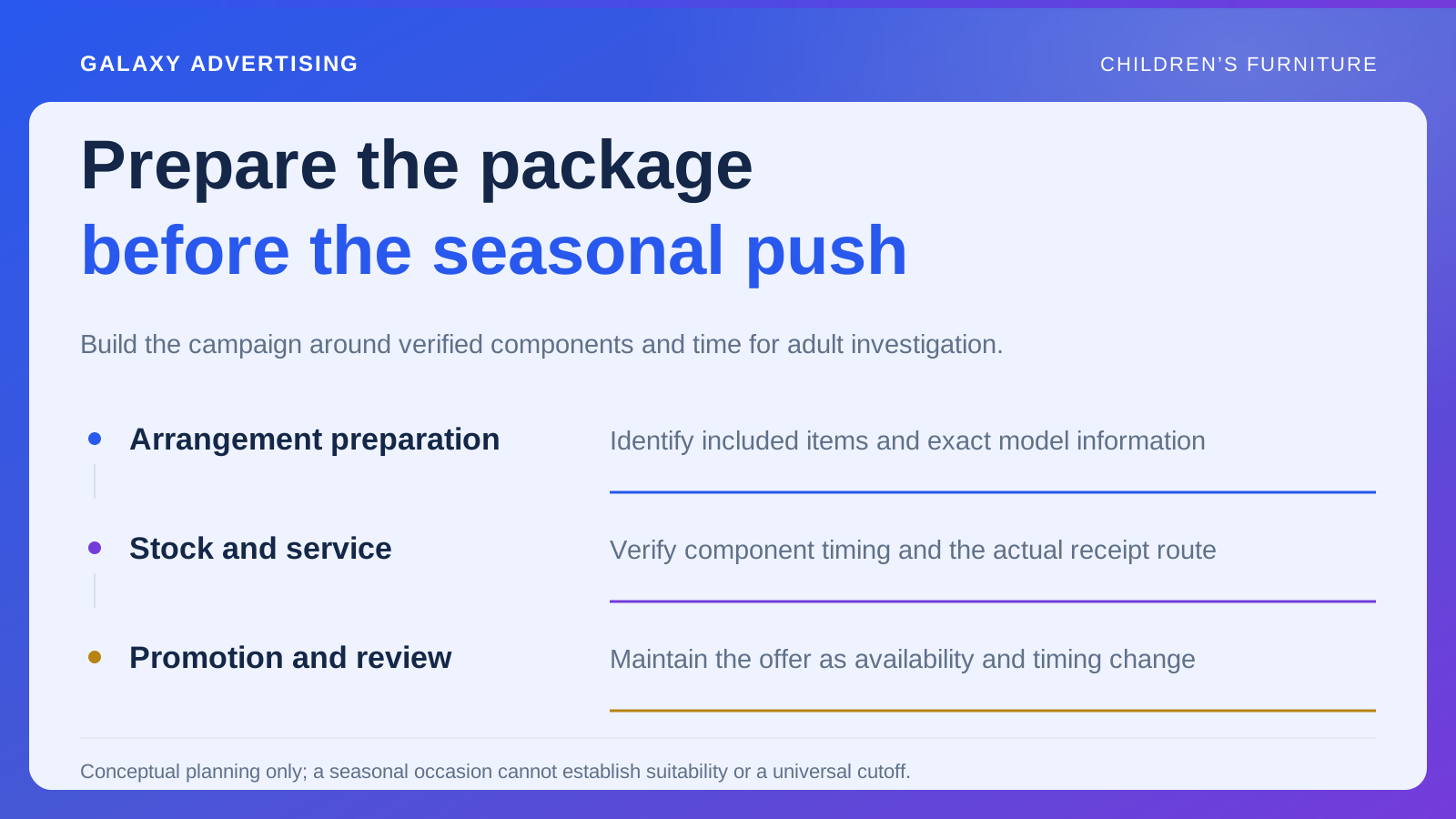
Work backwards through the information adults need: exact contents, documented dimensions, relevant instructions and the delivery or assembly service you actually offer. Give those answers a clear place before adding promotion.
Don't turn an approximate occasion date into a universal ordering deadline. If timing needs individual confirmation, make that route understandable and identify the team able to give a verified answer.
You can encourage planning without claiming a room refresh is effortless. Some decisions lie outside your control. Clear information helps adults organise the project; an exaggerated promise makes ordinary preparation feel like an unexpected obstacle the retailer failed to mention.
Prepare useful content before turning up the urgency
Commission material that helps with the seasonal task. A package guide could identify photographed pieces. A product route could distinguish product dimensions from package measurements and connect the relevant manufacturer documents.
Keep the information specific to the advertised arrangement. A generic planning article shouldn't imply that one layout or clearance applies to every bed. Preserve dependencies on the exact model, even when a campaign deadline makes simplification attractive.
Review it on a phone. Adults researching furniture need to identify the selected option and return to relevant detail without losing the package context. The content may be present while the route to it still makes the task unnecessarily awkward.
Decide what changes the campaign when plans change
Agree the events that trigger review: an unavailable component, a changed service estimate or the end of a promotional package. Assign both the person who confirms the fact and the person who revises the message.
Keep a version reference connecting creative, copy and destination. When earlier messages continue producing enquiries, staff need to establish which offer someone saw and explain the current position. They shouldn't have to infer it from the customer's description.
Once the occasion has passed, remove expired timing promises promptly. Useful package information may stay, but a deadline behind you must not keep appearing ahead. The next message can return to the ongoing room task using today's accurate offer.
Make this update route usable when the usual owner is away. A seasonal promise shouldn't depend on one person's availability to interpret a component change while the older campaign continues generating interest.
Read the response alongside preparation and fulfilment
Review the stock and package conditions that existed during the activity. Strong initial response followed by confusion might reflect a changed component or unanswered practical question. It doesn't automatically establish that the seasonal idea lost its appeal.
Keep completed work separate from observed commercial effects. Publishing a guide proves the content was delivered. It doesn't prove how many additional purchases it caused. Retain available enquiries and orders with their relevant limitations, rather than making the content carry a causal claim it cannot establish.
Take specific learning into the next calendar: earlier component verification, clearer delivery explanations or a better route to manufacturer documents. Those are useful changes you can assign and revisit.
The occasion can give people a reason to start planning. Your offer needs to give them something accurately described to plan around. That is a firmer basis for a seasonal furniture programme than a countdown attached to a room package nobody quite finished preparing.