Should you pay for more visits when your team is still explaining what comes with the bed? Appealing images can attract interest while unresolved supplier records and unclear packages leave customer service reconstructing what shoppers mean.
More traffic could increase that work before producing more suitable purchases. Review the complete offer first. Advertising can introduce relevant demand, but facts, page clarity and operational handling determine whether your business can progress it usefully.
Name the obstacle you can actually observe
Use campaign, enquiry and order information to describe the problem. Perhaps relevant visits are limited. Perhaps the destination mismatches the advert, contents are unclear or a service dependency remains unresolved. Those are different investment questions.
Keep the observation apart from a preferred supplier's task. Customers being unable to identify included storage does not automatically mean you need another campaign or a complete website redesign. Start with the condition, then consider the response.
Name the affected configuration, meaning the particular arrangement, and its route. A general concern about the children's range can hide several unrelated issues. Specificity helps identify who can act and whether the proposal addresses the actual constraint.
Check which packages are ready for demand
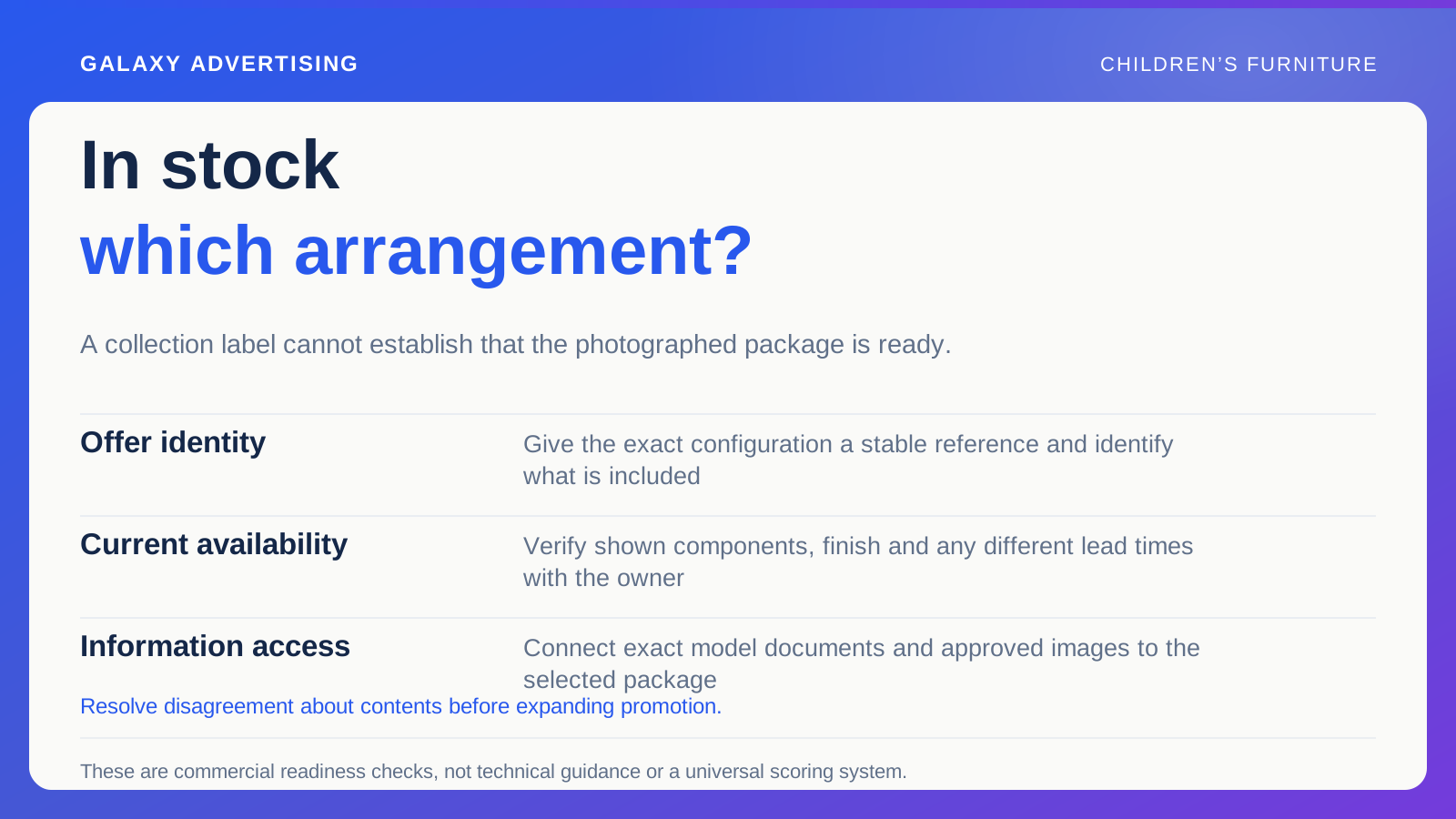
Can you identify, explain and supply each arrangement you intend to promote? Family level availability does not establish that the exact package in the photograph is ready for orders. Check the offer at the level someone buys it.
Include source completeness. Stock can be available while the page has no approved answer to an important question about contents or documentation. That information gap belongs in the readiness discussion alongside supply.
This isn't a reason to delay every campaign until every possible fact is perfect. Identify material dependencies for a coherent offer and decide what is ready now. A narrower, maintained range can be a better first investment than broad promotion across unresolved exceptions.
Understand the order you want more of
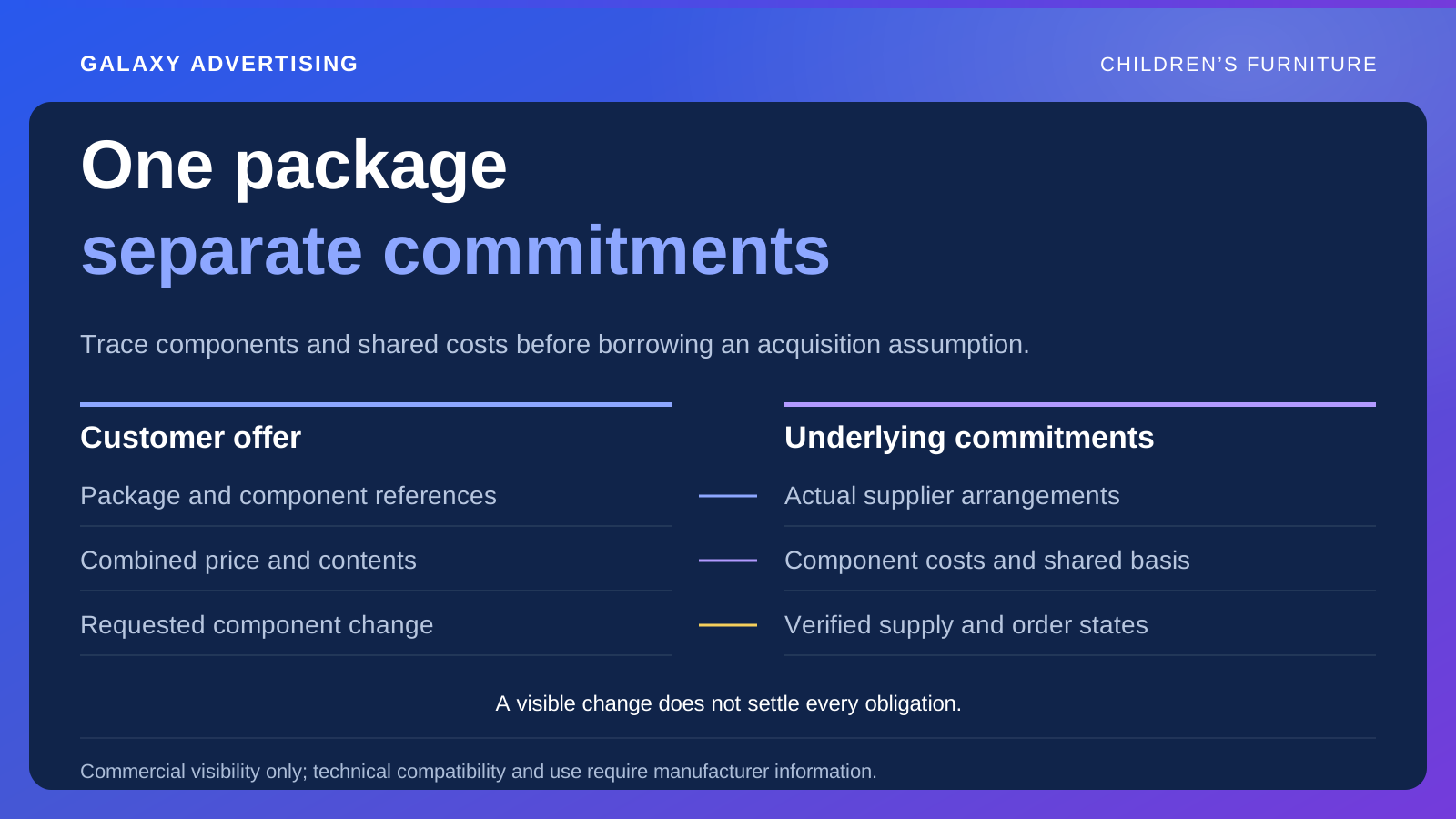
Use consistent revenue definitions and relevant variable costs to understand the economics. A package containing several components can create different supply and fulfilment obligations from a basic frame. The headline value doesn't tell the whole story.
Include repeated clarification and correction costs where you can assess them appropriately. Label estimates. A convenient assumption about staff time should not appear in the review as a measured operating fact.
You aren't producing a precise forecast for every visitor. You are judging whether another unit of activity is likely to help under current conditions. If the order's economics remain unclear, more media spend may amplify the uncertainty rather than answer it.
Price the whole information repair
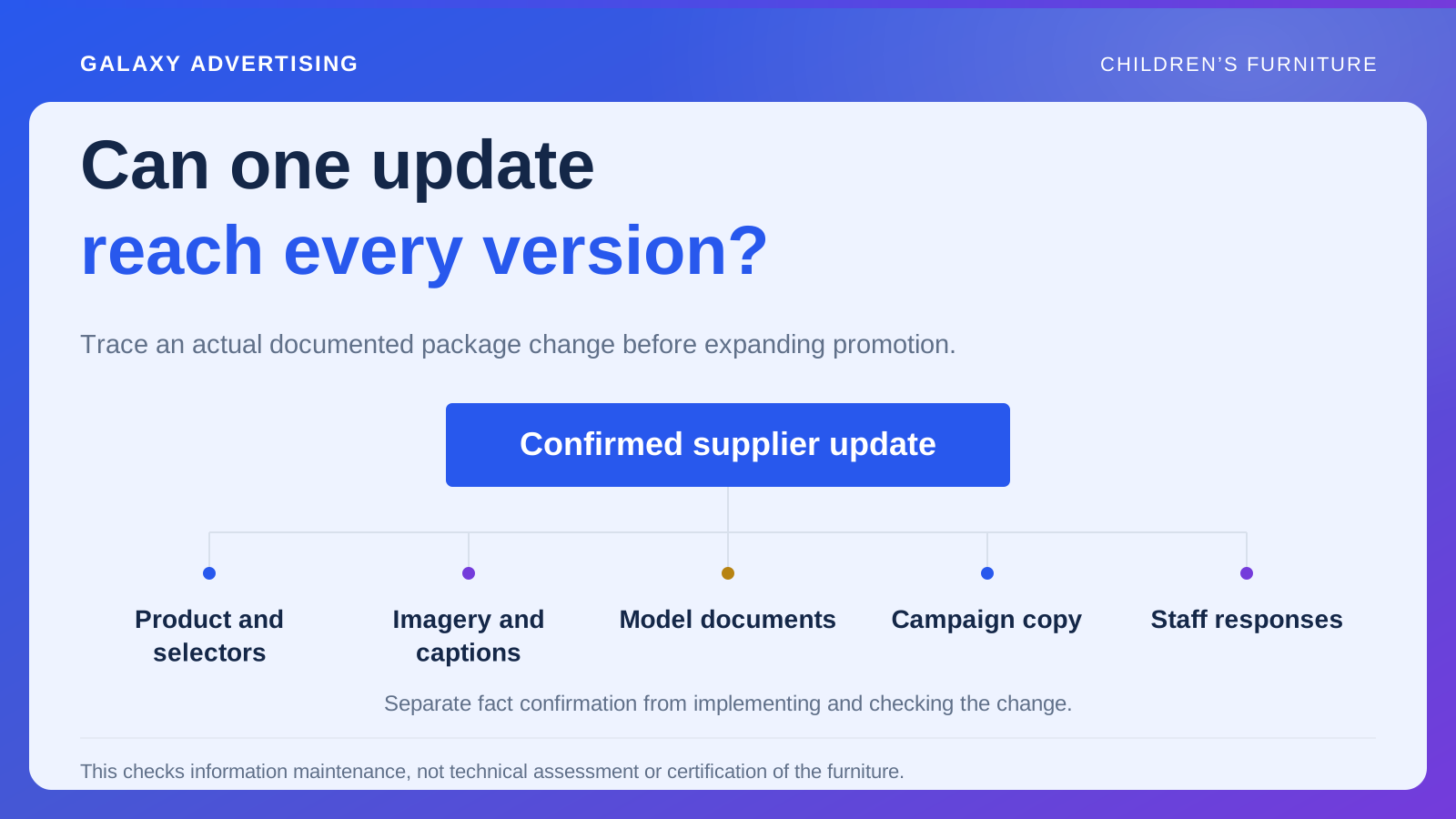
An unclear package might need supplier clarification, revised records, page copy, image labels and checks of dependent adverts. Include the owners and effort needed to complete that chain. Pricing only the visible design leaves part of the intervention unfunded.
A cleaner summary cannot supply an answer the product team has not established. Make the factual dependency part of the proposal, rather than discovering it when the designer asks what to write.
Consider maintenance too. A manual description needs an update route when components change. A structured source might need initial preparation while reducing repeated work. Compare usable, maintained outcomes, rather than isolated production quotes that cover different amounts of the problem.
Choose a bounded investment with a complete route
Pick work you can finish and review. That could mean clarifying an important package family, preparing a dependable destination or testing a defined source of demand for an offer already ready to sell.
Keep the first increment coherent. Splitting work so narrowly that customers still encounter contradictions doesn't produce an understandable route, even if every individual task has been completed. The wider catalogue can remain a separate project.
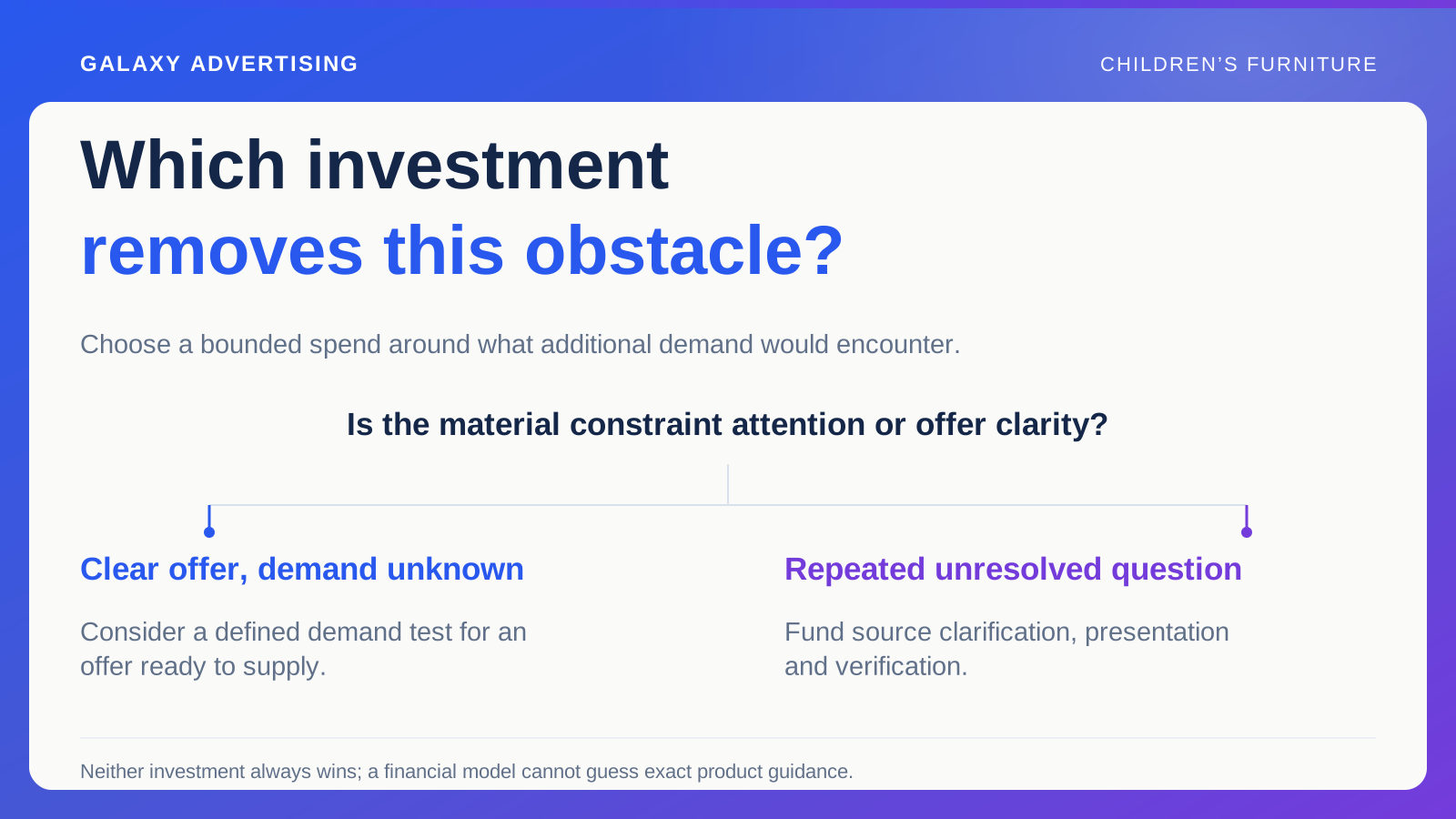
Write down why this action takes priority. Paid traffic can be appropriate when the offer is clear and demand is the uncertainty. Information repair can be appropriate when existing relevant interest repeatedly reaches the same avoidable question. Neither is automatically the better investment.
Don't let a financial model guess product guidance
Unclear measured sales effects are not a reason to omit uncertain product guidance. Information for the exact model and the appropriate qualified route remain part of factual communication, rather than optional extras awaiting a persuasive revenue estimate.
Ask the responsible product or supplier owner to clarify unresolved source requirements. Marketing cannot replace that work with broad reassurance simply because it would permit an earlier launch.
The commercial judgement concerns where to invest effort. It doesn't grant permission to guess about a child's circumstances. Keep that boundary clear so writers, support staff and account managers aren't pressed into answers beyond the evidence available.
Record what you are deferring as well
Name the next plausible use of the same capacity and why it is waiting. You might clarify an important package before commissioning another broad creative set. Record the supplier fact, public explanation and verification needed to finish the clarification.
That makes the choice reviewable when the dependency changes. It shouldn't become a permanent preference for information work over advertising merely because that was the right answer this time.
You can then assess whether the intervention removed the stated obstacle and whether the deferred opportunity now deserves funding. The recommendation has an observable purpose, rather than just a claim that this work feels more urgent.
Check the obstacle after the work
Can adults now identify the package? Can staff answer the question from approved records? Did a bounded campaign bring useful interest to something you can fulfil? Assess the particular condition the investment was intended to change.
Keep those observations separate from causal revenue claims. Availability, acquisition mix and other offer changes can affect commercial results at the same time.
More spend becomes a considered choice when you understand what additional demand will encounter. The next useful investment could be advertising, information or operations. Its strength lies in an explainable step that improves the buying route, rather than an automatic response to the wish for growth.