We can be far too quick to borrow the bed's margin when pricing advertising for the whole room package. Add the mattress and desk, though, and you've changed the commitments behind that attractive sales total.
The advert may show one arrangement and the retailer may sell one package, while the components use different supply routes. Purchasing and operations then hold obligations the campaign summary doesn't reveal. Understand the package before reaching for another generic advertising ratio. A reliable component record lets you judge the actual offer, recognise changes and distinguish known information from an inherited assumption.
Give the package an identity you can trace
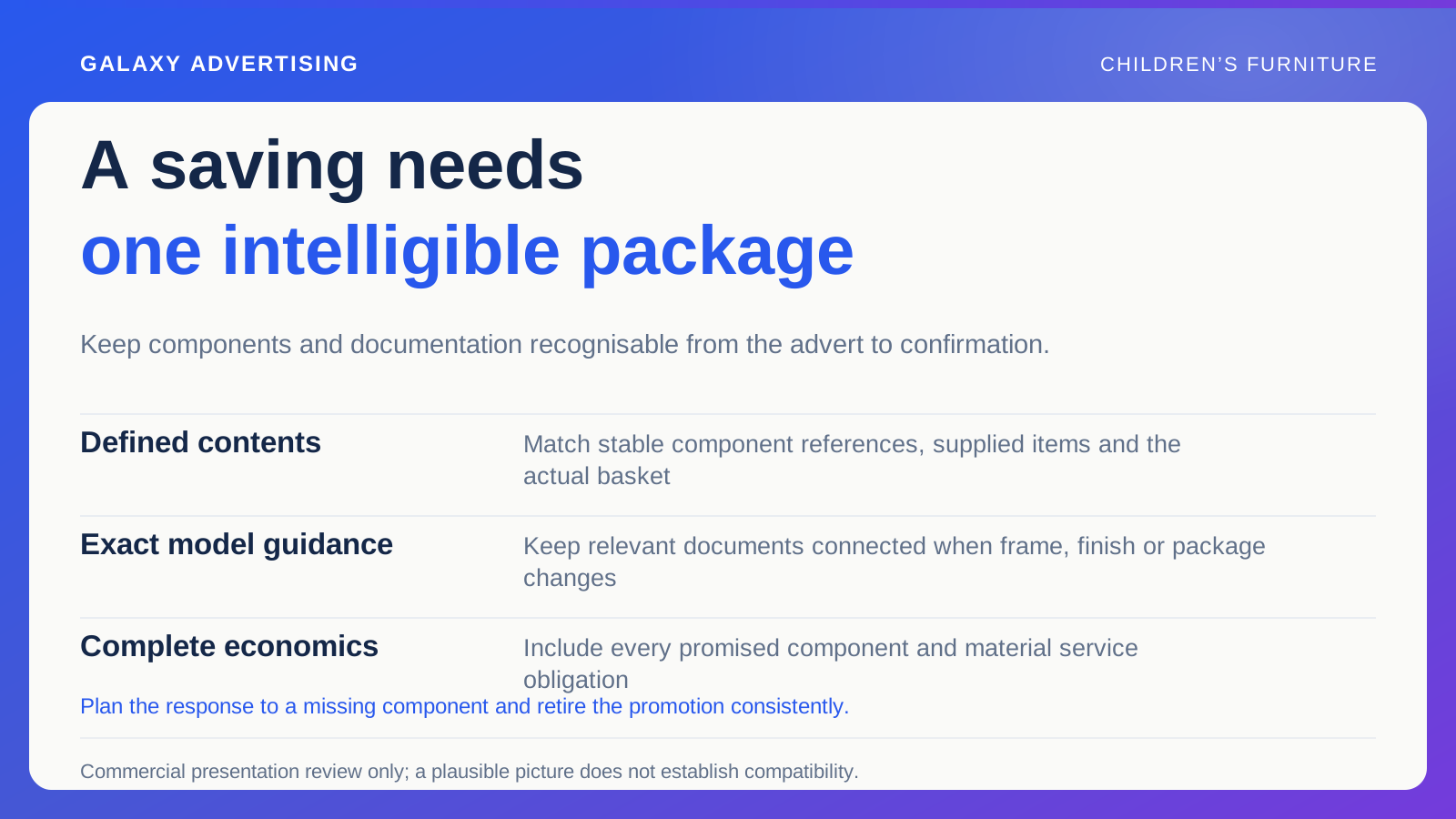
Record the advertised arrangement and exactly which components its price includes. Distinguish optional additions and styling from supplied items. Keep the package reference alongside individual item references so an order can be traced to the contents the customer accepted, rather than today's collection description.
A hypothetical package might combine three paid components before a later promotion removes one or adds another. Preserve both versions instead of overwriting the original. A familiar marketing name shouldn't hide changed commercial commitments inside a reporting category that appears continuous. You need to be able to retrieve the earlier offer.
Map each component's actual supply route
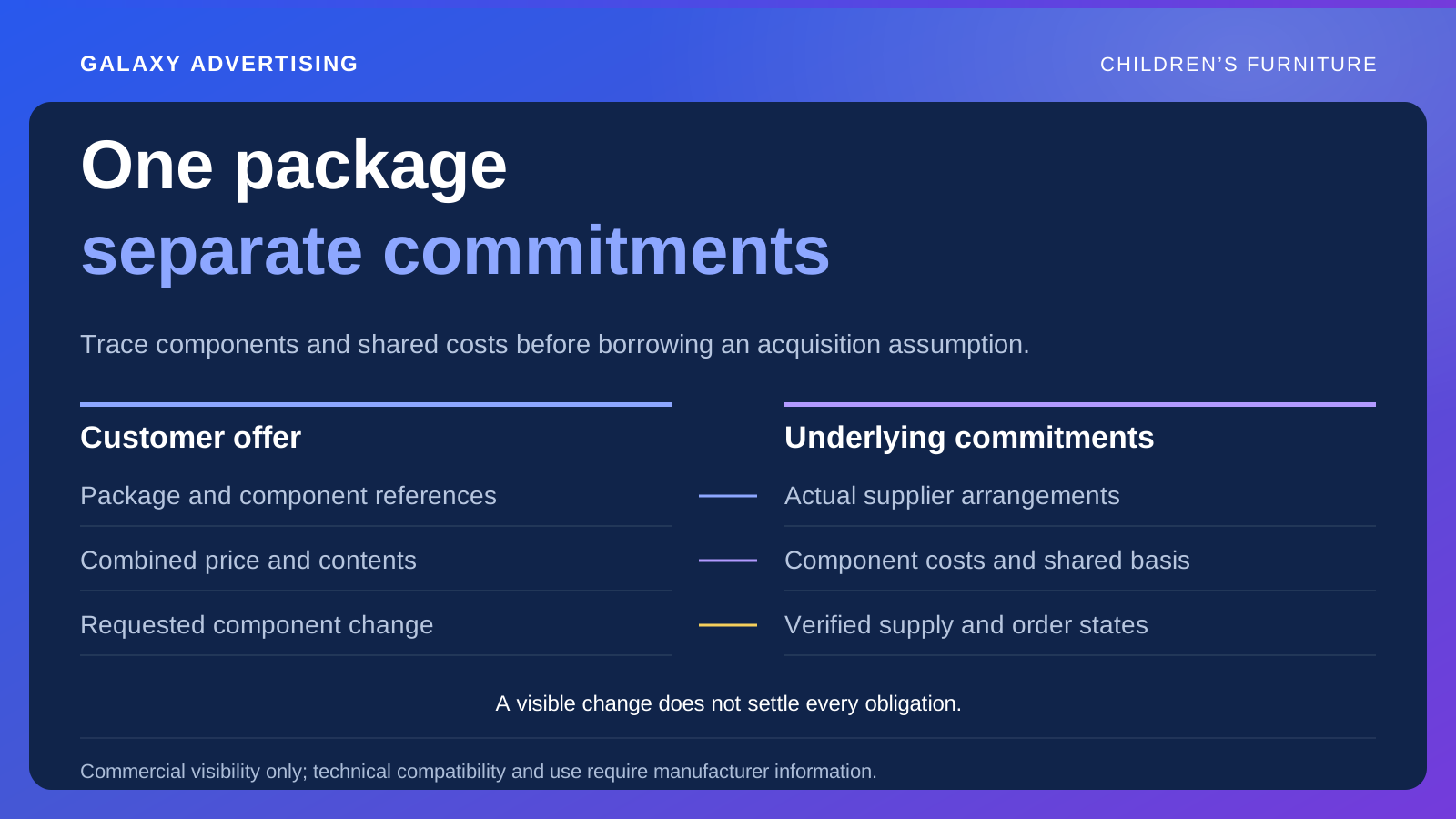
Identify who supplies the bed, mattress and desk and which documented arrangement applies to each. Sharing a room photograph doesn't establish one dispatch, one charge or one operating owner. Record the route actually used instead of treating the scene as a description of how fulfilment works.
Use your business records rather than speculate about suppliers. Mark anything requiring confirmation and assign who resolves it. A known dependency gives the review an honest boundary while the answer is established. An unmarked assumption makes the package look more settled than it is.
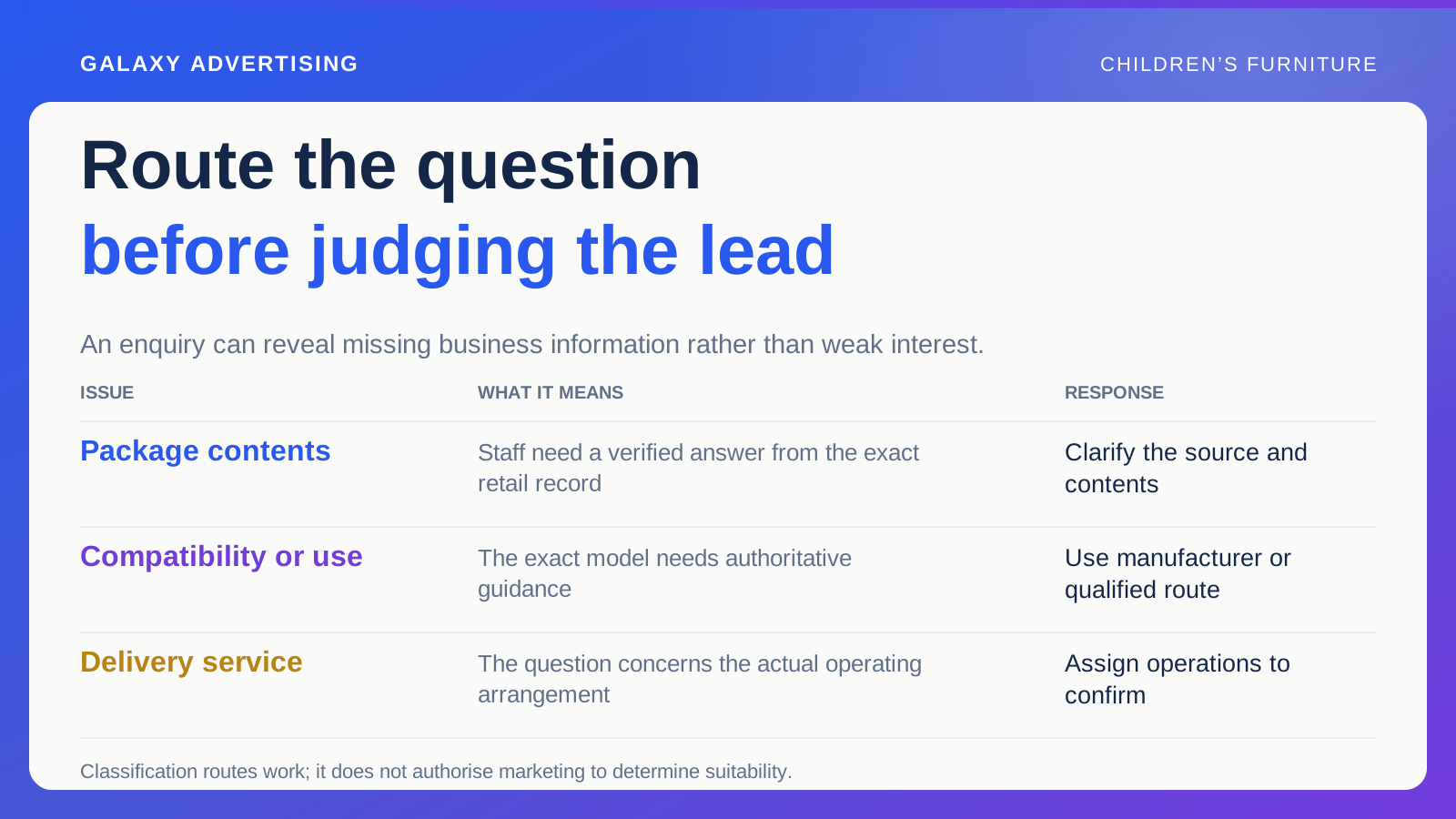
This is commercial visibility, not assembly or safety advice. Compatibility, use and technical questions belong with relevant manufacturer information and responsible expertise. Don't invent technical reassurance to make separate items appear easier to sell together. The commercial review needs its own clearly defined scope.
Show shared costs without duplicating or losing them
Ask finance and operations how relevant component and shared costs should be represented for this decision. Label the agreed basis so another reviewer understands it. A summary becomes useful only once it can be traced back to the real obligations it claims to describe.
A charge applying once to the combined order shouldn't silently appear against every component. A separate obligation shouldn't disappear because the report calls the arrangement one product. Keep both distinctions visible. Combining the offer doesn't make the underlying costs identical or automatically shared.
This isn't a universal accounting rule. Businesses use different records and cost views. Your chosen approach needs to explain what it includes, how it treats shared work and where figures originate. Agree that basis with the responsible colleagues, rather than letting an advertising report establish policy by accident.
Keep a requested change distinct from a completed one
When a customer asks to remove or replace a component, retain the request and its status. A revised basket display doesn't establish that every related commercial or supply commitment has already changed. The visible customer update and underlying obligations need their own verification.
Record the item and supplier arrangement needing review, who handles it and what remains unresolved. Follow your applicable process and relevant agreements for a cancellation or change. The advertising team shouldn't invent the rule because it needs a convenient way to revise the reported offer.
In a clearly hypothetical desk removal, you may need to check the revised customer offer separately from the existing supply position. Those tasks are related without necessarily completing together. Retain both states so one reassuring update doesn't obscure unfinished work elsewhere.
Let the order describe each component's state
Use a maintainable distinction between confirmed, pending verification and other statuses your operation actually supports. Attach them to components instead of giving the whole package one reassuring label. The record needs to describe what has happened, rather than imply everything moved together.
A supplied bed with another component unresolved is different from a fully completed package. Show that difference rather than interpret the initial order value as the final settled outcome. The commercial conclusion needs to reflect the states you can verify now.
Keep internal status and customer communication coherent. An operating label should help staff choose the next action. It shouldn't become public wording the customer cannot understand. You still need a clear explanation of the offer and any change being discussed, using terms that serve that conversation.
Review combinations that could alter the decision
Compare meaningful package versions and supply patterns. Orders under one room collection can have different economics, and a promotion can change the combination even when the bed looks familiar. Choose distinctions because they could change product emphasis, offer description or confidence in further advertising commitments.
Don't fragment the range into groups too small to interpret or maintain. Include ordinary orders and consequential exceptions in a sample. A model covering only unchanged, completed packages can miss the handover creating uncertainty. The sample tests the recording process. It doesn't establish how frequently every exception occurs across the business.
Set acquisition limits around the offer you know
Tell the campaign team which versions have an approved commercial basis and which need verification. That lets the owner distinguish a prepared offer from an explicitly bounded learning commitment. Don't automatically apply the standalone bed's acquisition assumption to the complete arrangement. Components and supply work have changed what's being promoted.
The shared contribution principle can be used once inputs are dependable. Contribution is the money remaining after the costs included in the calculation. First decide whether the inputs describe today's package well enough for more investment. Easy access to combined revenue shouldn't give an unexplained package a confident target.
Keep the record current where changes originate
Assign ownership of contents, component costs and material supply updates. Marketing needs reliable notification when the offer changes, rather than a duty to infer exceptions from a new photograph. Trace one revised package through the public offer, component references, order status and commercial review, checking the systems people actually use.
Shared costs, separate obligations and changing states don't behave like one ordinary item just because they're sold in one arrangement. Bringing them together makes the offer commercially intelligible. That gives the next acquisition decision a firmer basis than a blended margin whose underlying commitments nobody has traced.