An adult asks about a bed package, and another later orders it using a different contact reference. Your marketing report shows a purchase. The enquiry review shows no progression, leaving a gap that matching products and timing seem to explain.
They might concern the same household decision. You may not have evidence that they do. Useful attribution, the allocation of credit to recorded interactions, keeps confirmed connections and consistent transactions without inventing the family story needed to make every record join neatly.
Start with the order your business received
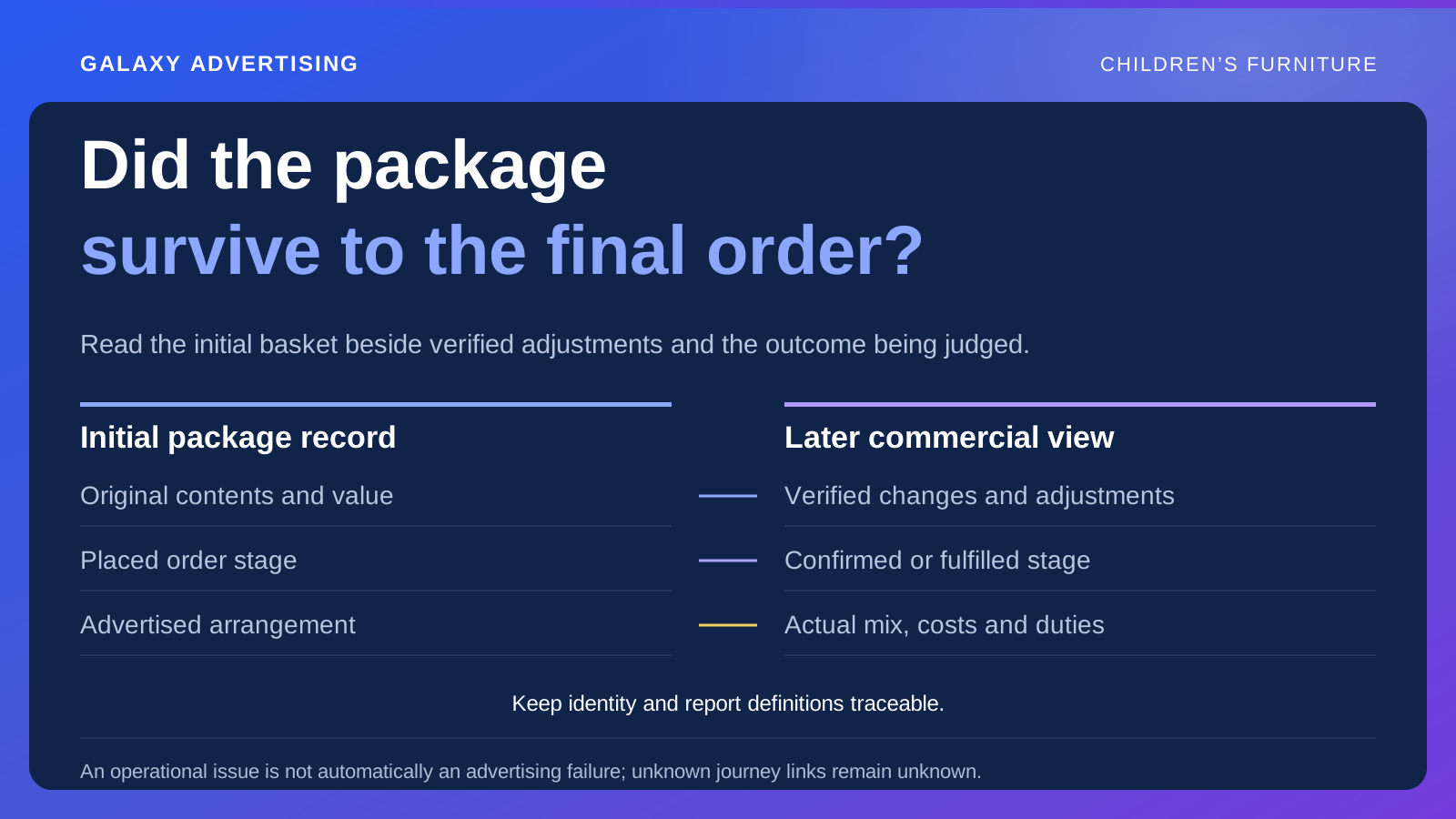
Identify the order record used in management reviews and the value basis it represents. Say whether you are discussing placed, confirmed or another defined stage, and explain how material changes are handled. Otherwise two reports can appear to disagree while describing different outcomes.
Keep quotations and enquiries distinct from completed revenue. A substantial package enquiry matters commercially, but it is not the same result as an actual transaction. Its potential value doesn't change its status.
Use a consistent order view to prevent double counting. An attributed purchase, staff assisted conversation and order confirmation could all concern one transaction. Three operationally useful views do not turn it into three sales, however busy the reporting looks.
Define an interaction before trying to connect it
Describe what each record shows: a product question, package enquiry, quotation or another observed event. Use meanings the team can apply consistently. Unclear event labels make later connections harder to interpret, even where the underlying records are sound.
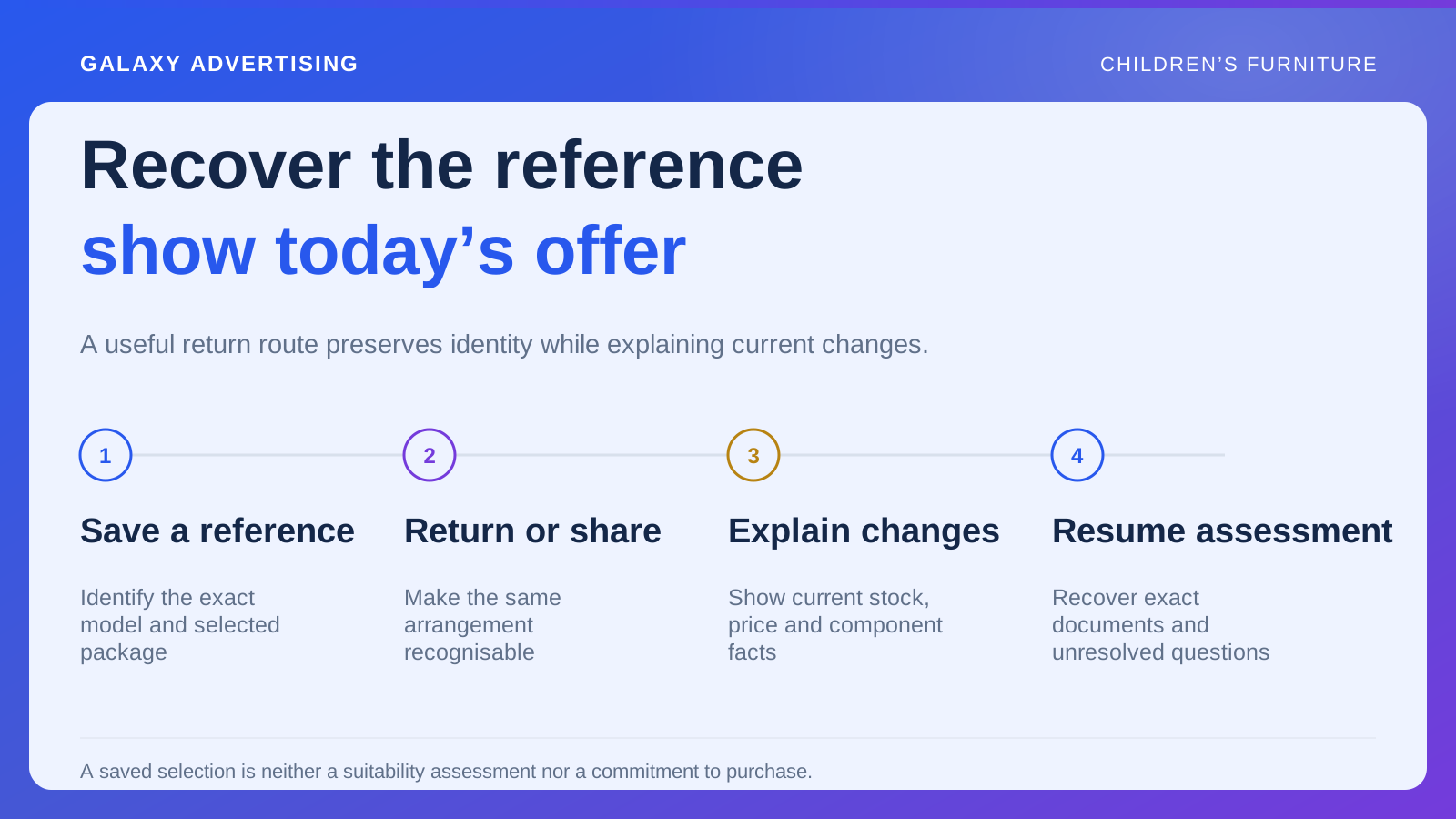
Retain relevant model and configuration references, meaning the selected arrangement, when customers supply them. That helps staff answer and identify the offer without requiring a broad explanation of household circumstances.
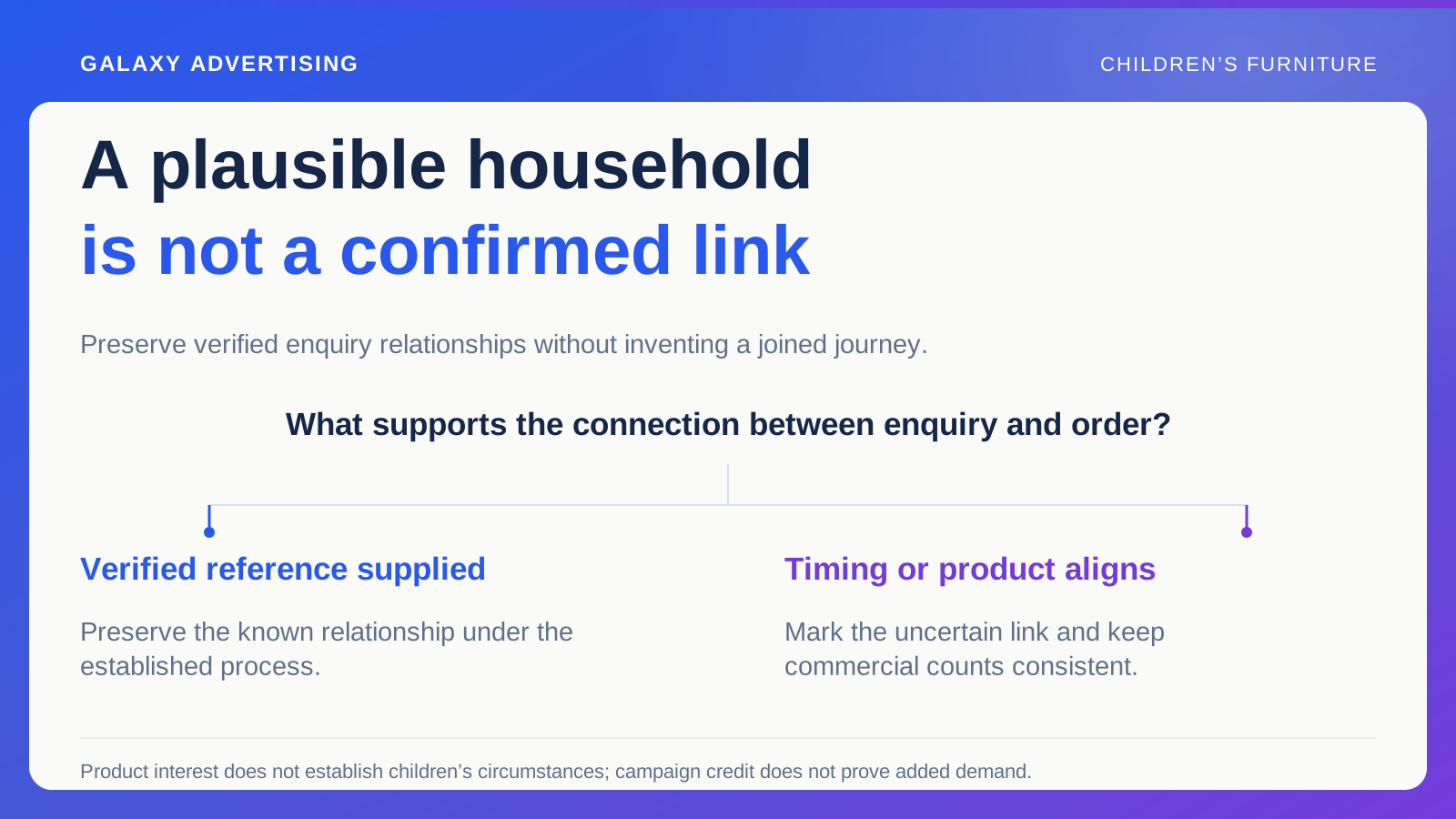
A similar product reference does not prove that two people belong to the same purchase. Popular models can attract unrelated enquiries. Distinguish a relationship you know from an association that merely seems plausible. The report should leave that difference visible.
Keep a connection when you can verify it
If an adult identifies an earlier quotation or supplies a verifiable enquiry reference, preserve the relationship under your established information handling process. It helps the team continue a real commercial conversation, rather than reconstruct one from circumstantial detail.
Where the connection remains uncertain, label it accordingly. Don't assign the order to whichever interaction makes the report look complete. A blank is more honest than a confident sequence supported only by the timing of two records.
This measurement task isn't a reason to collect unrelated information about children. You are examining an adult enquiry, relevant offer and actual order. Broader information needs their own legitimate purpose and responsible process, rather than an assumption that more data necessarily produces better attribution.
Separate product information from guesses about the audience
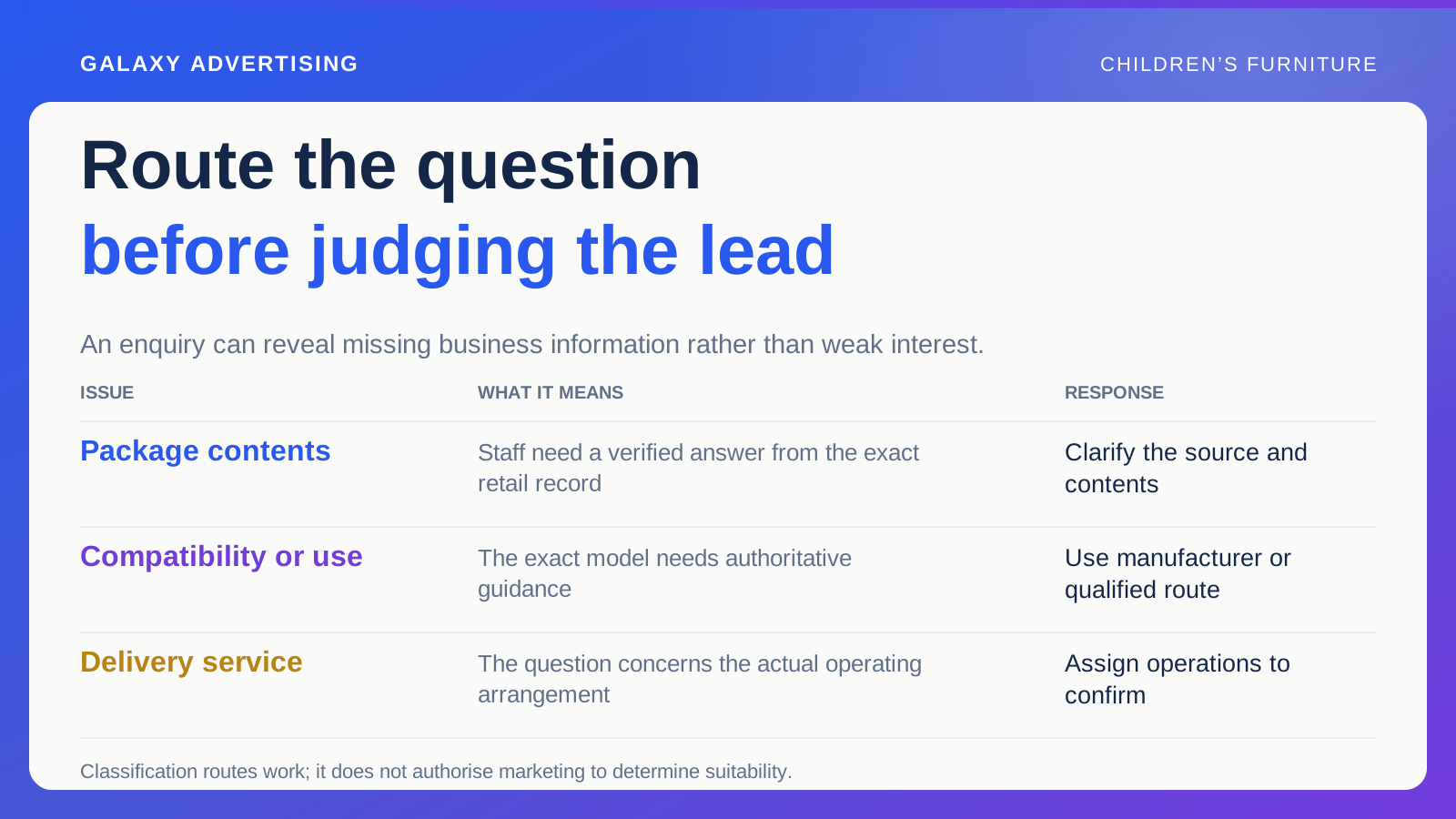
The selected model needs accessible manufacturer guidance in the buying route. That is different from deciding what a marketer can infer about a household because it viewed a particular product. Keep the two questions separate.
Interest in a bed type doesn't establish a child's age, needs or circumstances. You may know only that an adult opened a page or asked a defined question. Preserve that limited observation instead of expanding it into a confident audience description.
The distinction helps the report lead to defensible action. Enquiries about contents can support a content decision. A speculative portrait of the families making them adds apparent insight without necessarily improving what the business should do next.
Explain what campaign credit can establish
Advertising reports assign credit using observed records and reporting rules. They cannot reconstruct private discussions or establish precisely which interaction changed the eventual decision. A connected report still has boundaries around what it observes.
Someone might receive a useful product answer, then return through another route. Equally, an attributed order could come from somebody already intending to buy. Keep both possibilities present when discussing the campaign's apparent commercial return, rather than choosing only the flattering interpretation.
Use wording that fits the evidence. A recorded connection under the available attribution basis is narrower than a claim that the campaign created every associated purchase. That difference matters when you decide whether to continue or expand spending.
Investigate the discrepancies that change the decision
Choose a limited sample of orders or enquiries that materially affect interpretation. Review known references, event definitions, timing and value basis with the people responsible for the systems. The purpose is a useful explanation, not a complete household biography.
Don't circulate unnecessary personal details just to make the example vivid. A product or quotation reference could resolve the issue more effectively than a speculative identity match. Use the context needed to explain the records and leave unrelated material out.
Classify the discrepancy before changing implementation. A lost reference, later order adjustment and different attribution rule need different responses. A broad instruction to improve tracking can hide those separate tasks and leave the actual cause untouched.
Keep the reason for a confirmed match with the analysis. A future reviewer should be able to distinguish a supplied quotation reference from an association inferred by the report's author. Both might look identical once drawn as a neat sequence.
Choose an action your evidence can carry
The review might justify clearer enquiry references, a repaired event definition or a better package explanation. Those remain useful improvements even when part of the path to purchase is unobserved. You don't need the entire household story to correct a specific issue.
Uncertainty shouldn't excuse unlimited spending or dismiss every helpful interaction. Fund a bounded investigation with an explicit purpose and affordable commitment while staying honest about what the records cannot establish.
More than one adult can participate without the retailer identifying everyone involved. Keep the focus on the buying route and commercial outcome you can substantiate. Investment deserves a firmer basis than a perfectly connected report whose crucial relationships were supplied by the person writing it.