A polished mockup does not settle how a product page should work. If nobody has agreed how shoppers compare packages or what changes with a selected configuration, approval simply passes those decisions to development.
That is what can happen when a retailer asks for a cleaner page. The appearance gets resolved while important buying questions remain open.
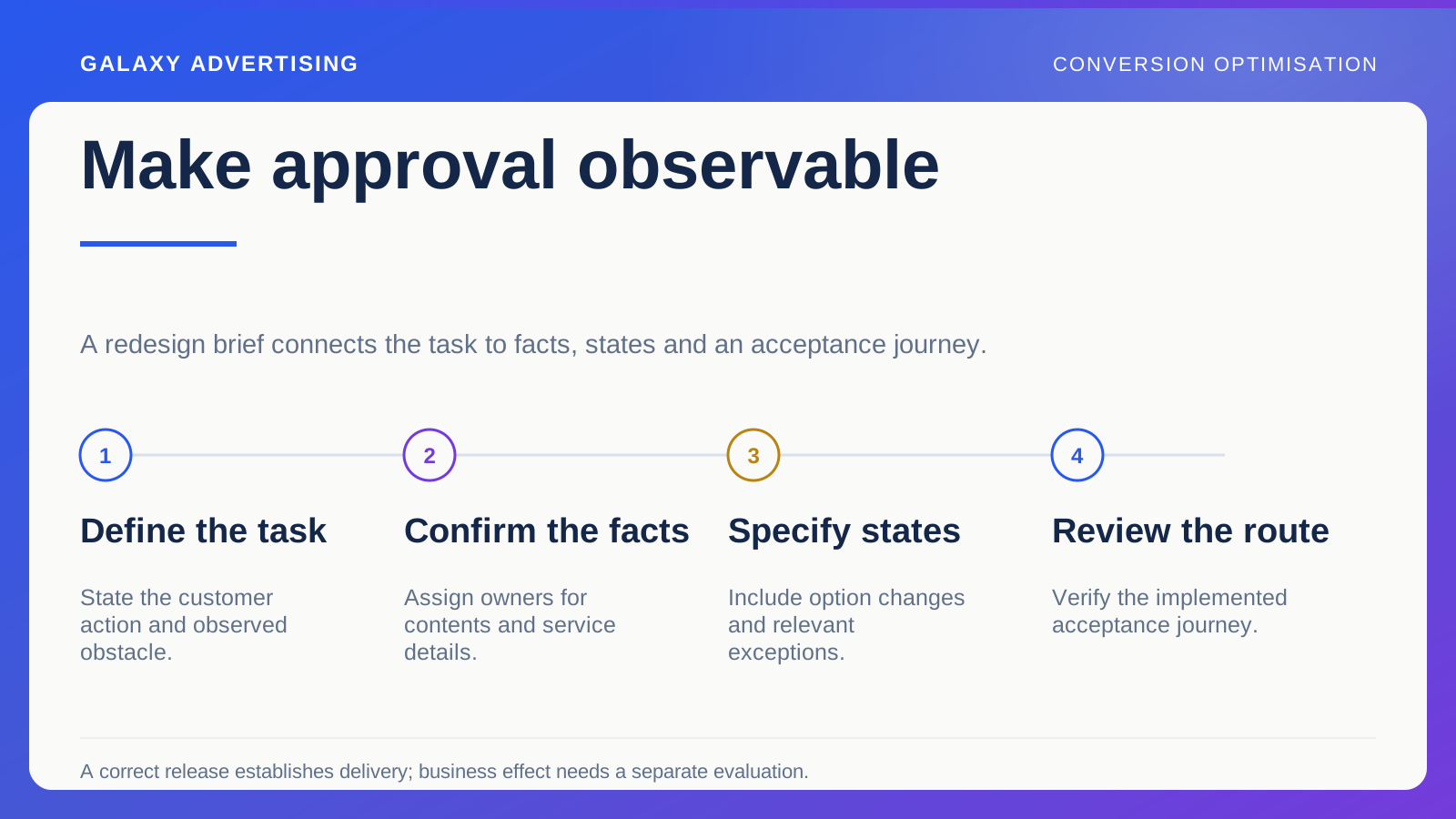
Begin the redesign brief with the customer task, the observed obstacle, the source facts and the conditions for accepting the completed work. Creative judgement then has a clear purpose, and everyone can discuss what a useful improvement actually involves.
Describe what the customer needs to do
Write the task in customer language. Someone might need to select a finish, confirm its associated price, image and delivery information, then add the product to basket.
Keep that task separate from a visual solution. Making the purchase button larger is a proposed change. It does not explain which observed obstacle the change should address or what the customer currently struggles to complete.
Include relevant arrival context. A person following an exact product advert already knows different things from somebody comparing a broad range. Preserve that context without implying every visitor has one identical route or motivation. A useful brief gives the designer the task and its circumstances, rather than an imagined universal shopper.
Show the problem somebody can reproduce
Attach examples of the current obstacle. You might show a failing control, a contradiction between the selected option and displayed information, or a fact customers cannot reliably locate.
Label hypotheses and visual preferences separately. A designer can consider both, provided everyone understands which findings are established and which ideas still need evaluation.
A weak conversion rate can justify investigation. It cannot prove the layout caused the weakness. Avoid turning a general commercial concern into an unsupported diagnosis. Say what the team knows and which uncertainty this work is meant to reduce, so the brief does not quietly promote an assumption into a fact.
Make the factual dependencies part of readiness
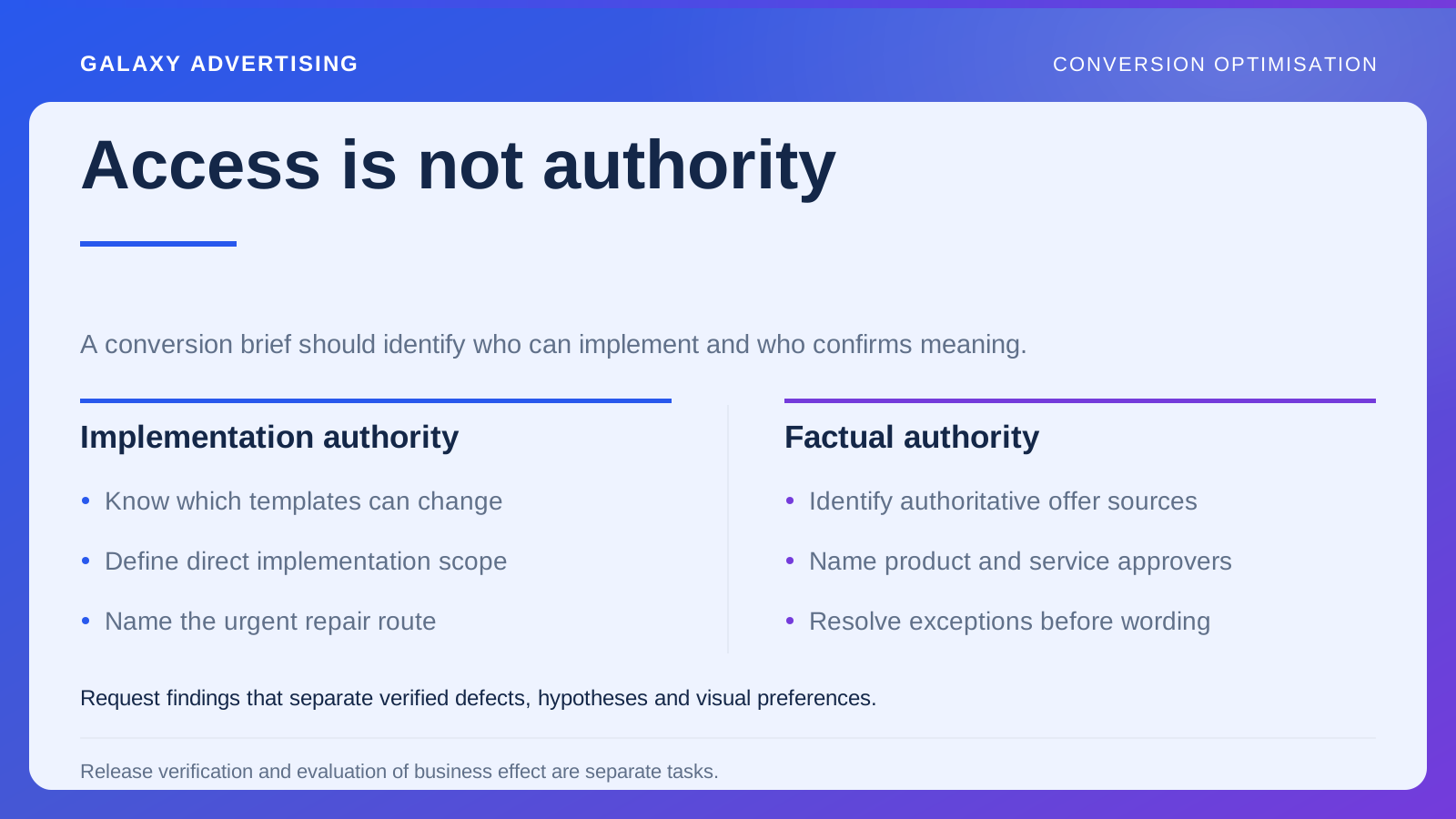
List what the design needs: package contents, relevant measurements, prices, availability and service conditions. Name the people who can approve the facts and resolve exceptions.
A comparison component needs complete enough attributes to provide dependable answers. A concise delivery summary needs an established service for the selected product. Presentation cannot compensate for uncertainty in either source.
Treat those dependencies as readiness requirements, rather than a development footnote. Otherwise a finished visual design can create pressure to fill uncertain fields with broad wording to meet the release date. Visual readiness and offer readiness are different conditions. The brief should make the distinction easy to see before it becomes a problem.
Include the states behind the attractive default screen
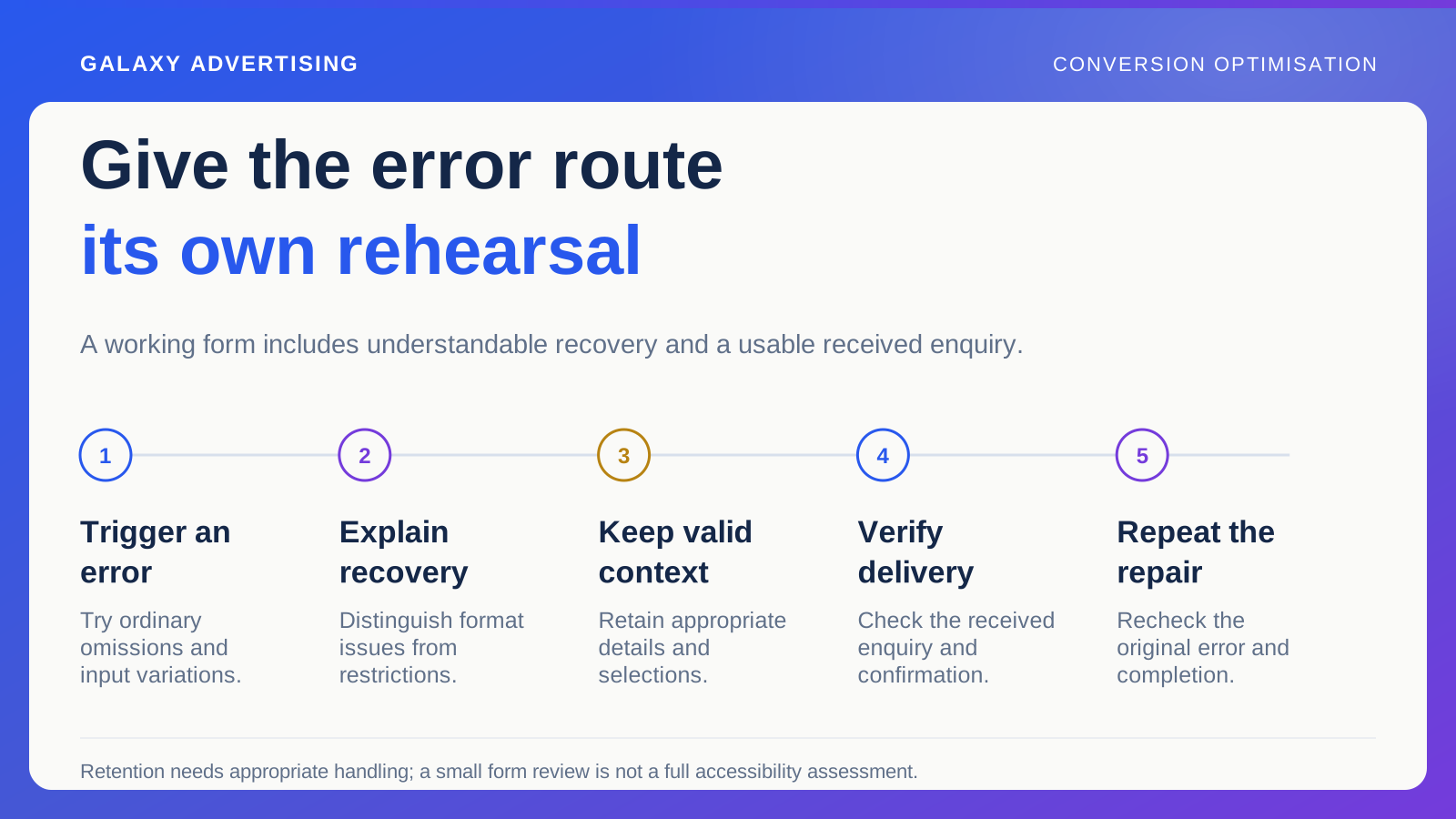
Describe important option changes, unavailable combinations, validation messages and recovery routes that affect the task. The product page needs to work beyond its most photogenic starting point.
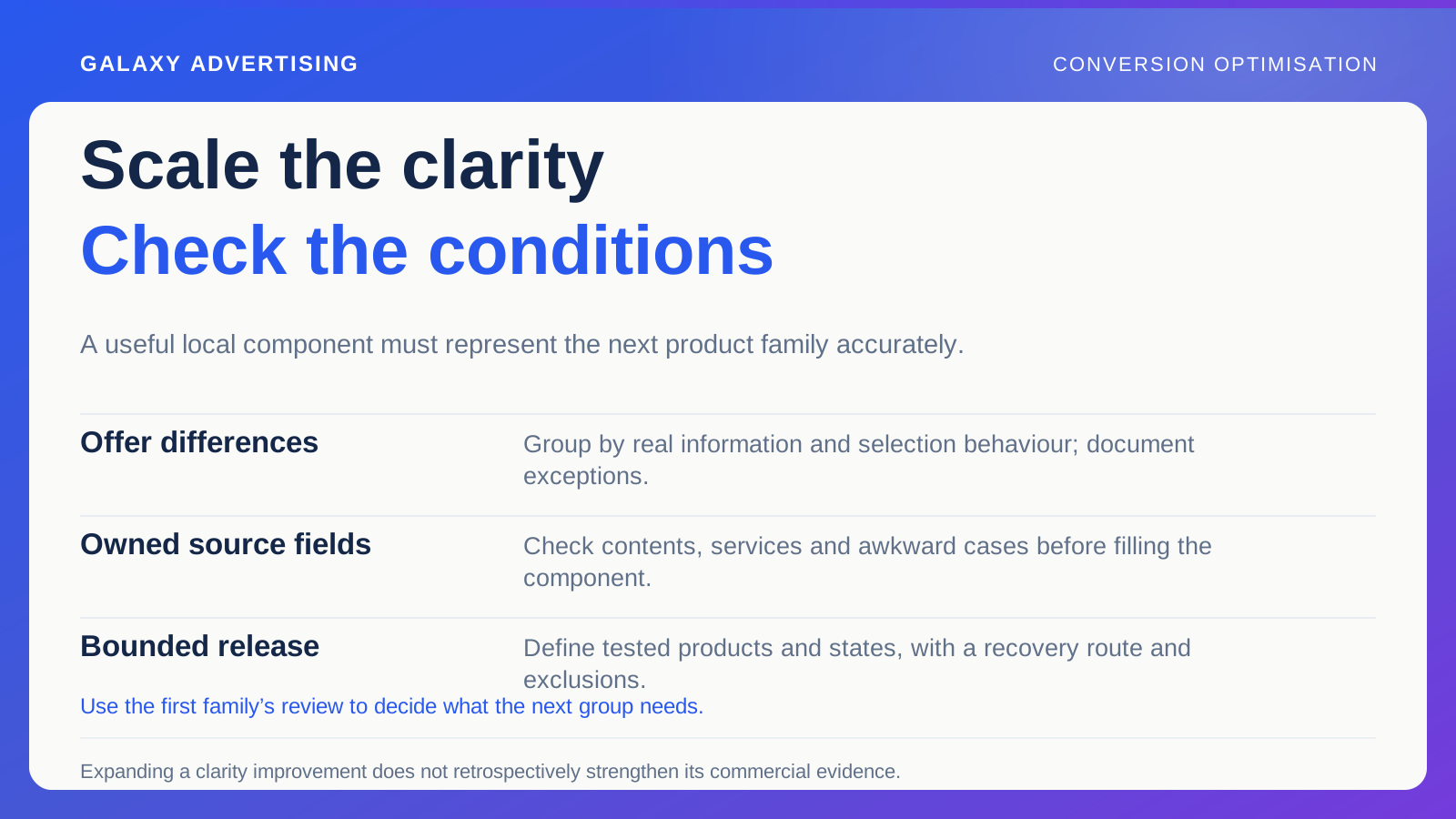
Choose representative cases exposing meaningful differences. Fixed products and configurable packages may look similar while requiring different behaviour from their information.
An exhaustive scenario list is not automatically useful. Prioritise states relevant to the offer and known problems, then record the review's limits. A bounded plan the team can complete is more useful than a vague promise to cover every possible interaction at the end. Be specific about what you intend to verify.
Agree what a reviewer must be able to observe
State what the reviewer should do and what should follow. If they change the finish, they should be able to identify the selected image and associated price without reconstructing their choice elsewhere.
Check information and interaction together. A selector can function while leaving the package unclear. Accurate text can sit beside a control that changes the wrong configuration. Either problem prevents a coherent representation of the offer.
Give aesthetic review its own legitimate place. “Looks premium” can guide visual judgement, but it cannot replace checking whether the selected offer is represented accurately. Both reviews need an agreed role, with acceptance based on the kind of judgement each can actually establish.
Get the right people involved before visual approval
Ask development and factual owners to inspect important dependencies early. They may find source limitations or state behaviour that changes the practical design before everyone becomes attached to the finished appearance.
Where useful, inspect the customer task through rough layouts or prototypes. The purpose is to expose misunderstandings while they remain economical to correct, rather than produce elaborate documentation for its own sake.
Assign somebody to consolidate feedback and separate factual requirements from preferences. Conflicting comments otherwise leave the implementer deciding which stakeholder has authority to change the offer or accept a functional compromise. That decision belongs in the agreed process.
Write out a complete acceptance journey
Include a concrete example. A reviewer opens the demonstrated model, selects a named available finish, confirms the corresponding image and price, finds the relevant service explanation and proceeds with the intended configuration preserved.
Replace those illustrative selections with the actual product references you will review. Record what should happen if a necessary choice is missing or a combination becomes unavailable.
This gives design, development and product owners a shared route to discuss before the page is fully polished. It also reveals dependencies a static mockup can hide. If the source cannot represent the required state accurately, resolve that explicitly. The interface should not imply an answer that nobody can verify. Keep room for professional judgement about visual execution within a clear, testable task.
Separate a correct release from its commercial effect
Verify the implemented page against the accepted task across the agreed cases. Record product references, tested states and remaining exceptions.
Then evaluate business effect through an appropriate comparison and relevant observations. A correct release establishes delivery, rather than guaranteeing additional orders. Keep stock, acquisition and offer changes visible when interpreting results.
A strong brief makes completion reviewable. Each contributor knows the task, facts and decision boundaries. The finished page can then stand up as a coherent buying route, with its important behaviour deliberately agreed instead of left for somebody else to invent.