An accurate conversion chart can still leave you unable to explain what changed on the website. Traffic, basket additions, checkout starts and orders tell you little about which release addressed which customer problem unless the report makes that connection.
You can finish reading with plenty of observations and no idea what needs approval. That makes an ordinary management conversation unnecessarily difficult.
Put the most important decision first, then give the evidence, completed work and comparison limits needed to assess it. The format can stay consistent while the emphasis follows the programme's actual state. The report should help you manage the work.
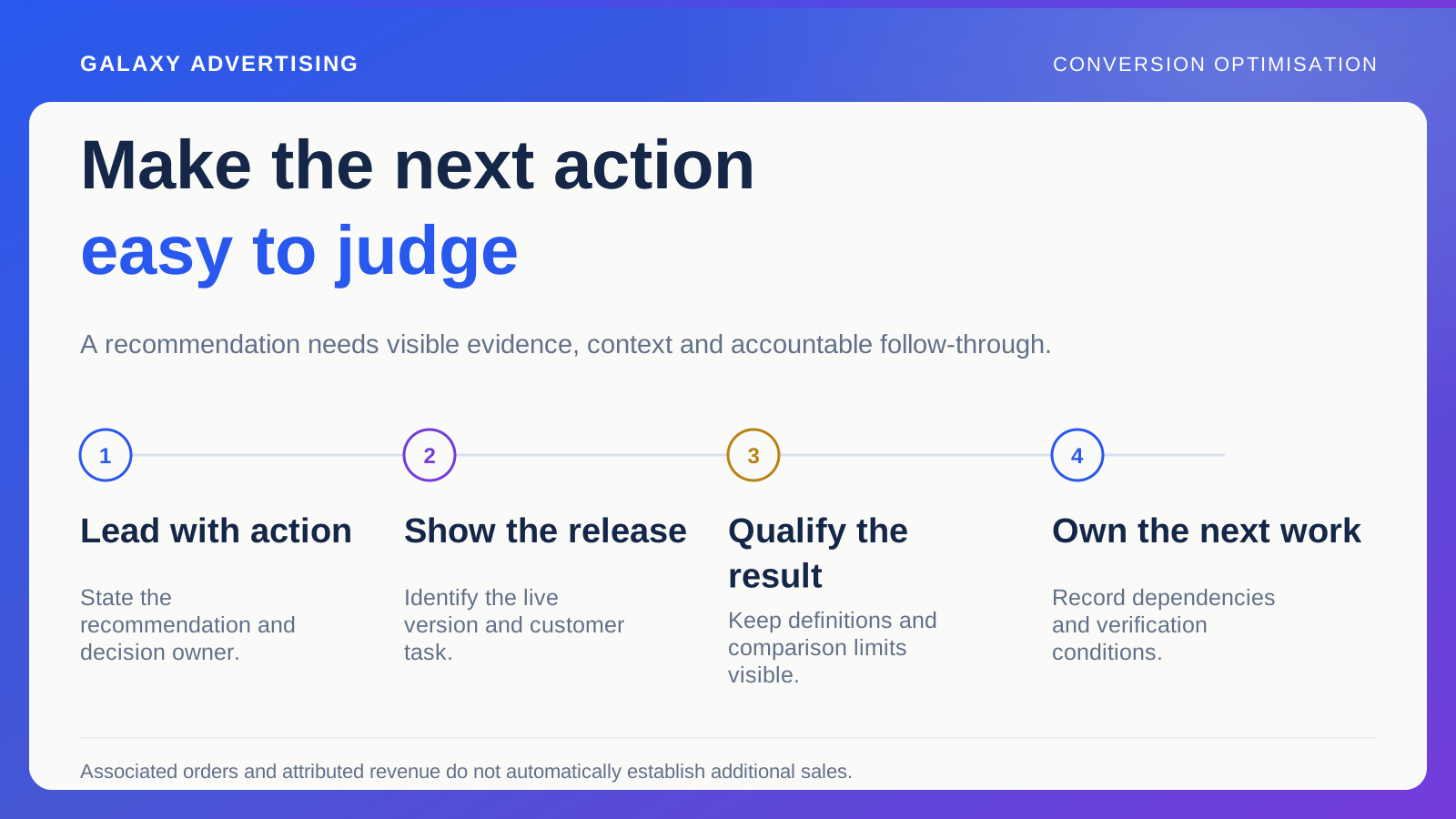
Put the recommendation where the reader can see it
Say what the business should do next and why. You might retain a clearer delivery summary, repair a configuration fault or pause a feature until product information is ready.
Name the supporting evidence. A verified improvement in someone's ability to complete a task is different from a commercial effect that remains uncertain. Do not make the reader guess the strength of the conclusion from how favourable the chart looks.
Include the decision owner and any operationally relevant deadline. Without an accountable next step, the recommendation can return in every report without anything changing. Make the action easier to take, rather than presenting analysis that merely appears finished.
Show the actual release and its intended job
Identify the version released, affected product family and customer route. Explain the original problem plainly. “Improved product pages” is too broad to connect with a later result or to establish exactly what the team delivered.
Keep preparation distinct from completion. Design approval, development release and a verified live improvement are different stages. They should not be counted interchangeably as delivered outcomes.
Provide a route to the underlying record for people needing detail. Implementation evidence, approved facts and acceptance checks can remain available without filling the management review with every production comment. A concise report can still be accountable when readers can inspect the work behind its claims.
Make the outcome figures comparable
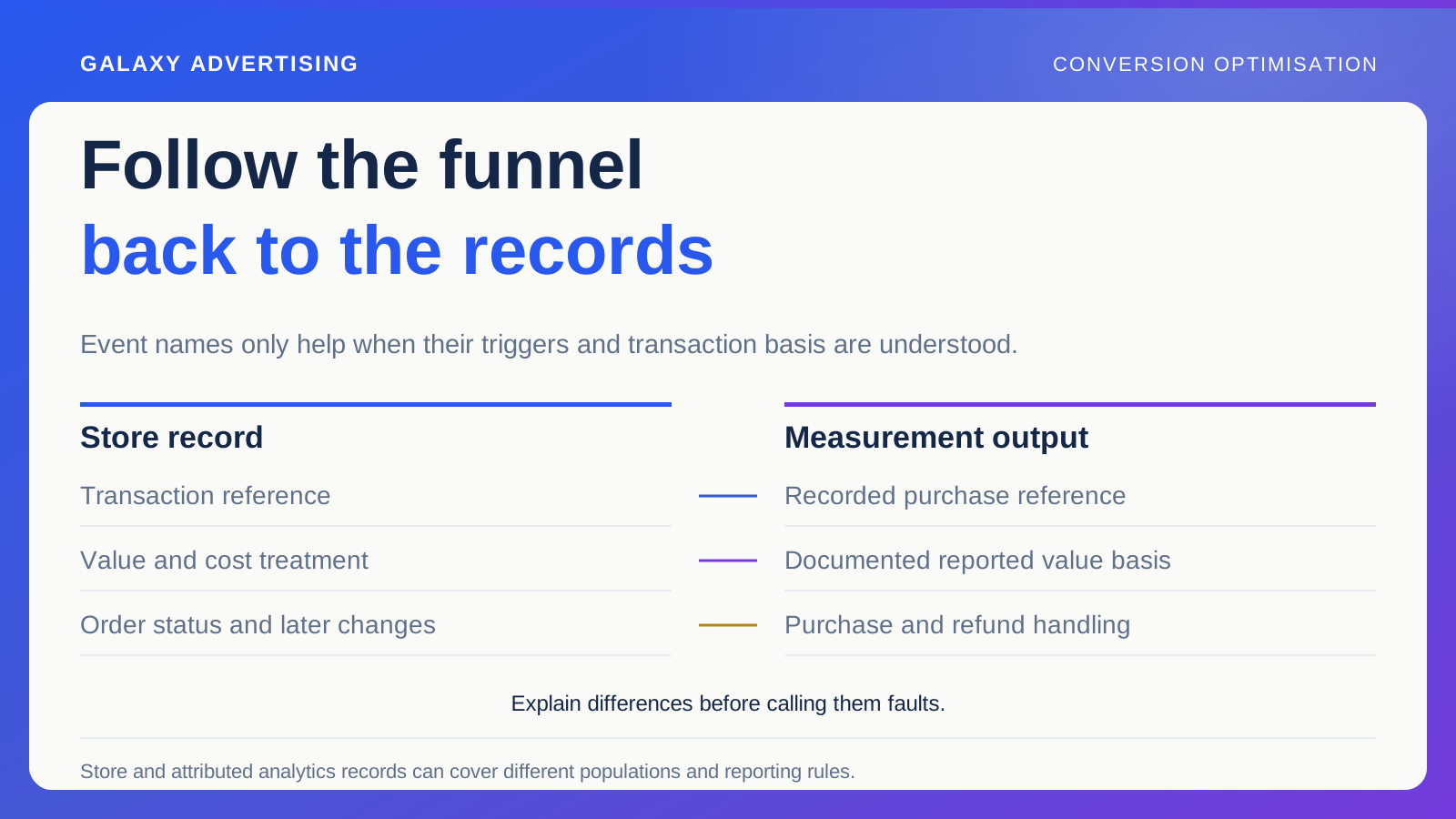
Define important measures, including what counts as a purchase and how revenue or contribution is represented. Contribution is the money remaining after the costs included in your agreed calculation. Note measurement changes affecting comparison with the earlier period.
Look behind the average at product and customer mix. A higher overall conversion rate could reflect more inexpensive, easily fulfilled items being purchased, rather than an improvement across the considered purchase range. That distinction could change your next action.
Use the agreed business cost basis for commercial conclusions. Label estimates of contribution effect. You need an interpretable result, rather than a polished return calculation assembled from incompatible figures. The definitions belong beside the result people will use.
Include the context that could change the reading
Record relevant changes in stock, pricing, service and acquisition activity. Focus on conditions affecting the specific question, rather than attaching an exhaustive diary of everything that happened in the business.
A product returning to stock could explain improvement independently of a page edit. A campaign bringing a different audience could change observed behaviour. Consider those possibilities even when the result fits the explanation the team prefers.
Apply the same discipline when performance disappoints. Operational context should not appear only for weak periods while strong periods are assigned entirely to conversion work. Consistency makes the interpretation credible and gives the next review a stable basis for discussion.
Let customer evidence change the next action
Summarise specific task observations, recurring enquiries and relevant order corrections. Explain where the evidence came from and its limits. A small review can reveal an important barrier without establishing how frequently all visitors encounter it.
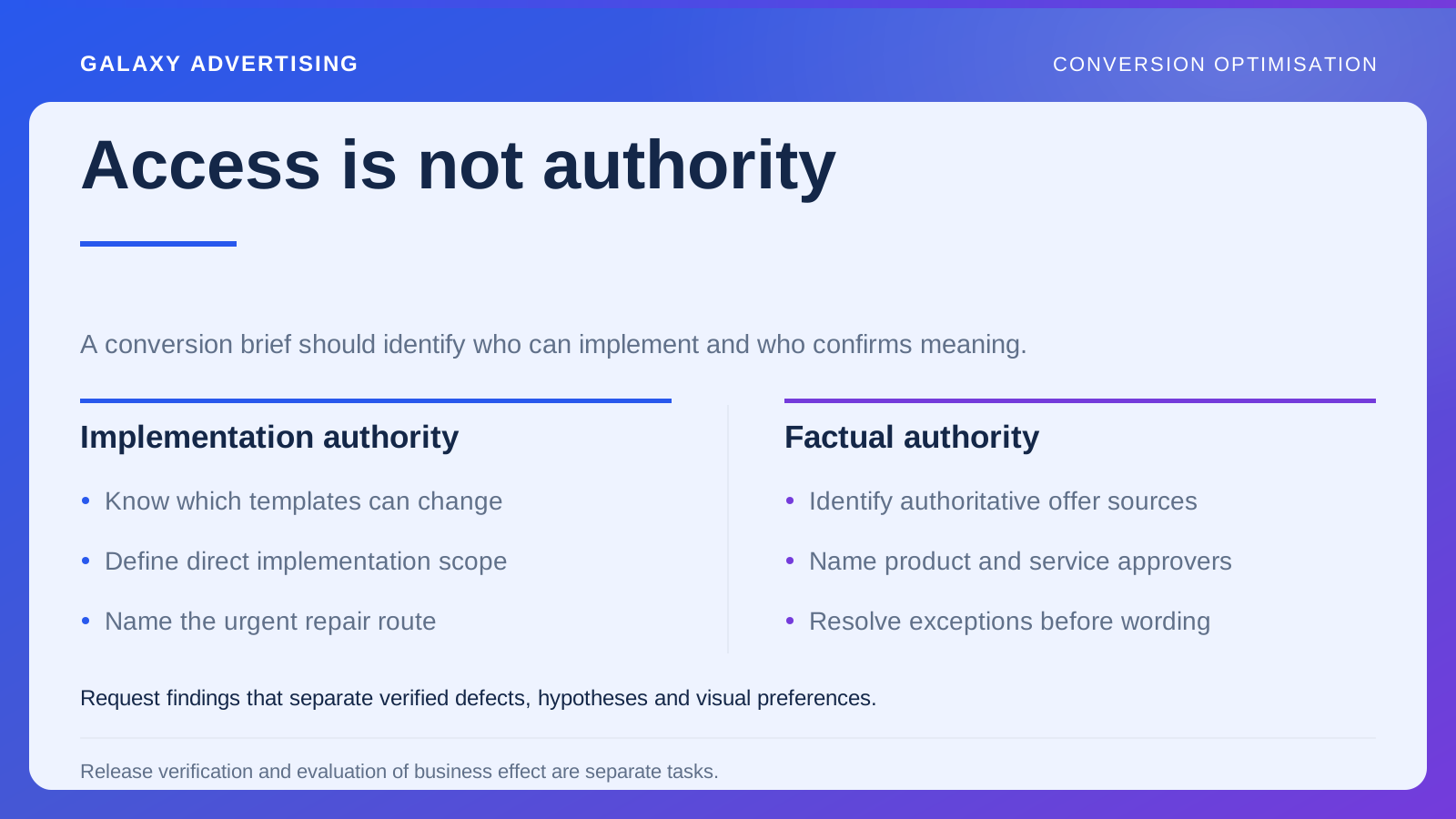
Connect it to work somebody can do. If people repeatedly ask whether a service is included, name the affected offer and the source owner who can clarify it. “Trust needs improvement” does not provide an equivalent task.
Include findings that challenge your first hypothesis. Customers might understand delivery information but have no suitable service in their area. That changes the response from copy presentation to an operational or merchandising decision. A useful report must make room for that change of explanation.
Say what was learned before claiming extra sales
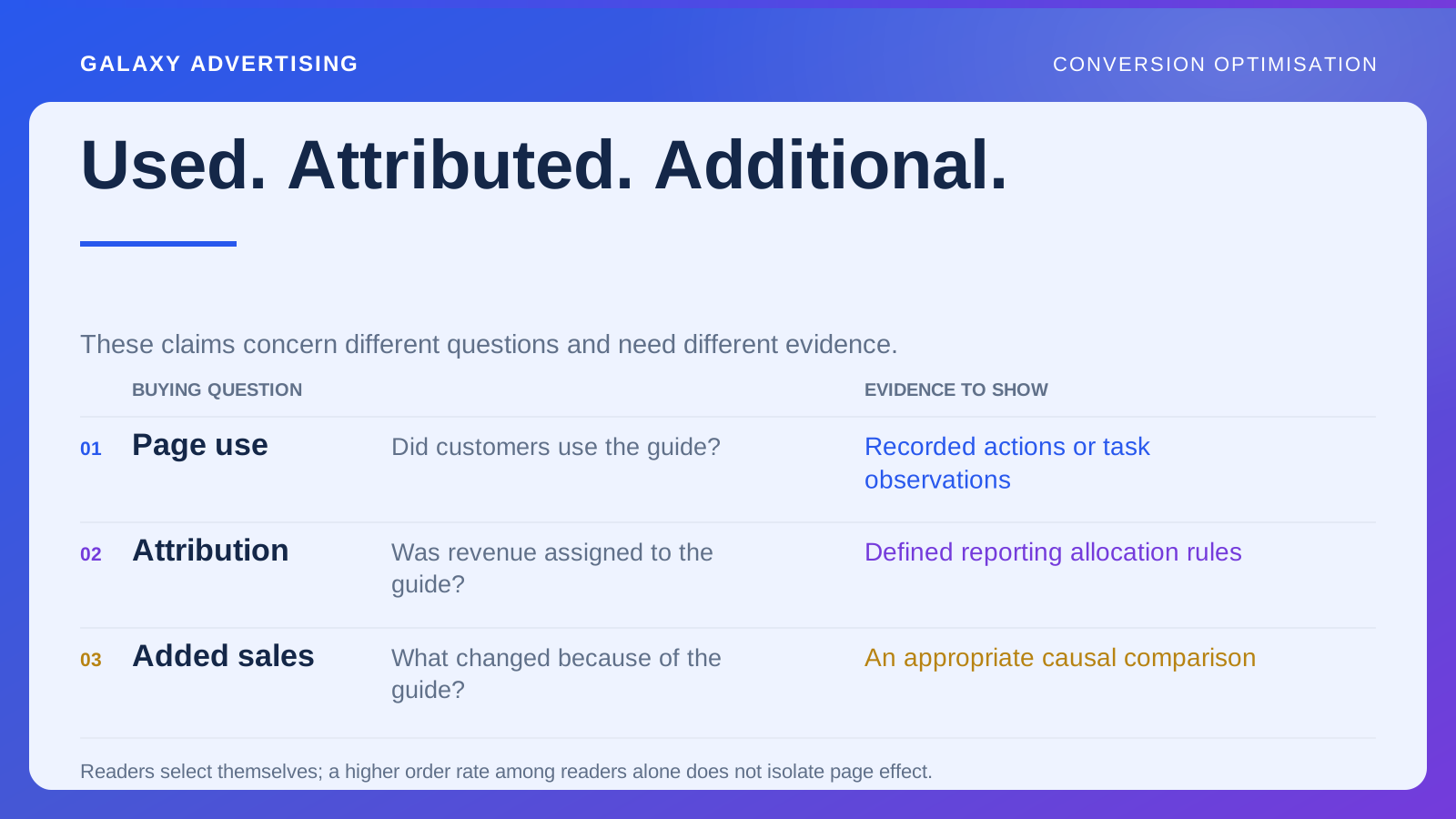
State whether you used a controlled comparison, a contextual before and after review or another investigation. Explain what that approach can establish and what remains uncertain.
Do not assign every order associated with an edited page to its project. Recorded paths and attributed revenue do not automatically identify purchases that would otherwise never have happened. A practical improvement can deserve to stay without a precise additional revenue claim.
Make inconclusive work useful too. Name the unanswered question and consider whether further evaluation deserves funding. Sometimes you should stop investigating a small uncertain effect and direct the capacity towards a clearer obstacle elsewhere. The next decision should follow the evidence and its value to the business.
Ask each chart what it is doing here
For each recurring chart, identify the decision it supports. What meaningful movement would prompt the team to investigate, and why?
If nobody can answer, consider removing it from the management report while keeping the underlying data where needed. A shorter review improves accountability when it makes relevant evidence easier to find. It should not be a way to conceal an inconvenient result.
End with work someone has agreed to own
For each important next step, record the action, owner, dependency and verification condition. Keep the list focused enough to complete before the following review.
Carry unresolved items forward with their reasons. A product information dependency should remain until the responsible person supplies it, rather than disappear with a refreshed template. Close completed items with evidence instead of leaving them labelled ongoing optimisation indefinitely.
A useful conversion report leaves the reader understanding what was learned and what happens next. The dashboard supplies observations. Professional judgement connects those observations to decisions, conditions and work your business can take responsibility for completing.