A shopper looks past the awards and large review panel on your product page and asks whether assembly is included. Another badge beside the purchase button will leave them with exactly the same question.
They may already trust you. They still cannot tell what they are buying.
Credibility has a useful job when it supports a relevant claim accurately and appropriately. It cannot establish package contents, delivery arrangements or suitability by making the page look more established. Start with a complete, understandable offer, then give reassurance something specific to support.
Name the answer your buyer is missing
Collect the uncertainty in concrete terms. Which components arrive? Is the service included? Which configuration does the displayed price describe? Those questions give the team something to resolve.
Keep them separate from a general concern about the retailer. A customer can believe you are trustworthy and still be unable to judge an unclear package. The necessary change may belong in product information rather than in a larger testimonial section.
Ask what evidence would settle the question. It could be a verified contents list, an accurate option summary or a clear service description. “More confidence” does not tell a writer which fact to supply in the next paragraph. A specific uncertainty does.
Make the purchase itself recognisable
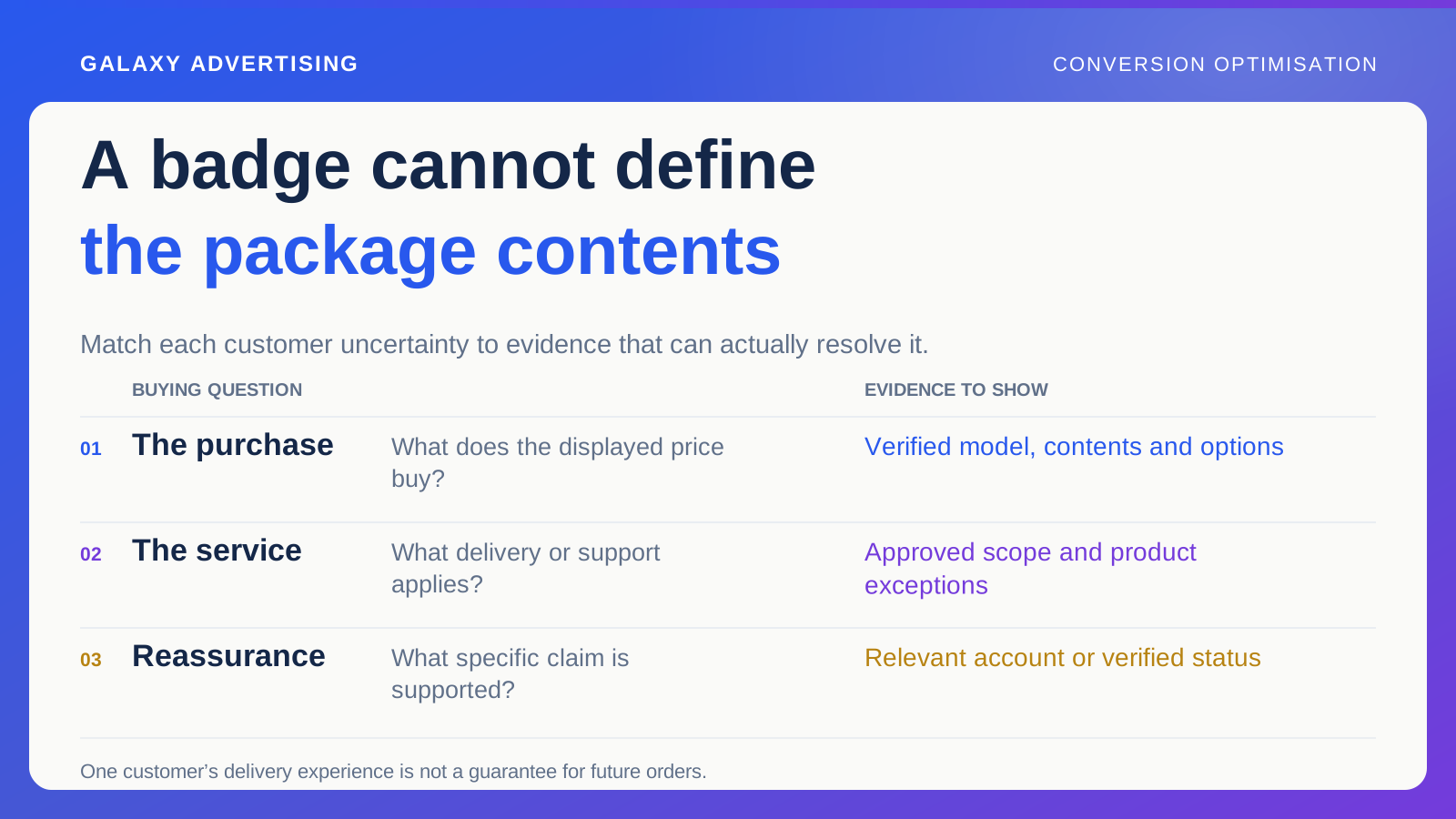
Identify the selected model, components and optional items. Use consistent references in images, controls and descriptions so someone can connect what they see with the price being shown.
In a hypothetical furniture scene, the photograph might contain a chair, footstool and occasional table while the quoted price covers only the chair. Explain that relationship. Do not rely on the buyer recognising and separating every item independently.
An internal catalogue package name may mean little outside merchandising. A concise contents list could do more useful work than an attractive title. Product identity belongs in the value proposition because the shopper needs to understand the offer before deciding whether it is good value for their circumstances.
Explain what the service actually involves
If delivery or support is a meaningful part of your offer, describe its real scope. “Premium service” can hide important differences in what happens after the customer places an order.
Ask the responsible operational owner to verify the wording and its limits. Different product families can have different arrangements. A general message elsewhere on the website may not establish what applies to the selected configuration.
Put material service conditions where they can inform commitment. Someone should not need to reach a late order stage before discovering whether the purchase is practical. Earlier clarity reduces surprise without suggesting every visitor ought to proceed. Sometimes understanding the conditions helps a shopper recognise that the offer is unsuitable.
Attach reassurance to the claim it supports
A relevant customer account can explain a particular experience. A verified independent mark can support the specific status it represents. Keep those roles visible so neither becomes an implied general guarantee.
One person's delivery experience does not establish the same timing for every future order and configuration. Preserve the scope of the account rather than stretching it into a broader promise.
Have the appropriate owners review permissions and accuracy. Finding a logo or quotation does not give the conversion team every right or factual basis for its intended use. Reassurance helps when a customer can understand what it genuinely establishes. Accuracy matters here just as much as it does in a dimensions table.
Replace vague praise with a useful distinction
Quality, value and effortless can sound appealing while leaving the comparison unclear. Ask which product or service fact makes the claim meaningful for this particular offer.
For a configurable product, that could be the arrangement available or the components included. For a service package, it could be the actual work performed. The explanation should let buyers judge whether the difference matters to them.
A narrower, accurate proposition can be more helpful than claiming universal superiority. It lets someone with another requirement recognise a limitation early, rather than drawing them further into a purchase route that cannot give them a suitable outcome. You are helping them judge the fit of the offer.
Check what an unfamiliar reader thinks they will receive
Ask somebody unfamiliar with the range to explain what they believe the displayed price buys. Include relevant options and service distinctions in the task.
If their answer is wrong, trace where the impression arose. Was it an image, a package name, a default selection or wording separated from its conditions? Another badge does not necessarily address any of those causes.
Keep the observation and correction in the product record. A future visual edit should preserve the clarification that made the offer understandable. Otherwise a cleaner looking page can quietly bring the original misunderstanding back, with nobody remembering why the detail was there.
Make prominent elements earn their space
Choose a prominent badge or general claim and ask what would be lost if you removed it. If the answer is mainly atmosphere, compare that role with the practical question still unanswered beside it.
This is a decision about what the space needs to do. Credibility material can remain where it supports a real claim. An accurate service summary may deserve priority where customers cannot establish the package.
After changing the section, review it as a whole. The page should remain coherent, rather than merely emptier. The useful result is a proposition people can understand, with reassurance supporting the information instead of occupying the place where an essential answer belongs.
Verify clarity before claiming a sales effect
Check that the revised page accurately describes the offer and makes the relevant fact accessible. You have then completed an information improvement. That alone does not give you a precise estimate of additional sales.
Review enquiries, suitable orders and downstream corrections alongside available commercial data. Keep stock, price and acquisition changes in view when interpreting movement.
A complete offer gives the customer a dependable basis for judgement. Relevant reassurance can strengthen that understanding once the facts are clear. Confidence is more useful when it rests on information the business can maintain than when it depends on another impressive symbol surrounding an unanswered question.