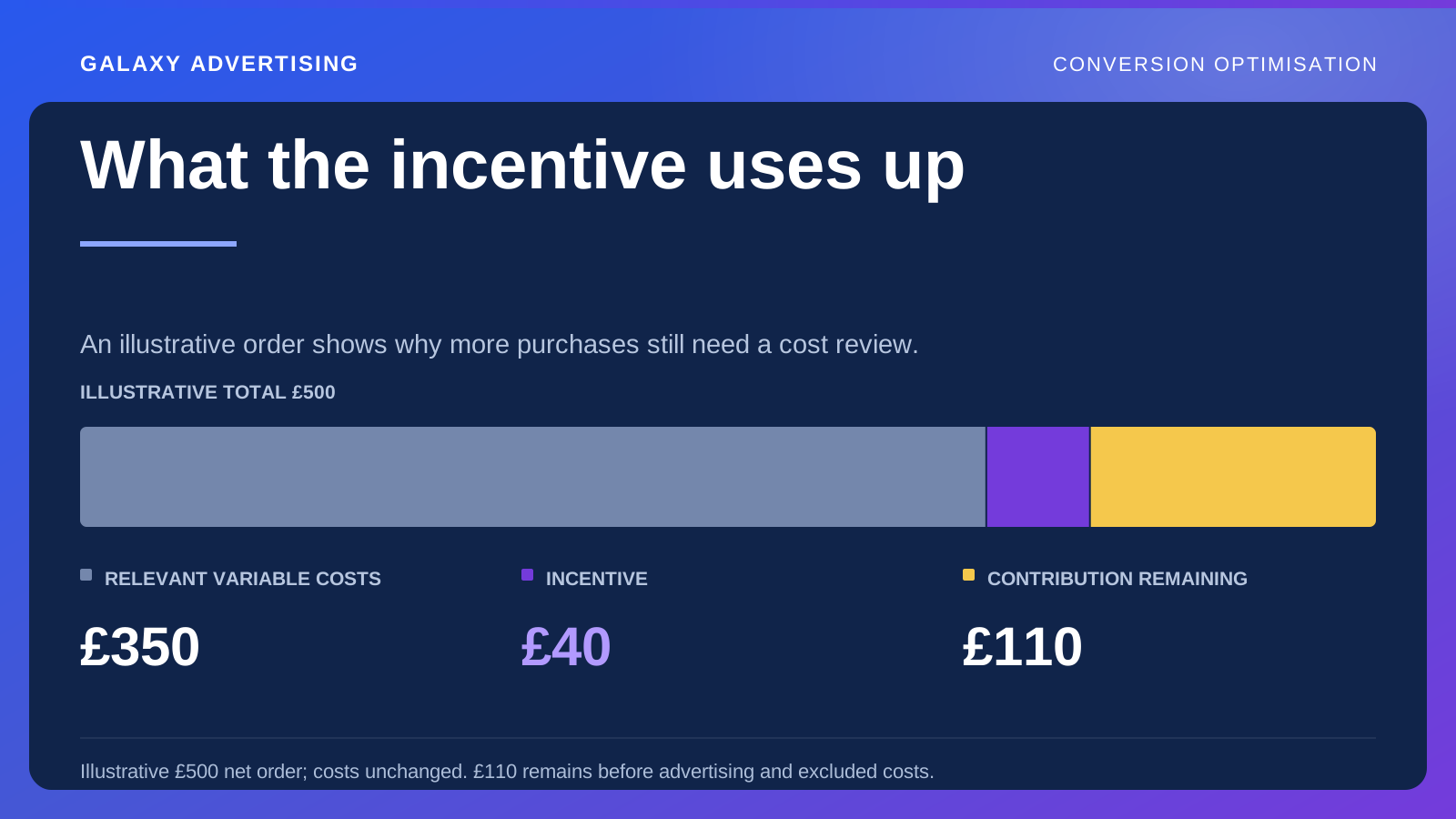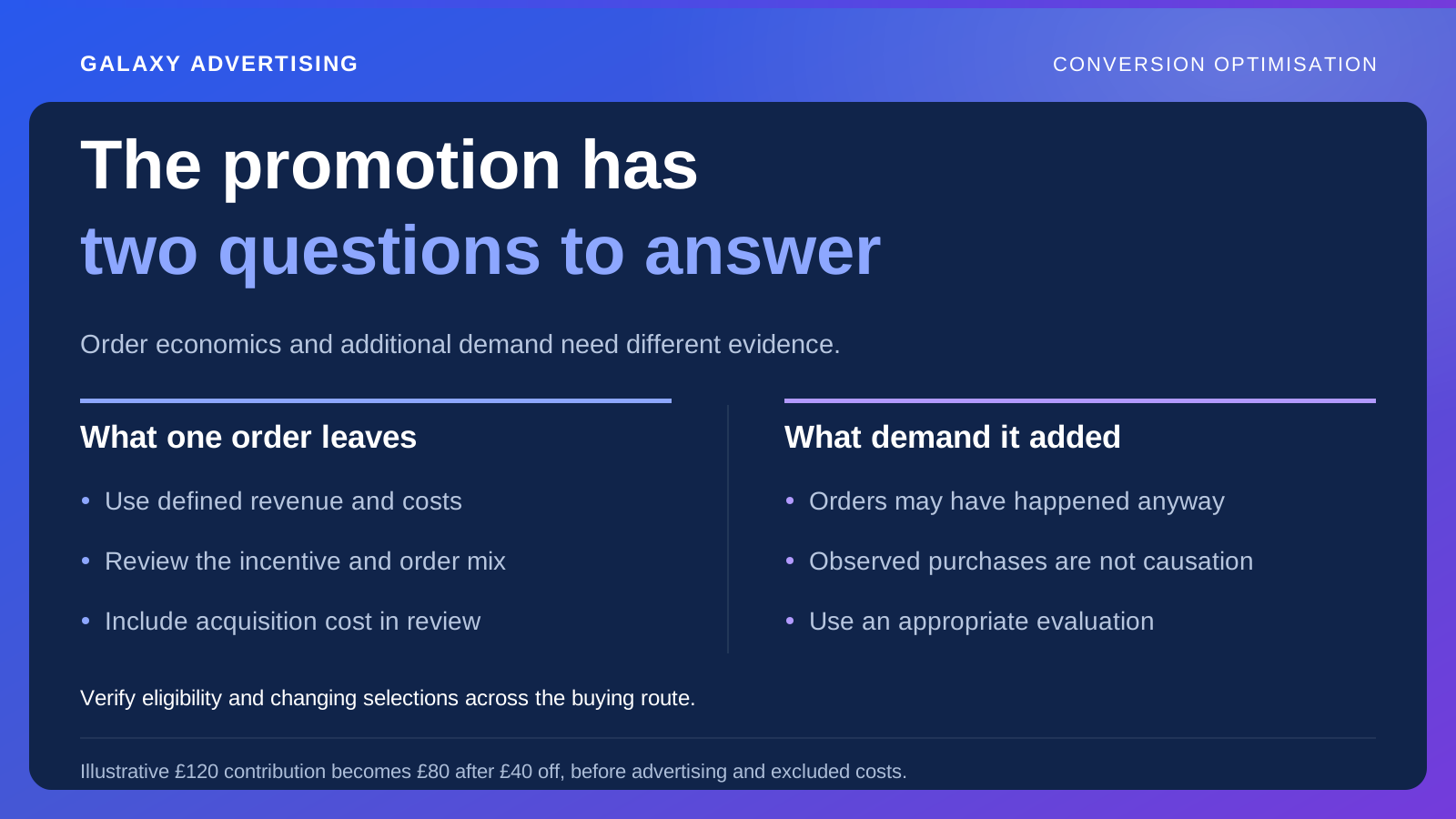
A hypothetical order leaving £120 of contribution before an incentive may leave £80 after a £40 reduction, before advertising and excluded costs. More orders alone cannot tell you whether that promotion improves the business's total contribution.
Now add a basket discount, bundle offer and delivery incentive to the same family. Shoppers can see plenty of savings messages yet struggle to understand which combinations apply. Support gets more questions, and the team struggles to explain the resulting margin.
A promotion should address a genuine barrier without creating another comparison task. Examine what it changes, how the conditions are understood and whether the final order remains worthwhile.
Decide which obstacle the incentive should address
Ask why you want the promotion. You might need to clear a configuration, increase useful accessories per order or help suitable customers assess a complete service package.
These aims suggest different designs. A broad discount may do little for unclear assembly information. A bundle makes more sense when its components form a coherent purchase than when it adds products the buyer does not need.
Write the commercial purpose and customer benefit separately, then judge whether both are served. An offer that moves stock while making the customer's decision harder deserves reconsideration before you give it more visibility. More promotional space cannot resolve a purpose the team has not made clear.
Calculate what the promoted order leaves
Use consistently defined revenue and relevant variable costs. Include the discount, product costs, payment charges, fulfilment subsidies and whatever other costs your business considers material to this decision.
The hypothetical calculation above concerns contribution, meaning money remaining after the costs included in the calculation. A higher order count still needs review of the resulting product mix and acquisition cost. It does not establish an improvement in total contribution.
Nor is every promoted order necessarily additional. Some customers could have bought under the previous offer. The calculation helps establish the economics of an order. On its own, it cannot prove the incentive caused more demand. Keep those two questions separate when deciding whether the promotion is worth continuing.
Explain eligibility before someone commits
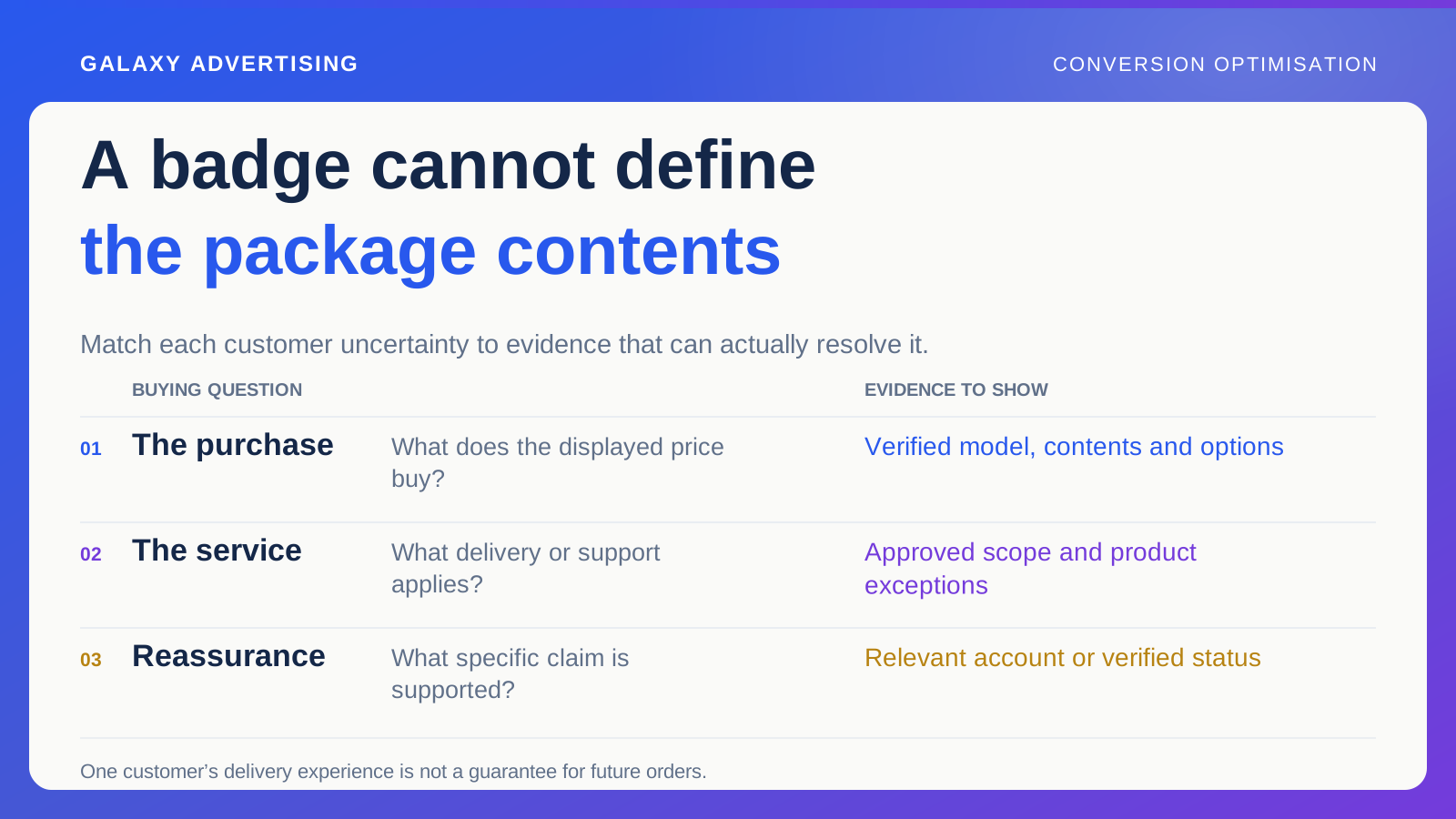
State which products, configurations and services qualify. Put material conditions close enough to the offer for customers to assess it without searching through a separate collection of general terms.
Avoid a broad looking headline with narrow practical eligibility. Someone should not reach late checkout before discovering the demonstrated configuration is excluded. Abandonment at that point could reflect a preventable misunderstanding rather than resistance to the underlying price.
Have the people responsible for the commercial offer, and any required legal review, check the wording. Preserve the approved meaning. Shorter conditions help only while they remain accurate descriptions of what the customer can obtain. Clarity is not permission to widen eligibility.
Test the combinations around the ordinary order
Change quantities, choose another variant, meaning the selected size, colour or configuration, remove a bundle component and combine the incentive with an existing account benefit. These cases can reveal ambiguity that a straightforward order misses.
Check totals throughout the route. A clear final amount does not repair earlier messages suggesting a different saving. Customers need to understand the current offer as their choices change, rather than discover the explanation only after they have finished selecting.
Include unavailable and ineligible items too. The rule may work technically for qualifying products while the rest of the range carries unclear messages. People should be able to distinguish an incentive they cannot use from a malfunction in ordering.
Consider whether the service is the real concern
Some objections concern the complete service rather than the headline product price. A clearly defined delivery or assembly package could address that uncertainty more directly than a discount code.
That alternative still needs a cost review. A service that looks inexpensive in a marketing brief can create meaningful operational consequences, particularly with bulky items or restricted delivery areas. Ask operations to verify its actual scope before treating it as a convenient free extra.
Neither incentive type always works better. Use the comparison to improve the offer for the customer's task, the product and your ability to fulfil the promise accurately and profitably. The useful question is which obstacle you are addressing.
Make the offer identifiable and reversible
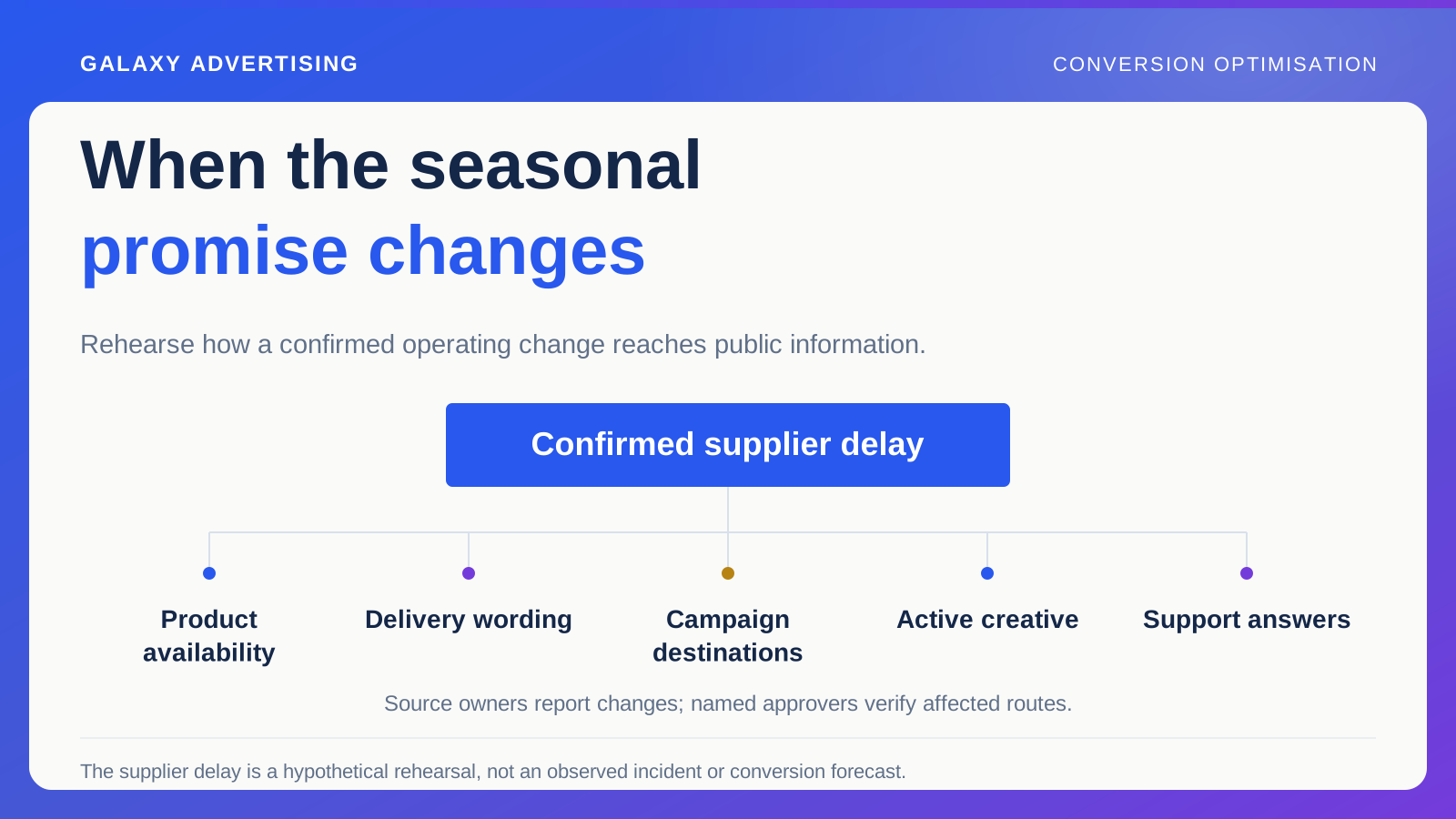
Retain approved wording, eligible range, destinations and responsible owners. If an enquiry or order correction arises, the team should be able to establish which version the customer encountered.
Agree how the promotion ends and what replaces its messages. A banner, product label and basket rule can retire at different times without ownership of the full route. That leaves an offer apparently available but impossible to obtain.
Verify the live site after launch as well as before it. A planning document records intent. It does not prove the intended promotion reached every important page correctly. The live configuration and customer route are what need checking.
Work through an order change or return
Ask the commercial team how the promotion affects both the records and the explanation to the customer when part of an order changes or is returned.
That does not prescribe a returns policy. It identifies a dependency to resolve before a complicated bundle becomes a live promise. Understand how the offer behaves beyond the initial purchase, while you still have room to make the explanation clear.
Review understanding alongside the economics
Look at completed orders, product mix, contribution, support questions and associated corrections. Repeated eligibility enquiries could justify clearer presentation even where the immediate order total looks healthy.
Keep evidence about understanding separate from claims of additional sales. A cleaner route has value, but its commercial effect still needs appropriate evaluation. Record the limits rather than treating every favourable movement as proof the incentive succeeded.
A useful promotion makes a specific purchase easier to assess and gives the business a defensible reason to offer it. Once the conditions, route and economics are understandable, the result can be evaluated. Until then, more visibility can simply put the same uncertainty in front of more people.