A busy seasonal campaign can send shoppers towards a promise your operations team cannot fulfil. A garden retailer's homepage might be ready while delivery wording still describes the quieter period and popular configurations now have different lead times.
With more enquiries expected, that gap becomes harder to manage just as demand arrives.
Seasonal preparation needs to go beyond promotional artwork. Check whether people can understand the current offer, whether the website can represent changing conditions accurately and whether the team knows what to do when those conditions move. That work is easier before every correction feels urgent.
Find out what makes the purchase timely
Identify the customer's seasonal task. A household preparing for guests might need a dependable arrival expectation. Someone replacing a failed appliance may need the earliest suitable installation arrangement. Another shopper could be comparing an offer without an immediate deadline.
Busy trading does not make every visitor equally urgent or ready to order. Focus on the decision each needs to make, rather than treating the season as a single motivation.
Use practical questions from the previous comparable period, but check whether today's range and services really are comparable. An old support summary can expose useful issues. It cannot substitute for inspecting the offer you intend to promote now. Familiar questions still need current answers.
Check the promise for the promoted product families
Inspect availability, lead times, delivery contents and geographic limits across the range. A general site statement may describe specialist products or particular configurations inaccurately.
Agree who owns the facts and how changes reach website and campaign teams. Merchandising might update availability while operations controls delivery arrangements. Your release process needs both sources. The marketing calendar cannot establish the customer promise on its own.
Where timing depends on the individual offer, use clear language and a usable route to the relevant answer. Avoid spreading an appealing broad statement everywhere when underlying conditions differ. A more attractive promise is no help if it says more than the business can support.
Walk the important routes before launch
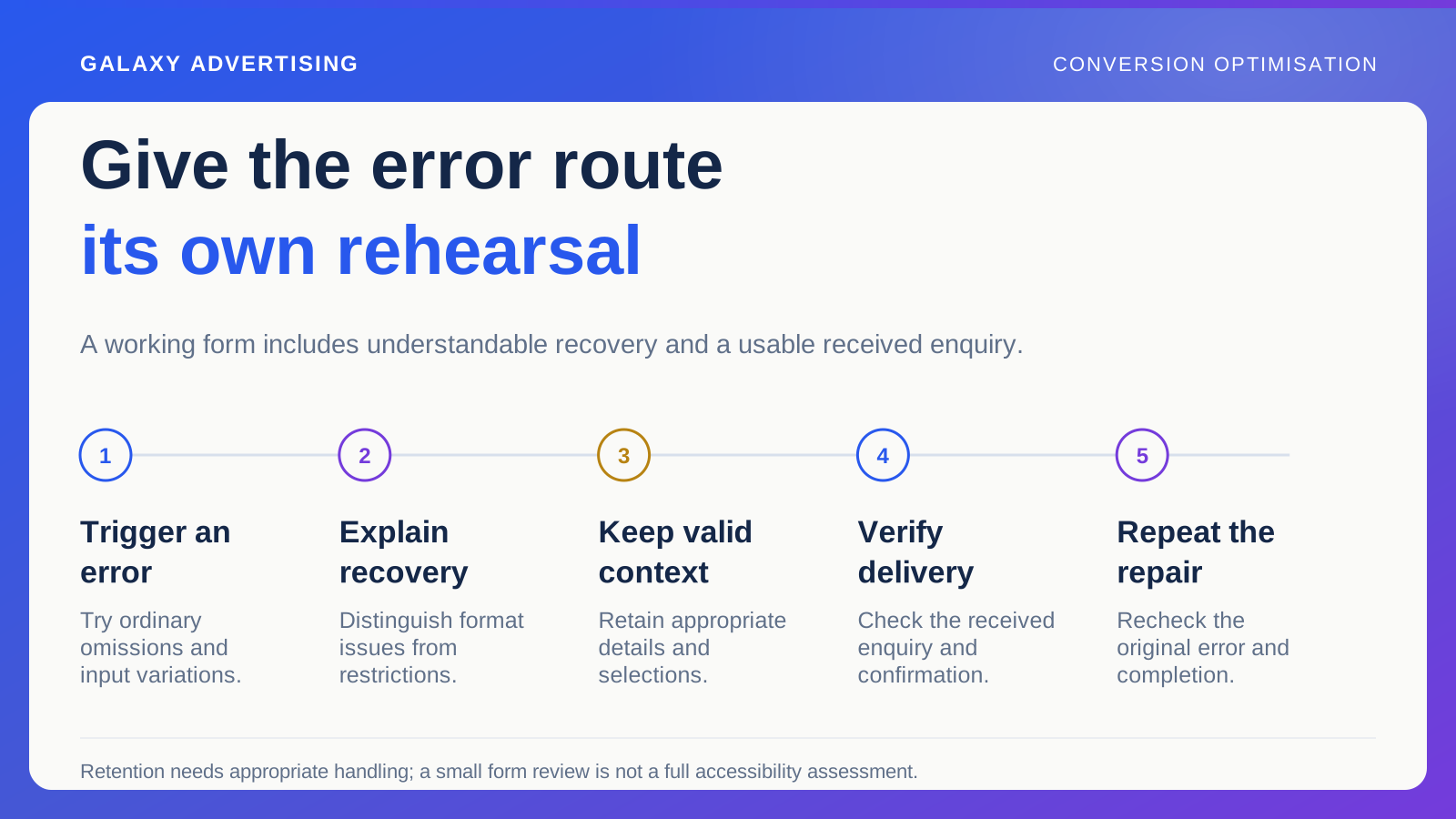
Choose representative products and follow the journey from campaign destination to order review. Include option changes, delivery information, basket quantities and recovery from an ordinary form error.
Prioritise commercially important routes and known differences. A specialist delivery product and a straightforward parcel item can share the same visual styling while depending on different ordering rules. Looking consistent does not make the requirements identical.
Record the exact conditions you tested. Checking one available configuration successfully does not verify every sold out variant, meaning a particular size, colour or configuration, or every service exception. A bounded record helps you focus remaining work without presenting one purchase rehearsal as complete coverage.
Decide what happens when the advertised item sells out
Choose what customers should encounter if a promoted product becomes unavailable. It could be a clear status, a relevant alternative or a verified availability enquiry route. Avoid an unexplained substitution.
Make meaningful differences in alternatives visible. A similar looking item may have different dimensions, materials or delivery arrangements. People need enough information to judge whether the replacement meets their original requirement.
Agree how advertising and website updates relate. Sending demand to a depleted offer can look like a conversion problem even while the page works correctly. The product is simply no longer a practical purchase. Some of the response then belongs in merchandising and campaign selection, rather than in another website layout change.
Prepare support for the questions likely to recur
Give the support team accurate answers and direct routes to the underlying service information. Response templates help only while their contents remain current and relevant to the particular product.
Separate questions needing personal review from ordinary information the site should publish. Requiring an enquiry for routine dimensions can add workload without improving the decision. Support should not have to compensate repeatedly for a straightforward missing fact.
If you offer live help, represent its actual availability. A clear explanation of when and how an enquiry will be handled is more useful than an immediate response promise the team cannot keep during its busiest hours. Set an expectation grounded in the service you can maintain.
Agree how changes and corrections will move
Give every planned change an owner, factual approver and verification route. Identify edits that can happen quickly and those needing development or operational review. A necessary service correction should not get stuck in an unclear approval chain.
Keep a record of active promotional messages and destinations. When an offer ends or stock changes, you need to identify the affected pages and creative without searching through unrelated files.
Agree a practical definition of urgency. Incorrect delivery wording or a broken selection control needs a different response from proposed visual refinement. A shared rule helps protect the buying route while avoiding unnecessary disruption to planned work. People should know which path to use before pressure arrives.
Rehearse a promise changing before it really happens
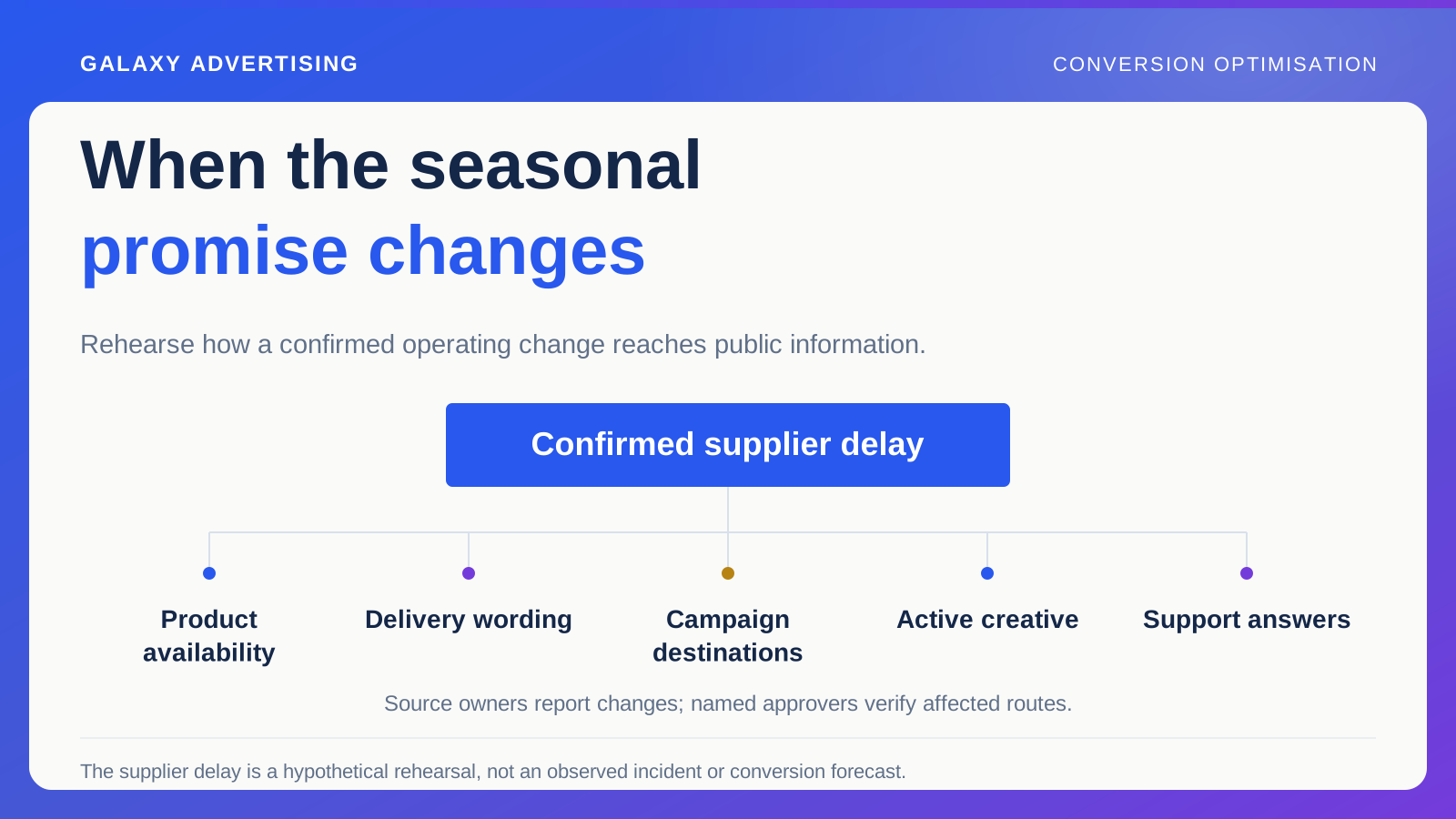
Ask the team to walk through a hypothetical supplier delay before launch. Which source changes first? Which public statements rely on it? Who checks the final route customers see?
The exercise can expose gaps in ownership without waiting for a real trading incident. It turns a broad intention to keep the website updated into responsibilities people can recognise and follow.
Review the trading period in its full context
During and after the period, read conversion measures alongside orders, availability, service changes and traffic mix. Results can move because of the offer and operating conditions as well as the page presentation.
Keep specific incidents and completed corrections. If one product family repeatedly creates arrival uncertainty, record the source owner and presentation improvement needed before its next campaign. “The site struggled” gives the next team little useful preparation.
Seasonal readiness cannot promise a particular conversion rate. It reduces avoidable contradictions as workload and stakes rise. Your campaign then carries an offer the team understands, through rehearsed routes, with an agreed way to keep both accurate when trading changes.