It's tempting to call the new copy a success as soon as organic visits rise. Especially when you've also changed the collection's navigation, products and template, and everyone wants the work to have paid off.
The route may well be better. But which change helped, and what else was happening? That's the question a useful SEO test needs to answer, or at least make clearer. Start with an explanation someone could challenge, a defined change and an outcome worth watching. The purpose is a better next decision, rather than a success story for every update.
Give your idea a chance to be wrong
Write down what you think is holding the page back, and why. “This collection does not make the available size differences understandable” gives you something to investigate. “The page needs optimisation” leaves rather a lot of room for interpretation.
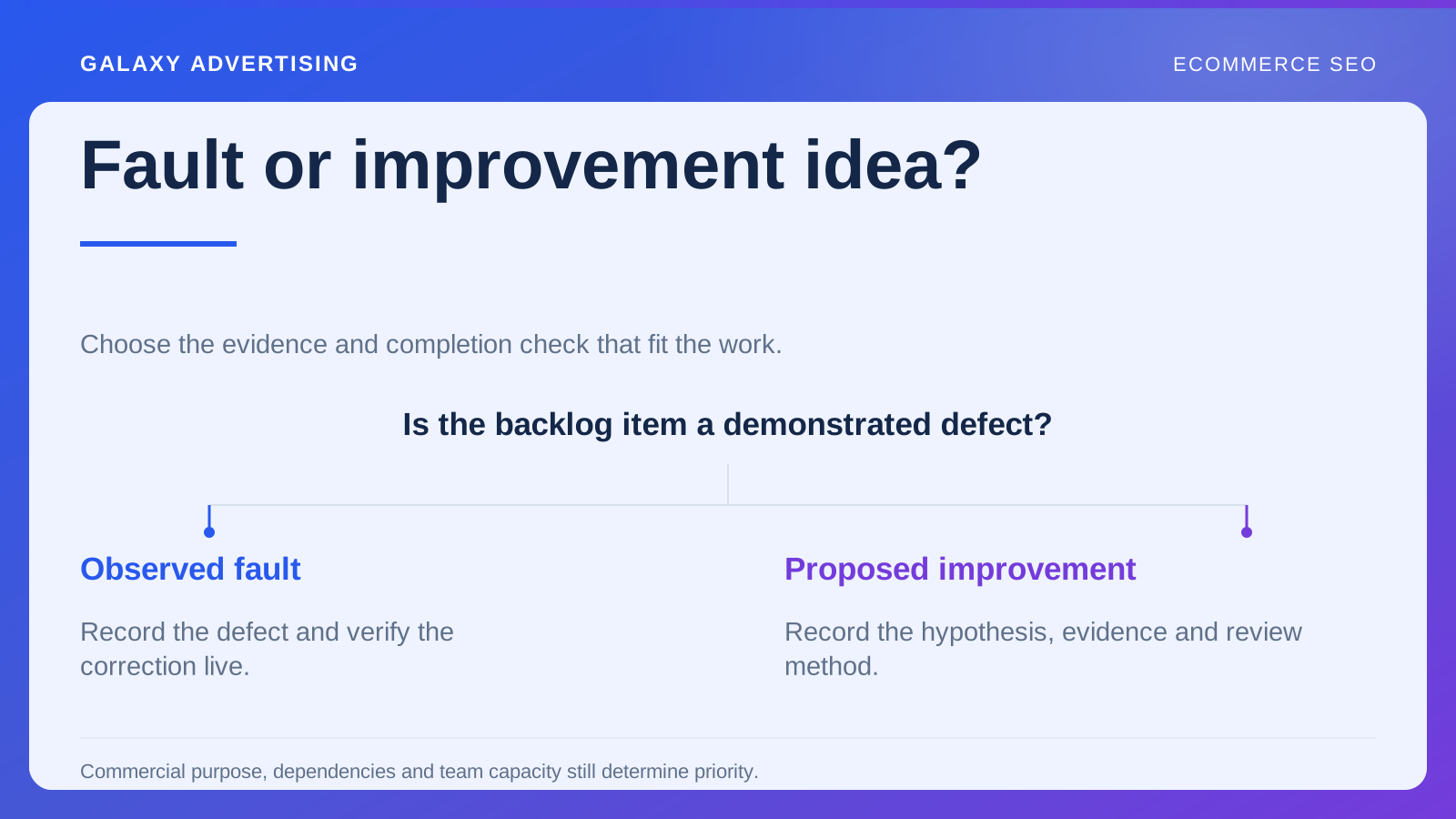
Show the evidence behind the idea. Perhaps you've found missing information, heard the same customer question repeatedly or noticed a mismatch between search queries and their destination. Keep a confirmed fault separate from your belief about what fixing it will achieve.
Take a hypothetical compact furniture collection. Making dimensions and configuration differences easier to compare gives the test a specific buying task. That's a more useful question than whether adding words improves everything.
Be precise about what you're changing
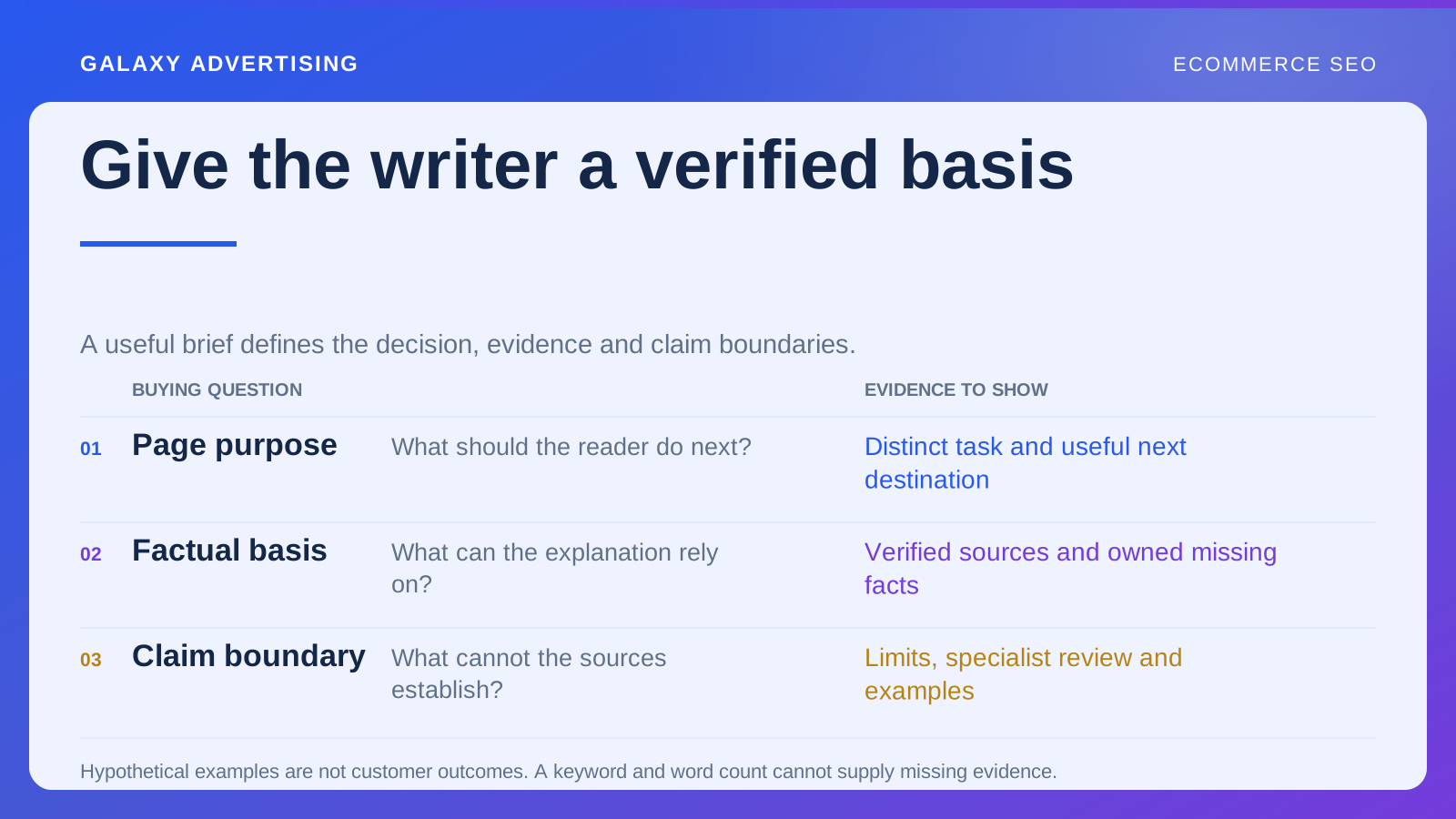
Record the proposed content, navigation or technical adjustment, the affected URLs and what is live before the work starts. Somebody else should be able to follow the change without relying on your memory.
If you're investigating one explanation, avoid bundling unrelated changes together where possible. Launching a template, product range and article at the same time makes any movement harder to attribute.
Sometimes the business needs several corrections together. Don't delay necessary work just to keep an experiment tidy. Say what you've done and keep a clear release record. A coherent improvement can have commercial value even when you cannot isolate the effect of one component. Those are different claims.
Ask what makes the comparison fair
Your analyst should explain which comparison suits this site and this decision. Unchanged pages offer useful context only when their conditions are relevant enough. Comparing with an earlier period brings seasonality and changing demand into the picture.
A similar page title doesn't make a valid control. Stock, range depth, existing discovery and the customer's task can all differ materially. Ask why the chosen comparison helps resolve the uncertainty you actually have.
There isn't a universal sample size or review duration to borrow. What you need depends on variability, available observations and the consequences of acting. Where a strong comparison isn't possible, make a narrower claim. A date in the calendar doesn't create confidence by itself.
Decide what matters before you see the chart
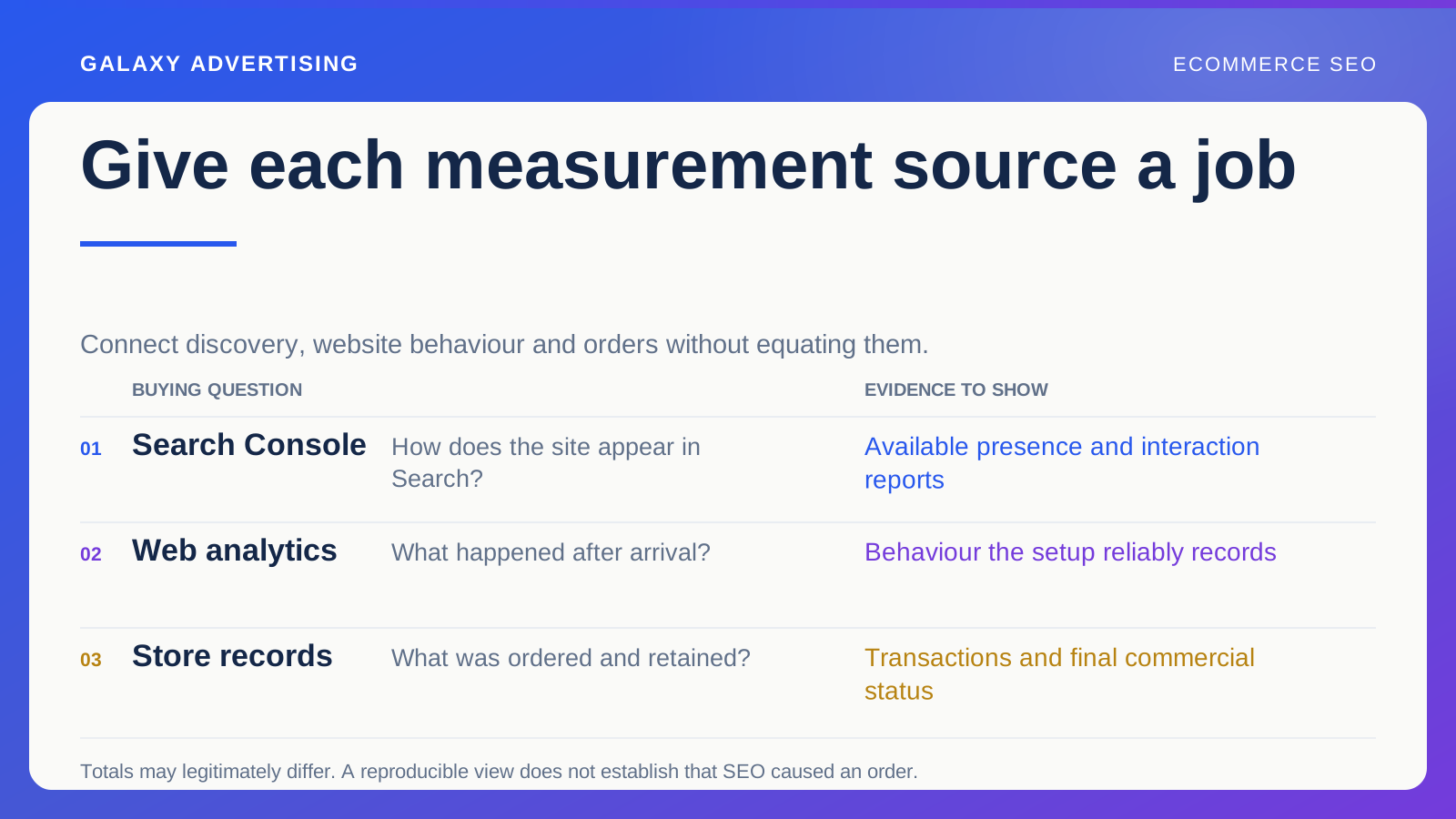
Choose a main observation that fits your hypothesis. Relevant discovery, product exploration and commercial outcomes all have a place, but they describe different parts of the customer's route.
For that size comparison example, you might check whether the intended query group reaches the page and whether visitors can explore suitable configurations. Orders add commercial context, subject to the usual attribution limits and changes in product conditions.
Resist swapping the original criterion for a metric that happens to look better. Other evidence can refine your interpretation. Quietly choosing the definition of success afterwards makes the review much harder to challenge, and much less useful to learn from.
Keep a short record of what else moved
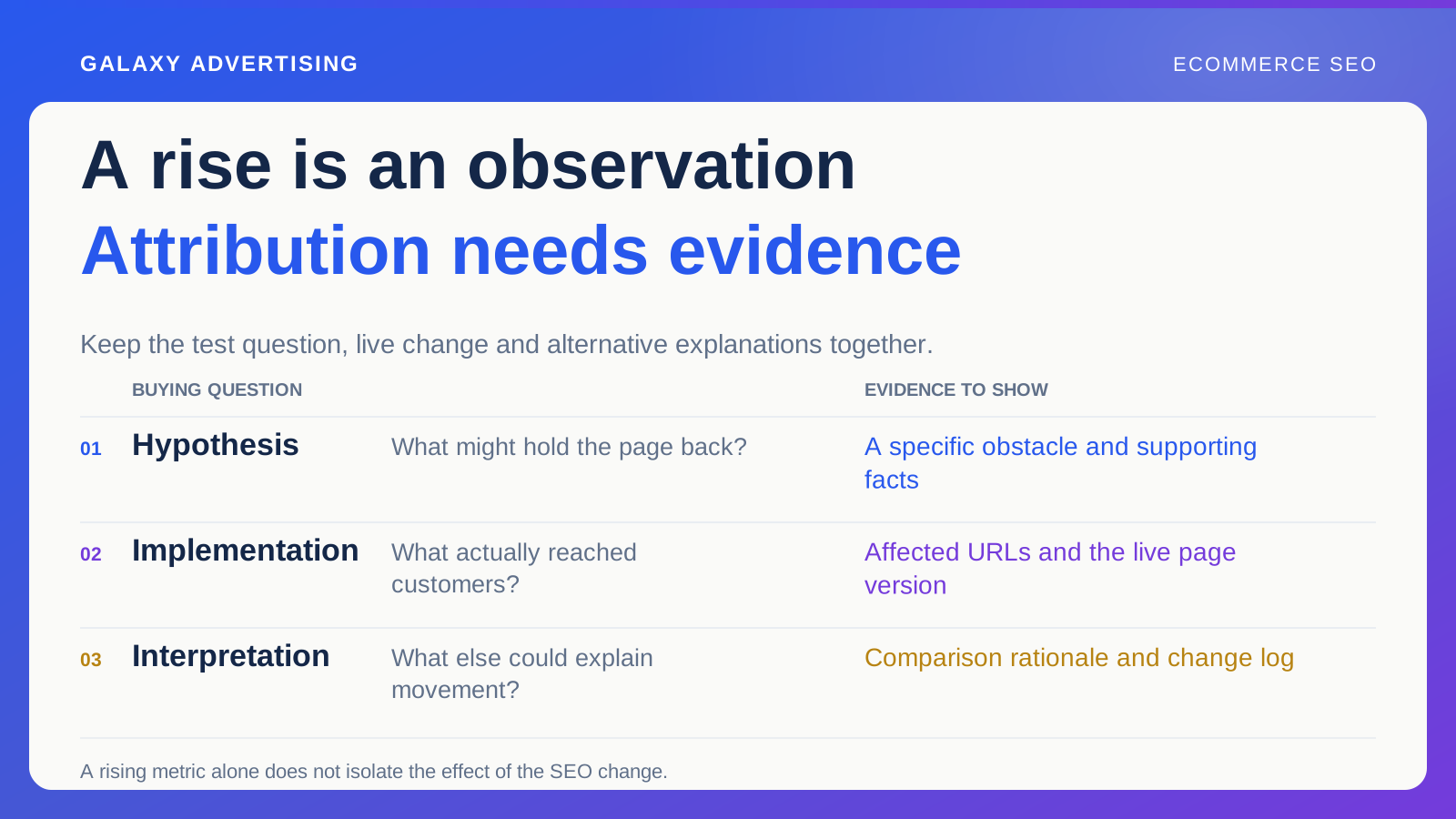
Log material stock, price, offer and website changes during the observation period. Also record whether the planned update actually reached the live page.
Approval isn't implementation. Check the destination, relevant links and selected product states after release. You cannot test copy that stayed in a draft folder, or appeared differently from the approved version.
This needn't become a diary of every routine edit. You're keeping alternative explanations available. A short, useful change log can tell you more at review time than a large dashboard stripped of its operational context.
Look for reasons your first idea might be incomplete
Keep observation and interpretation separate. Relevant clicks rising under stated conditions is an observation. Saying the new copy caused a particular increase in revenue requires stronger evidence.
Look for challenges to the premise as carefully as support for it. Size information could be clearer while another configuration problem remains. Visitors could investigate more without placing commercially suitable orders.
An inconclusive result still leaves you choices. Refine the question, find missing evidence or give another constraint priority. Uncertainty isn't proof of failure, and it isn't a reason to let the test run indefinitely without a decision.
Let another owner challenge the question
Before implementation, ask the product or customer service owner whether your proposed obstacle resembles the questions they hear. Their experience can reveal an assumption the search team made from a limited report. Treat it as additional context, rather than a substitute for your planned comparison.
If that conversation changes the hypothesis, change the test record before launch. Otherwise you risk reviewing one idea while the website team has implemented another. A short clarification now can preserve more learning than a lengthy explanation after the result arrives.
Leave a record somebody else can use
Keep what changed, what you observed, what remains uncertain and why the next action follows. Save the relevant page version or release reference alongside it, so another team member can understand the work later.
You can decide to retain an improvement without claiming to have quantified its additional effect. A clearer product comparison may deserve its place even when the available data cannot isolate its commercial impact.
A rising chart is welcome. The more valuable thing is being able to explain why you made the change, what evidence could challenge it and what you should do next. That's how a page update becomes learning you can actually use.