What if your next SEO audit gave you hundreds of recommendations, but no useful way to choose between them? Broken product routes sit beside speculative improvements and minor presentation preferences. Everything matters, apparently.
With a long content plan on top, it's understandable to reach for the easiest task or put the whole programme aside. The missing piece is a decision: which customer or technical problem deserves your limited development, product and editorial capacity? A useful backlog connects that problem to a commercial route and the work needed to fix it. Urgency and evidence won't be equal across the list.
Start by separating faults from ideas
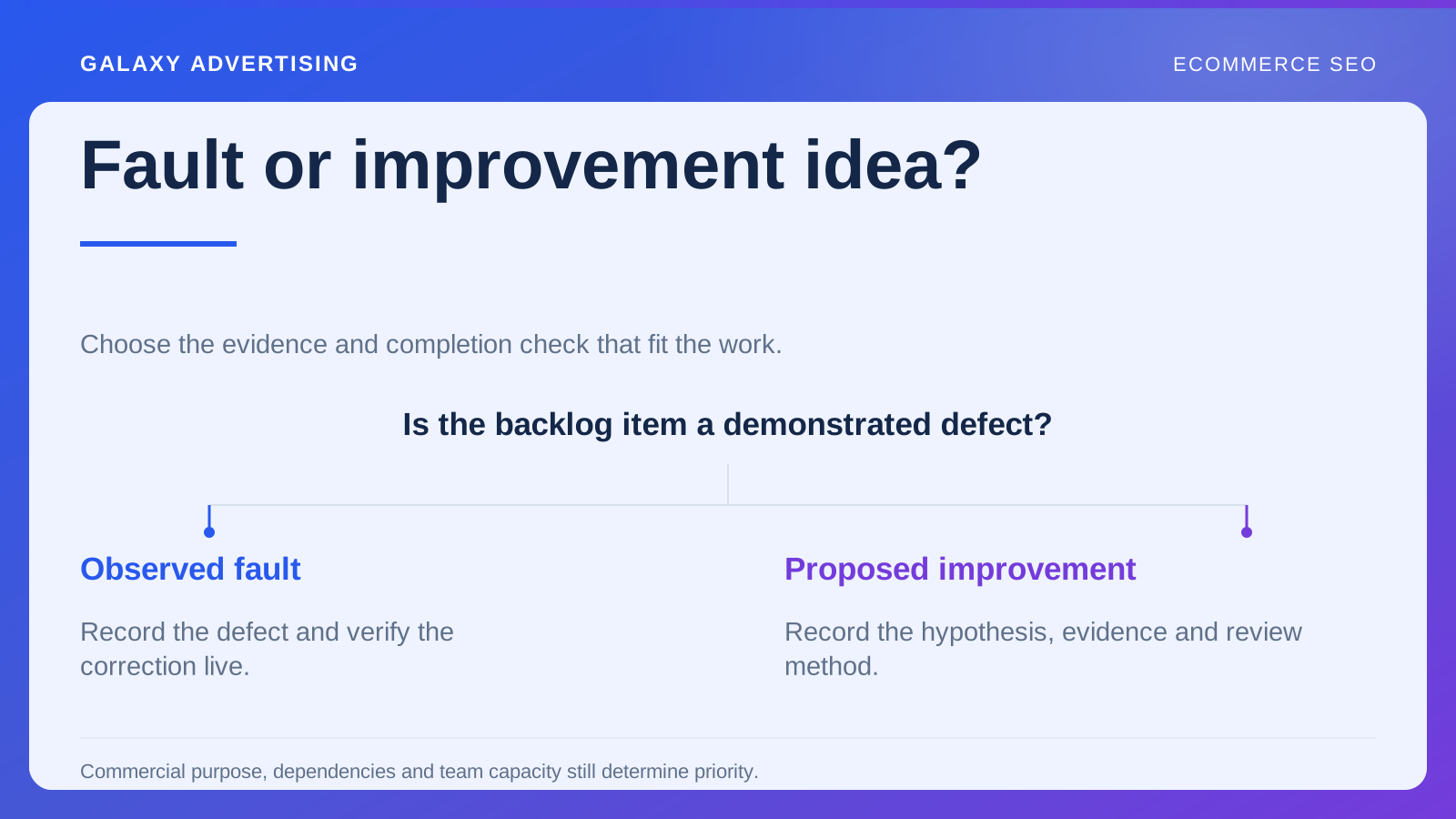
Identify demonstrated defects. A product link taking someone to the wrong destination is a different proposition from the belief that another paragraph would improve the page.
Both may warrant work. For a correction, record the observed fault and the check that will establish it's fixed. For a proposed improvement, explain the hypothesis, its supporting evidence and how you'll review it.
Don't let the tool's issue count make the decision. One repeated template defect can generate rows and rows, while a single commercial page problem affects an important route. You need to understand the consequence behind the export, rather than fund whichever problem has the largest spreadsheet footprint.
Show which part of the range benefits
Name the products, collections or guides affected, and the customer task they serve. Without that page role, a task is hard to connect to your business objective.
For a hypothetical storage furniture retailer, correcting dimensions throughout a commercially important collection might deserve a different priority from rewriting an old article barely connected to today's range. The task description alone doesn't tell that story.
Use the evidence you have and label what remains uncertain. Inventing a revenue gain won't make the comparison more reliable. A clear explanation of the route's relevance can justify a decision without pretending you know precisely how many orders the fix will create.
Find the work hiding behind the task
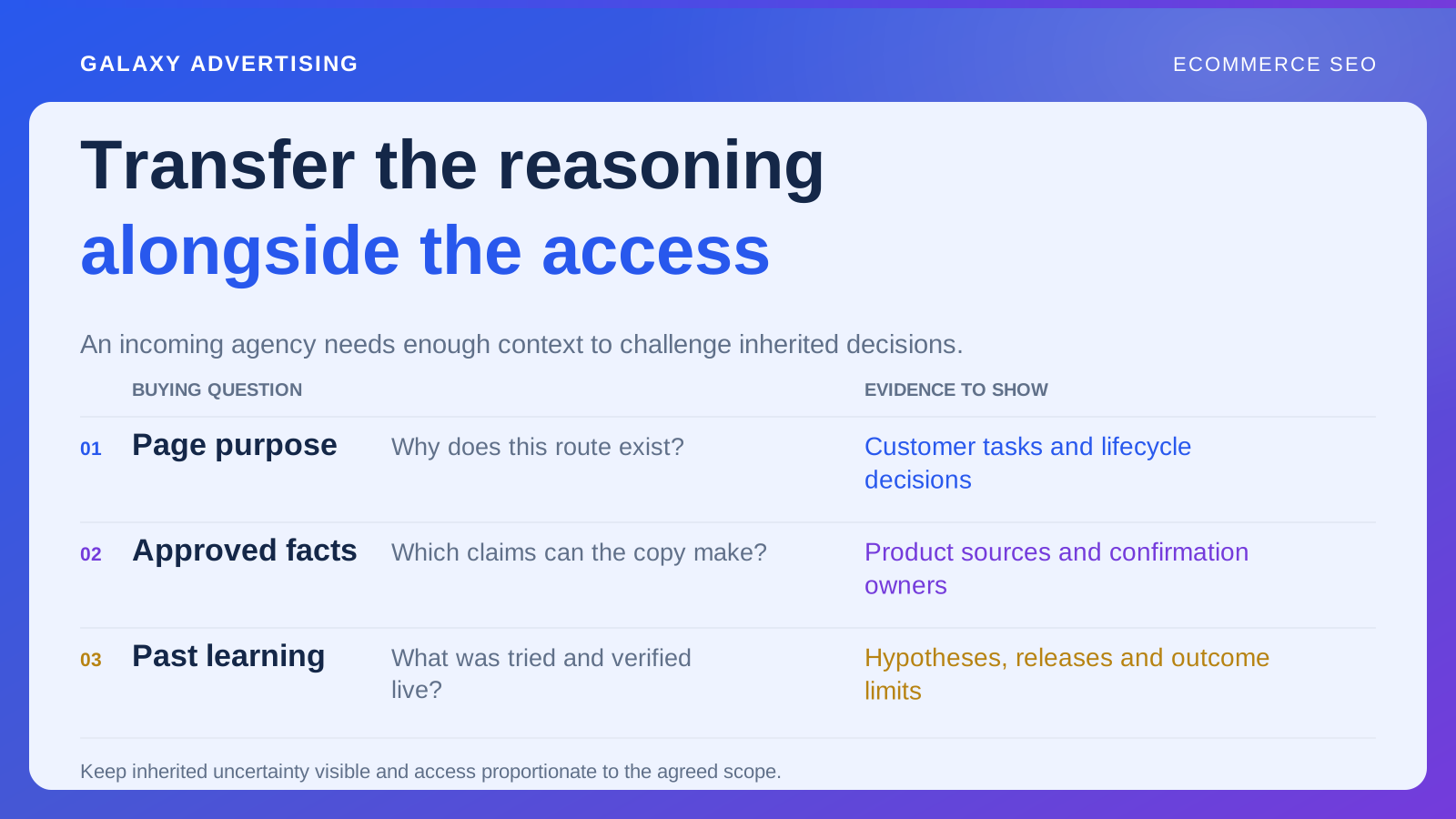
Ask what needs to be available before anyone can finish. Copy may need supplier facts. Navigation may need a merchandising decision. A technical correction may depend on access or a platform release.
Give each dependency a named owner. Putting everything in an SEO column doesn't give the specialist control over every fact or implementation. They can coordinate the work, but somebody still has to supply what's missing.
This can change your order of work. A supposedly quick rewrite may be stuck on an unresolved product definition while a technical repair is ready to go. Make that visible before agreeing a delivery promise, rather than discovering it once the task is underway.
Estimate for the people you actually have
A generic difficulty rating is a starting point at best. Your developer may know one template well and need to investigate another from scratch. Estimate using your team's actual people and systems.
Allow for verification and maintenance as well as the first edit. A correction needs a check on the live customer route. A new page needs someone responsible for facts that can change.
Where investigation is necessary, say so. A bounded diagnostic task may be the right next investment before a wider repair is authorised. That's easier to account for than giving unknown work a confident price, then letting it grow without a clear explanation.
Finish a useful route before scattering the work
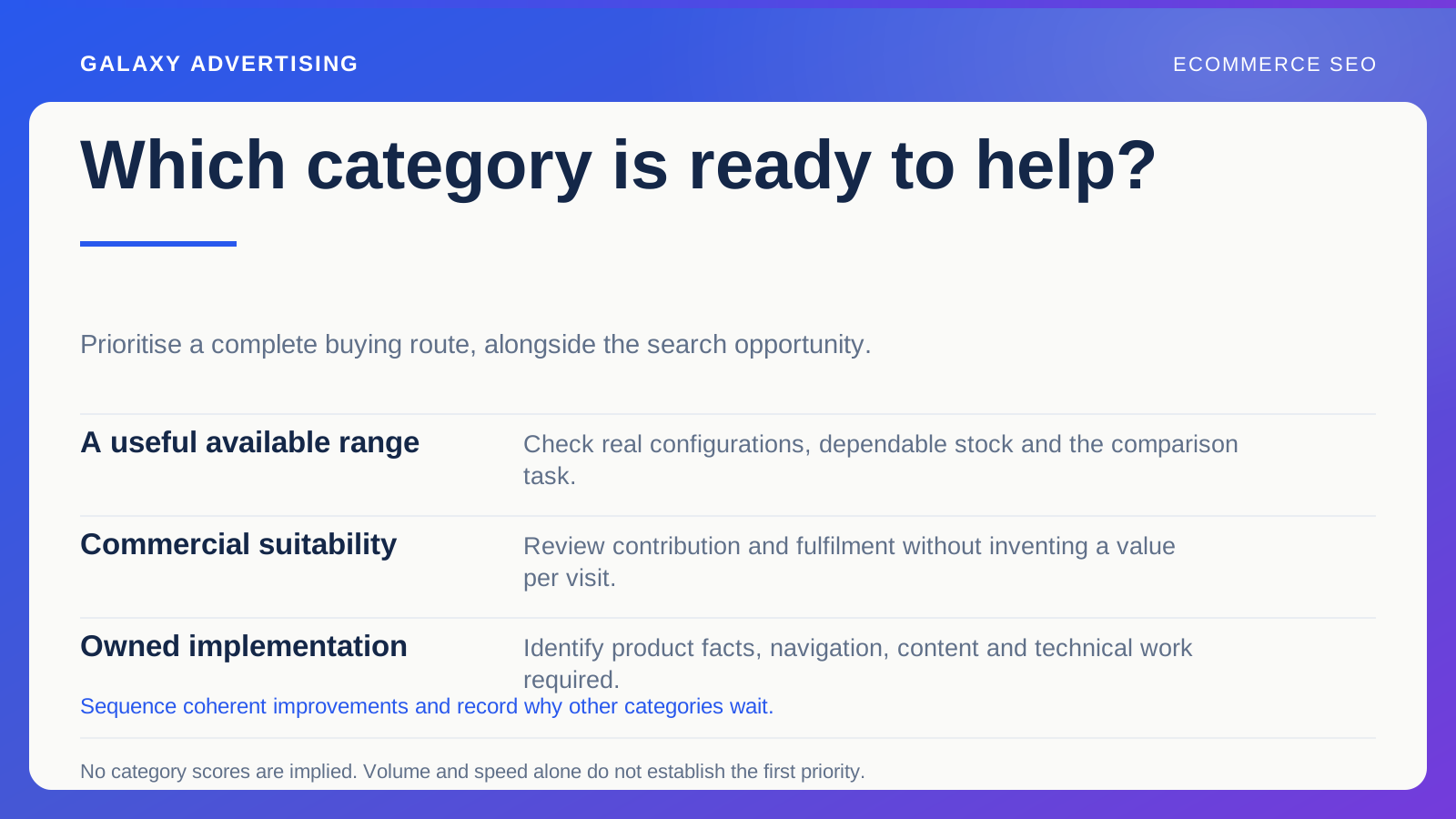
A connected group of changes is often more useful than cosmetic edits spread across the site. You could improve discovery, product information and relevant internal links for one range, leaving a complete route the team can inspect.
A sitewide fault still matters. A shared template problem may need central work before individual page edits. Let the consequences and dependencies determine the sequence, rather than assuming content or technical tasks always deserve first place.
Write down why an item is waiting. Perhaps the category lacks stock, the proposed guide duplicates an existing task or the technical idea needs evidence. Explicit deferral is a decision. An ever growing list with no review is simply a list nobody wants to open.
Leave room for a real interruption
Make sure a broken commercial destination or incorrect product claim can be corrected promptly. A scheduled backlog shouldn't stop you dealing with a verified problem in the current offer.
Equally, a fresh request isn't automatically urgent because a senior person raised it, or because another tool found it. Ask for a clear explanation of the interruption.
Check its consequence, owner and acceptance test, just as you would for planned work. That keeps the programme responsive without each week dissolving into unrelated requests. You want reliable judgement, with enough flexibility to reflect what's happening in the business.
Put one quick win under a little pressure
Choose an apparently easy task and ask what would establish that it worked as intended. Does that require unowned product facts? Does it rely on a technical change outside the team's access? If so, revise the effort estimate before putting it first.
This is especially useful when lots of content requests look similar. Their outward form can conceal very different evidence requirements. Exposing those differences helps you fund a complete useful outcome, instead of several cheap looking starts that nobody can finish.
Close the task when the result is there
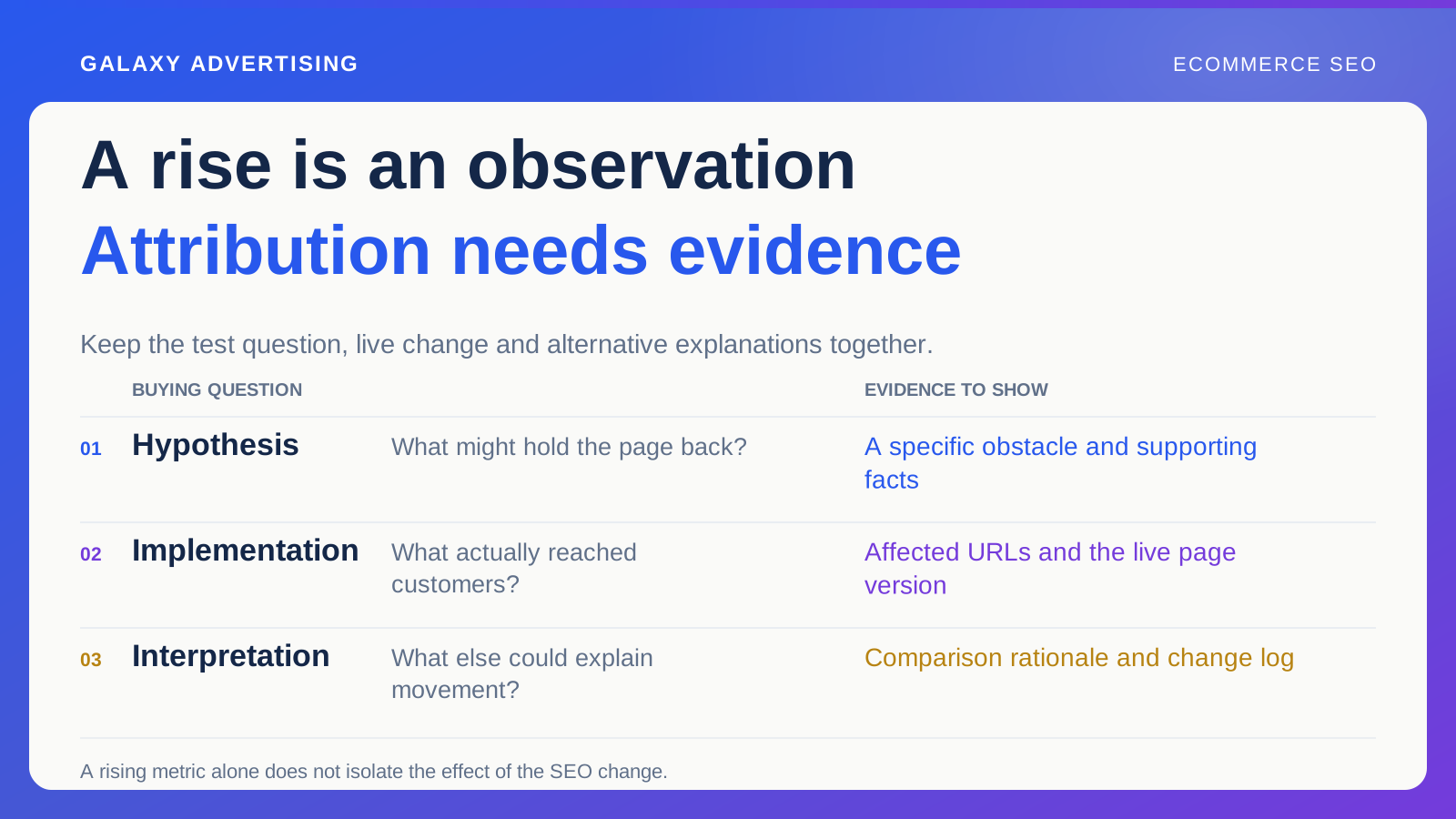
Mark work complete when the agreed result has been verified in the relevant environment. An approved document or changed source file is an intermediate step if customers still encounter the old route.
Keep the verification reference and any limitation. Where an improvement needs observation after launch, distinguish completed implementation from the later performance review. Those dates and decisions serve different purposes.
Your SEO budget has to fund work your business can actually support. When faults, ideas, dependencies and effort are understandable, you can assign responsibility for a result worth reviewing. The audit then becomes a way to choose, rather than a permanent reminder of everything somebody thinks you ought to do.