The new agency opens Search Console, analytics and your website, then asks why several collections were merged. Nobody can point to the reasoning, explain whether an old redirect was deliberate or confirm which product facts are still uncertain.
Access lets the incoming team see the current state. It doesn't transfer the commercial memory behind it. A useful handover gives them enough evidence to challenge inherited work thoughtfully, rather than reverse decisions simply because nobody recorded their purpose. The accounts are only part of what needs to travel.
Explain what the business is trying to achieve
Describe the outcome you want and the product ranges involved. “Grow organic traffic” leaves the agency guessing which demand is worthwhile and what your operation can support.
If you'll assess the work commercially, share the relevant cost and revenue definitions. Make clear whether you're judging sales, contribution, meaning the money left after the costs included in your calculation, or another defined outcome. Label assumptions that remain estimates.
Include what the programme hasn't established. Relevant visits to a page don't necessarily give you a clear account of additional sales. Honest uncertainty is a more useful starting point than a success summary that turns every observed movement into evidence of impact.
Hand over the purpose behind the pages
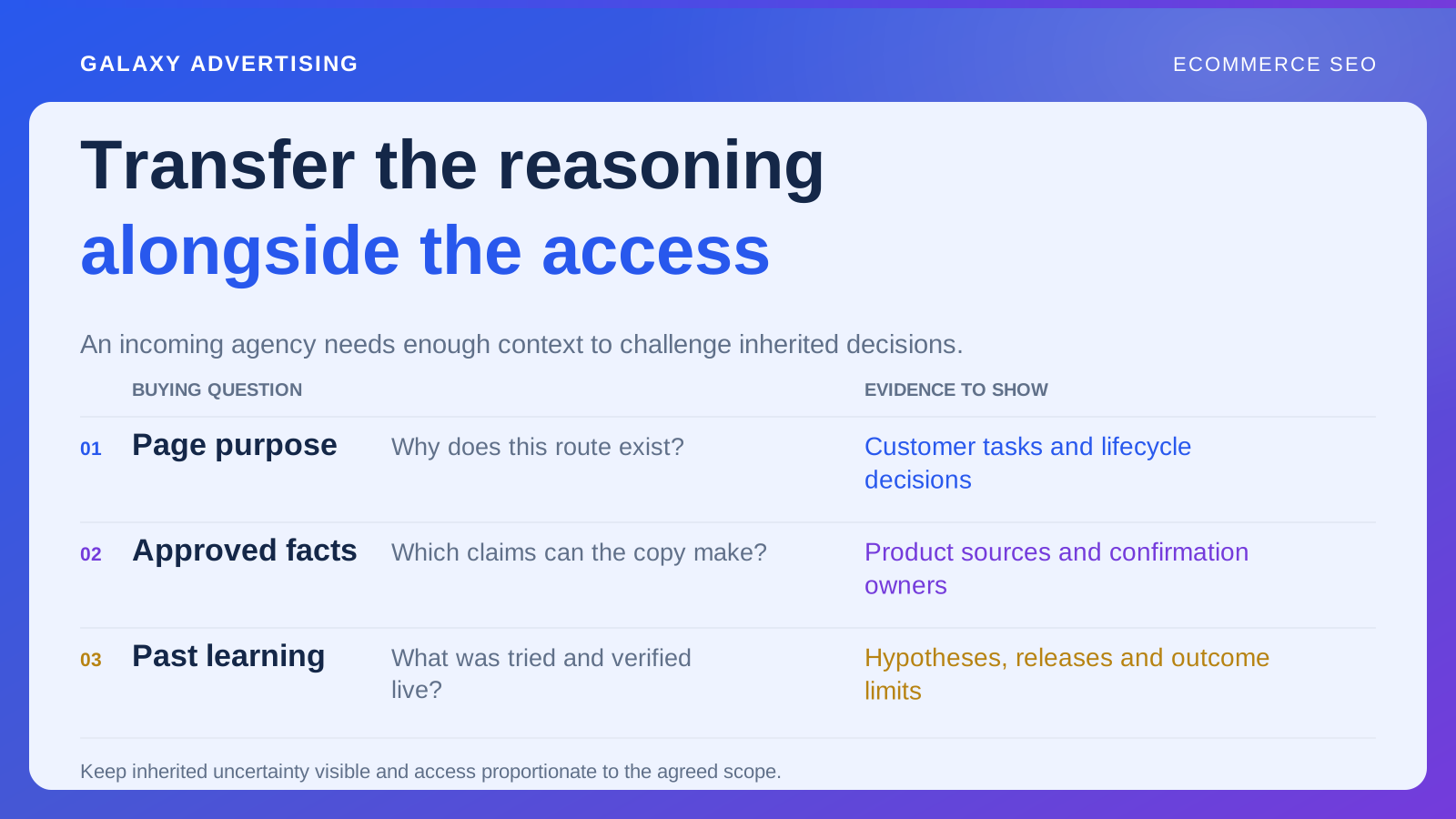
Identify important collections, products and guides. Explain the tasks they serve and the relationships between them, so the agency can understand the customer route as well as the page list.
Record deliberate consolidations, lifecycle decisions and exceptions. A missing page might have been appropriately replaced, accidentally removed or left unresolved. Those are different situations, and the new specialist needs context before proposing a response.
Your sitemap won't supply that explanation. It lists locations without necessarily showing why they matter. A concise purpose map connects technical findings to the customer journey. That's a more useful start than an unprioritised export of every URL on the site.
Supply the facts the copy has to respect
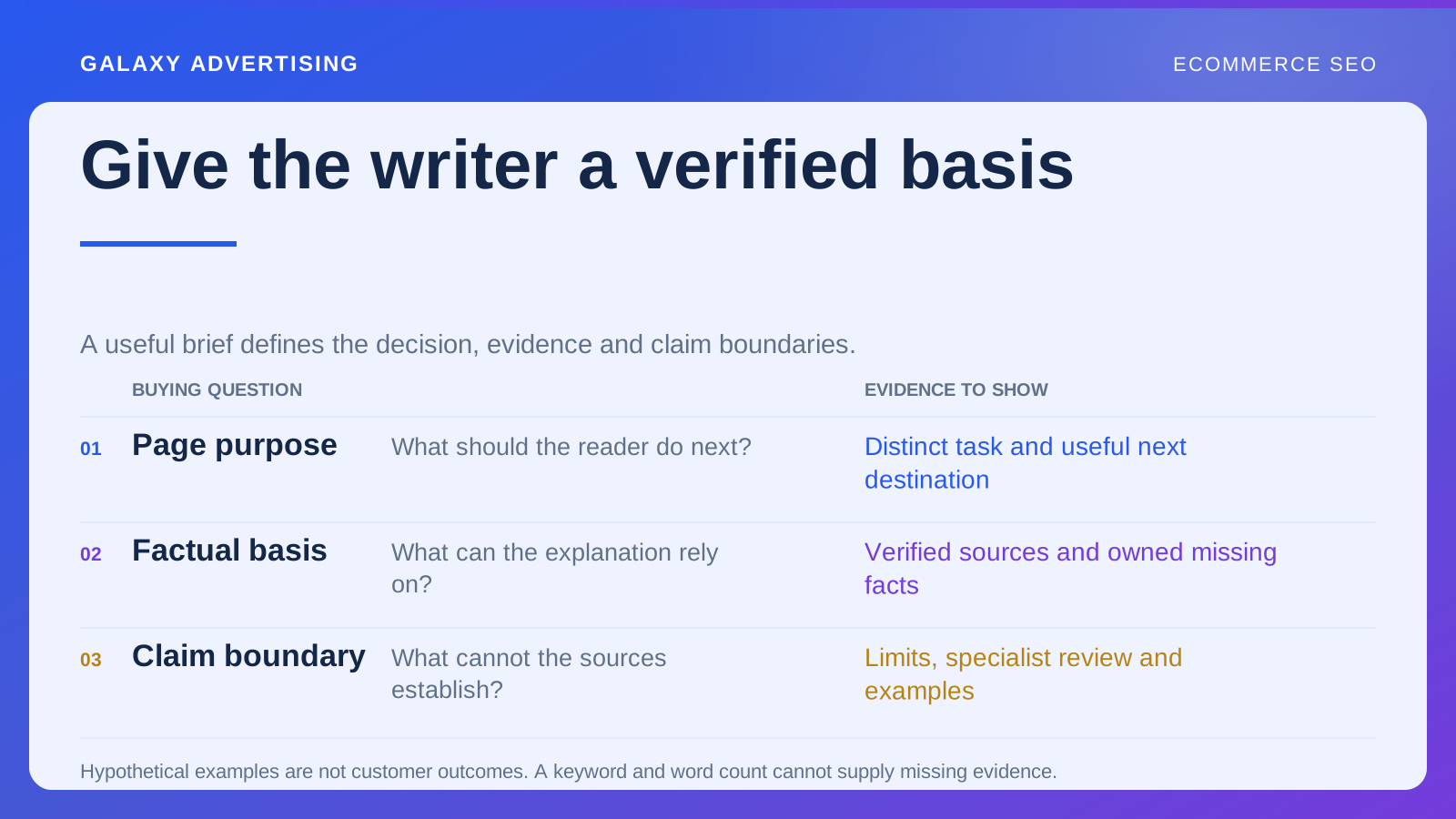
Give the agency reliable sources for specifications, configurations, package contents and relevant service conditions. Name the people who can confirm exceptions or resolve missing information.
Distinguish approved claims from language you'd like to use. Unsupported words don't become approved facts simply because a previous agency published them. The incoming team needs to know the difference.
Explain how material changes reach the website team. If a product becomes unavailable or a service promise changes, who reports it, and which outputs need reviewing? The quality of content depends on that working relationship after the initial audit as much as during the handover. A source document alone won't keep changing facts current.
Keep ownership clear and access proportionate
List the accounts and systems needed for the agreed scope. Confirm business ownership and grant the required access through supported permission processes.
Shared credentials aren't a substitute for accountable roles. Identify who can authorise, review and remove access, and where important records will remain. Both parties should know where responsibility sits.
The transfer should fit the task. An agency needs relevant evidence and implementation access, rather than unrelated personal or confidential material. Clear permissions let you provide what is useful without turning an ordinary SEO handover into a collection of every available business document. More access isn't automatically a better brief.
Keep the technical reasoning with the implementation
Provide records of important redirects, canonical choices, meaning decisions about the preferred version of a page, navigation rules and template behaviour relevant to the scope. Ask the technical owner to explain unresolved concerns. A finished interface can't tell the whole story.
Include migration history and material measurement changes. A trend may be hard to interpret if the agency doesn't know URLs or event definitions changed during the period being examined.
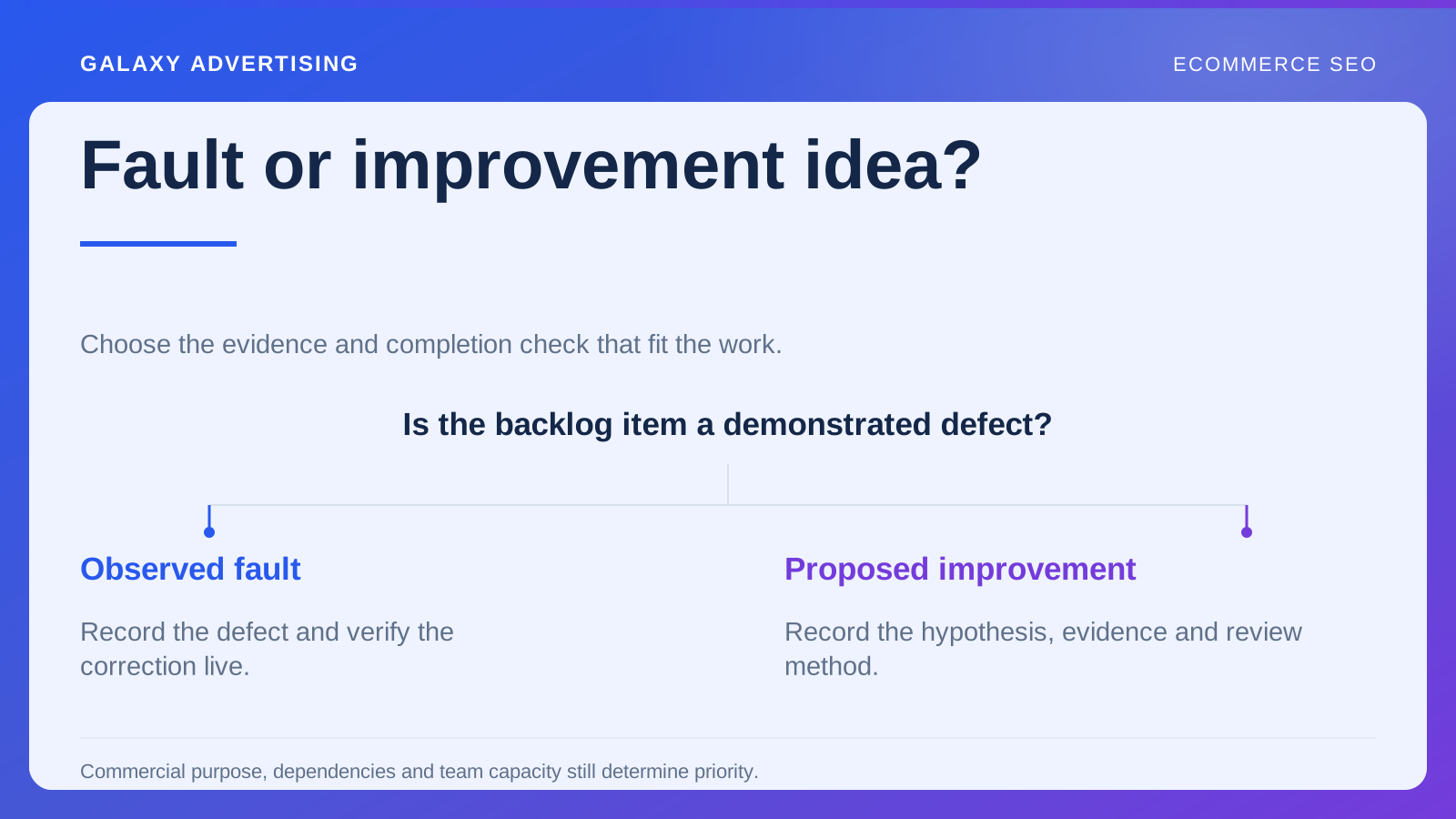
Separate confirmed faults from proposals that never went live. Backlogs often mix them together. Show which items have evidence, which need investigation and which were deferred commercially. That helps prevent another audit from repeating findings without improving the decision behind them.
Show what was learned, and what actually went live
Record important hypotheses, implementation references and observed outcomes. Include unsuccessful and inconclusive work where it could prevent an avoidable repeat test. Useful learning doesn't have to come with a success label.
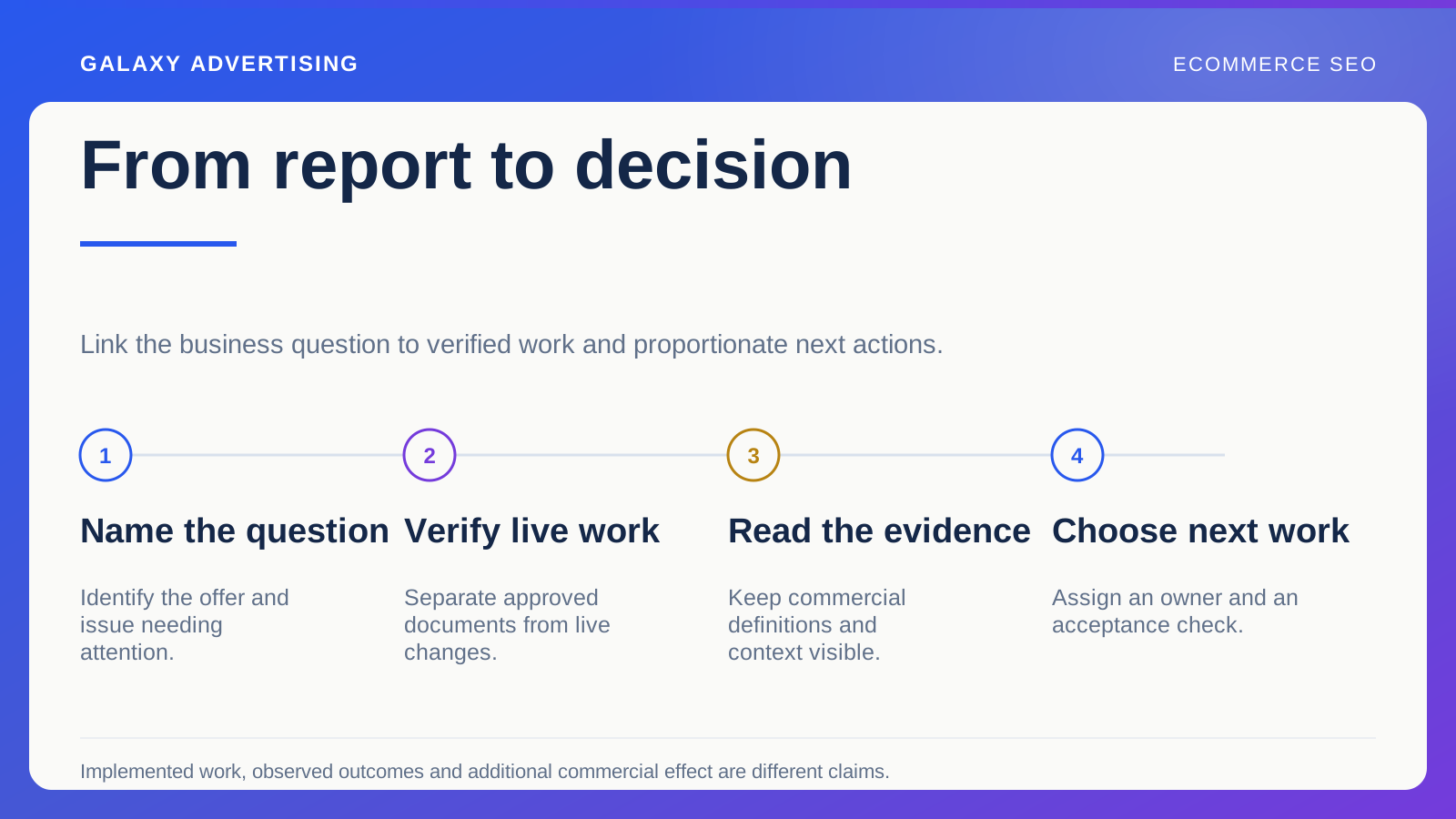
Verify whether promised corrections reached the live site. “Complete” in an old report might mean an approved document, rather than a changed customer experience. Preserve that distinction in the transfer.
List decisions already waiting for you. Missing product information or development capacity may block progress. The incoming agency needs to know before promising delivery, so an existing dependency doesn't later reappear as a surprising performance problem or scope disagreement.
Trace one old decision together
Choose an important change from the previous programme and follow its rationale, approval and live result with the new team. This checks whether your records are understandable, rather than merely extensive.
If nobody can establish the reason, label the uncertainty. Don't fill the gap with a plausible explanation. The new agency can investigate in proportion to the issue. Visible gaps offer a better starting point than a seemingly complete archive whose key records nobody can connect to the current website.
Agree the first review before the next programme
Ask the team what it has verified, which inherited assumptions it challenges and what it recommends first. A new agency's preferred template isn't, by itself, a reason to replace the whole programme.
Choose a bounded first sequence, with owners and acceptance checks. Keep necessary corrections separate from improvements needing observation after implementation. You should understand the commitment you're making and the evidence that will inform the next decision.
A strong handover preserves your ability to judge the website. With facts, purposes, responsibilities and learning alongside access, the incoming agency can exercise informed judgement. It can spend its opening period making useful decisions instead of reconstructing the ones your business already paid to make.