 Google Ads
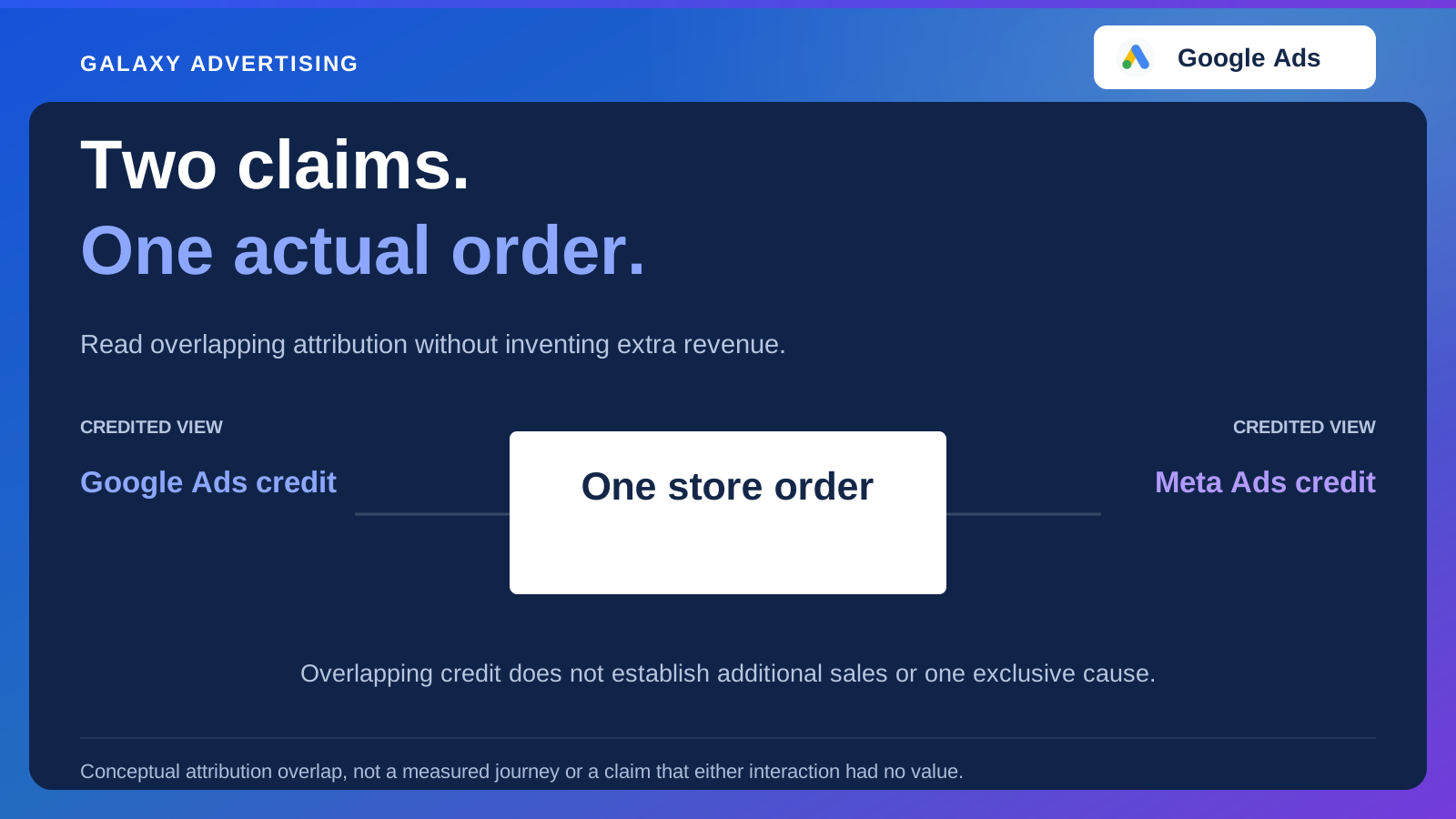
Why are Search and Shopping both claiming a part in the order, and which one should get more of your money?
That argument is understandable. You want to know what's earning its keep. But the customer could have been doing different jobs in each interaction, while the account discussion treats the campaign labels as competing explanations for everything.
Start with the purchase questions the activity addresses, then ask whether the combined investment supports a commercially sensible buying route.
How much has the shopper already decided?
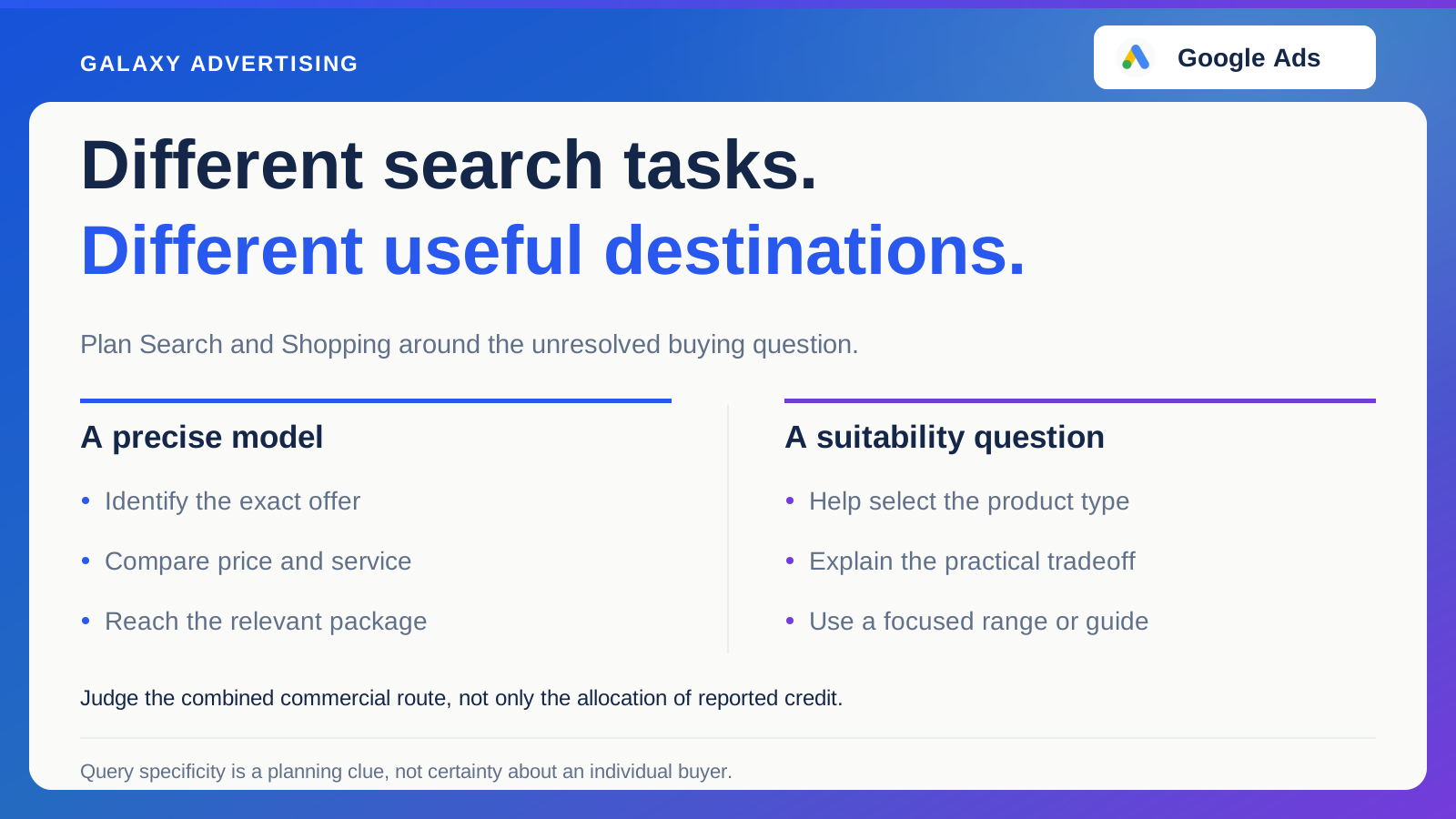
Picture someone searching for a specific projector model, comparing retailers and returning later with a question about installation. Another shopper starts with a broad requirement and hasn't chosen a model. Both can use Google advertising without being at the same decision.
A precise model search could concern availability, price and service. A problem or use case search could mean someone still needs help choosing the type of product. Write down the offer you can support for each task before discussing account structure. It gives the team a practical reference.
Keep the limits clear. A precise query can still be research. A broad query can come from someone ready to choose. Available search and customer evidence helps planning; it doesn't provide a complete psychological profile of the person typing.
Give product information and the message their own jobs
A retail product listing relies on accurate item information. Search advertising can communicate an argument and direct visitors to a destination suited to the query and supported setup.
Those jobs can complement each other. Product information identifies the particular offer. A relevant message can explain a service or use case that needs more context. You don't have to make them compete for the right to be useful.
Check the current campaign types and controls before explaining how you'll implement that division. Performance Max can also serve across different Google inventory. A neat diagram of distinct roles doesn't prove each activity operates in a completely isolated setting. Keep the plan connected to what the account can actually do.
What question is still unanswered after the click?
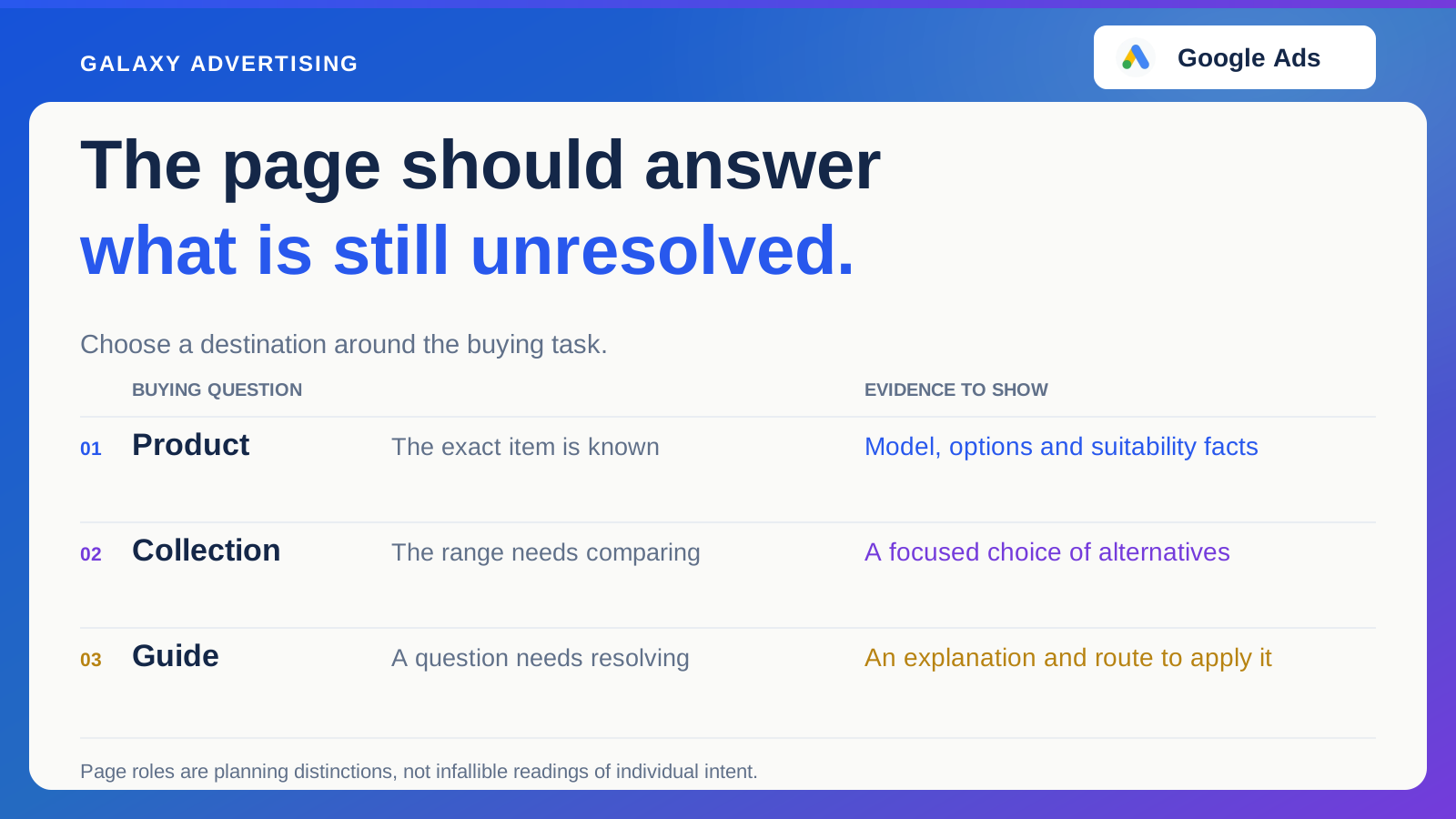
A shopper comparing a precise model usually needs an accurate route to that model and relevant package. A broad collection could make them repeat selection work they've already done. That's time you're asking the customer to spend again.
A category or suitability question could need a focused range or explanatory guide instead of an arbitrary individual product. Choose the destination that helps the next decision, rather than applying a convention that every advert should lead to the same type of page.
Follow the actual link and inspect price, availability, configuration and practical conditions. The role you've described only becomes credible when the destination can fulfil it. Otherwise, a sensible account plan can still send somebody to an unsuitable offer.
Does the investment make sense across the route?
Don't judge every campaign as if the whole buying journey must happen inside its reporting view. A customer can investigate through several interactions before ordering.
Equally, a complicated journey isn't a permanent excuse for weak activity. Each part needs a stated purpose and evidence suited to it. The combined cost must still make sense against the orders and contribution you can observe, meaning the money remaining after the relevant costs in your calculation.
Use common definitions of revenue and completed orders. Attribution, the reporting rules that assign credit to interactions, can otherwise make the same transaction support incompatible conclusions. Agreeing those definitions keeps the investment discussion attached to the same commercial result.
What problem would removing overlap solve?
Some overlap is understandable when customers search and compare in different ways. Its existence alone doesn't prove wasted spend.
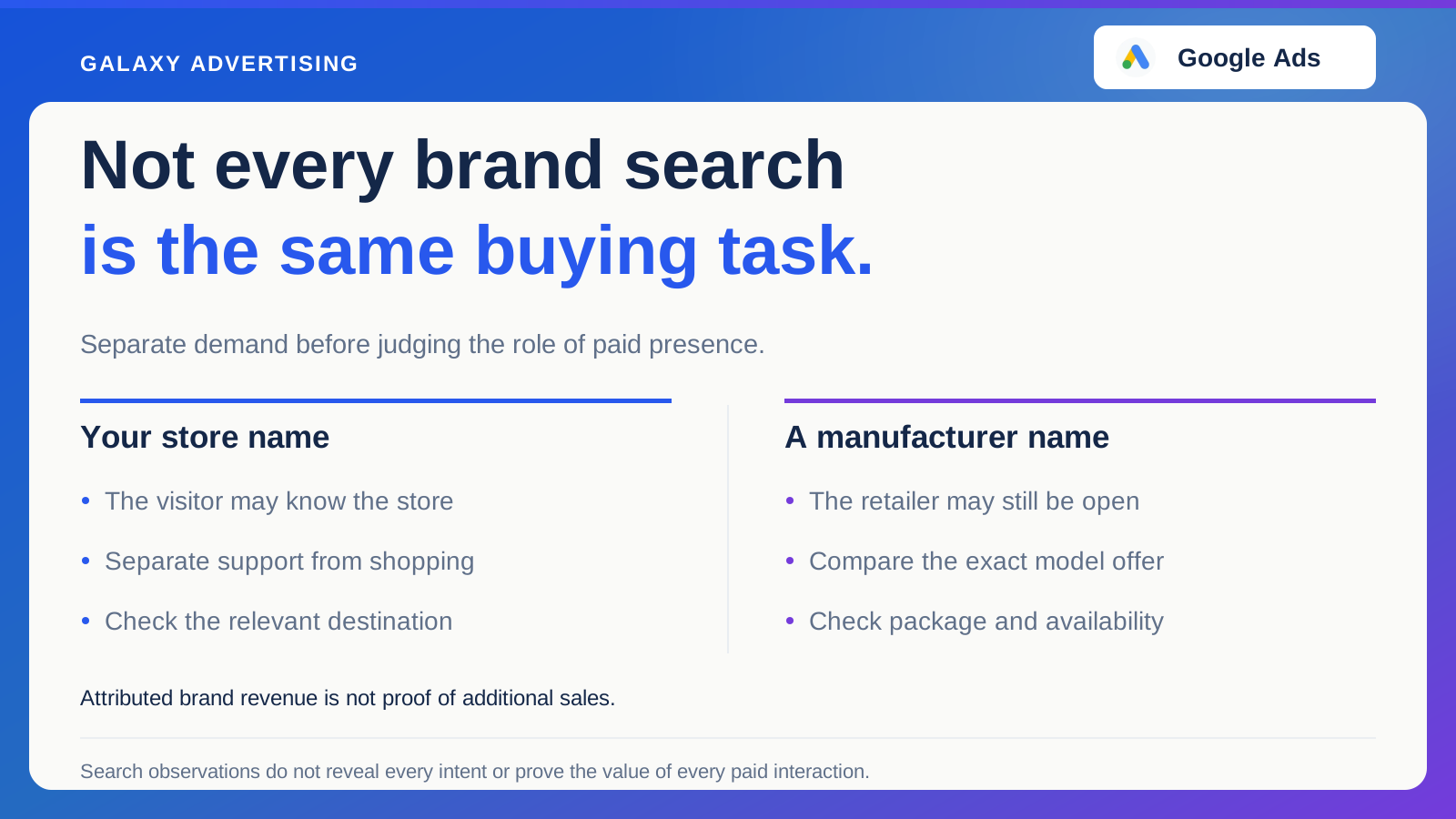
Ask what practical problem a proposed change would solve. Is your own brand demand obscuring broader acquisition? Is a destination inconsistent? Is investment in a product exceeding its commercial allowance? Each question gives you something more useful to investigate than a general wish for zero overlap.
If an appropriate control is available, assess its scope and likely consequences before applying it. Document what evidence would show improvement in the overall task, rather than orders simply moving between reports.
A tidier allocation of credit isn't the same thing as a better order.
Was the product ready for the role you gave it?
A product can look strong in one activity because its offer is easier to understand there. Another might need clearer compatibility or package information before broader demand becomes suitable.
Inspect that before announcing that a channel format works or fails for an entire category. The result could reflect the particular products, queries and destinations tested. Those details matter when deciding what deserves another attempt and what needs repair first.
Bring merchandising knowledge into the review. Someone who understands stock and product differences could explain a discrepancy that stays invisible in a campaign summary. Advertising evidence becomes more useful when the people supplying the offer can help interpret it.
Follow two questions through your actual account
Take a precise model query and a broader suitability question within the same range. Describe the intended offer, likely information need and useful destination for each. Then inspect how the current account and website support them, using the evidence and controls available.
You could find a clear model route alongside a suitability route leading to an unhelpfully broad collection. Or useful broader content alongside an availability mismatch on the exact item. Record the gaps before debating who deserves more budget.
Don't assume every interaction will fit neatly into one role. You're identifying the practical work a customer needs to finish and whether you've provided a credible route. Once that's clear, the account manager can explain possible changes and how you'll review their effect.
A role map with checked destinations is worth more than a tidy account diagram that misses the shopper's decision.
Test the disagreement you actually have
If the team disputes a role, write down the competing explanations and choose a manageable test. Keep the offer and relevant commercial conditions stable where possible.
Don't redesign the account, change promotions and rebuild destinations together to investigate one relationship. Where you can't isolate it, explain what the comparison cannot establish.
The useful conclusion belongs to the setting you observed. Your customer isn't trying to crown Search or Shopping the winner. They're trying to choose something, and your investment needs to help them do that on terms the business can justify.