 Google Ads
You review the images beside the headlines and spot a problem: the video shows a configuration you no longer sell, and the service promise belongs to an old promotion.
Every field has been filled. Some of the individual pieces look excellent. But a customer encountering the material could struggle to work out what you're actually offering.
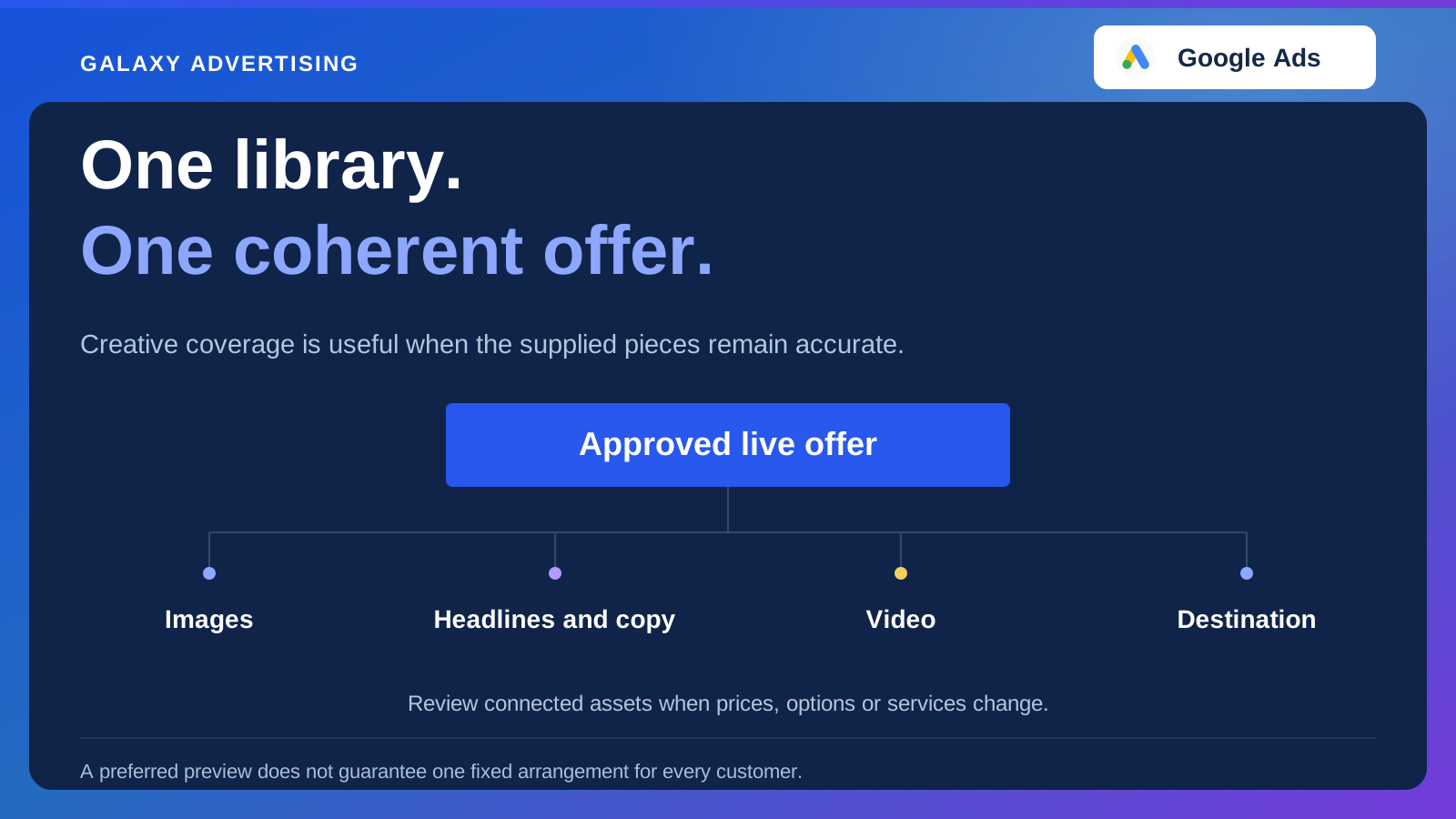
Before commissioning more versions, check whether the assets belong together. A complete library only helps when its pieces can communicate the live offer accurately.
What product decision is this material meant to help?
Write a short brief identifying the product family, intended customer question and relevant destination. Explain why the grouped material belongs together. This gives production something more useful to work towards than filling the available formats.
A dining table range could need to communicate size flexibility and material detail. An appliance offer could depend more on identifying the model and explaining delivery. Similar asset formats don't make those the same argument. They need different evidence.
A generic brand message isn't enough to organise products with materially different purchase conditions or uses. The customer still needs to understand the particular offer behind the message.
Lay the pieces out together
Review images, copy and video as a library. Check that product, configuration, finish and commercial claims remain consistent across them.
Imagine a photograph of a large corner sofa paired with copy leading on the smallest configuration's price. Unless the destination explains the relationship, the customer has to untangle it. A service statement borrowed from another range can be inaccurate here even when it's true elsewhere on your site.
Keep approved references accessible. Whoever reviews the assets needs to establish what's correct, rather than deciding only whether it looks professional. Looking polished and representing the product accurately are separate checks. You need both before approving the work.
Give each piece a reason to be there
Different views can explain scale, detail, use or purchase conditions. Record the role of each asset. That makes missing evidence visible without turning every empty upload slot into an order for another almost identical image.
A video could explain a mechanism or sequence more efficiently than a still. A close photograph could show material more clearly than decorative movement. Choose the form that helps the customer make the decision, rather than the one that gives the production team more to animate.
This isn't a fixed sequence every campaign must follow. The right library depends on your offer and the campaign's current capabilities and requirements. Keep that flexibility while being clear about the job each piece serves.
Would the claim still be true on its own?
A short headline or description won't necessarily appear with the full explanation the writer had in mind. Read important claims alone. What qualification do they need to remain accurate?
If delivery assistance is conditional, don't supply an unconditional promise and expect another asset to repair it every time. If the price refers to a particular option, check how the relevant presentation and destination explain that connection.
Use Google's current documentation to understand supported asset behaviour and settings. A remembered preview doesn't prove every customer will see one fixed arrangement.
That preview is reassuring. It isn't a contract with the customer about how every piece will appear.
Check the actual product, including during movement
Creative tools can make more versions feasible. They don't remove product verification. Compare shape, proportions, features, accessories and material representation with approved references.
Watch the frames through a video, rather than approving it from the opening image. A product can change during movement while the still looks plausible. If your argument depends on a real physical action, decide whether you need a controlled demonstration.
Accuracy is a condition of approval. It isn't a performance hypothesis to be settled by how much attention the asset attracts. Interest based on something you cannot supply doesn't make the material acceptable. It gives the customer a different product to want from the one you can deliver.
Use reporting to ask a better question
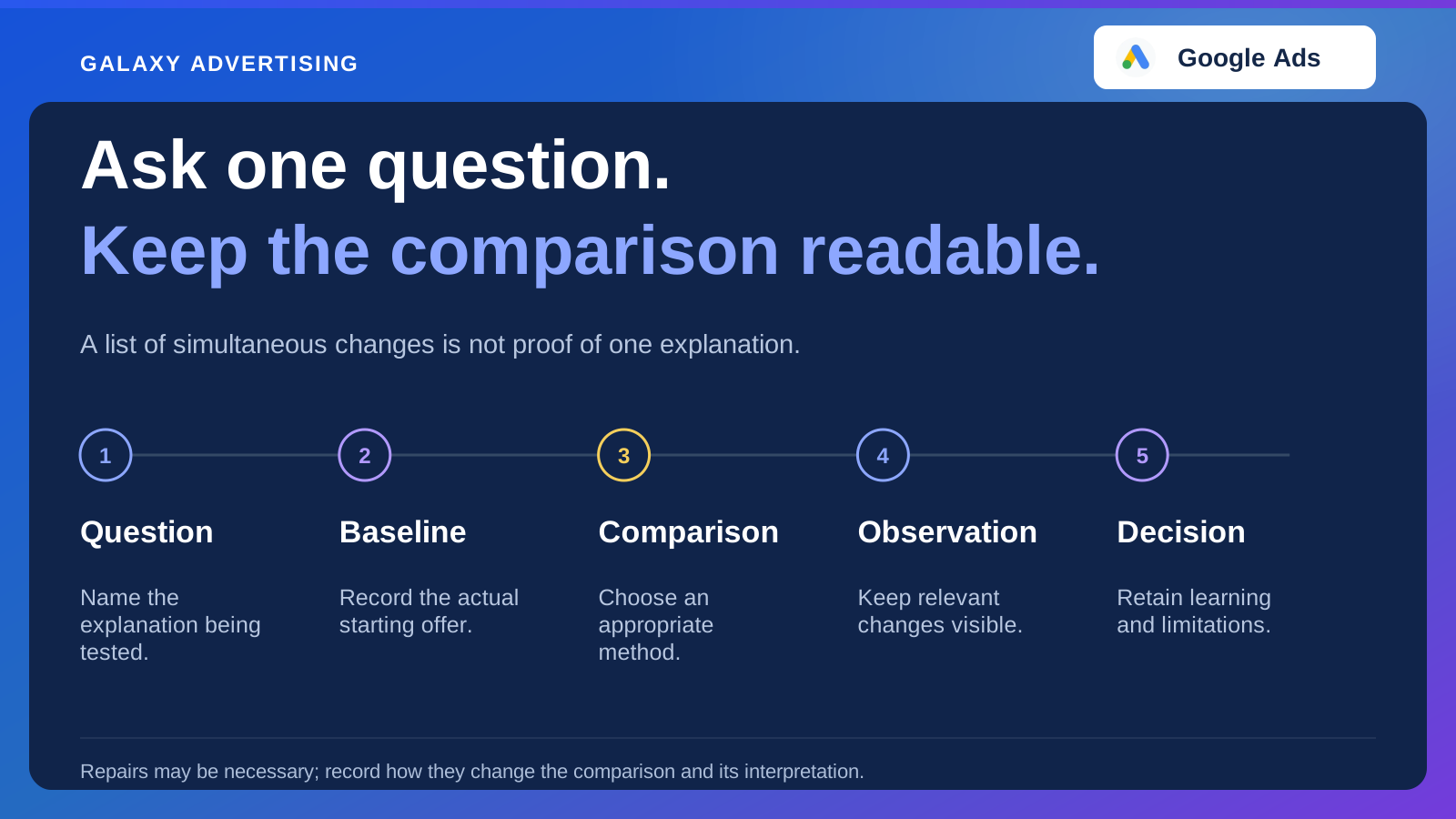
Use the account information available to investigate delivery and performance. Don't turn a diagnostic label into a universal creative rule. The observed result belongs to a particular campaign, offer and destination.
Record meaningful changes and preserve the concept behind each version. Replacing an argument entirely can teach you something different from making the existing argument clearer. If you lose that distinction, it's harder to know what to repeat.
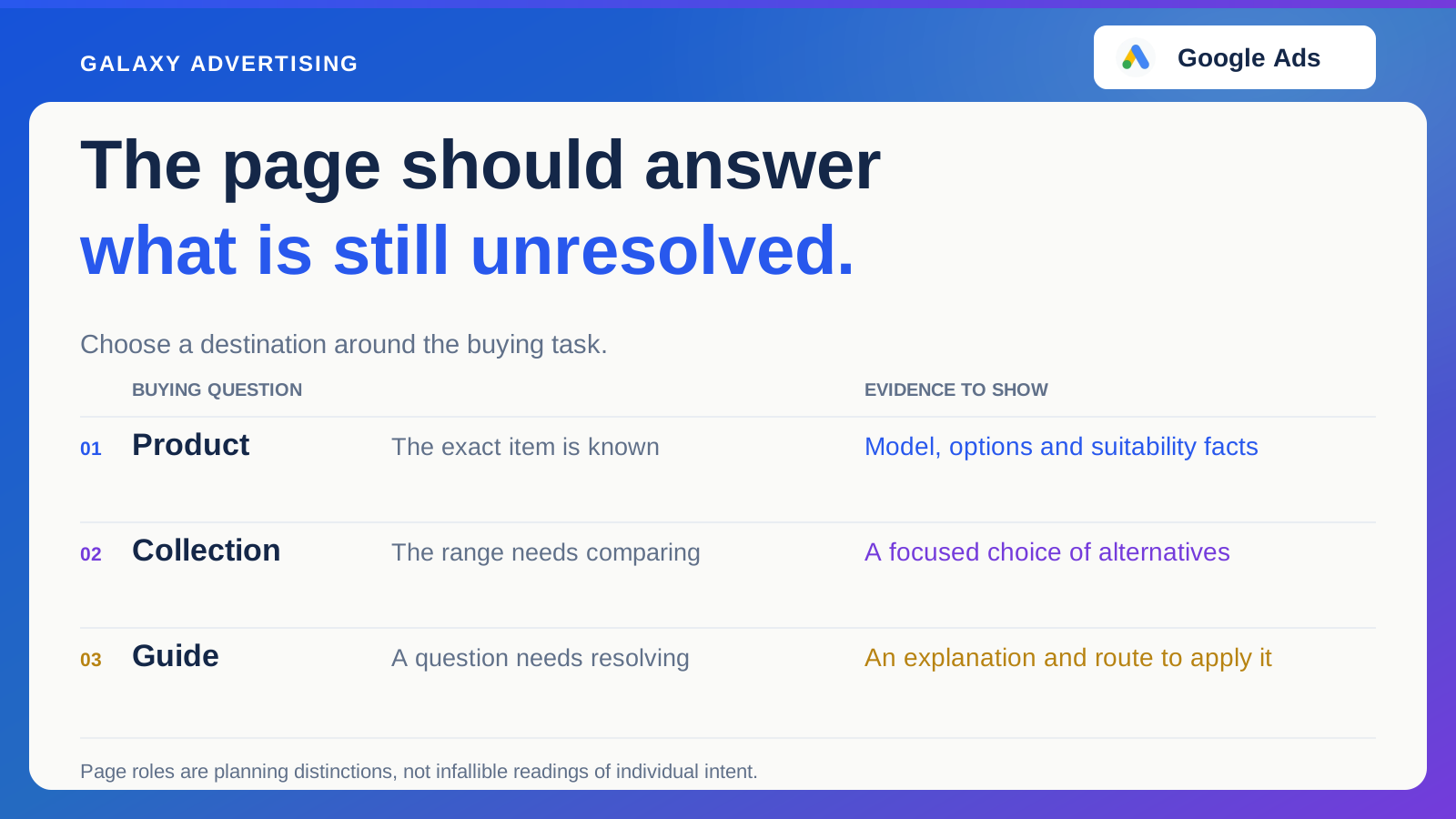
Check the route after the click as well. A credible message can lead to unavailable variants, meaning the sizes, finishes or configurations customers want, or unclear specifications. More production won't repair a destination that fails to complete the offer.
Review beyond the arrangement everybody likes best
Select representative copy and images and ask what each communicates without the rest of the brief. Flag anything that depends on another asset to prevent a misleading reading.
If a headline implies an included service, that service must be true for the offer. If a photograph shows a configuration, the destination needs an understandable relationship to it. Check that words mean the same thing across the family: a claim suitable for a stocked item could be unsuitable for another with different fulfilment.
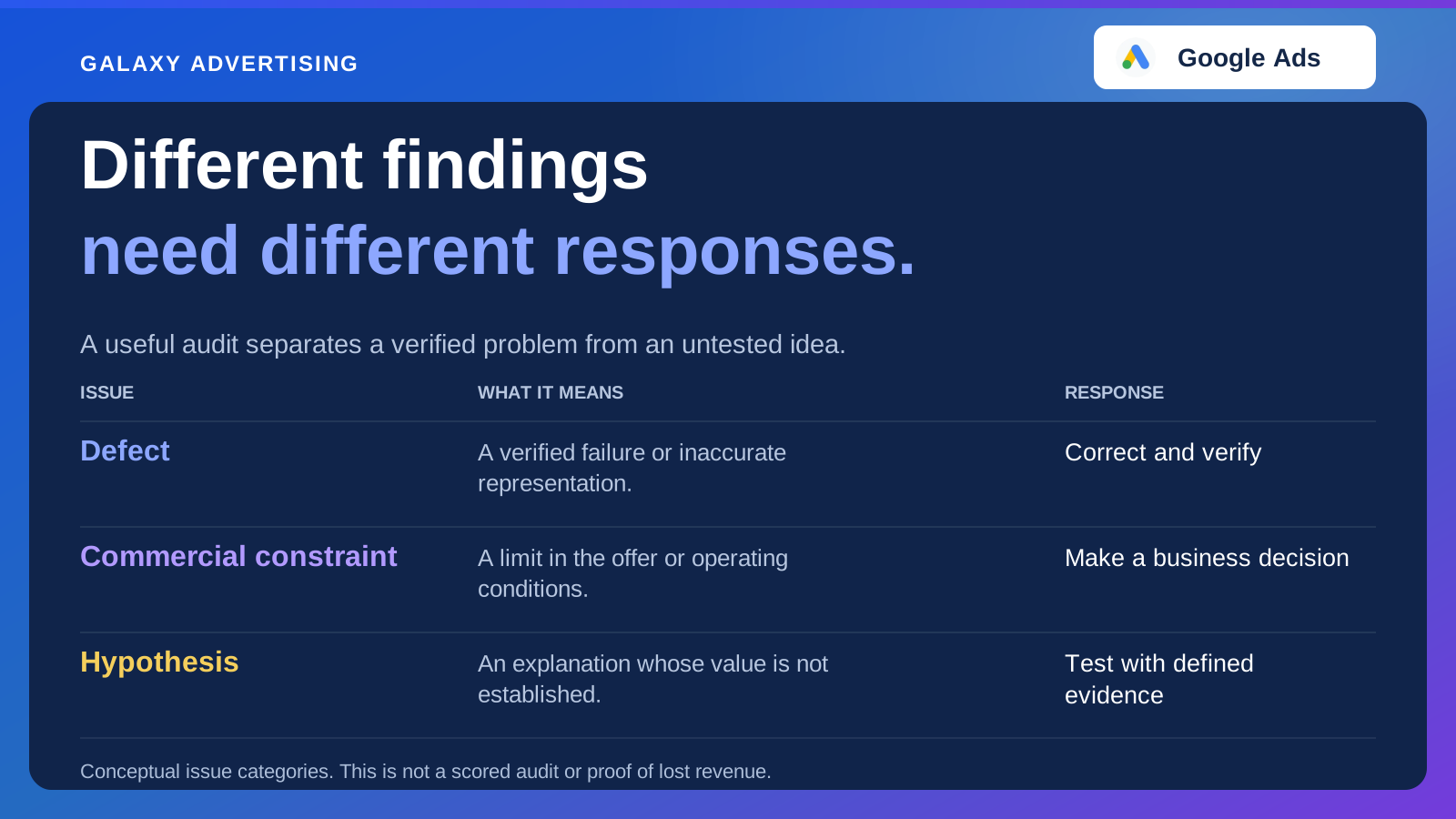
Record factual issues and their owners separately from creative preferences. The team can then distinguish a mandatory correction from a proposed alternative execution. That makes approval more precise and saves time debating taste while a factual problem remains unresolved.
Keep a small set of approved examples for later production, but verify each new asset on its own merits. A familiar visual style doesn't establish that a different product or service claim is correct.
Know when an approved asset has expired
Give someone responsibility for reviewing material when prices, configurations or service conditions change. Passing an initial approval doesn't make a library permanently accurate.
Use filenames and approval notes specific enough to identify the product and claim. Retire or revise outdated material, then verify the resulting library. Don't assume a file change has reached every use.
Your assets need to work as complementary explanations of something a suitable customer can actually buy. A library earns its place through that clarity, not through the reassuring sight of every upload field being full.