 Google Ads
What if a shopper sees “The Kensington” in Shopping and has no idea it's an extending oak dining table?
You know the range, so the name feels descriptive. An unfamiliar customer doesn't have that advantage. At the other extreme, stuffing a title with repeated product phrases and promotions makes them work through the clutter instead.
A useful title identifies the item and the differences that matter to the purchase. That takes accurate product information in a sensible order, rather than simply more words.
Which facts help someone tell this product apart?
Start with the facts that identify it: product type, relevant brand, model, material, size and meaningful configuration. The right combination depends on what you're selling.
For a projector, the precise model can be central to comparison. With a dining table, dimensions and extension capability could distinguish offers that otherwise look similar. A title formula that works for one category doesn't automatically deserve to govern the entire shop.
Keep internal range names where they matter. Just don't expect a name your business invented to explain the product to somebody meeting it for the first time. Put yourself on their side of the listing: what would they need to recognise what is actually being offered?
Check the facts before making the wording more confident
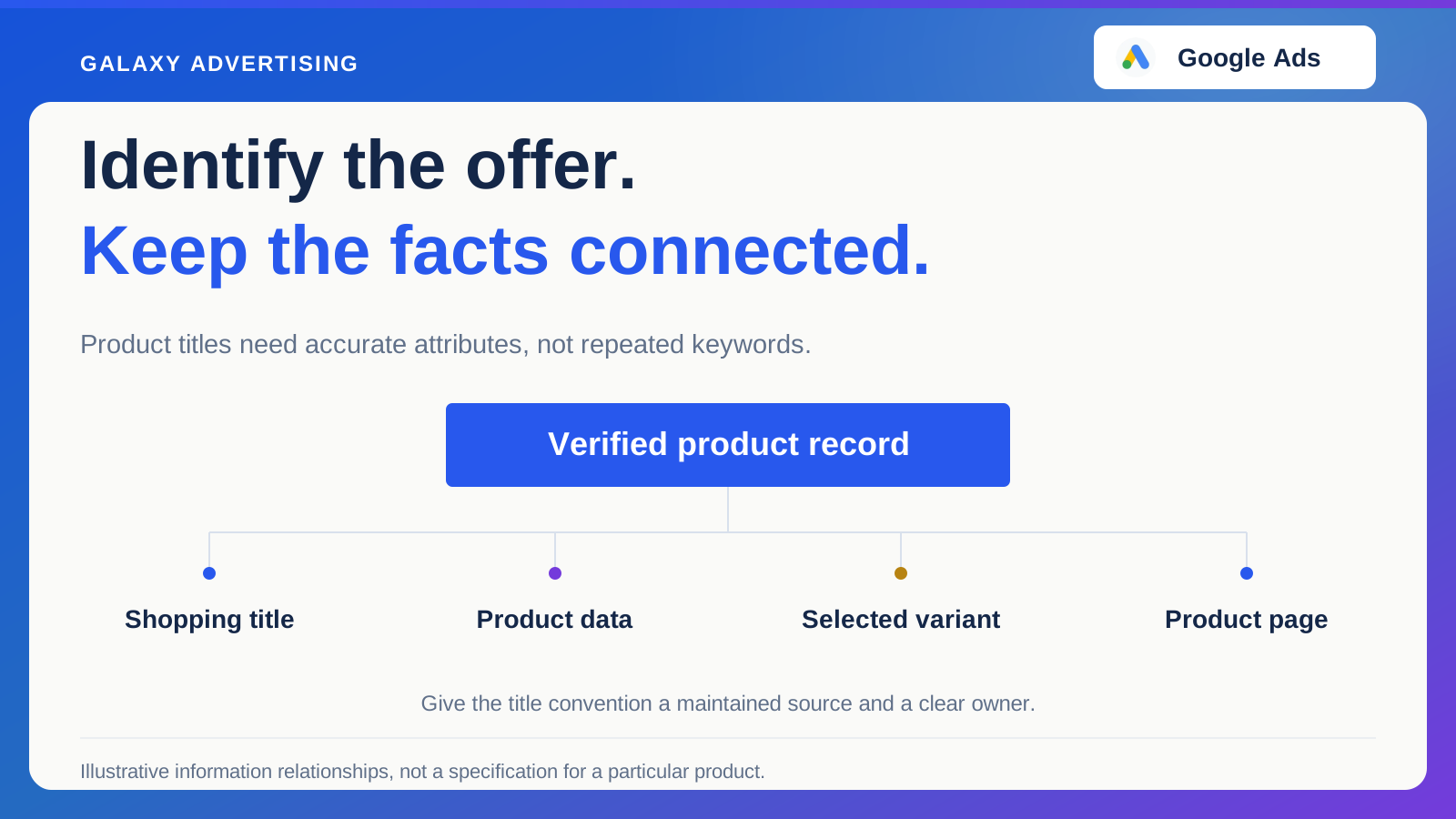
A better sounding title won't resolve uncertain product information. Verify measurements, materials and model identifiers against the reliable source your business uses.
An oak effect surface and solid oak construction aren't interchangeable claims, even if both seem relevant to a broad search. If the writer isn't sure, send the question to the product team. Confident wording is an expensive place to hide an unresolved fact.
Check that you're describing the advertised item, too. A page photograph could show another configuration. Accuracy needs to hold from source data all the way to the destination, so the customer isn't being invited to assess one thing and offered another.
Put the useful identification where it will be seen
Titles appear in different displays, and customers won't necessarily see every word straight away. Give early space to information that helps them recognise the item and its principal distinction.
Consider the illustrative title “Brand model extending oak dining table, 160,220 cm”. It has a different job from a headline promising the perfect dining experience. It's an information pattern, not a recommended title for any product whose facts haven't been verified.
Check Google's current title requirements and available formatting guidance before implementing changes. Confirm technical limits and permitted content rather than working from a rule somebody remembers. Platform requirements deserve a current check, however familiar the job feels.
Does the title match the version after the click?
Where variants matter, meaning the different sizes, colours or configurations you sell, verify how their attributes are supplied and how the destination shows the selected item. A size or colour in the title shouldn't contradict what appears after the shopper clicks.
Packages need the same care. If one offer includes an accessory and another doesn't, the title and supporting data shouldn't make them look identical while leaving the customer to puzzle over the price difference.
Don't invent distinctions to make the catalogue look larger. Your data should describe the products you actually sell and the attributes a customer needs to assess them. Clear differences help comparison. Artificial differences just give people another thing to decipher.
Let the title identify, and put promotion in its proper place
Promotional claims can distract from identification and conflict with platform requirements. Use appropriate places and supported features for an incentive. The product title isn't an unlimited space for advertising copy.
Nor is it a home for every search phrase that ever appeared in an account report. Loosely related uses can create an inaccurate impression, even when each phrase sounds commercially attractive on its own.
Try a simple editorial check. Ask someone unfamiliar with the range to describe the item from its title. If they imagine a different product, resolve that ambiguity before discussing whether you've included enough keywords.
That's a more useful conversation than counting repeated phrases.
Treat a title change as a product information change
Record which items changed and what you added, removed or reordered. Keep the previous values so you can diagnose an error without asking someone to remember how it used to read.
If price, stock, imagery and bidding change too, acknowledge that you can't confidently give the title all the credit or blame for performance. Where a limited comparison is practical, choose a sensible group and document its commercial conditions.
Review search relevance and customer outcomes with the evidence available. More attention isn't necessarily better if people have formed an unsuitable interpretation of the offer. Traffic that comes from misunderstanding isn't a title improvement merely because the graph rises.
Try the process on something genuinely ambiguous
Choose a title that could reasonably describe several offers. Ask a colleague unfamiliar with the range to identify the product type, main distinction and any configuration implied. Compare their reading with the actual page and approved source data.
If they imagine a different material or package, fix the ambiguity before adding search language. Then try a second item from another category. The rule that clarified the first could overemphasise an attribute that matters less in the second. Document the exception rather than squeezing both into the same pattern.
Finally, inspect the data as it is actually supplied, not just the proposed spreadsheet. A sensible rule can still send the wrong field or an old value through the mapping. Keep approved examples so new entries have a reference.
That gives the process an editorial standard and a verification step. It saves you depending on one person's memory of the last product data edit.
Who keeps it right when the catalogue changes?
Make the convention understandable to whoever adds products. Document the required source attributes, ordering principle and exceptions where a category needs something different.
Build factual review into the workflow. Don't leave the advertising manager to catch every error after publication. Supplier data and website changes can bring inconsistencies back after a manual correction has been approved.
Your Shopping title is a compact description of a real offer. A stranger should be able to recognise that offer from the words you put in front of them. If they can't, another repetition of the keyword won't supply the missing product knowledge.