Your agency puts together an appliance campaign from the product data, photographs and delivery page, then discovers the optional service differs for the configuration shown.
The material looked sufficient until somebody had to approve the complete purchase. Now the team has to untangle which model, service and promise actually belong together.
Give the agency an identifiable offer it's authorised to communicate. It can organise and challenge the proposition, but it can't infer every operating exception from public pages or supply technical assurances you haven't approved.
Start with the complete model reference
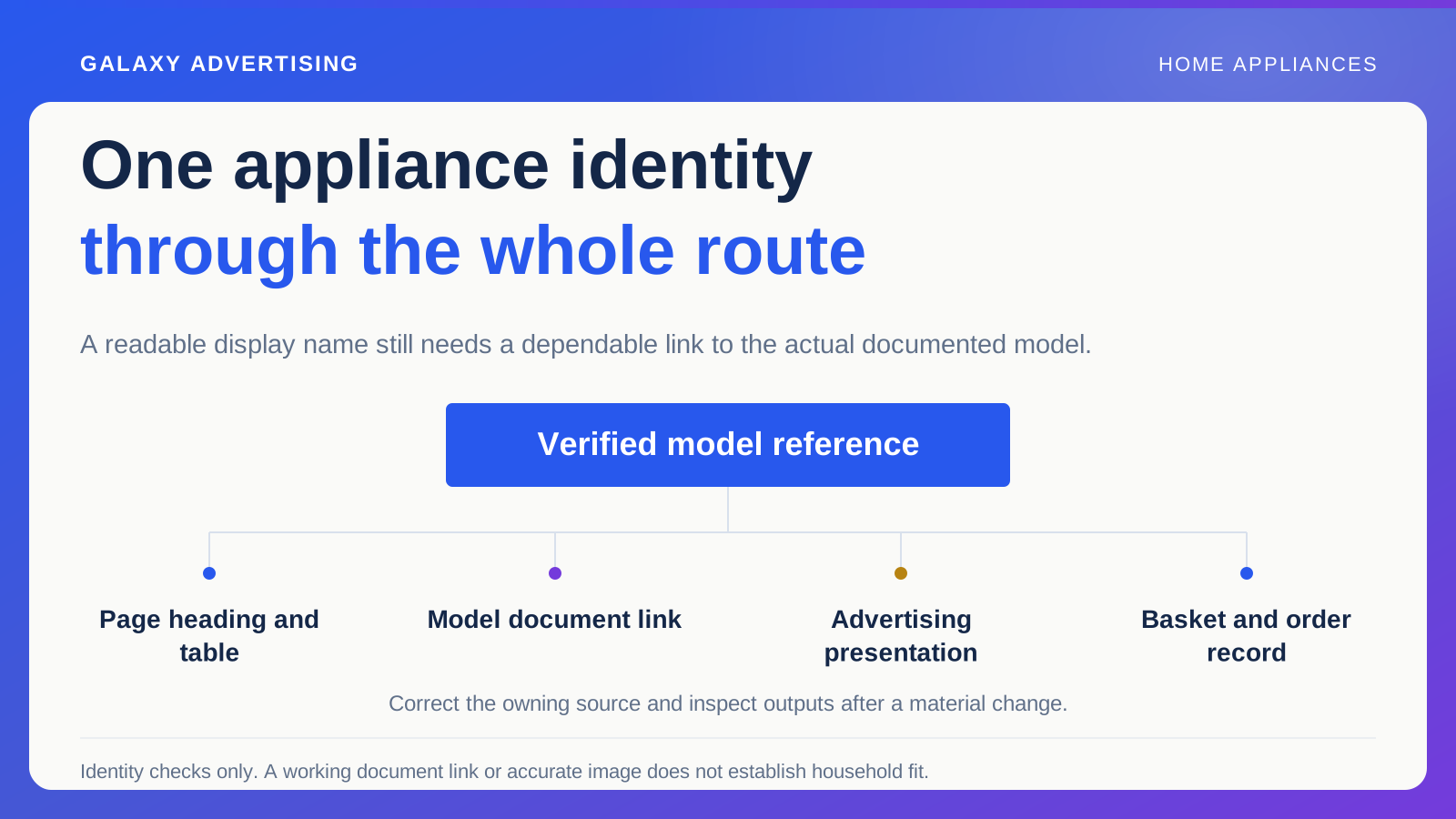
Provide the full product identity, not just a family name or internal shorthand. Connect current photographs and relevant official documents to it. That gives people preparing assets a reference they can check.
Explain differences between similar versions. An abbreviated title or replacement image could introduce another configuration, particularly when the producer doesn't know the catalogue well. Visual familiarity isn't enough to preserve the actual offer.
Don't send an unlabelled folder and expect the agency to select sources by resemblance. A small verified pack can save more time than a large collection whose status has to be reconstructed every time someone writes a caption. The useful handover reduces that repeated uncertainty.
Separate retail services from product specifications
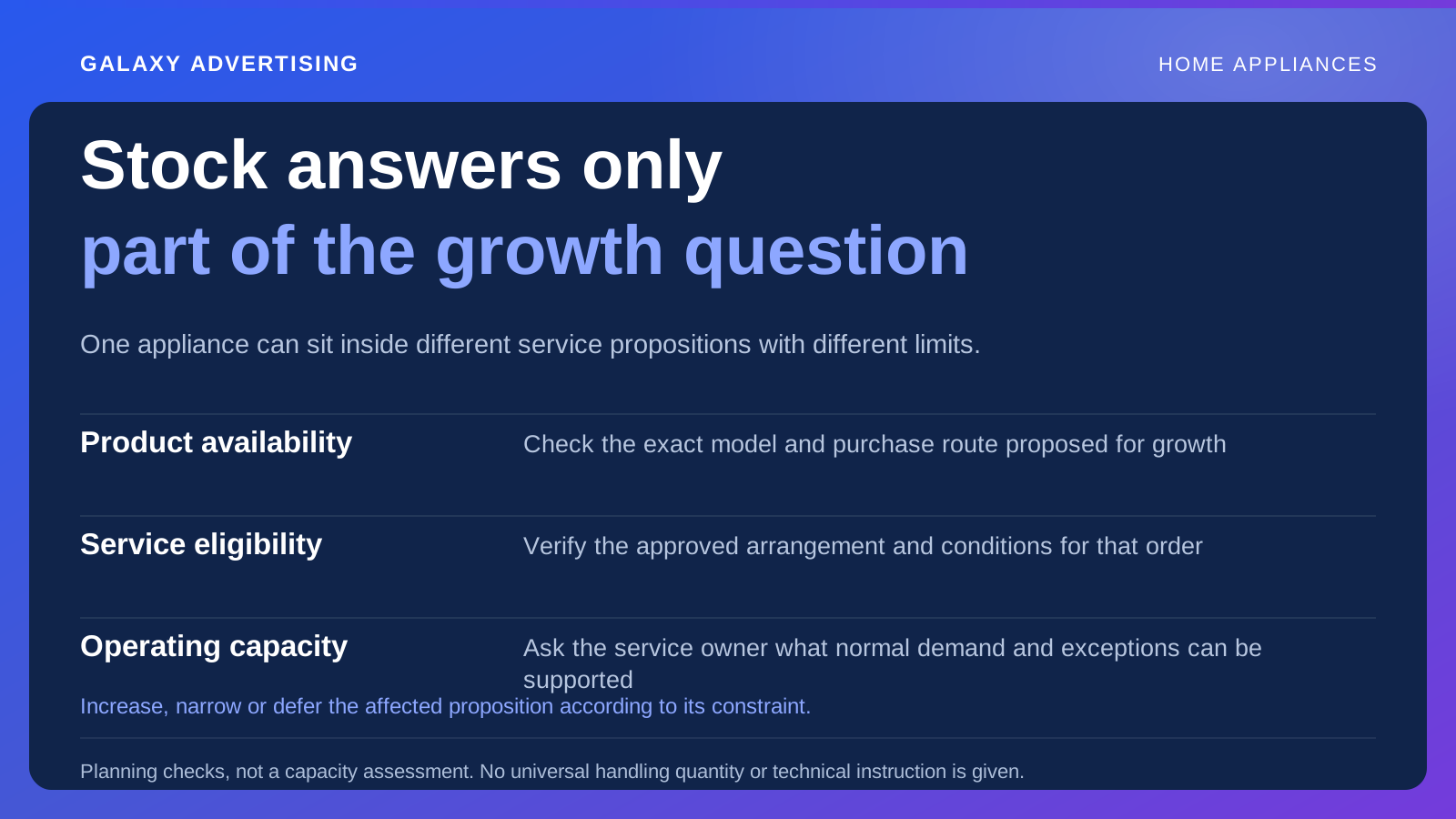
Ask operations to approve what delivery, removal, optional installation or other assistance means for this offer. Keep important conditions and exclusions understandable. The agency needs the arrangement you can actually supply, rather than a general reassurance.
Manufacturer documentation and your service promise answer different questions. A specification doesn't establish what your team will do at a household. A service arrangement doesn't establish that the model suits every existing setup.
Provide a dependable route for unresolved suitability questions. Marketing should point to authoritative information or a qualified source. The need for a confident closing line isn't permission to improvise an answer. Keeping that route clear protects the meaning of the offer while letting production progress within its role.
Identify exceptions that change the public promise
Record material differences such as service areas, packages or constrained arrangements. Keep it usable. An exhaustive document nobody maintains won't give the account manager dependable guidance.
For each exception, name its owner and confirming source. The agency shouldn't have to draw conclusions from an old order or broad map. It needs somebody able to establish what applies now.
Test the record with a proposed campaign. Can the team identify model, current amount, relevant service and approval status without another long conversation? Improve the handover if it can't, before treating misunderstanding as an execution fault.
Repeat after a model substitution. The layout could carry over while sources and service confirmation need fresh approval. Ask the release owner what can legitimately remain. A full product code makes that decision inspectable, rather than allowing a familiar photograph to carry forward old assumptions. You're preserving commercial meaning through a normal update, not reopening the entire launch for every minor edit.
Keep ownership of promotions visible
Separate retailer discounts from manufacturer incentives and other externally administered benefits. Supply the current official reference and identify verified claims for the exact product.
An earlier cashback programme doesn't establish a new programme's conditions. Give the agency the actual offer, including the difference between an immediate price reduction and a separate conditional benefit where relevant. Those aren't interchangeable ways of describing what the customer pays or receives.
Assign update and retirement responsibility. Qualifying ranges, prices or operating conditions can change after approval. Explain how those updates reach the people maintaining the advert and destination. Initial release needs an ongoing process if the promise is to remain accurate.
Agree what can change without another approval
Define routine campaign management separately from product facts, service promises and spending authority. Clear boundaries let specialists use judgement while you retain an understandable record of who authorised material claims.
Adjusting copy while preserving approved meaning differs from extending a service statement to another area. The latter needs operational approval, however easily the words fit the layout.
Use supported access processes and keep permissions proportionate. The agency needs relevant campaign and reporting access. The business needs ownership and continuity. An efficient working relationship shouldn't rely on informal credential sharing or one person's memory of how the account is arranged.
Verify the released buying route together
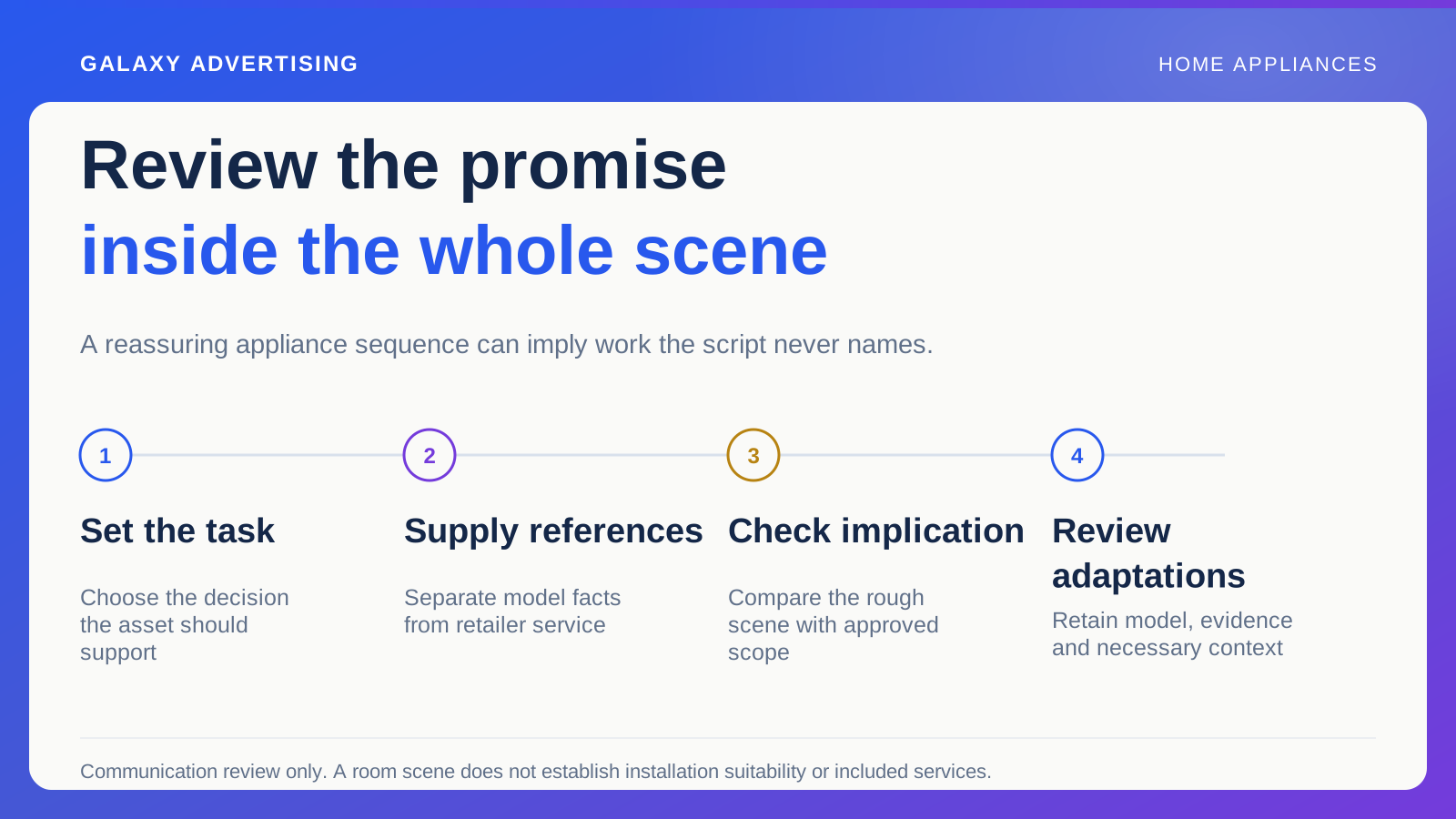
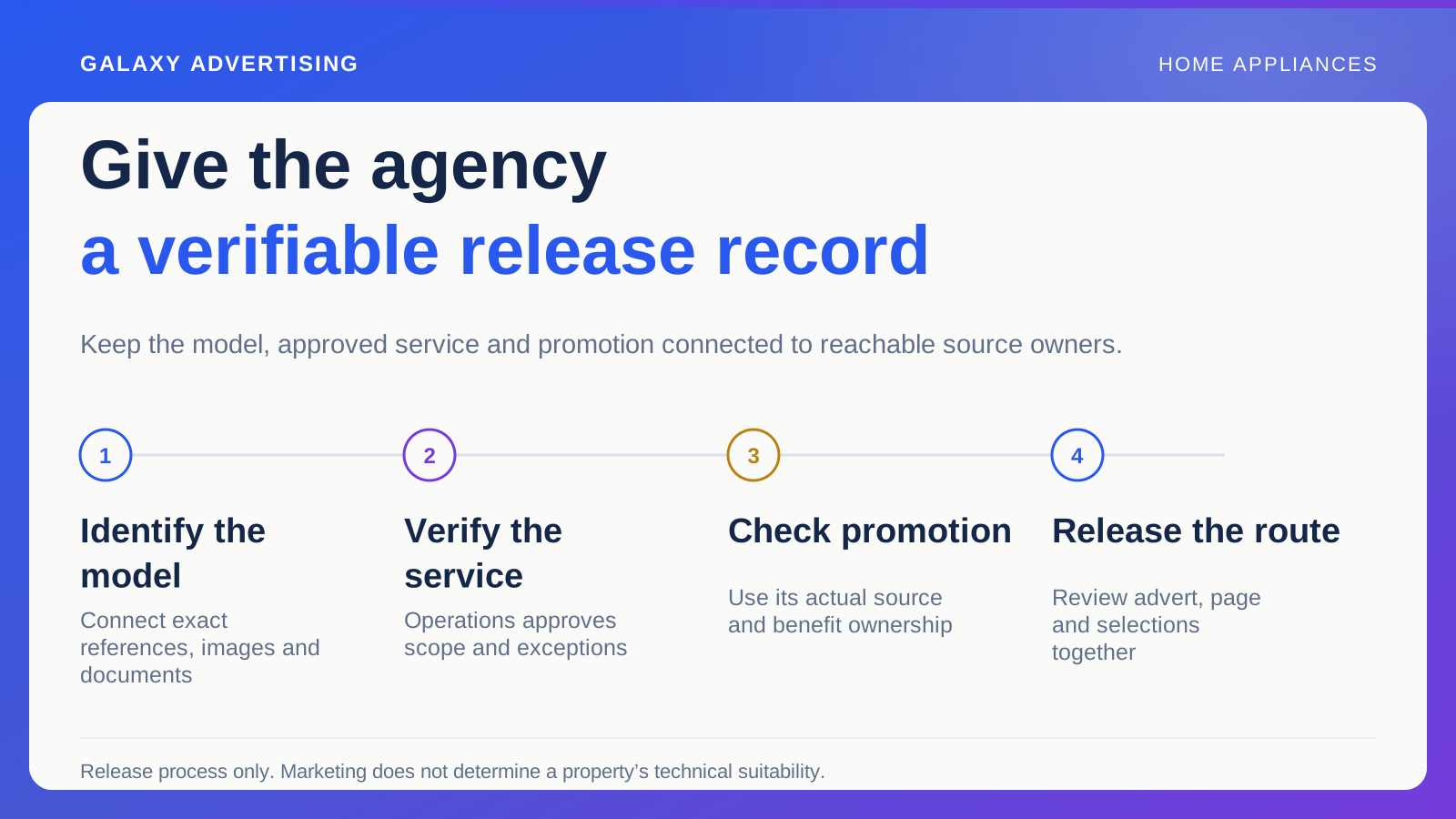
Review the approved advert, actual destination and ordinary selections as one communication. Check that model and service state survive the click. Approving separate files doesn't establish that the connected experience still represents the same purchase.
Use appropriate supported and unsupported service cases through your approved testing approach. You're checking communication, rather than asking marketing to determine an individual property's technical suitability. Keep the purpose of that review explicit.
Record the accepted version and who checked it. “Looks good” in a general email gives less help later than a release record tied to the actual product, caption and destination. A traceable record lets another person resolve questions without rebuilding a private conversation.
Make the information usable when people change
Keep sources, decisions and current owners accessible to another authorised colleague. Holidays, staff changes and later agency transitions shouldn't remove what the business needs to maintain the offer.
Ask the agency to report unresolved dependencies plainly. A missing service approval or obsolete model reference doesn't become less important behind a list of completed optimisations. The next task belongs with the person who can actually resolve it.
A clear release record gives specialists room to make creative and commercial decisions inside verified boundaries. The model, service and promotion stay connected to their sources. Your agency can then explain the offer, rather than be expected to manufacture one from a photograph and a broad promise about delivery.