Could your appliance advertising return stay steady while customers keep asking about a service you can't provide?
The purchases look familiar in the report. Support sees repeated questions, and several orders need the same clarification. The average hasn't made the operating issue visible enough to change what you advertise next.
Look beyond the combined revenue ratio to the offer behind it. A useful review shows which model or promise remains supportable, which needs correction and who can make that happen. It doesn't require an enormous operational dashboard.
Show the offer behind the number
Identify model groups, relevant services and trading conditions. A general total can combine straightforward deliveries with orders involving other approved assistance. Those could need different decisions even when the revenue looks similar.
Keep material changes visible. Different product mix or restricted service can alter the proposition while campaign name and budget stay unchanged. The owner needs to see what actually changed for the customer.
Use agreed order and value definitions and name the source. Is the figure an initial purchase or a later commercial view? Don't make readers infer that from a familiar chart label. Establishing the basis first saves the next discussion being built around two different meanings of the same total.
Choose exceptions that matter to a decision
Collect a manageable set affecting the live offer: wrong model identification, service ambiguity, availability mismatches or recurring enquiries the page should answer. Focus on issues the business can meaningfully investigate.
An unusual order doesn't establish a general problem across the range. Separate an explained individual exception from a pattern deserving wider attention. Keep the strength of the conclusion attached to the evidence.
Give important findings a concrete reference and owner. “Improve delivery information” says less than identifying the message and operating fact in conflict. Another reviewer should be able to reproduce the issue without unnecessary customer details being circulated. Precise evidence makes the task more useful, rather than simply making the report sound more certain.
Was the offer unavailable, or poorly explained?
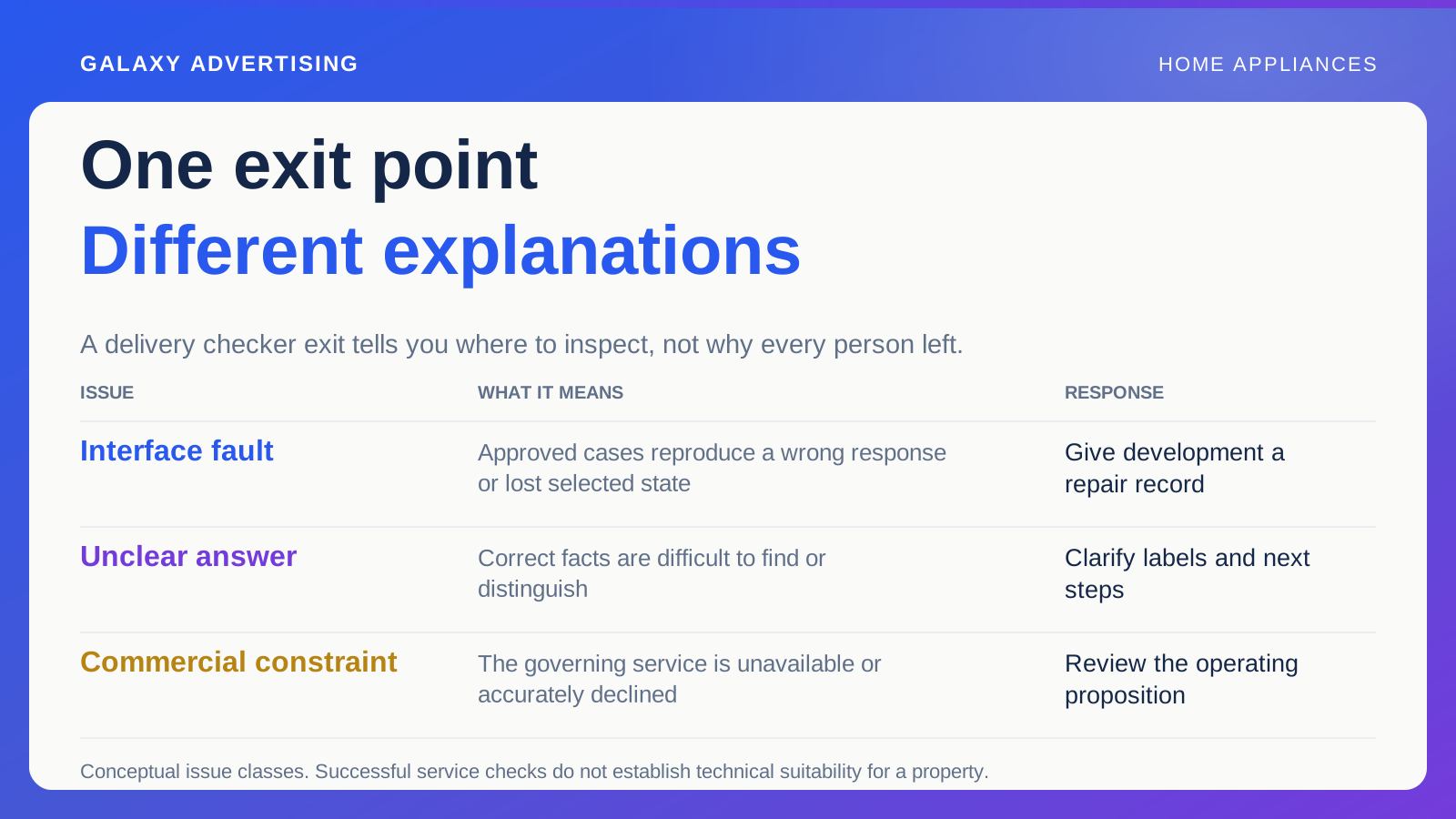
A correctly declined service request differs from a technical fault or unclear message. The commercial response could concern the arrangement you offer. The communication response could concern how you explain it.
Ask operations which state applied. Don't infer eligibility from an advertising area, or assume an in stock appliance means the selected complete transaction was available. The product and service need examining together.
Preserve that distinction in the recommendation. A developer can repair lost option state but can't authorise a new service. A campaign manager can narrow an advert but shouldn't invent another operating promise to preserve the revenue chart.
Keep separate fields for the observed outcome and confirmed explanation. A visitor leaving after an unsupported result is an observation. A verified service limitation is an operating fact. Suspected unclear wording remains a hypothesis until inspected. This prevents every exit acquiring the same convenient cause, or accurately declined enquiries becoming invented lost revenue. It also helps you choose the right kind of correction.
Connect the questions with the page people used
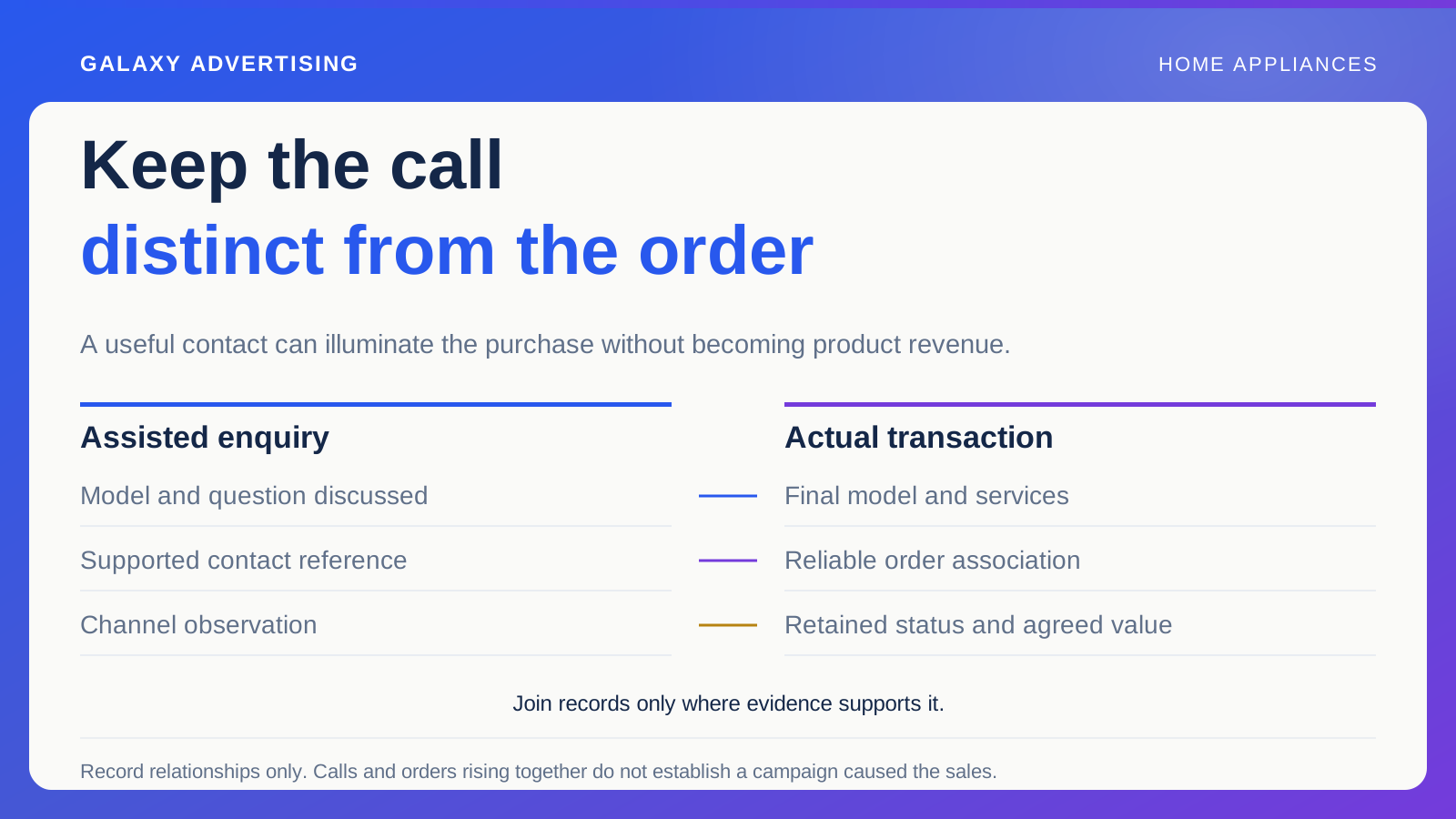
Group enquiries by task: model identification, package contents, service scope or questions requiring authoritative guidance. Each can suggest a different improvement. A contact count alone doesn't explain which one the route needs.
Don't count every enquiry as a sale or dismiss every unanswered question as unsuitable traffic. A commercially relevant call can expose information the destination failed to clarify. That deserves investigation without giving the contact a transaction value it hasn't established.
Use examples proportionately. Several questions about an included service could justify a factual review. They don't establish that particular wording caused every nonpurchase. The practical correction can be worth making while the broader causal explanation remains unresolved. You don't need to turn a useful observation into a universal claim for it to matter.
Show what changed and how it was checked
Explain completed corrections and their purpose. The team could have fixed a model reference, separated service states or retired a promotion. Keep the version or route inspected after implementation.
Separate delivered work from commercial effect. A verified correction establishes that intended information is now present. It doesn't automatically prove a precise number of additional orders. Both questions matter, but they need different evidence.
Start with earlier commitments. If a correction is blocked, identify the missing approval or source. Don't present the same task as fresh insight. A report earns its place by helping work get finished, rather than describing unfinished work more elegantly at every meeting.
Does the next investment fit the operating position?
Review whether funded demand matches current model supply and approved service capacity. One promise can be constrained while other offers remain ready. The budget discussion needs that distinction before treating the account average as a transferable result.
Another model or service area could introduce different information, fulfilment or enquiry handling requirements. State those dependencies before recommending expansion. An attractive historical ratio doesn't complete the preparation for the next increment.
Keep an affordable alternative visible: narrower activity, a corrected destination or another ready offer. Explain the tradeoff instead of treating a larger available audience as sufficient reason to grow. The business needs a choice it can support, rather than a spending increase whose conditions remain unexplained.
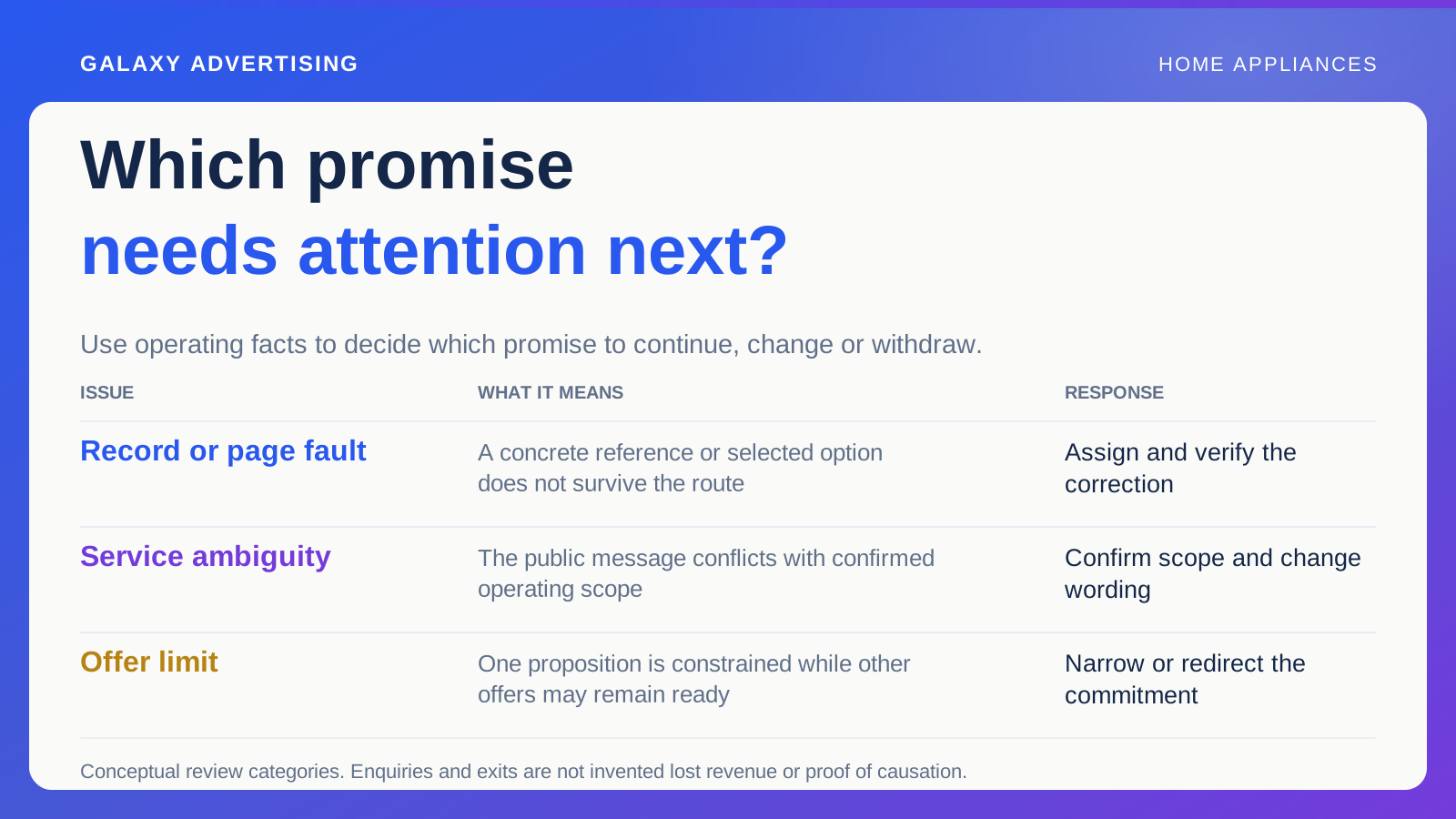
Name the promise to continue, change or withdraw
State the immediate decision and its evidence. Name who approves the operating fact, who changes the communication and what triggers another review. Those roles could differ, so make the handover between them visible.
For a hypothetical service ambiguity, the action could be to confirm actual scope, correct the model page and verify the live advert no longer implies broader assistance. That's an illustrative action structure, not a claim about a real retailer's results.
A credible appliance review recognises useful orders while exposing exceptions that could weaken the next commitment. The business should know which promise it can keep promoting and which needs attention before more people encounter it. A steady average is reassuring only when the offer underneath it is still one you can explain and deliver.