Applying a product margin to the whole appliance basket can describe a purchase your business never supplies. Some customers pay for a service. Others receive a delivery benefit you fund. The campaign's reported revenue can combine those arrangements while the review treats them as product only economics.
Start by classifying the offer, rather than reaching for another acquisition formula. What did each order include? Was the advertised benefit available? What work did you agree to fund? Those distinctions give the product focused return something real to describe.
Keep the appliance and its service choices identifiable
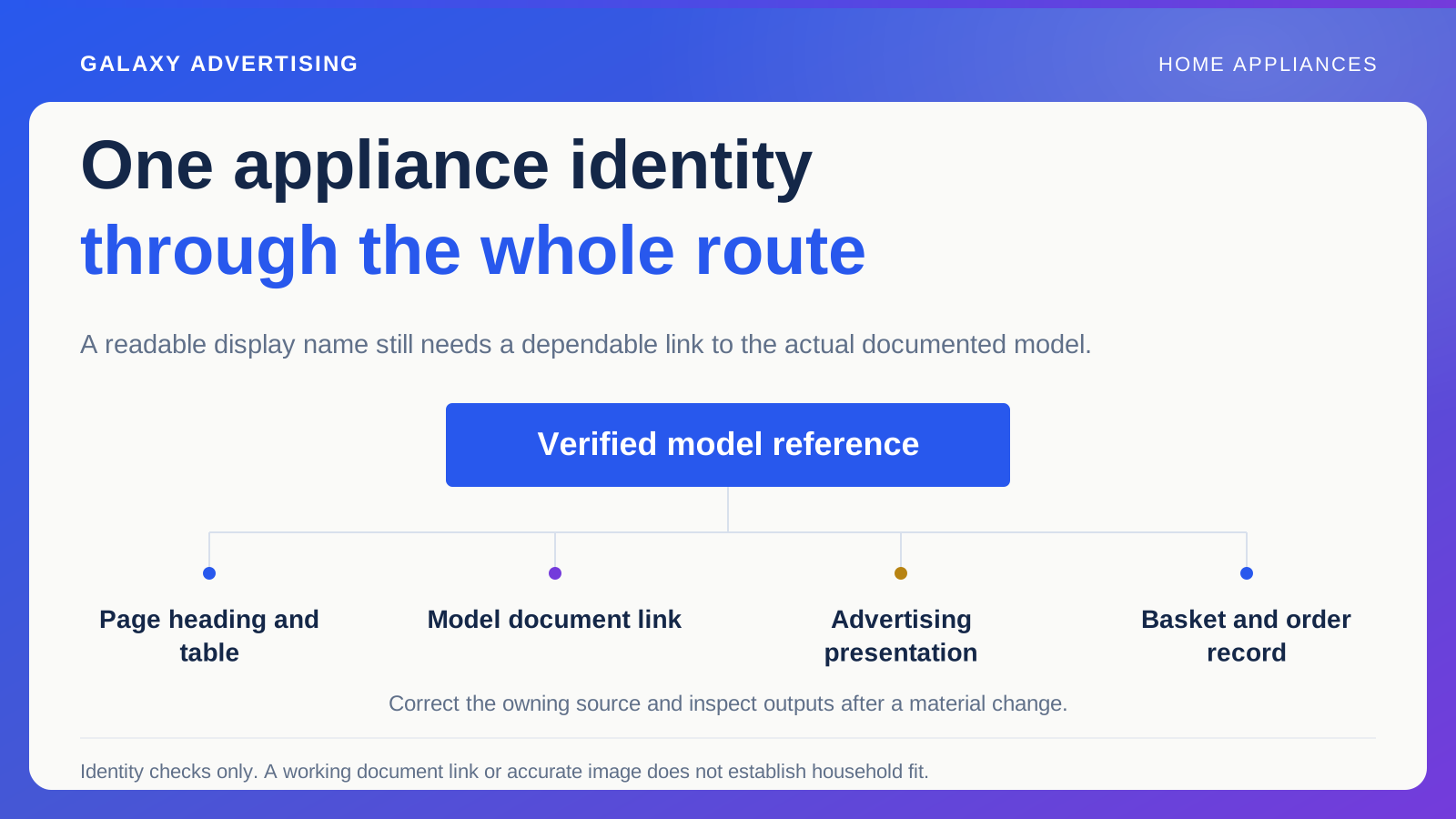
Retain the appliance model and selected services in the order record. A service payment shouldn't vanish into a broad product value merely because the customer accepted both during checkout. The combined transaction still contains different elements.
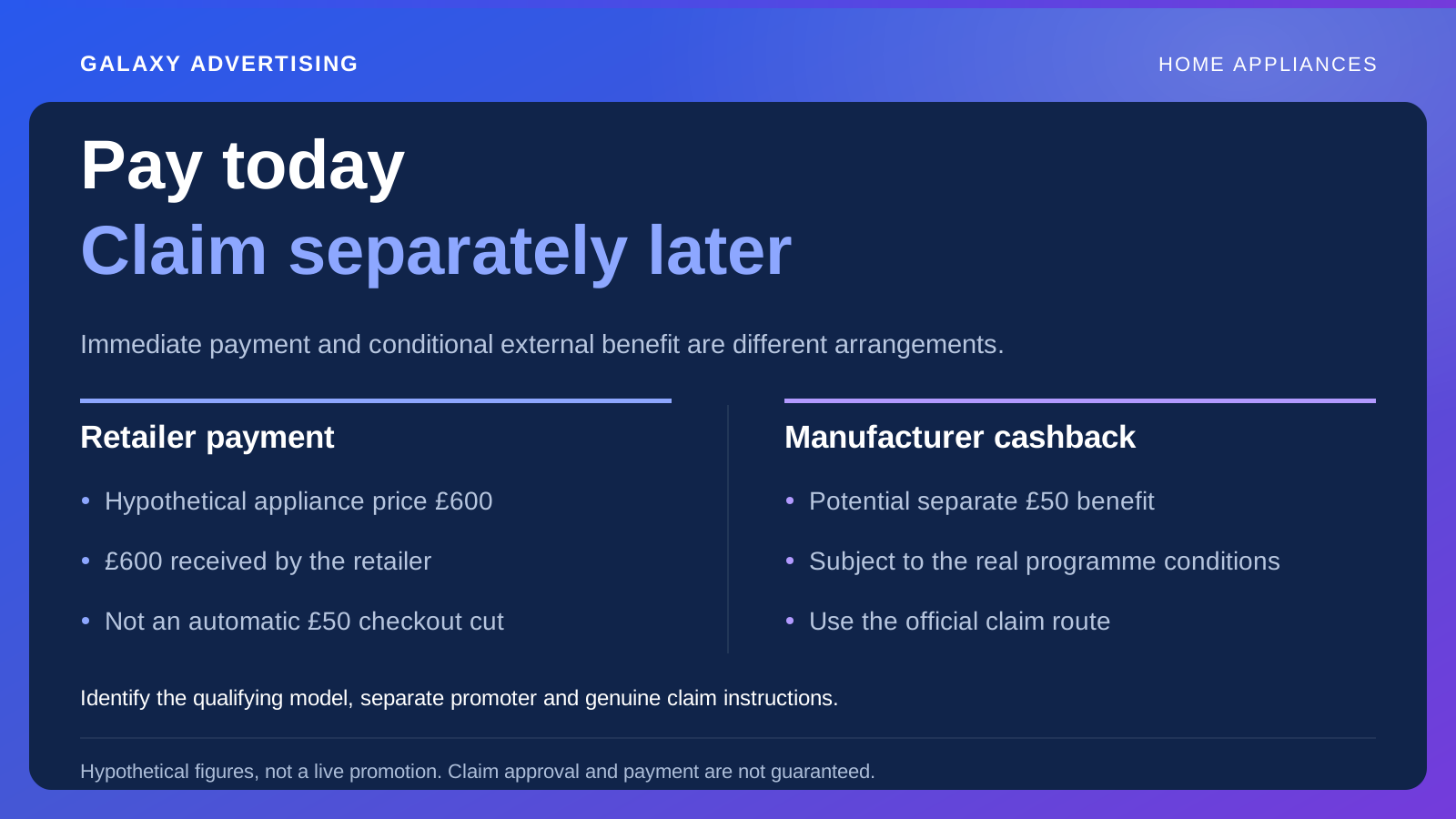
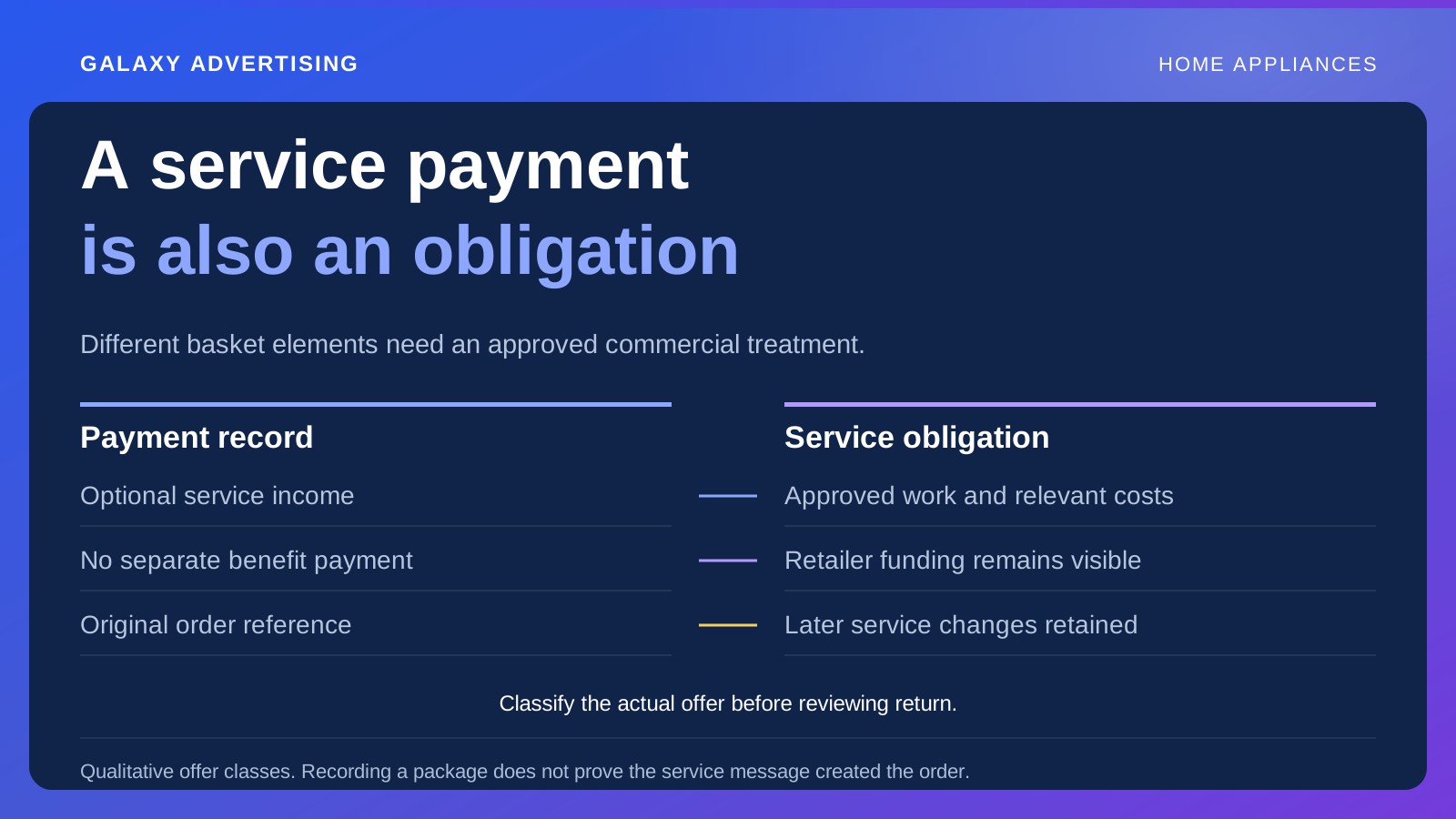
Record an included benefit separately from a purchased service. No separate payment doesn't mean no obligation for your business. An offer you fund needs a visible place in the commercial picture too.
Use basket groups that could change a decision. Examples might include the appliance under its ordinary arrangement, a purchase with an optional service or an offer with a specified retailer funded benefit. Those are illustrative, rather than universal categories for every store. Choose distinctions your actual offers and records support, so the classification remains useful instead of becoming an artificial reporting scheme.
Ask what enters the reported advertising value
Have the reporting owner demonstrate which amounts enter advertising value and how they relate to the management order view. Keep the definitions visible. A familiar label doesn't establish that the figure contains only product revenue.
If service income is included, show its contribution to the total. That isn't evidence the appliance became more valuable, or that the whole service payment remains available to fund acquisition. You still need to understand the arrangement behind that payment.
Don't redefine the number simply to improve the ratio. Choose the view that fits the commercial question and retain enough detail to reconcile it. You should be able to tell whether apparent improvement comes from the product, a different basket mix or changed recording. A clearer definition gives you a more useful decision than a more flattering total.
Treat eligibility as part of the offer
Identify the real conditions affecting the advertised service. They may depend on the item, location or another documented arrangement in your business. Keep the condition connected to the promise it qualifies.
Make the source and owner clear. Marketing shouldn't infer eligibility from a category name or assume a service used with one model applies to another. The information needs verification by the people responsible for the actual arrangement.
Check where the customer learns the relevant condition. A benefit that earns the visit but isn't available for the actual order may need a clearer boundary. This is about communication and classification. It isn't guidance for assessing technical installation conditions or deciding legal entitlements. Keep the review within the practical question it is equipped to answer.
Trace the payment and the obligation separately
Record the relevant payment, charge or subsidy on your approved commercial basis. An optional service can bring both income and an obligation. An included benefit can create an obligation without a separate income line. Your review needs to recognise both patterns.
Work with colleagues who understand the service arrangement. Don't estimate its economics from the public selling price. Customer appeal doesn't establish what providing the service leaves for the retailer, so use a source that can explain the work and funding.
Separate directly recorded amounts from estimates and identify unresolved information. You're not trying to allocate every overhead precisely before running a campaign. You're preventing a material commitment being treated as free because the product report lacks a convenient field for it. That is a narrower, more practical management task.
Follow service changes even when the product stays sold
A customer can keep an appliance while the service arrangement changes. Preserve the original order reference and identify what changed, which process handles it and how the commercial review reflects the outcome. The associated elements need their own history.
A product remaining sold doesn't establish that all service income and obligations remain unchanged. Equally, changing a service doesn't automatically erase the whole appliance order. Keep those different outcomes distinguishable in the records.
Use a clearly hypothetical example where a selected service is later removed but the product purchase remains. Ask responsible colleagues to trace the entries and unresolved commitments. You're testing the record system, rather than prescribing treatment of a particular customer's request or claiming this happens at any particular frequency. The example should reveal whether the review can describe the arrangement accurately.
Compare offers on a like basis
Look for differences in service mix, eligibility patterns and retailer funded benefits between order groups. A stronger total revenue return can reflect that mix instead of better demand for the appliance on its own terms. Read the result through what was actually purchased.
Keep the promoted offer and final model selection alongside the comparison. Featuring a benefit may attract another basket pattern from an otherwise similar product message. The record needs enough context to examine that distinction.
Preserve the causal limit. Knowing which packages were bought doesn't establish that the service message created every extra order. It can still help you decide whether the reported product result has a credible interpretation. You don't need to claim more than the records show to improve that interpretation.
Give promotion a maintained commercial boundary
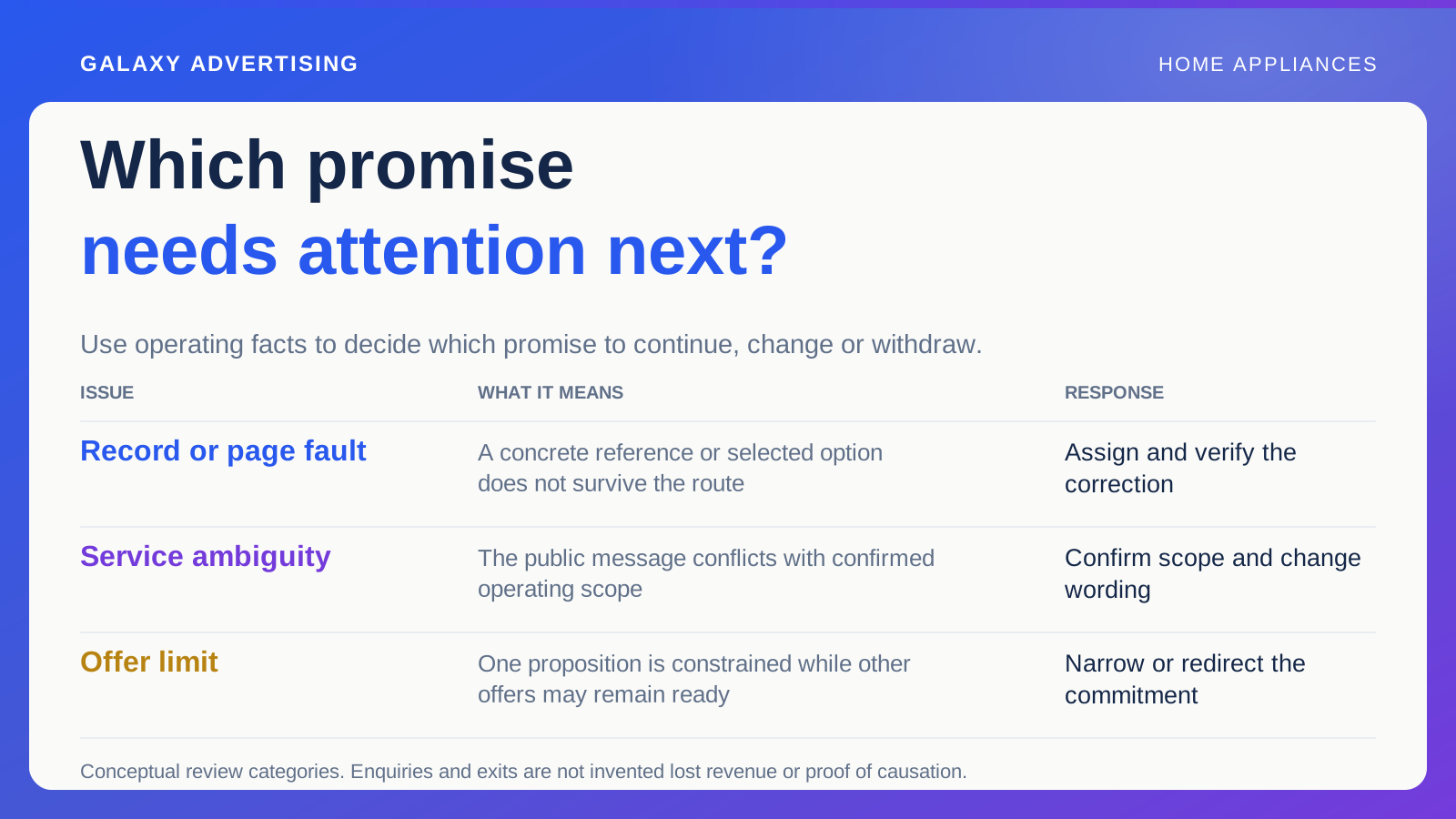
Identify product and service combinations with a verified basis for advertising and review. Where a material obligation remains unclear, the owner should choose between resolving it first and explicitly approving a limited investigation. Keep that decision visible rather than allowing uncertainty to disappear into a target.
Don't transfer one inherited product target to every basket. The financial principle still matters, with inputs representing the actual arrangement supplied. Different offers need an accurate basis even when they share a model.
Check operations before increasing activity. A service offered accurately at current volume may require another arrangement as demand changes. Additional product stock doesn't establish unlimited service capacity. The proposed acquisition commitment needs to recognise that dependency as well as the commercial calculation.
Connect the handover to the live promise
Name owners for service conditions, commercial assumptions and public explanations. Material changes need a dependable route to page, campaign and reporting teams.
Verify the live buying journey alongside internal records. Updating a service sheet doesn't prove an old advert has stopped making a broader promise.
The appliance and its surrounding services belong in the same commercial conversation, with their differences preserved. That lets you judge the actual offer instead of applying tidy product economics to a total whose obligations nobody has explained.