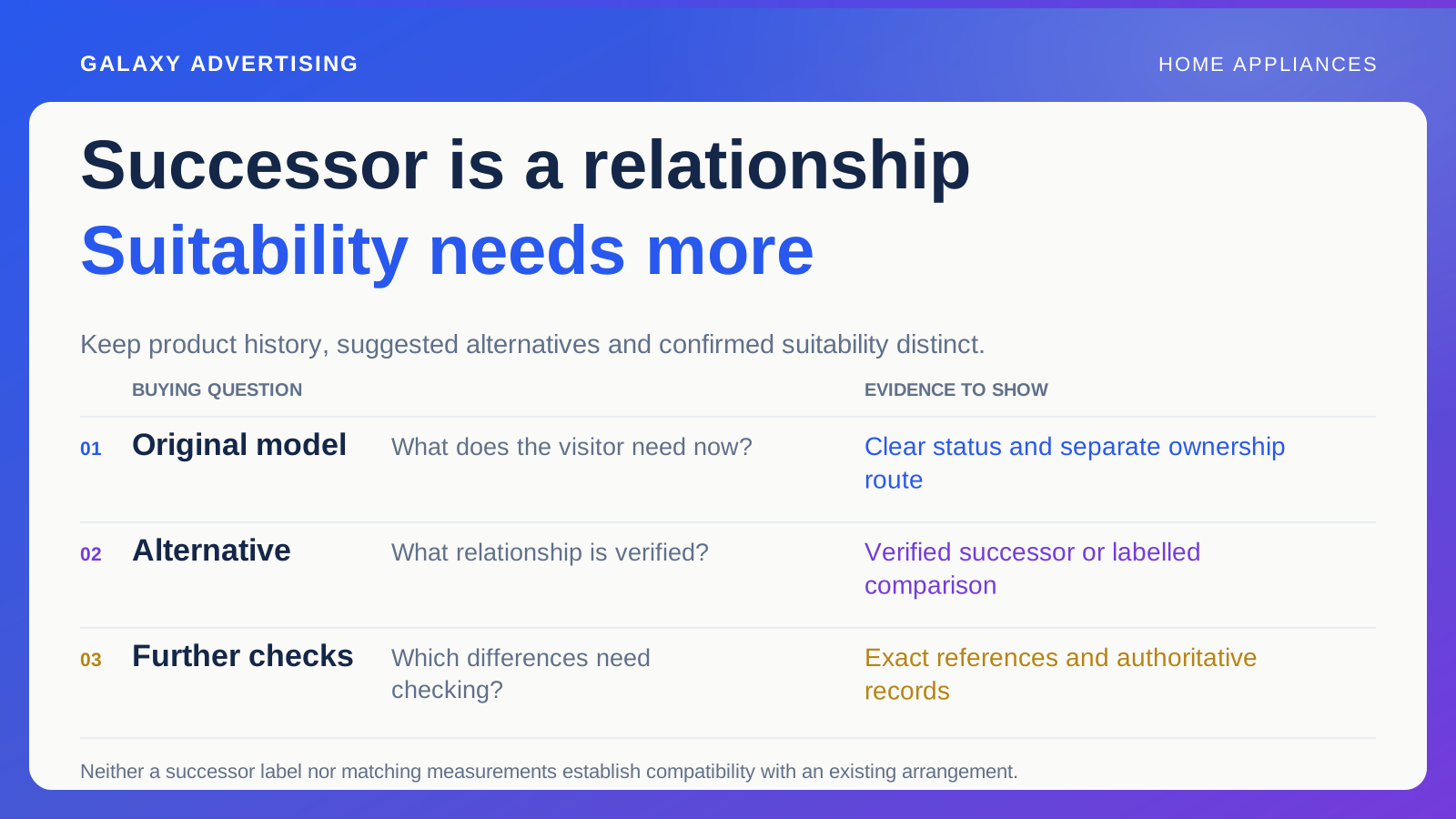
A manufacturer identified successor is not a confirmed assessment of the household's existing arrangement. Nor is another appliance your retailer considers worth comparing. That distinction matters when somebody searches for an owned model and lands on an unavailable product page offering its replacement.
The label can imply that no further checks are needed. A useful destination keeps the original model, a verified successor relationship and a suggested alternative distinct. It helps the customer make the next verification, rather than asking the word replacement to answer questions it cannot establish.
Explain the original model's place on the page
Identify the visitor's possible task. They may be considering another purchase, seeking information about an appliance they own or following an older campaign link. The same reference can lead into quite different needs.
Show the original item's current commercial status plainly. A page retained for reference must not continue suggesting supply under an obsolete price or service promise. Keep the useful record without keeping the wrong invitation to buy.
Separate ownership support from shopping. Someone looking for a manual should not have to interpret a sales recommendation as the only answer. Offer the relevant authoritative route where appropriate, while letting a genuine new buyer continue towards current offers. Neither task needs to erase the other.
Say what the alternative relationship means
Record the source behind a successor description. Where the manufacturer identifies the relationship, retain both the reference and its limits. Where you suggest a comparable option, label it that way instead of borrowing a stronger implication.
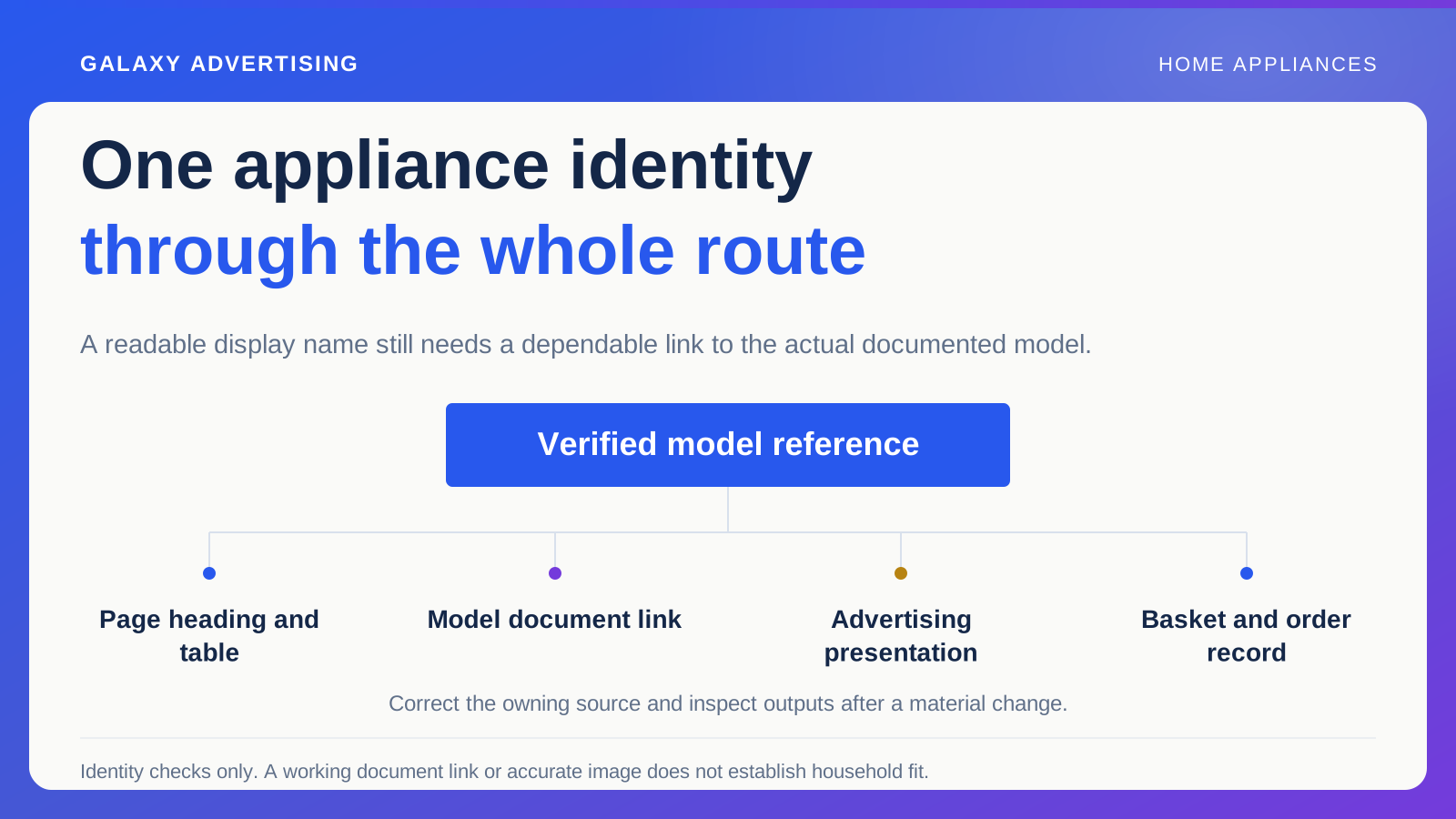
Do not rely on similar photographs or family names. The complete reference matters when connecting specifications, documents and the appliance the customer can actually buy. Familiarity is not enough to establish the connection.
A useful label can say that a current model is available to compare with the discontinued one. It should not imply that an existing space, connections or furniture arrangement have been assessed. Make that distinction before the product enters the basket, rather than hoping somebody notices a qualification after choosing.
Show the differences that need checking
Choose relevant comparison information from reliable sources. Dimensions, documented configuration details and the scope of supplied equipment can affect what somebody needs to investigate. Explain the distinctions that serve that task rather than adding fields for completeness alone.
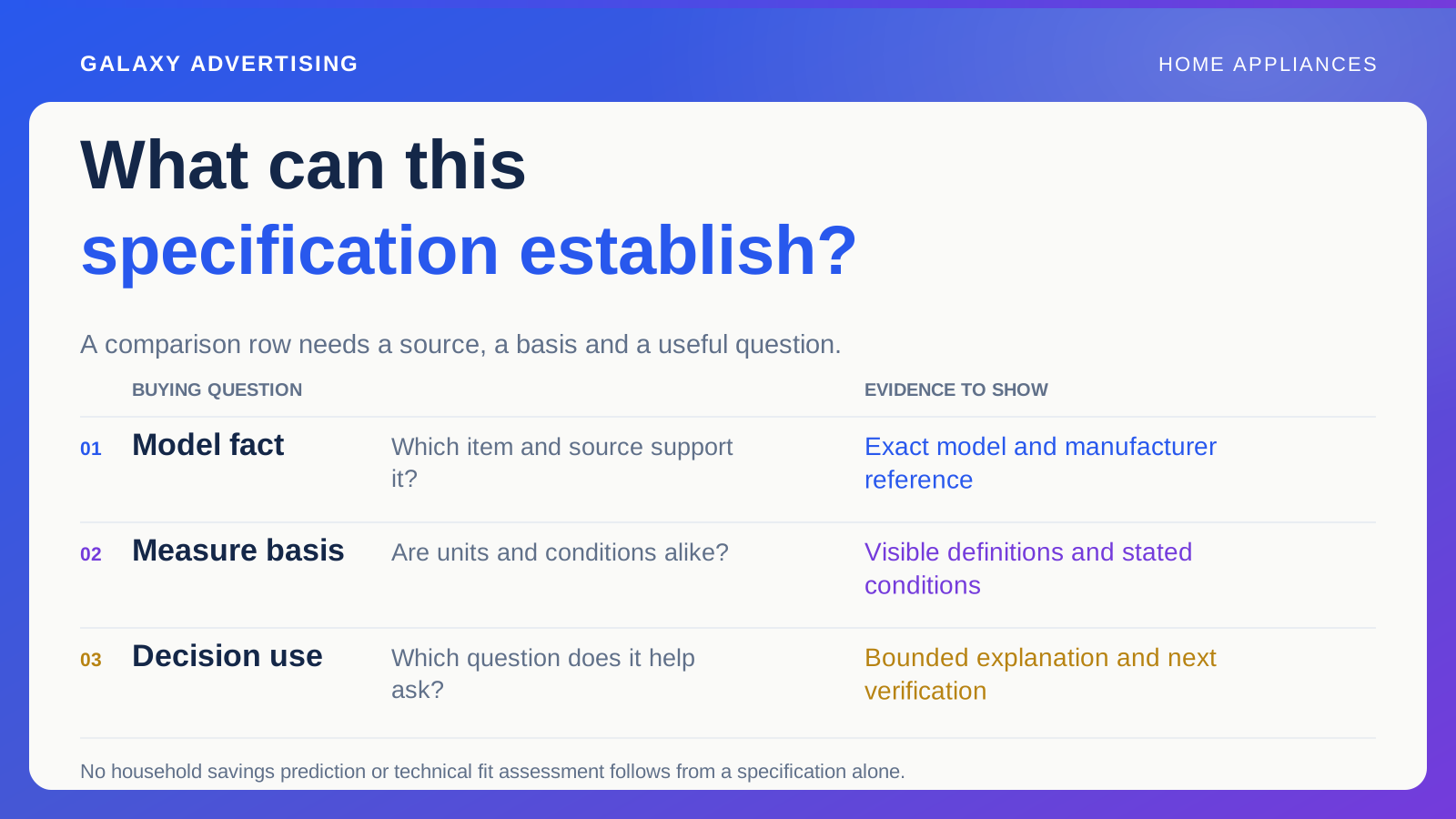
Keep measurement meanings clear. Product dimensions, packaging and manufacturer requirements are different fields. A neat table can mislead if its headings hide those differences. Clear labels are part of accurate information, not decorative finishing.
Do not improvise installation instructions or declare suitability because a few numbers match. The page identifies relevant information and routes unresolved questions to the manufacturer or an appropriately qualified source. It must stay within the assessment its evidence can support.
Place original and current references beside their respective documents. A customer moving between tabs should not have to remember which similarly named file belongs to which appliance. Where a meaningful field cannot be verified, state the uncertainty and provide the right question route. Filling the gap with an assumption makes the table look fuller while giving the household less dependable grounds for a replacement decision.
Explain today's retail offer on its own basis
Show the newer model's price, availability and actual delivery or optional service arrangement. A relationship between products does not establish that your retail package is unchanged from the earlier purchase. Familiarity with the old model should not carry an outdated offer forward.
Check old banners and saved adverts for different expectations. The destination may explain the new package accurately while an entry message continues implying a price or service no longer available. Review the combined route.
Give the account team an update or retirement decision for those links. Retaining a helpful reference page does not justify buying traffic through an inaccurate acquisition promise. Information continuity and commercial continuity are connected responsibilities, but they require their own judgement.
Give questions a useful route
Explain what information helps the responsible team clarify the next step. The exact old model reference and current option being considered are more useful than a general request for advice with no identifiable subject.
Use your approved process for any further details. Do not encourage customers to perform technical checks or access components simply to complete a marketing form. The enquiry route should remain within its proper role.
Make response boundaries clear internally. Sales can explain the current offer and identify authoritative documents. Suitability questions may need another source. A customer's understandable wish for a quick replacement decision should not result in an unsupported assurance from a helpful person trying to finish the conversation.
Test the page for two different tasks
Ask one reviewer to find ownership information for the original appliance and another to investigate a current purchase. Check that the page supports both while preserving each item's status. Success for one task does not automatically establish success for the other.
Follow the buying route on a phone. The chosen current model, amount and relevant service should remain identifiable after clicking through. A comparison loses usefulness if it drops somebody into an unfiltered catalogue and makes them find the subject again.
Use the findings to correct specific ambiguities. If reviewers assume compatibility has been guaranteed, inspect the heading, alternative label and main image. A careful qualification far down the page may not undo a stronger implication at the point of choice.
Keep the relationship current
Name the owner checking successor references, current alternatives and obsolete documents. The route can become stale if the second model is withdrawn too, or its retail package changes. A working page is not necessarily a current comparison.
Retain the reason each alternative was included. The next editor needs a fresh factual basis before attaching another available product resembling the old photograph.
A good replacement destination moves somebody from a known reference towards an informed current decision. Product history, a possible alternative and confirmed suitability each have their own place. Keeping them distinct lets you offer a useful commercial route without pretending that replacement has settled every technical question still needing an answer.