Your seasonal banner has gone live on schedule. The appliance is still listed, but a service arrangement has changed and only checkout has the updated delivery information. Everything looks ready until you follow the offer the customer is actually trying to understand.
A launch date cannot establish readiness for the whole promotion. Availability, price and service scope have different owners and can move at different times. Keep a coordinated offer record so the campaign follows those dependencies, rather than assuming the banner tells the complete story.
Give different buying tasks different routes
Seasonal visitors may be planning a future purchase or replacing failed equipment straight away. The same headline does not establish the same need. Review actual enquiries to understand which questions each campaign route should support.
An exploratory visitor might need a focused model comparison. Someone who has already identified an appliance may need its current availability and complete service offer. Both need reliable information, rather than simply more pressure to decide.
Choose a role for each route. More assets earn their place when they address different questions. Repeating the same urgency against another decorative background adds production without necessarily helping a new decision. Be clear what each communication lets a customer investigate before asking the team to make another version.
Keep a promotional record for each model
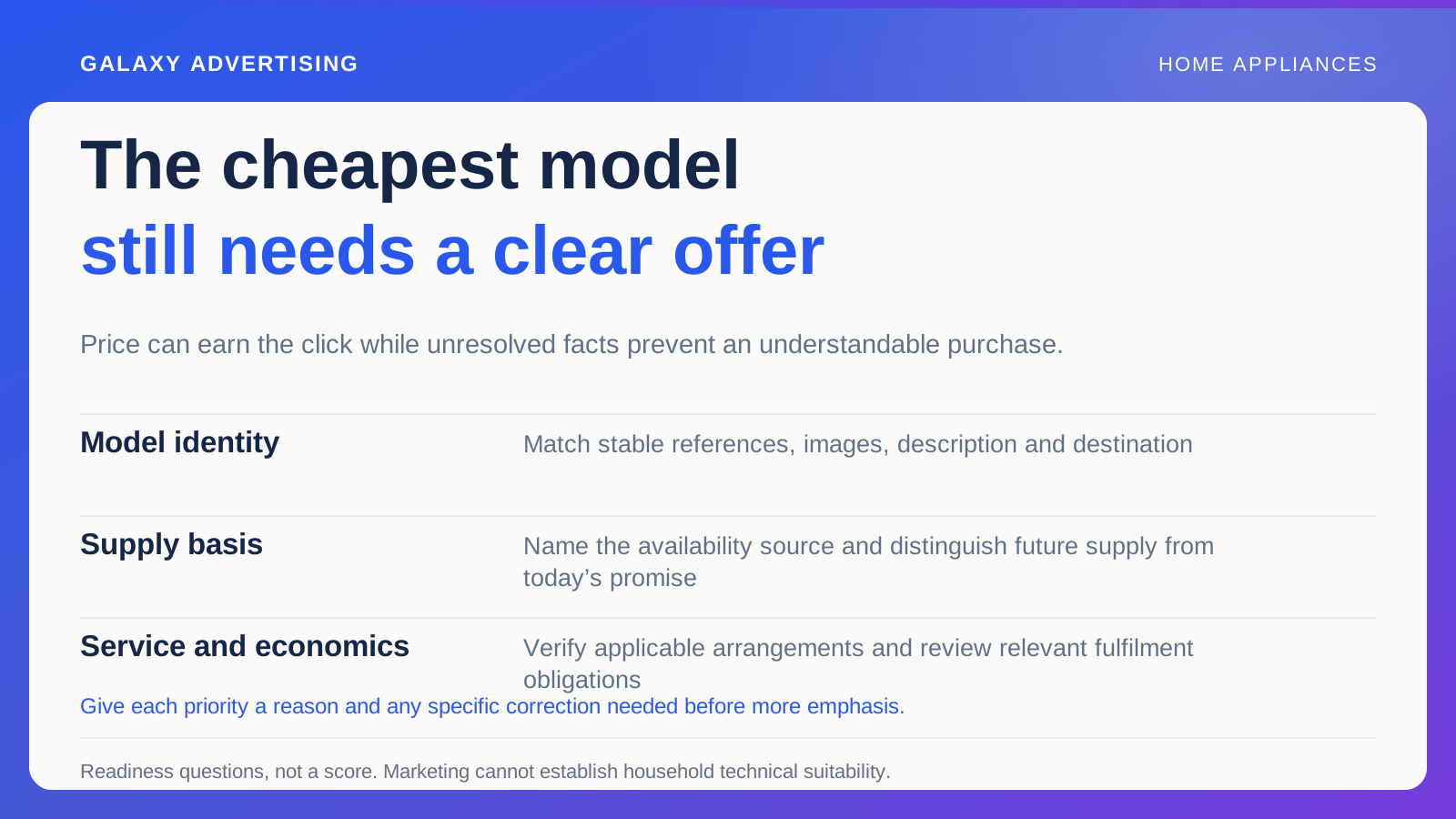
Identify the exact product, approved price, relevant dates in internal records and source of availability. Where customer facing articles are intended to remain evergreen, keep them that way. The live offer owner should maintain time dependent campaign information separately.
Confirm which images and documents describe the item. Similar family names make it easy to substitute a plausible but incorrect appliance when another model is needed quickly. Preserve the actual reference rather than relying on how familiar the picture looks.
Distinguish confirmed supply from expectations. Planned replenishment does not automatically become an advertising promise. The stock owner needs to explain what the campaign can state now, and which further changes require verification before release. That gives marketing something concrete to maintain.
Check services independently of stock
Verify current delivery and optional service arrangements for the promoted order and relevant areas. A stocked appliance does not establish that every associated service remains available on the same terms. These are connected parts of the offer with separate facts to check.
Ask operations which information might change during the campaign and how it will reach the asset and page owner. Keep marketing informed sounds reasonable, but it leaves considerable room for each team to assume somebody else has acted.
Give customers a practical explanation of how to verify their actual offer before commitment. A seasonal category label does not establish model suitability or an individual installation. The campaign should not imply that those questions have already been resolved just because the promotion is ready.
Keep the price basis consistent
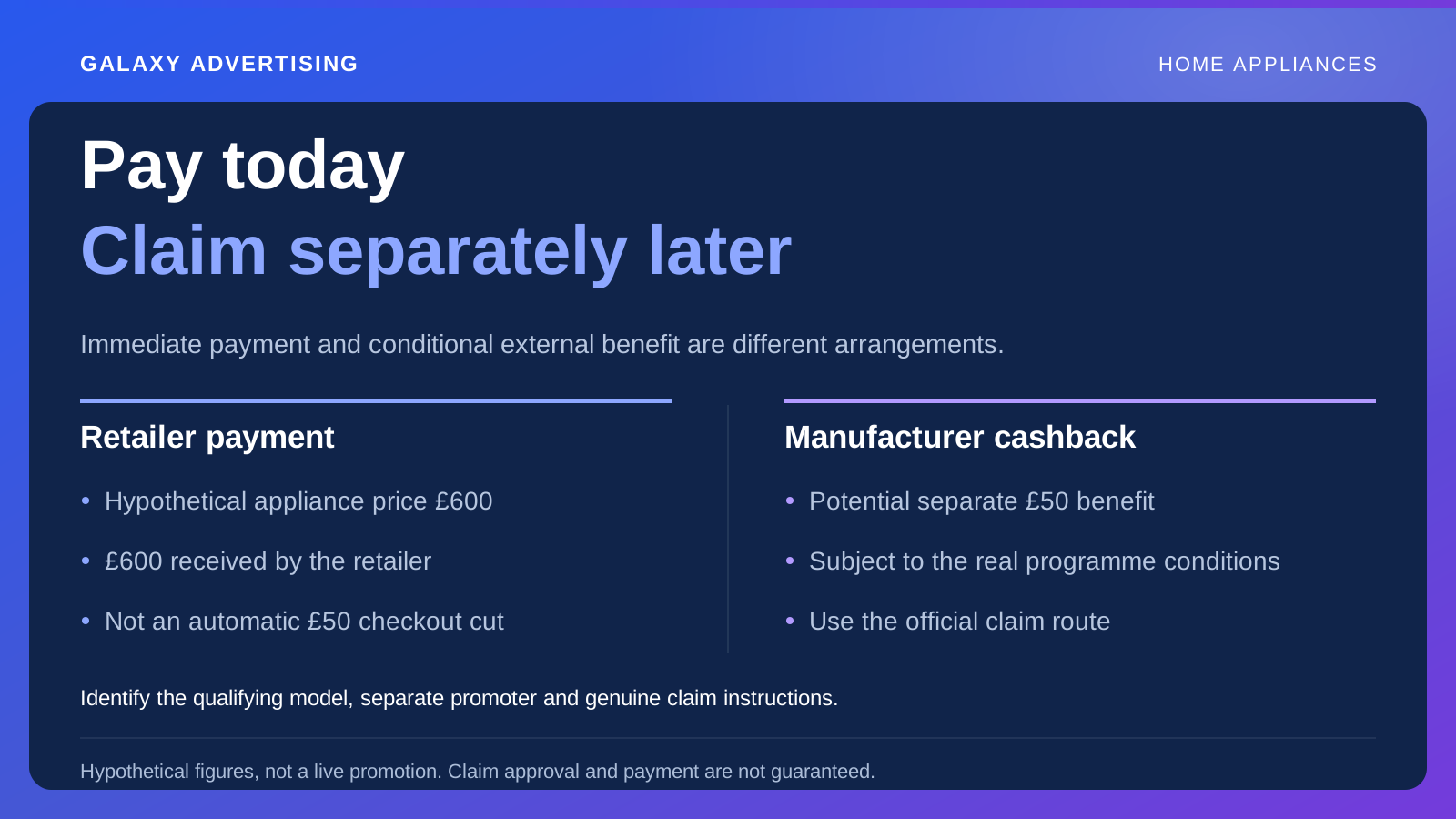
Review the advert, destination, selected options and basket together. Does the amount describe the appliance alone or a package containing particular services? Keep that distinction understandable throughout the route.
Check promotional conditions against the actual commercial setup. They should be supportable and intelligible. A customer ought not need to reconstruct a complex calculation to discover what the sale banner means for their selected item.
Retain approved versions. Prices and packages may change several times during a promotional period. Later analysis needs to identify the offer somebody encountered, rather than describe the whole season as one unchanged proposition. The correct headline at launch is only one part of that history.
Know your response when something changes
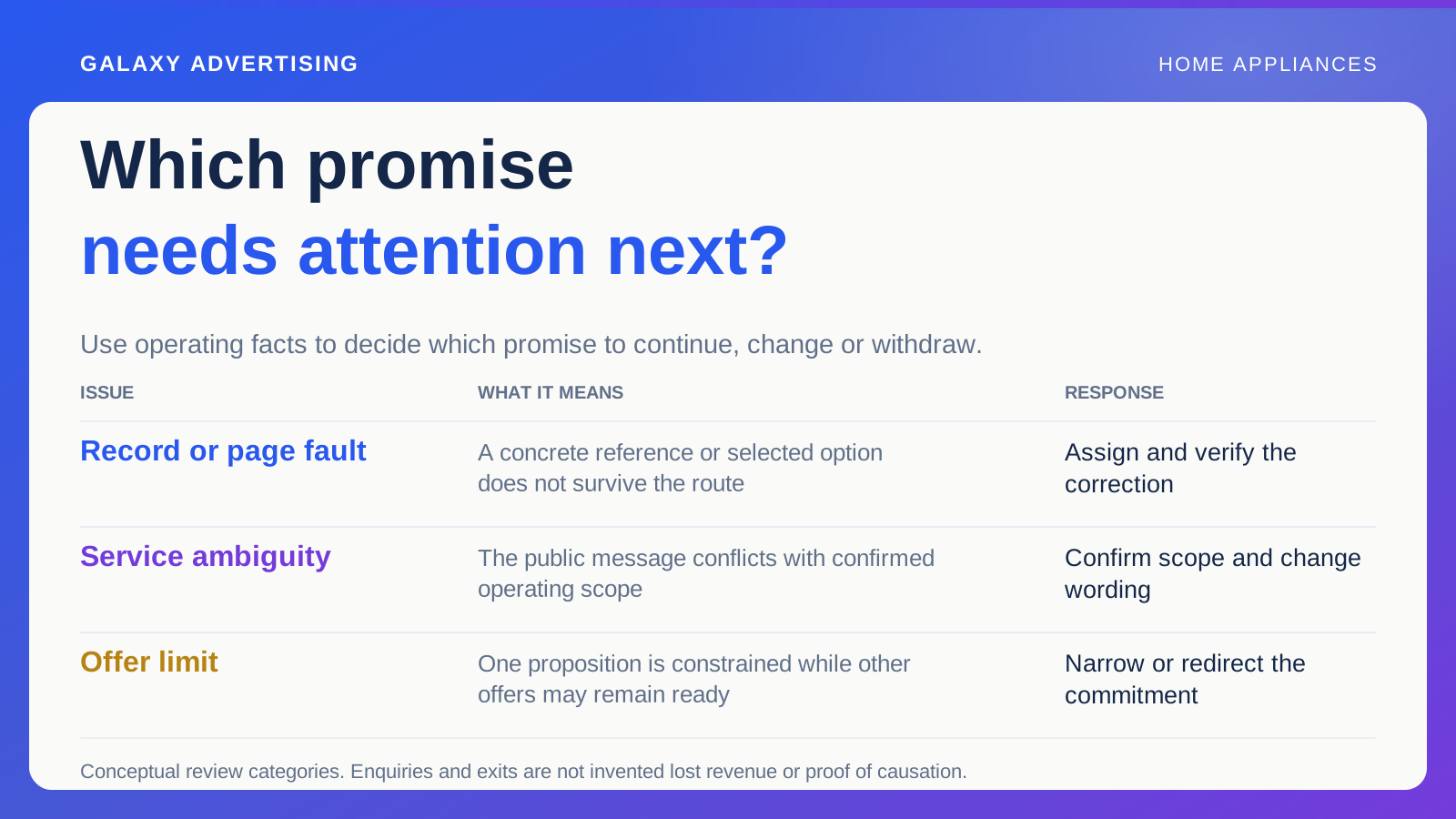
If a model becomes unavailable, decide from confirmed information whether to revise the promotion, show an accurately described alternative or take another appropriate action. A rushed judgement based on similar appearances is a weak substitute for checking the offer.
An alternative needs its own technical source and service explanation. A similar price or appearance does not establish suitability for an existing household arrangement. Keep that question open for the appropriate verification.
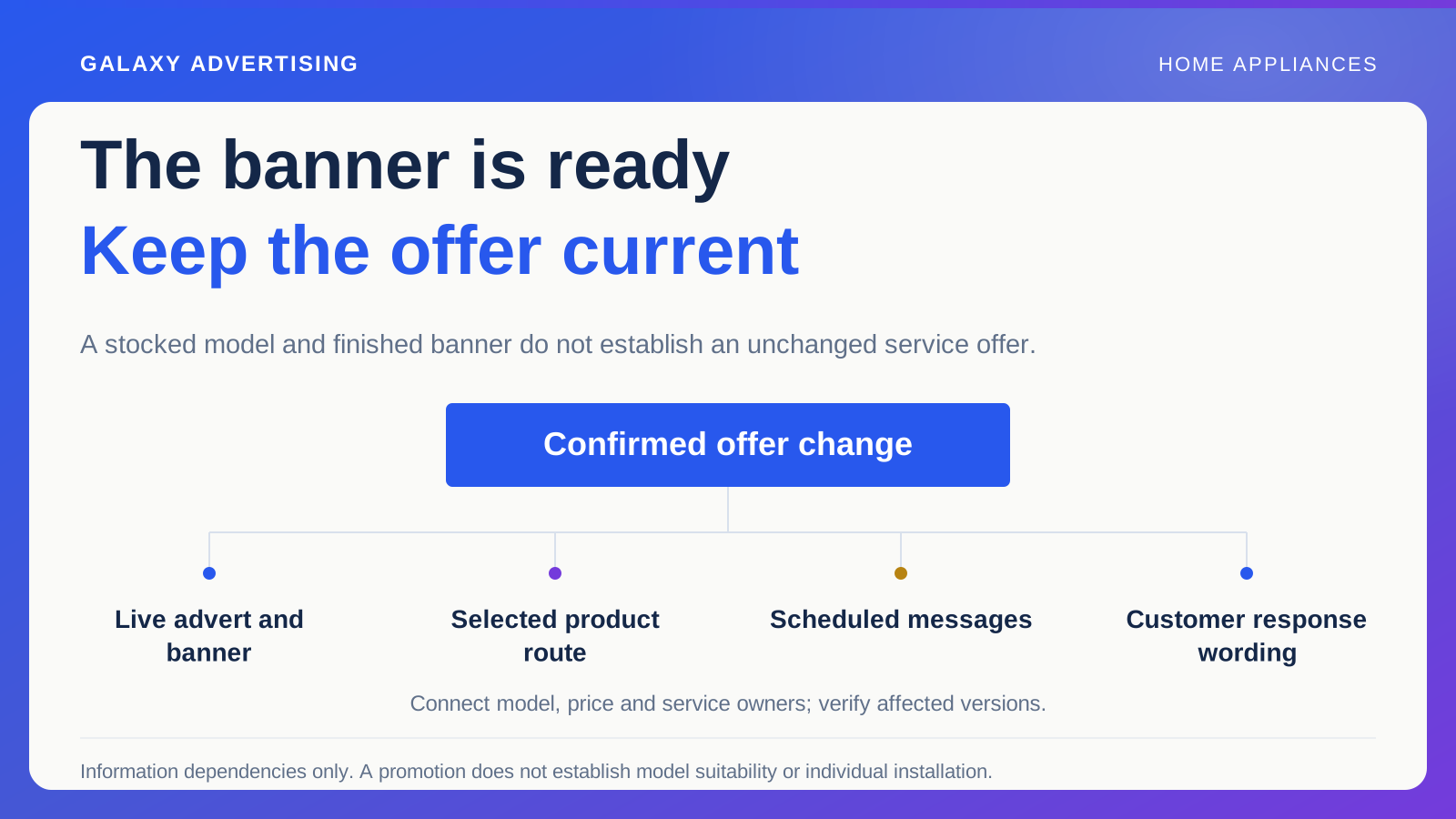
Inspect scheduled messages and saved creative as well as the main page. Updating a product record does not automatically remove the earlier promise from every connected place. A manageable campaign reference list makes those changes easier to follow and verify, especially while the promotion is still running.
Connect demand with what you fulfilled
Review retained orders and relevant costs using your agreed basis. Include material changes in product mix, promotional packages and operating conditions when interpreting results. Otherwise unlike offers can disappear into the same seasonal total.
More initial orders do not settle commercial value if the fulfilled mix or service commitments changed. Connect the demand generated with what the business actually supplied before deciding what the result means.
Treat enquiries about unavailable offers cautiously. They may identify a useful planning question without establishing guaranteed lost revenue. Separate observed requests, unresolved questions and speculative forecasts. The next seasonal plan should inherit useful evidence, rather than certainty added during the review.
Keep an internal offer change record. If a service becomes unavailable while the model stays stocked, identify affected asset versions and operations' approved response. Verify that revised wording reaches the advert, destination and relevant customer response.
That is more precise than noting that availability changed. It lets the later review distinguish the original package from its replacement. Without the connection, a result might be attributed to seasonal demand when the offer changed materially. You need useful operational memory, rather than an elaborate record of every routine edit.
Close the promotion deliberately
Assign somebody to remove expired urgency, change obsolete references and verify the current route after the promotion. The appliance can remain available while the campaign conditions no longer apply. Give that transition an owner.
Preserve useful comparisons and product explanations where their facts remain accurate. They need not disappear with the banner, but check how they connect to current offers. This keeps good work useful without leaving old promises attached.
The valuable memory of a seasonal campaign is which models could be supplied, which service changes mattered and which information customers struggled to find. That makes your next promotion more prepared. An earlier launch earns its value when the offer behind it can stay accurate for the people responding to it.