 Meta Ads
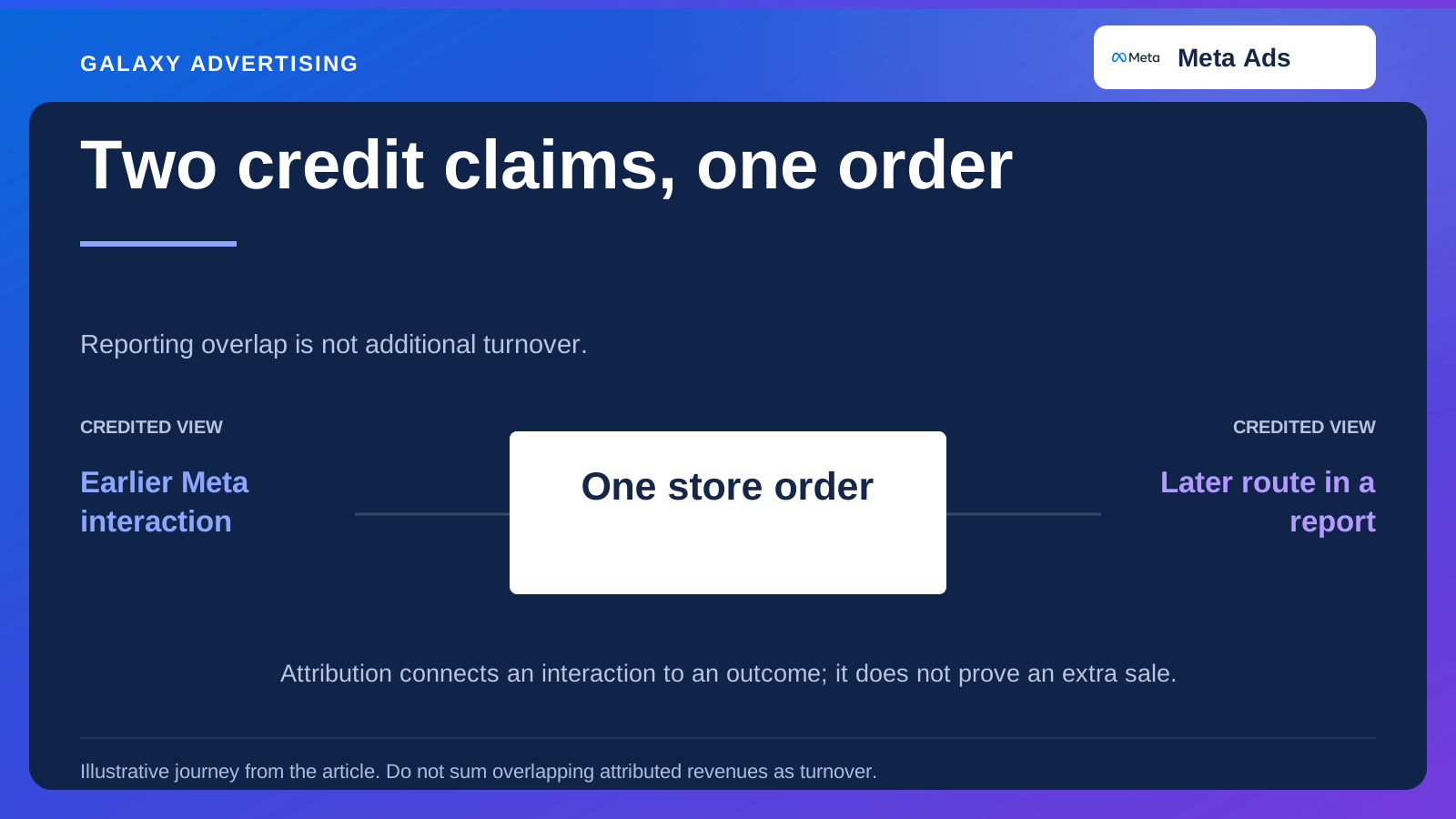
A shopper watches a room demonstration, later searches for your business and eventually orders a sofa. Meta associates the purchase with an earlier interaction. Another report credits the later route. Your store has still received one order.
That overlap is where an apparently straightforward performance conversation gets difficult. Each report can be describing something useful without providing a separate sale to count.
Attribution is a rule for connecting outcomes to observed interactions. It isn't a controlled answer to how many orders advertising created. Understand both its value and its limits before letting the figures authorise more spending.
What question does this figure answer?
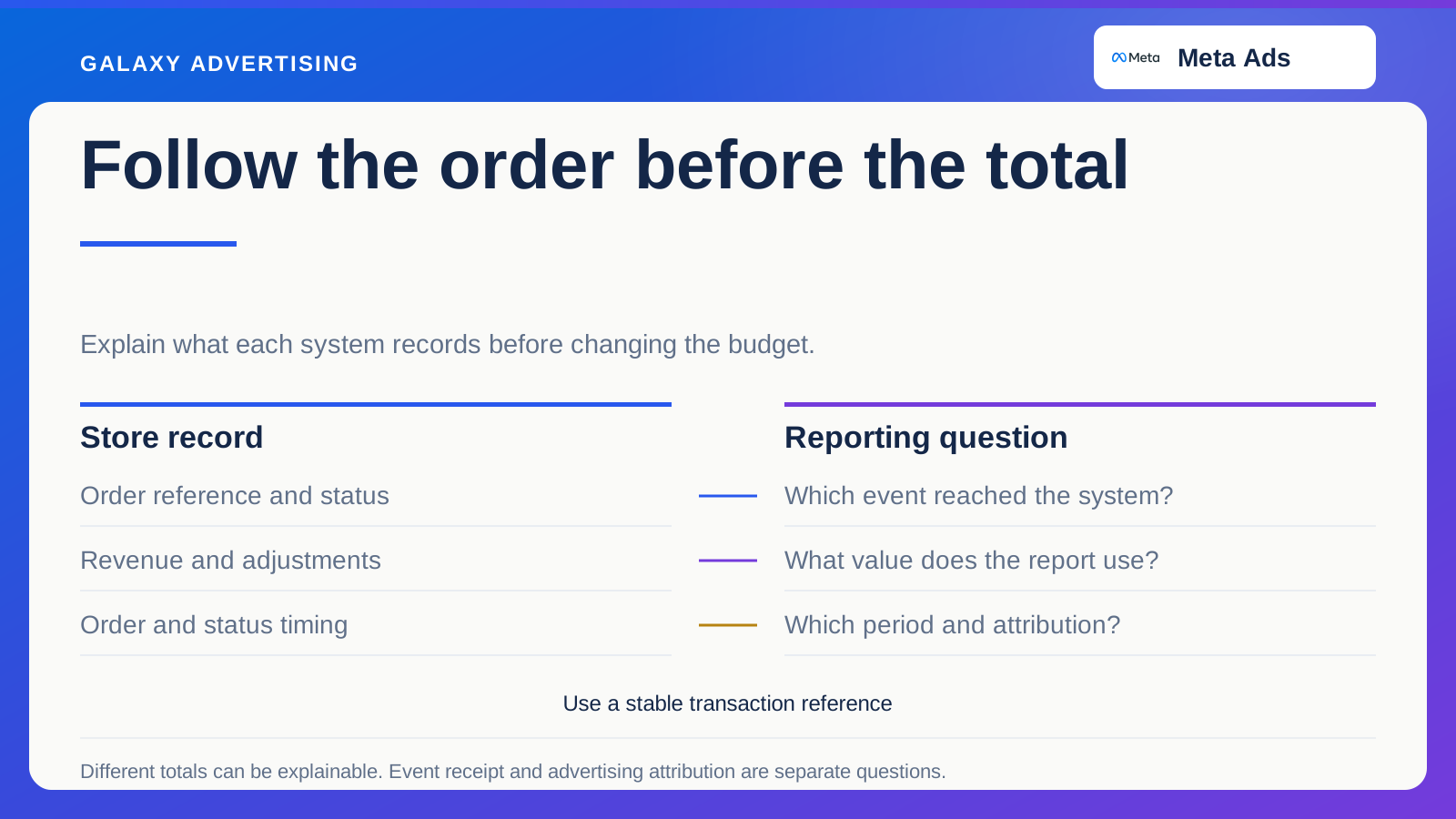
Identify whether you're looking at recorded purchases, purchases attributed under a selected reporting basis or actual store orders. Legitimate differences can separate those totals. Faults can too. A disagreement needs investigating rather than an immediate verdict.
Read the current reporting definitions available to your account. Don't assume an attribution window or setting. Name the basis in use and explain the comparison you're making, so everybody understands the figure before judging it.
Be careful with the label sales from Meta. It can suggest more certainty about cause than the evidence supports. A clearly labelled attributed value gives you a firmer basis for judgement than a simple sounding phrase that means several different things to the people around the table.
Keep the order separate from the credit claims
Use store records to establish the actual order and its eventual status. Then inspect how other reports describe the route. Several systems can each associate the same purchase with an interaction they observed.
Don't add their attributed revenues together and call the sum business turnover. These are overlapping accounts of influence or credit. They aren't necessarily mutually exclusive transactions, even if they sit in separate dashboards.
Where the available data supports it, use stable order references for an internal reconciliation. Don't invent individual detail that the systems don't provide. If a precise match isn't possible, state that limitation and make an appropriate aggregate comparison. Complete visibility is an attractive idea. It shouldn't become a claim your data cannot support.
A click and a view leave different questions open
A click shows that someone followed a route. It doesn't prove the advert was their only reason for buying or that the order would have disappeared without it. The observed action is useful, but its meaning has limits.
An observed view can also be relevant without showing how closely somebody attended to the message. Interpret any attributed outcome according to the report's definitions and the practical buying context. Neither label answers the whole commercial question.
Avoid deciding that every view associated outcome is worthless or every click associated outcome is incremental, meaning additional business that wouldn't otherwise have happened. Both rules make a difficult question conveniently simple. Instead, decide how much confidence this evidence reasonably supports for the particular spending decision you face.
Bring the business result into the conversation
Review store revenue, order mix and relevant contribution, the money remaining after the included costs, alongside media investment. You need worthwhile orders across the programme, rather than one platform claiming an attractive share of them.
Include meaningful changes in price, stock, service and other activity. Rising store sales during a campaign don't automatically prove the campaign caused the rise. A platform result and a business trend are related observations, each with different limitations.
Look for inconsistencies worth investigating. If attributed value rises sharply while fulfilled orders and contribution remain weak, reporting, product mix or overlapping claims might explain the difference. Treat that as an open question. Choosing whichever dashboard tells the preferred story leaves the explanation unfinished.
Additional value needs a different kind of evaluation
The causal question asks what would have happened without the activity. Answering it well requires a suitable comparison, designed in proportion to the business and decision. Attribution alone doesn't provide that comparison.
Where account tools and scale support an appropriate experiment, ask a qualified specialist to explain the design and its limitations. Where they don't, use available evidence cautiously. An informal before and after observation shouldn't be presented as conclusive proof.
You don't need perfect causal measurement for every operating decision. You do need to know whether a recommendation rests on attributed activity, a broader pattern or a stronger controlled comparison. Let the size and reversibility of the commitment reflect that difference. Uncertainty should shape the decision rather than vanish from its explanation.
Use the uncertainty to ask something useful
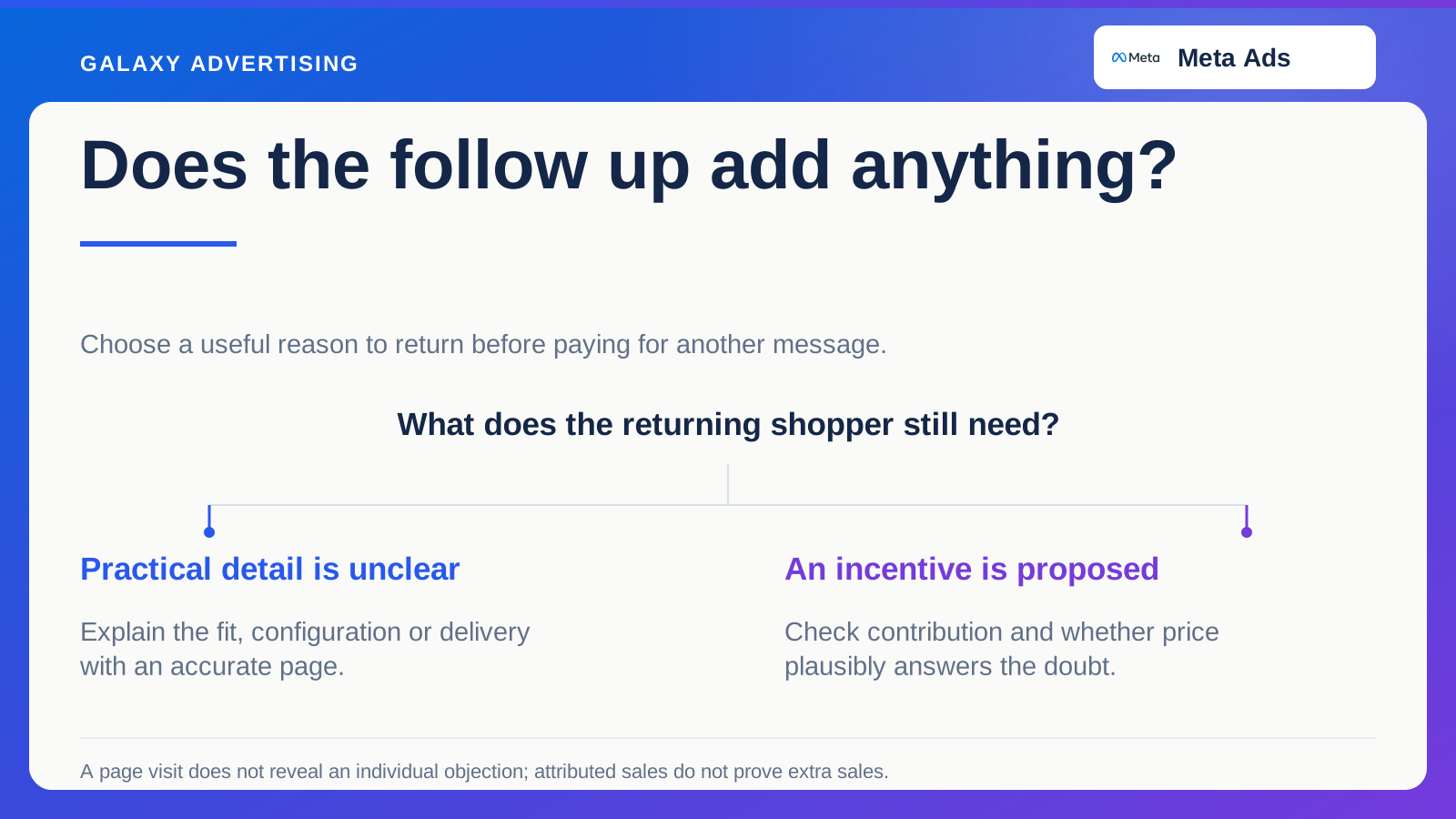
Suppose, hypothetically, a follow up campaign reports a strong attributed return among people already familiar with the product. You could ask whether a bounded change in that activity would provide useful evidence about additional value.
That's more informative than cancelling on principle or expanding solely because the reported ratio looks good. Make the next question specific enough to investigate with the tools and commercial conditions actually available to you.
Keep operational risk in view. A comparison that can't be implemented reliably, disrupts essential activity or produces too little evidence may not justify its cost. Measurement design deserves the practical judgement you'd apply to production or media allocation.
Agree how to explain the conclusion to somebody who doesn't use the platform. If the account manager and finance lead describe the same figure differently, write the distinction into the report before the budget meeting. A short glossary can give actual orders, attributed orders and estimates of additional value separate meanings. Then a terminology disagreement is less likely to be mistaken for deliberate misrepresentation by either team.
Match the confidence of the conclusion to the evidence
A useful report states the observed result, reporting basis, relevant business context and recommendation. Keep confirmed faults distinct from limitations and estimates. Those categories carry different implications for what happens next.
Saying attributed purchases increased under this reporting basis is narrower than saying the campaign generated these additional purchases. The narrower claim can still justify a sensible action when its commercial context is clear.
Attribution becomes more useful when it no longer has to explain everything alone. Actual orders, clear definitions and proportionate experimentation let you investigate the journey without turning several credit claims into several customers, or an association into a growth guarantee.