A page for one vintage object can lose its original purchase purpose the moment that object sells. A broad collection has a different risk: the customer may never find the cabinet that caught their attention in the first place.
Neither page type is universally wrong. The right choice follows what your message invites someone to investigate and what's currently available. Plan the relationship between individual listings, current selections and sold references, then give someone responsibility for the transitions. The destination needs to preserve the customer's interest as the stock changes, rather than leave them to interpret the gap.
Read the invitation your advert makes
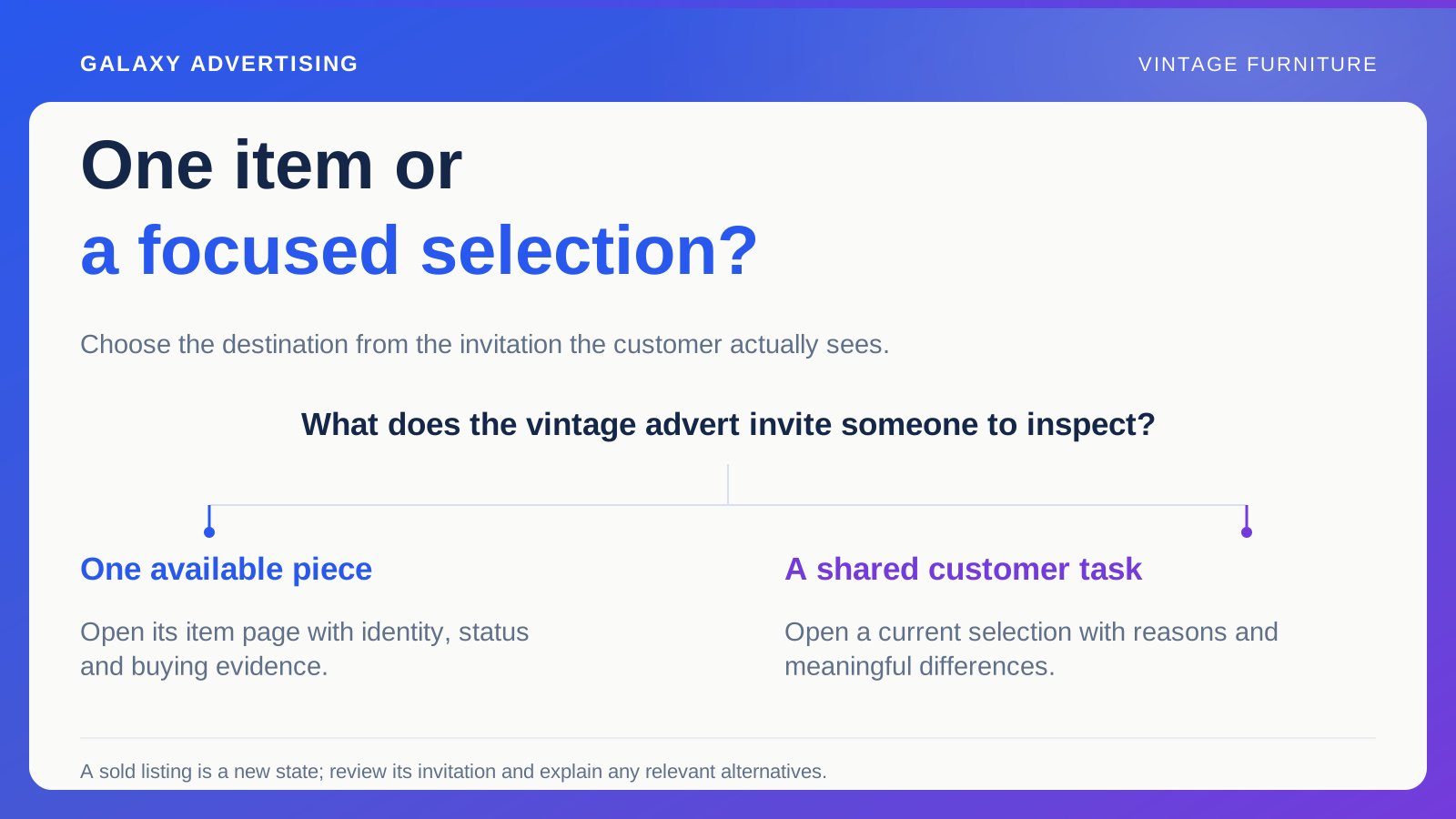
Does the asset introduce one object, a focused selection or the retailer more broadly? The destination should make that same invitation recognisable. Start by reading what the customer is likely to understand, rather than choosing the page most convenient for your internal workflow.
A close demonstration of one cabinet sets a different expectation from an overview of compact storage stock. Sending both to the same generic page leaves visitors guessing what the campaign meant.
Write the intended next task plainly. Is it inspecting this object's condition, comparing a small current selection or learning how you document stock? Let that task determine the page plan. A blanket rule that every advert needs a new landing page won't answer the underlying question.
Give a particular purchase a clear item page
When creative concerns one available piece, identify it clearly and supply the evidence needed to assess it. Keep the relevant image, current status, dimensions, condition and purchase information together. The page should establish both which object this is and what the customer needs to know about it.
Check the opening on a phone. Visitors shouldn't need to pass a generic introduction before confirming that the page concerns what they just saw. A direct destination earns its value through clear identification as well as detailed information.
Keep the item reference in the operating record. Your team needs to know which campaigns rely on that page remaining an active purchase offer. The more precisely the advert concerns the object, the more important it becomes to manage the moment its status changes.
Use a focused collection when the choice is open
A selection can suit a message introducing a shared customer task, rather than one specified object. Explain why the available pieces belong together and what differences matter. The page should support comparison instead of merely collecting products beneath a heading.
A category isn't automatically focused. Storage could include objects with very different dimensions, condition and uses. Give the reader a practical comparison basis. The existence of a category page doesn't establish that it answers the task your creative has introduced.
Keep the selection current and clear about its limits. When featured objects sell, don't fill the grid with loosely connected stock merely to preserve its size. A smaller relevant choice helps more. The reason someone clicked needs to remain visible in the stock you show.
Treat the sold listing as a new state
Decide what happens after sale under your actual process. You might retain the record as reference, add relevant alternatives or choose another suitable route. Make the decision deliberately, rather than leave the original page behaving like an offer that remains available.
Wherever it stays visible, make status clear. A historical listing can still answer questions about the piece. It shouldn't quietly retain an active invitation to buy. Explain which information describes the past offer and what someone can do now.
Don't substitute an unrelated object while keeping the original page identity. That can turn a helpful reference into a destination where title, images and link context no longer identify the same piece. Keeping an old link live isn't useful if its meaning has become incoherent.
Explain why an alternative belongs there
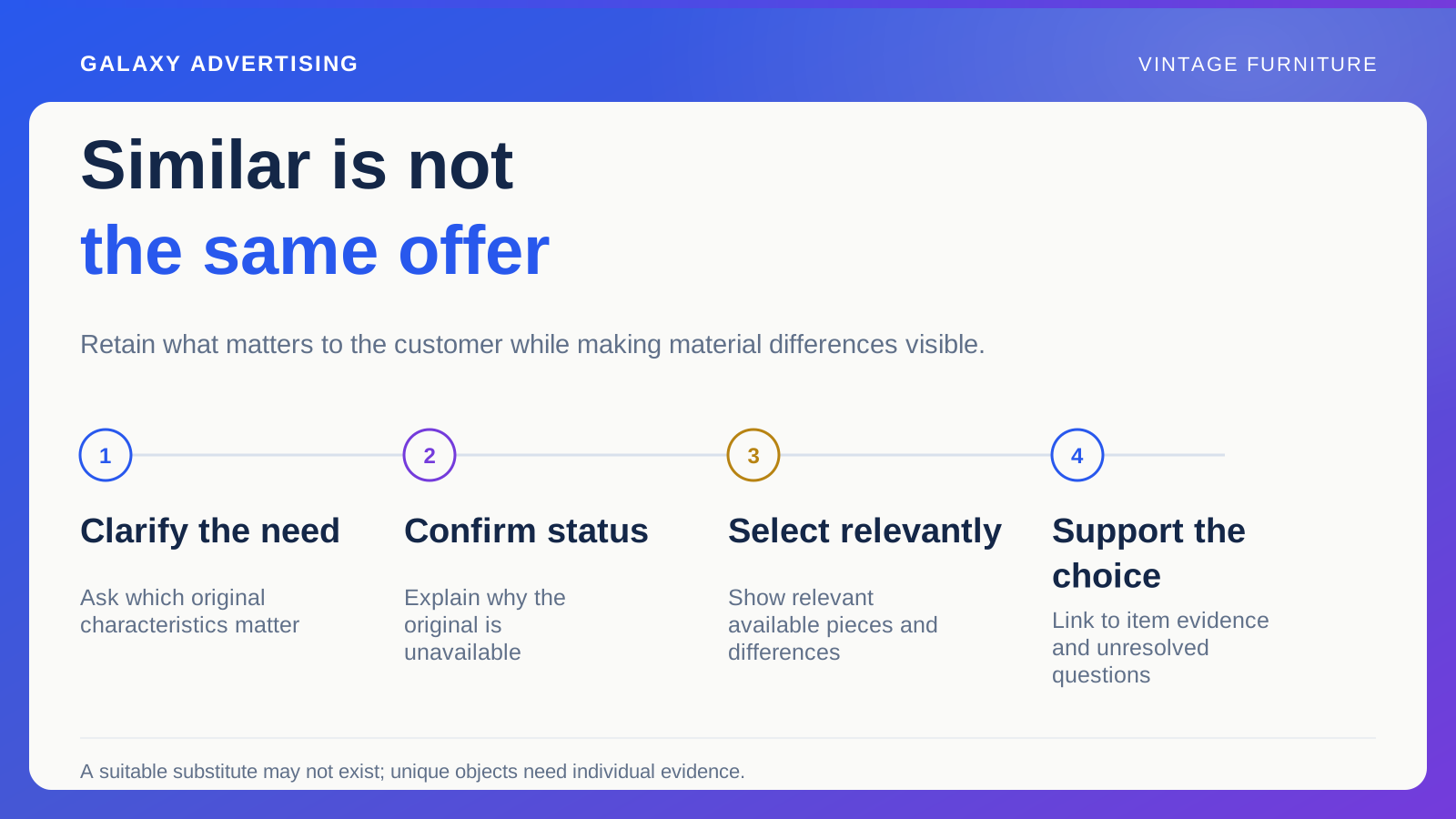
If the sold route introduces current stock, name the relationship. Similar material, comparable footprint and related storage arrangement are different kinds of relevance. Customers may value each differently, so let them see the basis of your suggestion rather than implying equivalence.
Link to actual available records and identify meaningful differences. A shared broad style label doesn't create an exact substitute. Each piece has its own condition and purchase conditions. Those details remain part of the new offer, even when the recommendation began with a sold item.
If nothing suitable is available, say so. Offer an appropriate future enquiry or notification route if you genuinely provide one. Don't promise control over future arrivals. The useful commitment concerns how you'll handle information, rather than guaranteeing the return of a unique object.
Create another page only when it helps a task
A campaign page should provide something an existing item or collection route cannot adequately supply. Repeating the advert above a link to the same listing can create work without helping a buying decision. Be clear about the added purpose before adding another destination to maintain.
If the page is justified, define which information it owns and which facts come from the item record. Price and availability copied across several manually updated pages can drift. You need a dependable relationship with the underlying record as well as a design that reads well.
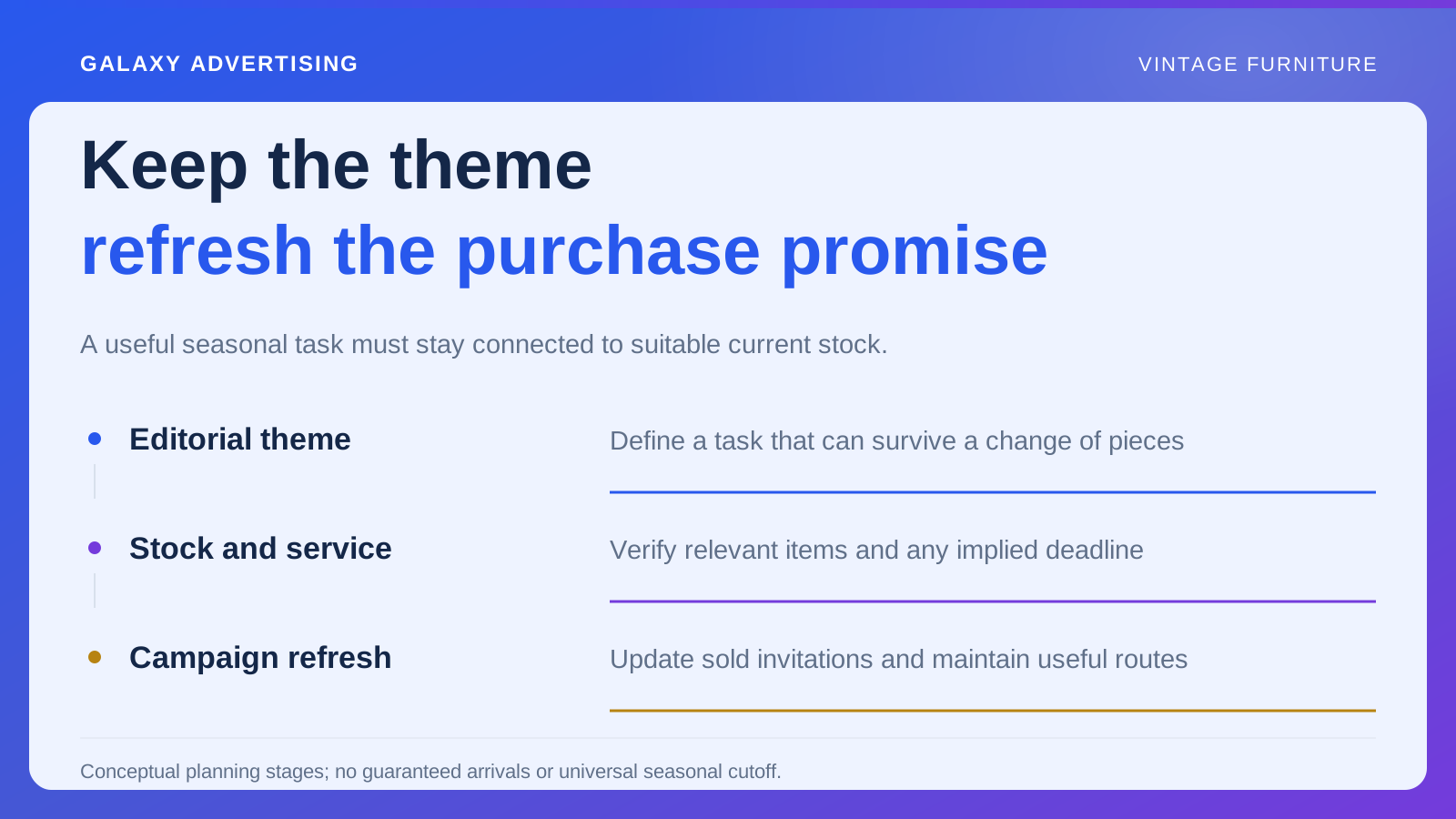
Name a maintenance owner before launch. Unique stock may need a change sooner than a continuously stocked product page. Include that operating work in production planning. Publication isn't the point at which the destination stops needing attention.
Check returning visitors too. Someone opening a saved link from an earlier version may need the changed status explained clearly, particularly if it still leads to the historical record. The current page needs to make sense to someone carrying the previous promise in mind.
Follow the route again when the offer changes
Use the actual campaign link after reservation, sale or a material listing correction. Do message, destination and next step still describe one coherent opportunity? Check the connection, rather than review the revised page in isolation from what brings people to it.
Recurring questions about where the advertised piece has gone are a reason to inspect that route. Don't assume visitors failed to read. An earlier promise may still dominate the campaign. A dependable destination lets the inventory change while the conversation stays understandable. That's what makes the next purchase easier to assess and the marketing easier to maintain.