An enquiry isn't a reservation, and neither is a completed sale. If your teams treat those states as the same kind of interest, a vintage desk can keep being promoted with a purchase promise nobody can clearly explain.
One customer wants more photographs, another asks for a delivery estimate and a third reserves it under your process. The object can only be sold once. You need a shared view of what's available, what's being held and what you can actually offer returning customers. Manufactured urgency won't resolve unclear status.
Give your status words a practical meaning
Write down what enquiry, reservation, pending payment and sold mean in your own process. Familiar words can hide different assumptions when one person updates the website and another handles customer conversations. Make the operational meaning something both can explain.
Identify the event that changes each status and who records it. A verbal discussion may not have the same consequence as a confirmed reservation. Staff and customers need to understand the distinction, rather than discover conflicting interpretations after another conversation has progressed.
Don't borrow another retailer's terms without checking what they mean in practice. A polished label helps very little if nobody can say which purchase route remains available under it. Use definitions your business can apply consistently to the way it actually works.
Keep one current record for the piece
Connect conversations, listing status and promotion through the stable object reference. Nobody should need to work out which desk was reserved from an old room photograph or vague description. The record needs to identify the same object across the whole route.
Agree which record is authoritative and how changes reach the people handling other channels. A stock update sitting in a message the website owner or campaign manager never sees cannot guide their next action. The information needs to travel beyond the original conversation.
Keep relevant context when status changes. If someone was waiting for a verified measurement, explain the changed availability in the follow up. Don't answer as though the purchase position stayed the same merely because you can still answer the technical question. Both pieces of information matter now.
Explain what reservation actually promises
Describe your genuine reservation process and its conditions. Tell the customer what has been agreed, what still needs to happen and how you'll communicate a change. They should understand the position without interpreting a reassuring phrase as a promise you didn't intend.
Don't improvise a hold to maintain interest. A salesperson's wording can conflict with the website or another colleague's understanding. With unique stock, two customers cannot receive the same object, which makes an ambiguous holding promise particularly difficult to put right.
If the request falls outside your established process, take it to the person authorised to decide. Accurate escalation is more useful than a fast answer creating an obligation the business hasn't agreed to fulfil. You need an answer you can honour, as well as one you can give quickly.
Let the returning visitor see the current position
Update the listing when an object isn't immediately available. A missing purchase button alone doesn't explain what's happened. A returning customer needs a clear statement of the current position, rather than a small interface change they must interpret for themselves.
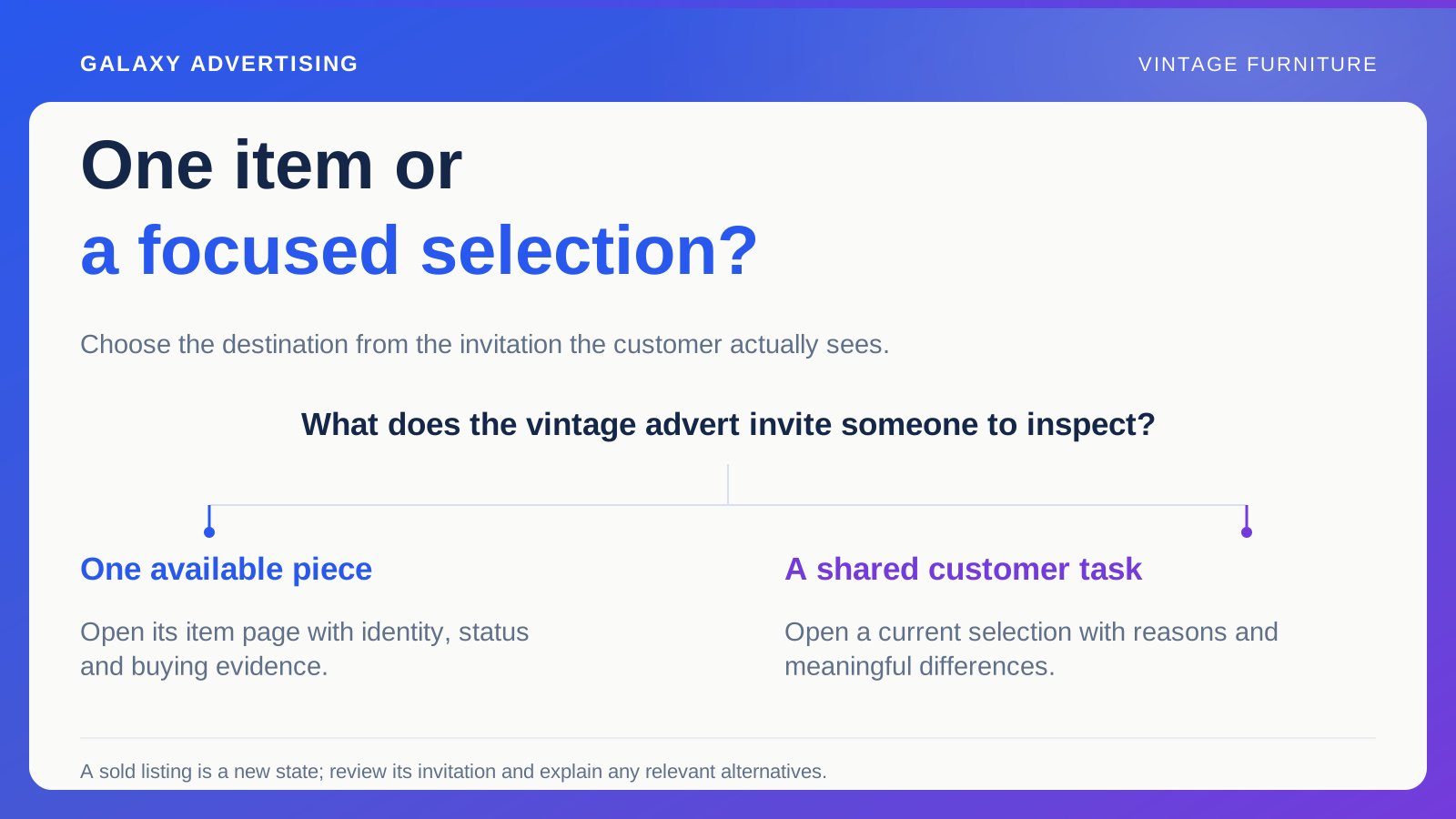
Review live adverts and follow up content too. The page can be accurate while the message bringing someone back is still wrong. Make the whole route describe the same status. Correcting the destination doesn't complete the task if the invitation remains misleading.
If you keep a page after sale, separate historical information from present availability. Photographs and recorded details may still be useful. They shouldn't invite a reader to treat the original offer as a purchase opportunity that remains active. Retaining the record and retaining the promise are different decisions.
Make an alternative relevant to their original interest
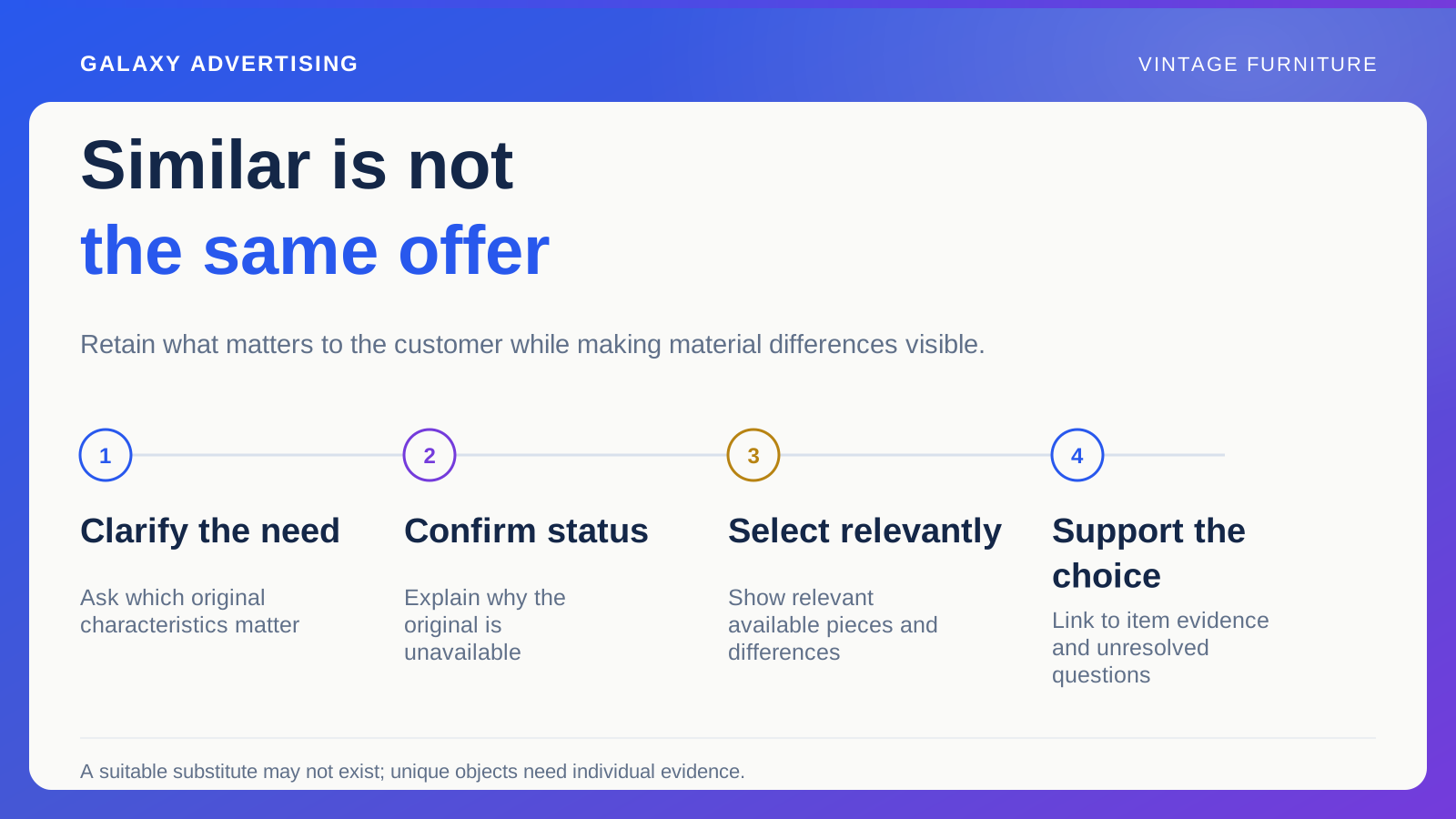
If another piece might help, explain why and which differences matter. Sending every available item isn't necessarily a useful continuation of a specific enquiry. The customer has already told you something about the purchase they're considering. Use that context.
Ask which characteristic they need to retain: perhaps a measurement, storage arrangement or particular appearance. Choose a small, defensible selection on that basis. Objects sharing a category aren't automatically interchangeable, and a recommendation should explain more than the category they belong to.
Be clear if nothing currently fits. Offer an appropriate future contact route if you have one, with honest limits. Don't promise an identical unique object will arrive. That uncertainty is part of the stock you handle, rather than something a positive sales message can remove.
Give follow up a useful purpose
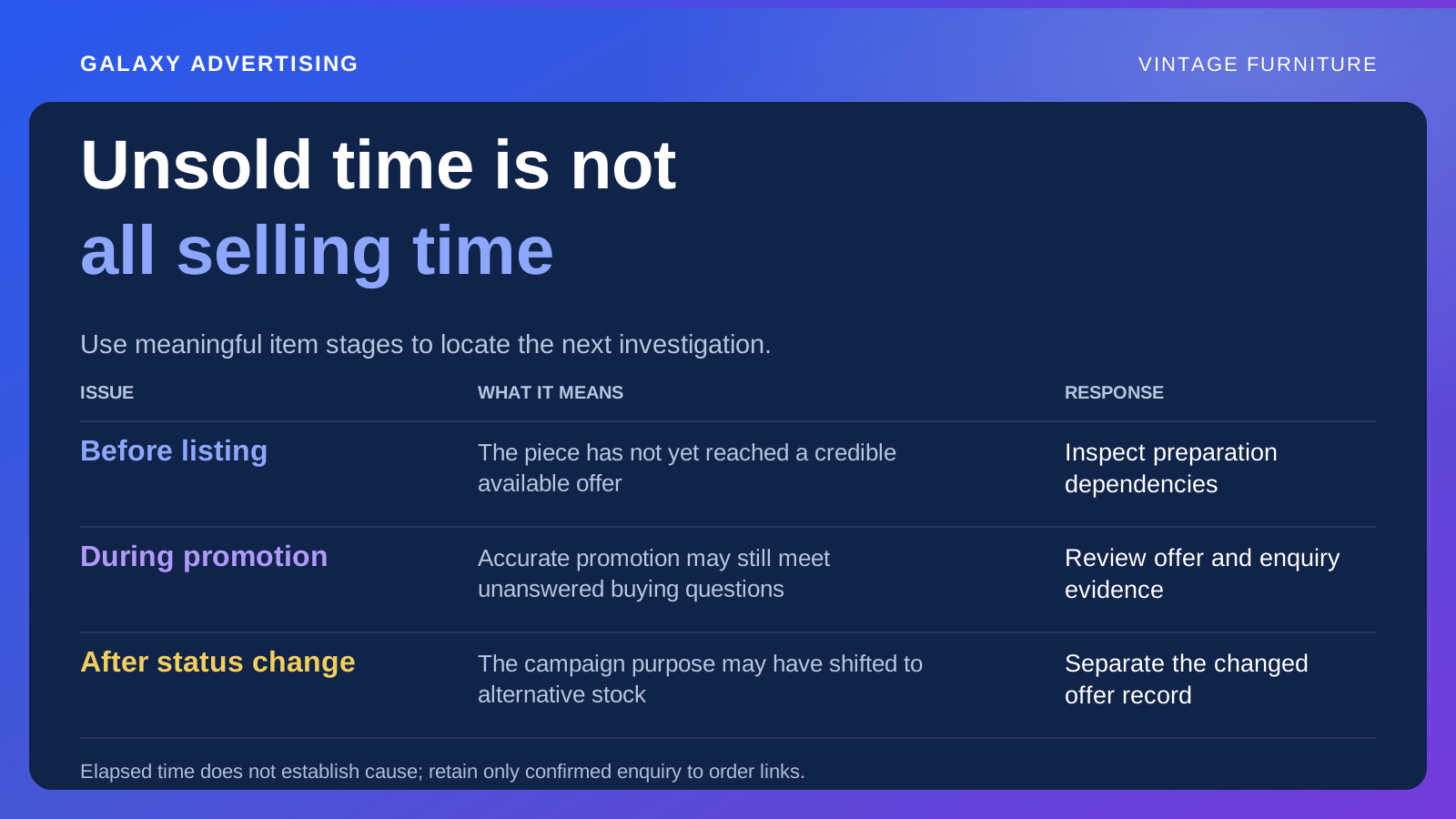
A relevant follow up brings new information about the piece, its status or a clearly related option. Repeating an invitation to act adds little if the customer still needs an unanswered condition or delivery question resolved. Start with what has become useful to tell them.
Keep communication within the customer's actual relationship with your business and the permissions you're responsible for managing. This isn't a legal contact policy. The operational point is that follow up needs both a legitimate route and a useful purpose. One cannot substitute for the other.
Judge timing on that basis. A known status change may need prompt explanation. An unchanged item page may not justify another message merely because a calendar reminder appeared. The reminder can prompt a judgement; it cannot supply the reason for contacting someone.
Test a representative handover between staff. Can the next person identify the object, current status and last verified answer without making the customer repeat the conversation? That checks the working process, beyond what the written procedure says should happen.
Correct the process behind unclear offers
Review cases where people returned to a changed or confusing offer. Was the cause a delayed update, inconsistent reservation language or a lost conversation reference? Assign the correction to whoever owns that part of the process. A more visible sold label won't fix uncertainty about when to apply it.
Equally, careful captions cannot compensate for several people updating the item record inconsistently. A dependable process lets you explain the opportunity that exists now, rather than keeping an earlier promise alive after the piece has moved to another state. That gives customers firmer ground for their decision and your team a clearer job to do.