Changing a vintage listing's title shouldn't break its connection with preparation costs and advertising spend. If it does, you can end up knowing when an item arrived and sold, but very little about the journey in between.
Photography may have been delayed, the listing revised twice and an advert left running after reservation. The sale is real. It still leaves you short of evidence for improving the next piece's route. Centre the record on the object, its preparation and the attention it received. You need a dependable operating and commercial account, rather than an apparently complete view of every customer's research.
Let the object hold the records together
Give the item a stable reference and carry it through acquisition, preparation, photography, listing and promotion. A category name won't separate similar objects with different condition and cost histories. You need to know which piece each record actually describes.
Make the reference easy for the people doing the work to use. If it's awkward, staff may return to informal names that need interpreting later. Measurement should support ordinary work, rather than require somebody to reconstruct the story separately when reporting comes round.
Keep that reference if the public title changes. A revised attribution or clearer descriptive name shouldn't detach the piece from its original preparation and expenditure records. The words customers see can improve while the underlying identity remains dependable. Both needs can be met together.
Record the stages that reveal a useful difference
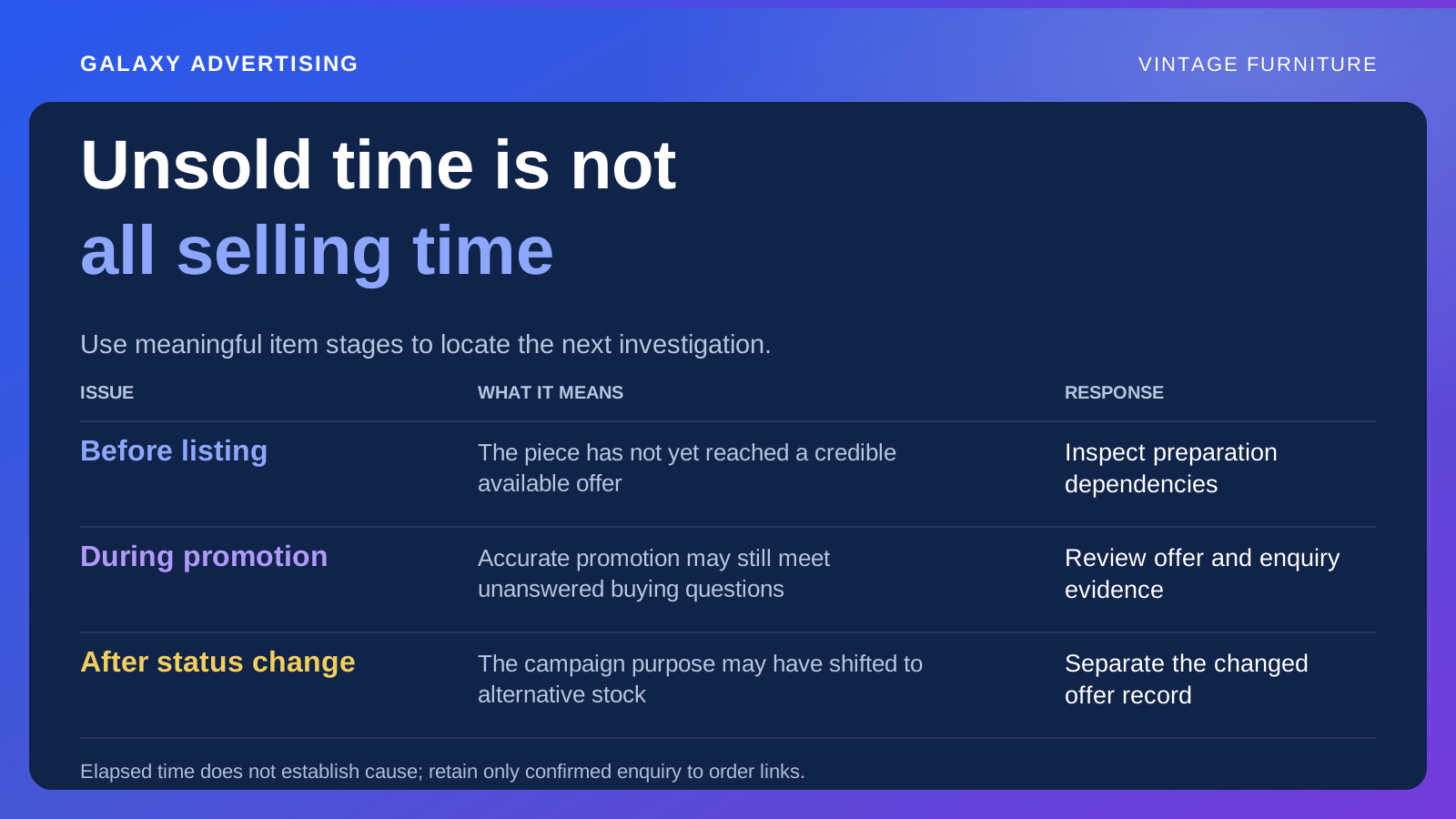
Identify when the piece is ready for photography, when its information record is complete and when the listing becomes available. Those stages can show whether an apparent demand problem partly concerns time before a credible offer existed. Unsold time isn't necessarily all selling time.
Use definitions your team can apply consistently. Ready should mean the relevant preparation and verification have happened. Moving the object to another room doesn't, on its own, establish readiness. The label needs an agreed practical meaning if you want to compare records later.
Don't collect detail without a purpose. Useful stages reveal delays, dependencies or changes to the offer customers could assess. A long activity log isn't automatically more informative than a few clearly defined events with named ownership. Record what helps you decide what to change.
Connect paid attention to the offer it supported
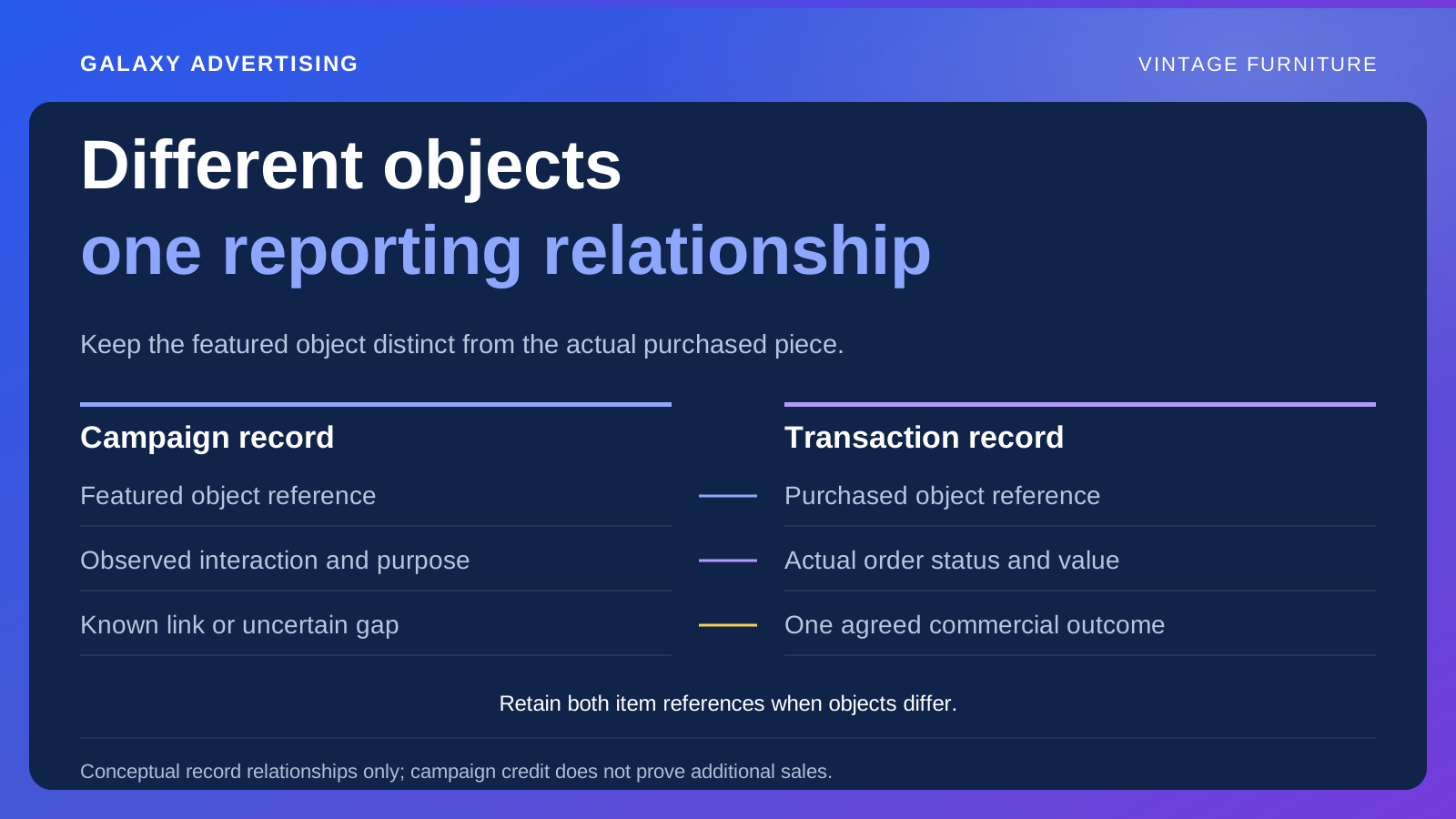
Retain the item reference with campaign assets, destinations and relevant spend records. This helps distinguish promotion of one object from broader activity introducing the retailer or a collection. Those are different marketing jobs, even if related pieces appear in the imagery.
Record material changes to message or destination. If an advert starts by promoting the individual cabinet and later introduces alternatives after sale, its purpose has changed. Don't read the combined result as though it supported one constant offer throughout the period.
How you implement this depends on your advertising tools. The operating requirement remains the same across interfaces: explain which available offer expenditure was meant to support and when that intention changed. Keep the record usable for that question instead of organising it solely around a platform's layout.
Keep enquiry, reservation and sale distinct
Define general questions, product specific enquiries, reservations and completed sales using your business process. Each is a different observation. Giving them all a success label because each shows some interest makes the final view harder to interpret, rather than more encouraging.
Retain a confirmed link between an enquiry and eventual order where it exists. Where it doesn't, label the uncertainty. Don't assign the sale to the nearest plausible conversation because that would complete the record neatly. A plausible connection isn't a verified relationship.
Use a consistent commercial outcome and value basis. Explain whether you're reporting placed orders, completed transactions or another defined stage. Keep relevant cancellations and adjustments visible so the final view doesn't rely on a value that no longer applies. The definition belongs with the figure.
Bring preparation and fulfilment into the money discussion
Record relevant item costs and the basis for estimating contribution, meaning the money remaining after the costs included in the calculation. Acquisition price alone may not explain a sale's value when restoration, handling and delivery obligations differ. The work around the piece matters too.
Separate estimates from confirmed amounts. A provisional view can help if the main uncertainty is clear. Don't make an incomplete record appear precise simply because a report template expects one number. The template should accommodate the evidence you have, rather than manufacture certainty around it.
Review material exceptions at item level before extending a conclusion across the assortment. An unusually demanding restoration or delivery arrangement can explain an outcome you might otherwise mistake for a weak advertising argument. Check that context before deciding what the marketing result means.
Use elapsed time to choose the right investigation
Measure intervals between meaningful stages where they help a decision. A long wait between arrival and listing calls for a different investigation from a long period of accurate promotion without suitable enquiries. The same total time can contain quite different problems.
Elapsed time doesn't establish the cause on its own. The piece may await preparation, attract interest with an unanswered information gap or receive little relevant attention. Records help distinguish these possibilities. They don't automatically settle which explanation applies. Keep your conclusion within what they support.
Test usefulness through a small number of representative item reviews. If staff cannot explain why information was collected or what action follows, simplify around the decisions you actually need to make. More data isn't a useful objective by itself.
Check for duplicate item references before relying on a summary. A renamed listing or replacement image folder shouldn't make one object appear as two preparation projects or two sources of promotional expenditure. Verify identity before reading patterns into the totals.
Turn a finished journey into a better next decision
At sale or a defined investment review, summarise the available offer, costs, promotional work and known customer questions. Explain important changes along the route. Then choose learning that can improve preparation or marketing for the next object.
Earlier condition photography, a clearer status handover or a more selective brief can be useful outcomes even when each channel's exact causal contribution stays uncertain. The eventual sale isn't proof that everything preceding it was equally effective or necessary. A traceable journey gives you something more useful: a reasoned place to make the next one better.