What could customers actually buy while your vintage report was recording strong revenue and a low average acquisition cost? Some advertised pieces may already have been reserved, a valuable sale may have come through a known enquiry and a new collection may have remained unlisted because photography was delayed.
The headline figures describe part of the outcome. They don't explain that operating route. Connect activity with actual objects and their statuses so you can distinguish preparation, availability and demand questions. Unique stock doesn't behave like one continuously stocked average product, however tidy that would make the report.
Put available stock around the figures
Identify the meaningful inventory you could promote and relevant status changes during the period. Distinguish available pieces from those awaiting preparation, reserved or sold. The reader needs to know what the campaign had to work with before deciding what its result means.
Use your defined terms consistently. If one person marks a piece sold when payment is pending and another waits until completion, the stock view can mislead the discussion. The label needs an agreed meaning, rather than depending on who happened to update it.
Explain significant assortment changes. A compact desk campaign didn't retain the same offer once those desks sold and unrelated cabinets were all that remained. Availability belongs in the marketing context from the start. It isn't an excuse to attach only after a disappointing result.
Count the outcome on one agreed basis
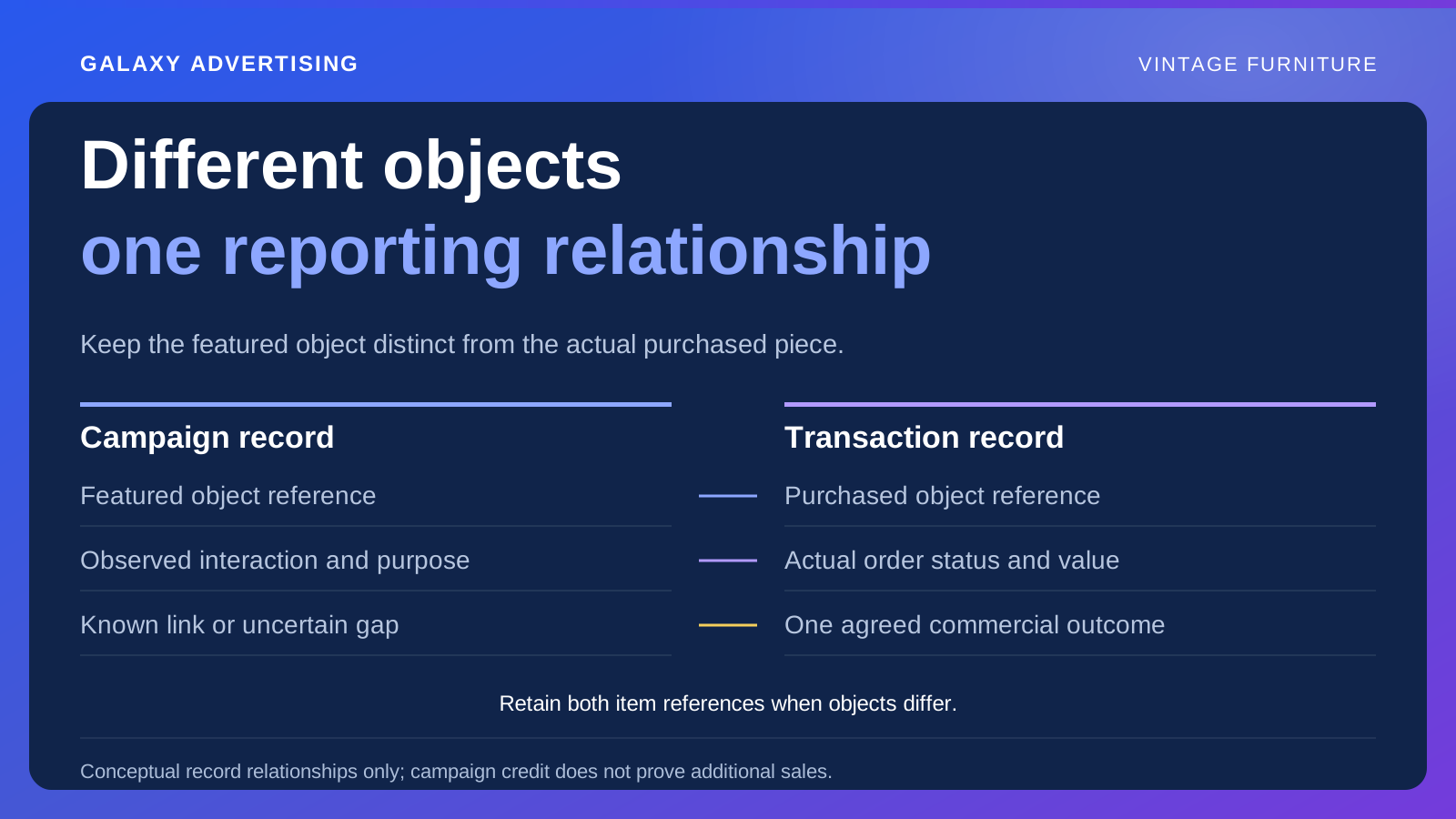
Use a consistent transaction record and value definition. Explain whether you're reporting placed orders, completed sales or another defined stage, including how material adjustments are handled. A clear definition lets people compare the result without silently changing what success means.
Keep enquiries and reservations separate from revenue. They can provide useful operating signals, but a unique object or promising conversation doesn't turn them into completed sales. Preserve their value as observations without giving them a commercial status they haven't reached.
Don't add claims from several routes into an inflated management total. One order can appear in advertising and sales records for different reasons. Retain those views for their respective questions, while counting the transaction once in the agreed summary. Different reporting perspectives don't create extra revenue.
Explain the pieces that change the judgement
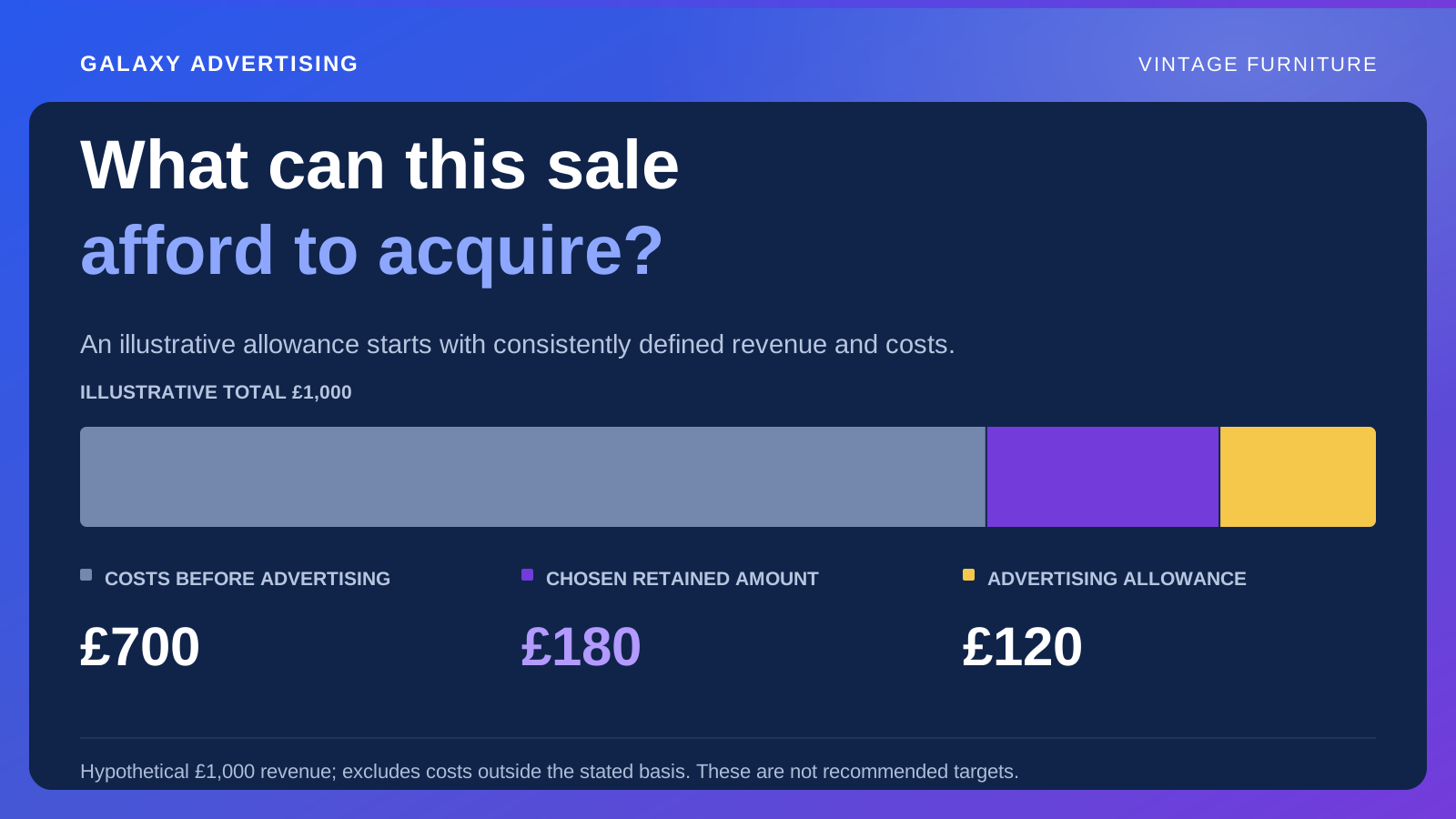
Review material individual outcomes and meaningful differences. Preparation, item costs and fulfilment can explain why similar prices leave different contributions, meaning the money remaining after the costs included in the calculation. The sale price alone doesn't establish how worthwhile each transaction was.
You don't need exhaustive detail on every object when it doesn't alter a decision. Focus on significant examples and useful patterns, while keeping underlying item references available for inspection. The summary should remain readable without removing the route back to the actual evidence.
Show estimates as estimates. Incomplete cost records may support a provisional interpretation, not a precise profitability conclusion. Explain what needs improving before the information can reliably support larger investment. Confidence in the wording can't make the underlying record more complete.
Check whether the live offer stayed accurate
Review live assets against current stock status. Identify material cases where an advert or destination retained an invitation to buy after the piece moved into another state. The report should make the mismatch visible enough for somebody to act on it.
Give repeated problems an operating owner. They may concern stock handover or asset references rather than media settings. A recurring note under campaign totals isn't a correction. Identify which process needs to change and who can make that happen.
Record successful process changes too. You can directly verify a more reliable status update even when its exact revenue effect can't be isolated. Recognise the work accurately, without ignoring it or awarding it an unsupported sales number. Its practical achievement has a place in the review.
Bring customer questions into preparation decisions
Summarise recurring enquiries affecting assessment. Internal dimensions, condition detail or restoration extent may deserve better listing preparation when the same gaps recur. Use those questions to identify a specific job the team can carry into the next arrivals.
Keep individual context where it matters. More measurement questions don't mean every piece needs the same extra dimension. They suggest that preparation should identify which measurements support each object's intended use. The consistent process needs item specific answers, rather than one standard response.
Don't turn those questions into an explanation for every unsold piece. They reveal uncertainty but may not explain all demand. A focused preparation improvement is a more supportable conclusion than a sweeping diagnosis of the whole stock's performance. State what the evidence actually helps you decide.
Separate completed work from its commercial effect
State which listings, photographs, corrections and campaign changes were completed, with the buying tasks they were meant to support. Then describe outcome evidence and its limits. A sale following a revision doesn't establish that the revision caused it. Existing interest or other changed conditions may also matter.
Let that uncertainty guide a proportionate next action. A clearer condition image can remain a sensible preparation improvement without a universal conversion uplift claim. Useful operating choices don't all need a fictional percentage to justify them. Explain the purpose you can verify instead.
Retain definitions and important item references with the report. Future colleagues should understand why the decision was made without the author reconstructing its context. That matters especially once the object has left and its details are harder to inspect directly. The review needs to keep that knowledge usable.
Finish with a decision somebody owns
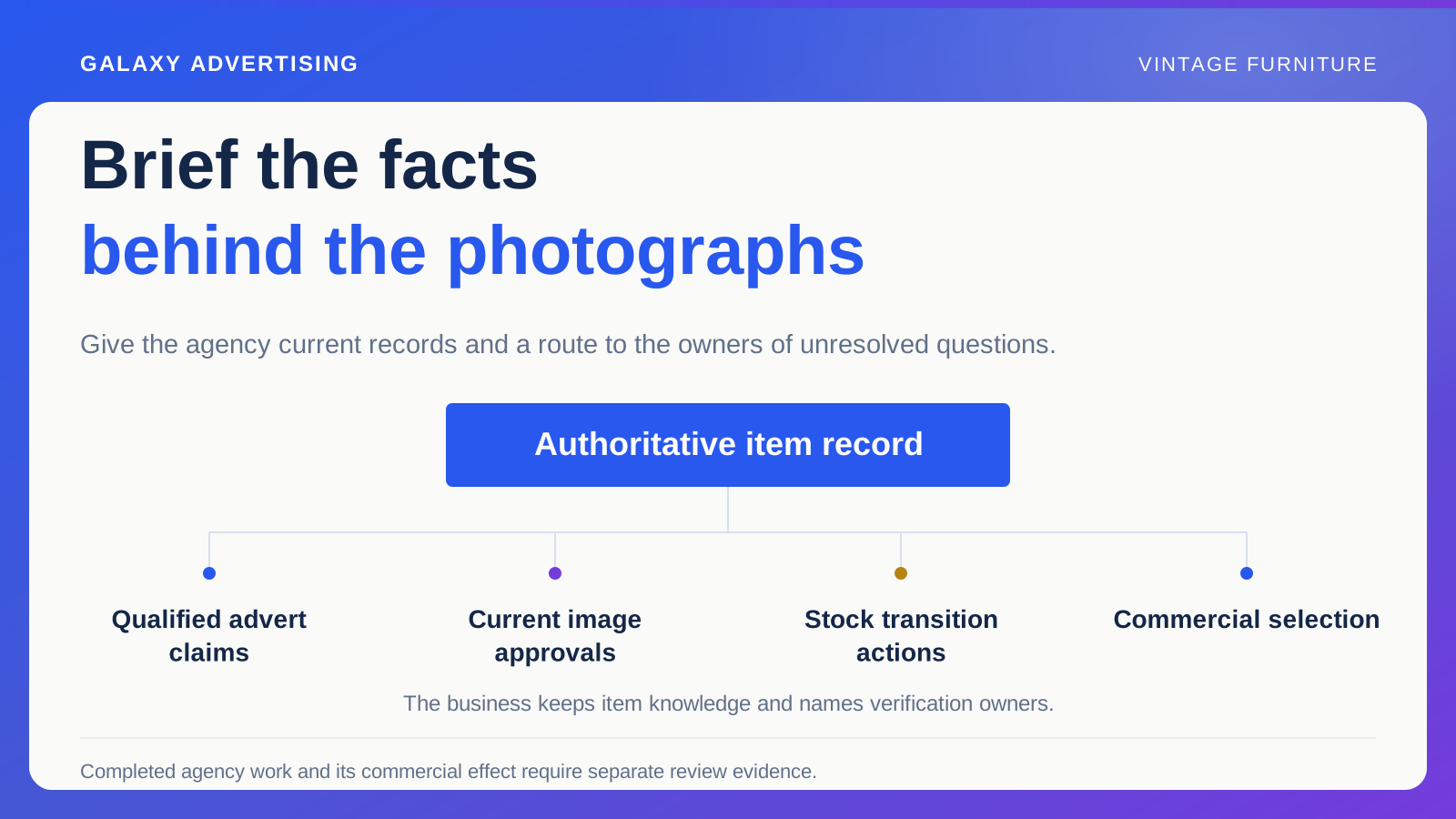
Name the action, owner and condition for review. You might prepare an unlisted opportunity, change a destination, revise one offer or improve an item record. Make retailer dependencies clear: an agency needs appropriate access and an owner to verify attribution or photograph a missing detail.
A blocked requirement shouldn't become another month's unchanged note. The useful report makes clear what you could sell, what you sold and what would improve the next opportunity. Those actual pieces give the investment conversation more substance than a favourable average can provide on its own.