A healthy markup doesn't prove your vintage advertising has produced a worthwhile sale. A table bought attractively and sold for substantially more can still leave an awkward question once restoration, photography, handling and the cost of holding it are brought into view.
You need a commercial view of the individual piece and the work that gets it sold. That doesn't mean allocating every cost perfectly before promoting anything. It means making the assumptions behind an acceptable acquisition result visible enough to support a sensible decision. The sale price is the start of that conversation.
Agree what the selling figure includes
Start with the revenue your business expects to recognise on a consistent basis. Explain delivery income, tax where relevant, discounts and later adjustments using your own accounting definitions. Everyone deciding the investment needs to know which figure they're discussing.
Don't compare one item's gross headline price with another item's net contribution as if they're the same measure. Contribution is the money remaining after the costs included in the calculation. Even the familiar word margin can hide different calculations across buying, restoration and marketing.
Ask finance to agree the basis for the investment discussion. You aren't trying to invent accounting policy inside an advertising report. You're making sure the people authorising spend understand what the revenue and cost figures include before those figures steer a decision.
Record what it took to prepare the piece
Include purchase cost and relevant work needed to make the item sale ready. Depending on your business and the object, that can mean documented restoration, cleaning, photography, collection and other handling. Use the work attached to this piece rather than assuming every arrival requires the same preparation.
Distinguish recorded amounts from estimates. An estimate can support a provisional decision when its source and limits are clear. An honest range identifying the main uncertainty is more useful than an unexplained total that merely looks precise.
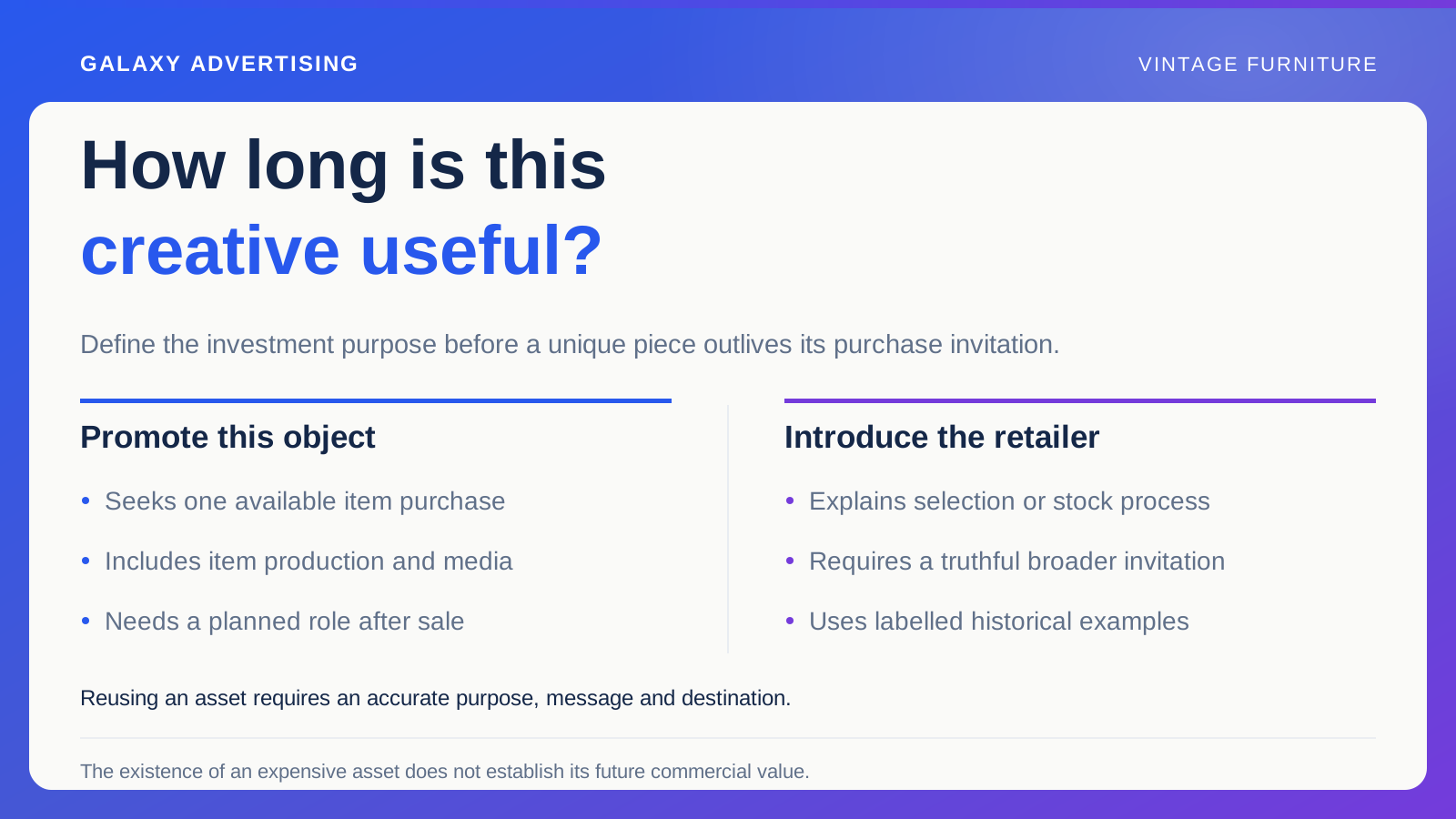
Restoration isn't automatically value creating in every case. Ask whether the prepared item supports a worthwhile sale under the actual offer. The effort already invested doesn't establish that further advertising deserves funding indefinitely. You still need to judge the next investment on its merits.
Include what completing the sale requires
Check the fulfilment arrangement for the object. A large cabinet can require different handling and delivery work from a small side table. Where that materially affects contribution, it belongs in the discussion about what the sale can afford.
Review the actual service promised to the customer. Don't assume the cost of a standard shipment if that isn't what you're supplying. Marketing and operations need to identify the same delivery basis when looking back at the order.
Keep exceptions visible. An unusual destination or agreed service change can alter the final economics even when product revenue stays unchanged. That doesn't necessarily make the original marketing decision wrong. It does mean the changed obligation needs to remain in the review.
Decide how much needs to remain
Once you've identified the agreed relevant costs, decide what your business needs to retain before assigning an advertising allowance. That depends on your operating model and commercial judgement. Another retailer's comfortable figure doesn't settle yours.
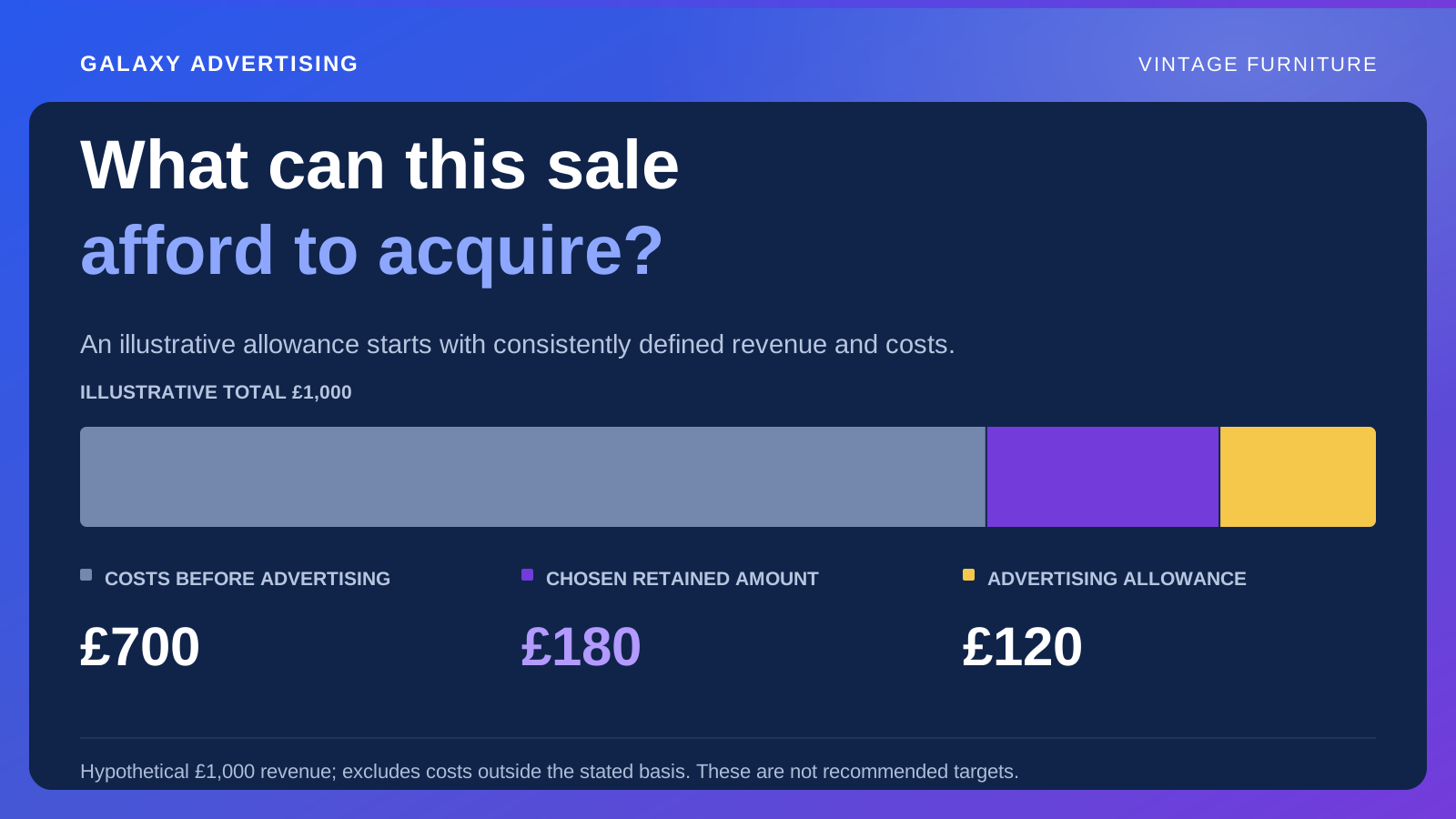
Take this hypothetical example. Consistently defined revenue for an item is £1,000 and the relevant costs before advertising are £700. That leaves £300 on this basis. If you choose to retain £180, the advertising allowance is £120 under those assumptions.
These are illustrative figures, not recommended targets. They exclude anything outside the stated cost basis. What matters is the visible relationship between the order, the obligations attached to it and the amount you're prepared to pay to acquire it. You can question each part of that calculation.
Ask what holding it longer means
An unsold piece may keep occupying space and needing care or handling. Consider those practical consequences when choosing between revising the offer, improving the listing and funding more promotion. Continuing to hold it is part of the decision too.
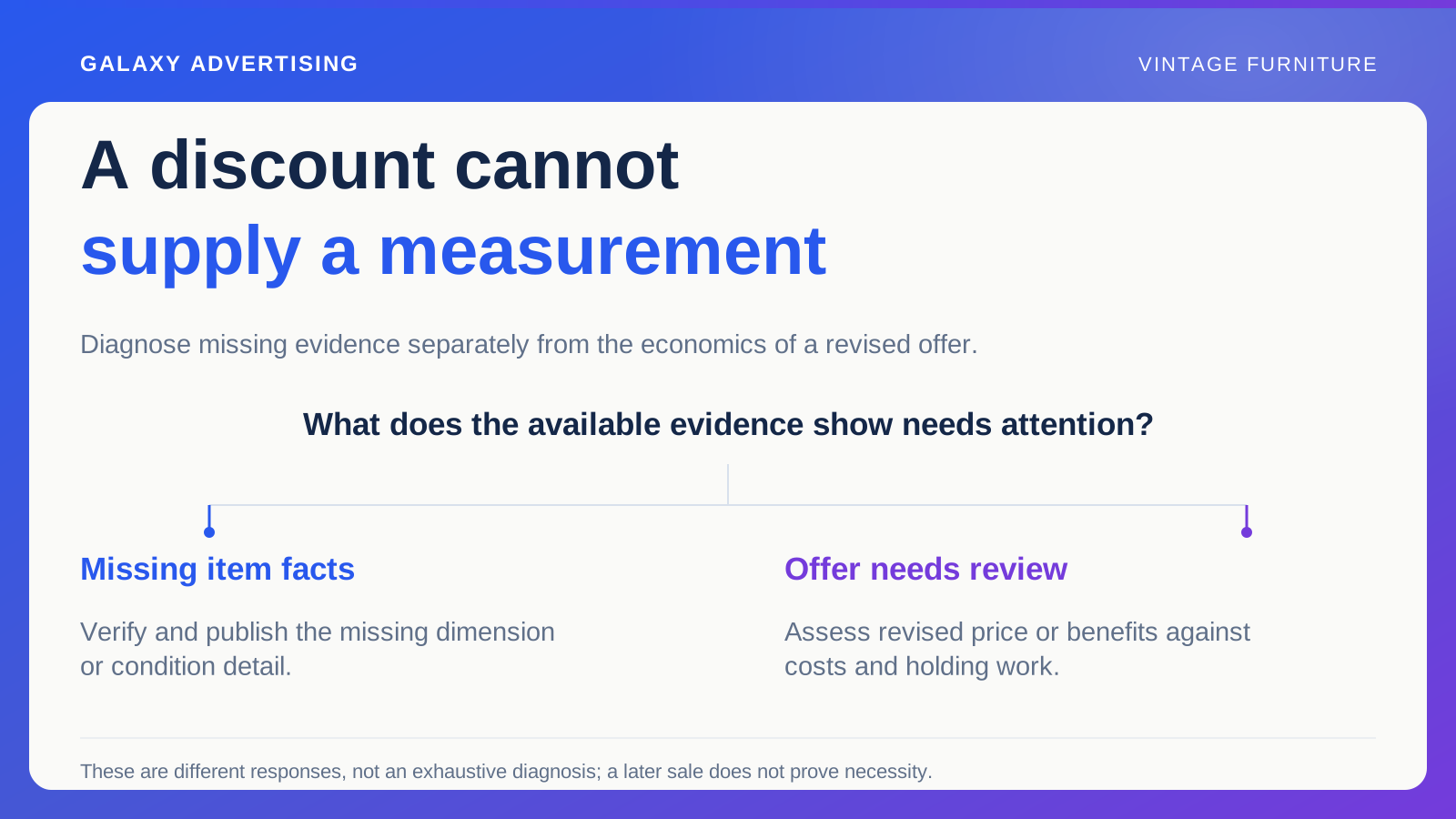
Time held isn't an automatic instruction to discount. Perhaps customers don't understand the object because an important detail is missing. Perhaps it is reaching unsuitable interest. Those explanations call for different actions from reducing the price, so diagnose before choosing the remedy.
Equally, buying it in the first place isn't a reason to keep funding the same approach without review. Judge your available options now, including the cost and uncertainty of continuing to pursue the sale under the existing proposition. The next decision still needs a reason.
Read the item result beside the wider programme
With a unique piece, there is only one sale available, so an individual result can be unusual. Use item records to understand its economics. Don't turn one attractive transaction into a universal acquisition target for the whole assortment. It cannot carry that much evidence.
Look for patterns across comparable preparation and fulfilment circumstances. Grouping should help you make a commercial decision, rather than simply collecting objects sharing a decorative style. The useful comparison may sit somewhere other than the catalogue category.
Keep exceptions that explain the pattern. Particularly expensive restoration or special delivery can matter more to contribution than a broad category name. Help the buyer and marketer recognise those differences before they commit further resources.
Store the eventual preparation record beside the original estimate. If restoration took longer than expected, the difference can inform the next buying decision. Don't let it disappear into general business expense where marketing never sees the learning.
Put the next investment decision on the record
Choose the next move: improve the item's information, revise its offer, pursue a defined promotion or reduce further investment. Explain the evidence and uncertainty supporting that choice. An explicit decision is easier to assess than an open ended intention to keep trying.
Record the product reference and commercial assumptions so you can compare the later sale with the original decision. If the outcome changes, investigate which conditions changed. The object eventually selling doesn't, on its own, establish that the campaign was successful.
Useful advertising supports your judgement about inventory. It leaves you able to explain why the next piece deserves investment, without pretending demand is predictable or costs are perfectly known. The real work belongs in the calculation, even when the markup looks lovely without it.