A unique item's stock status changes what your advert can honestly promise. Yet when new vintage pieces arrive, it's easy for the cabinet that photographs beautifully to get the first creative, while a smaller table with a complete listing and straightforward delivery is overlooked.
Visual appeal matters. It just doesn't establish campaign readiness on its own. You need an accurate record, a credible purchase route and a commercial reason to pay for attention. Choosing deliberately makes the programme easier to operate and the results easier to understand.
Start with the stock you actually have
Identify which pieces are available, reserved, still being prepared or already sold. Use the status record your business maintains. An informal selection of photographs sent to marketing isn't a dependable view of what customers can buy, however attractive the images are.
If several people can change an item's status, agree how the campaign owner receives a reliable update. Selecting suitable stock is only part of the job. You also need a way to maintain that selection as the offer changes.
Keep the identity stable through photography, listing and promotion. Similar descriptions create room for mistakes when pieces share a material or general style. A reference everyone can use helps more than a memorable nickname understood only by the buying team. The right facts must stay attached to the right object.
Would a new customer understand the listing?
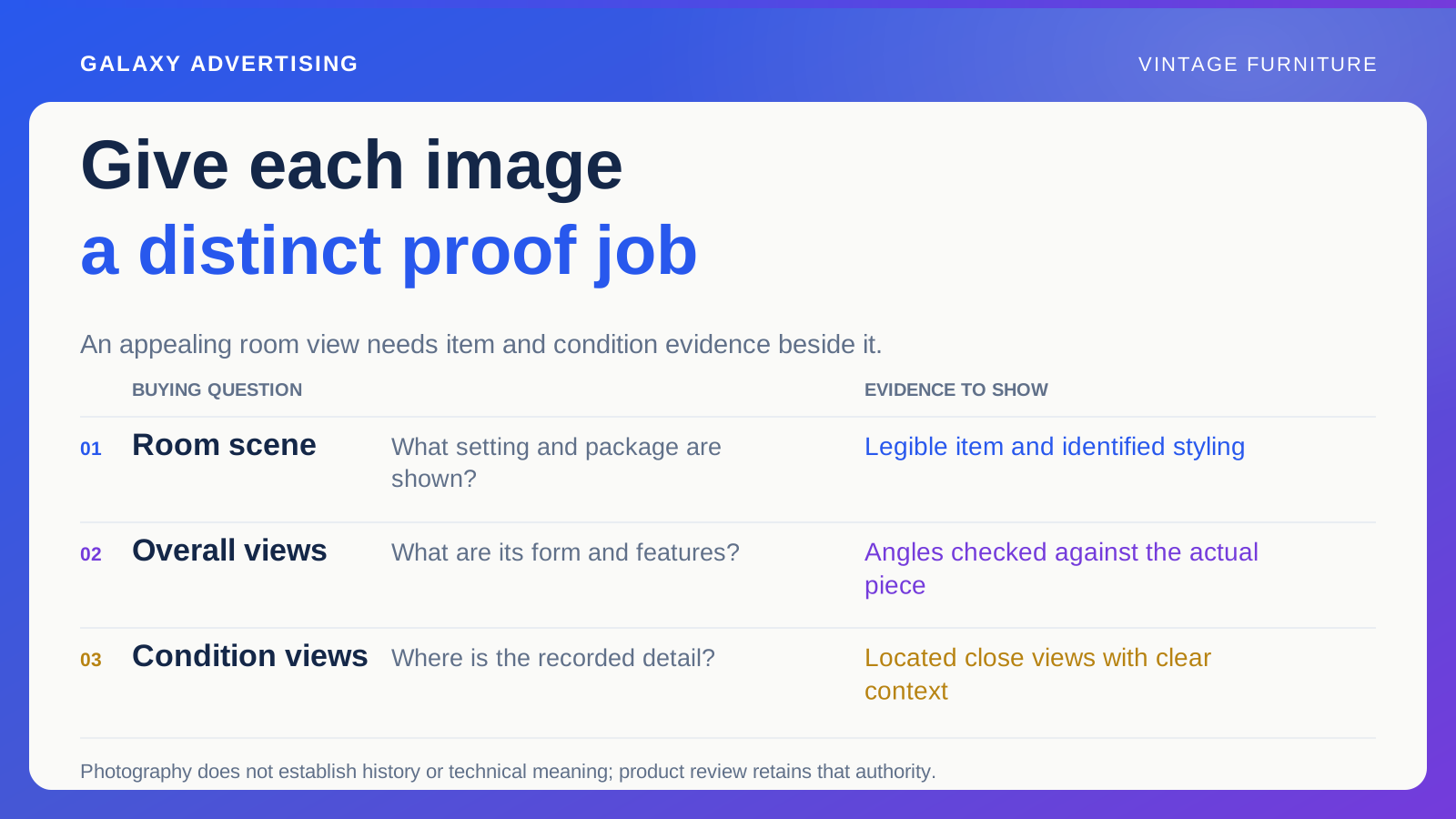
Review photographs, dimensions, condition and relevant restoration information for the actual item. Ask what someone unfamiliar with it can establish without contacting you to fill a preventable gap. Your team's knowledge shouldn't have to do invisible work on the page.
A striking piece may still be unready because attribution is uncertain or condition evidence incomplete. Create a preparation task. Don't rush out a confident description merely to meet the campaign schedule. More attention won't make the evidence stronger.
Tell the person preparing the listing what acceptance requires. Perhaps a surface detail needs photographing, or the wording must distinguish documented history from interpretation. The aim is an accurate offer. Adding length to the page isn't, by itself, evidence that you've solved the gap.
Explain why someone would consider this piece
Describe the practical or aesthetic decision it could serve without inventing a narrow personality profile. A compact desk may suit someone furnishing a limited workspace. A substantial cabinet may demand more thought about dimensions and delivery. Those are useful buying tasks to explore.
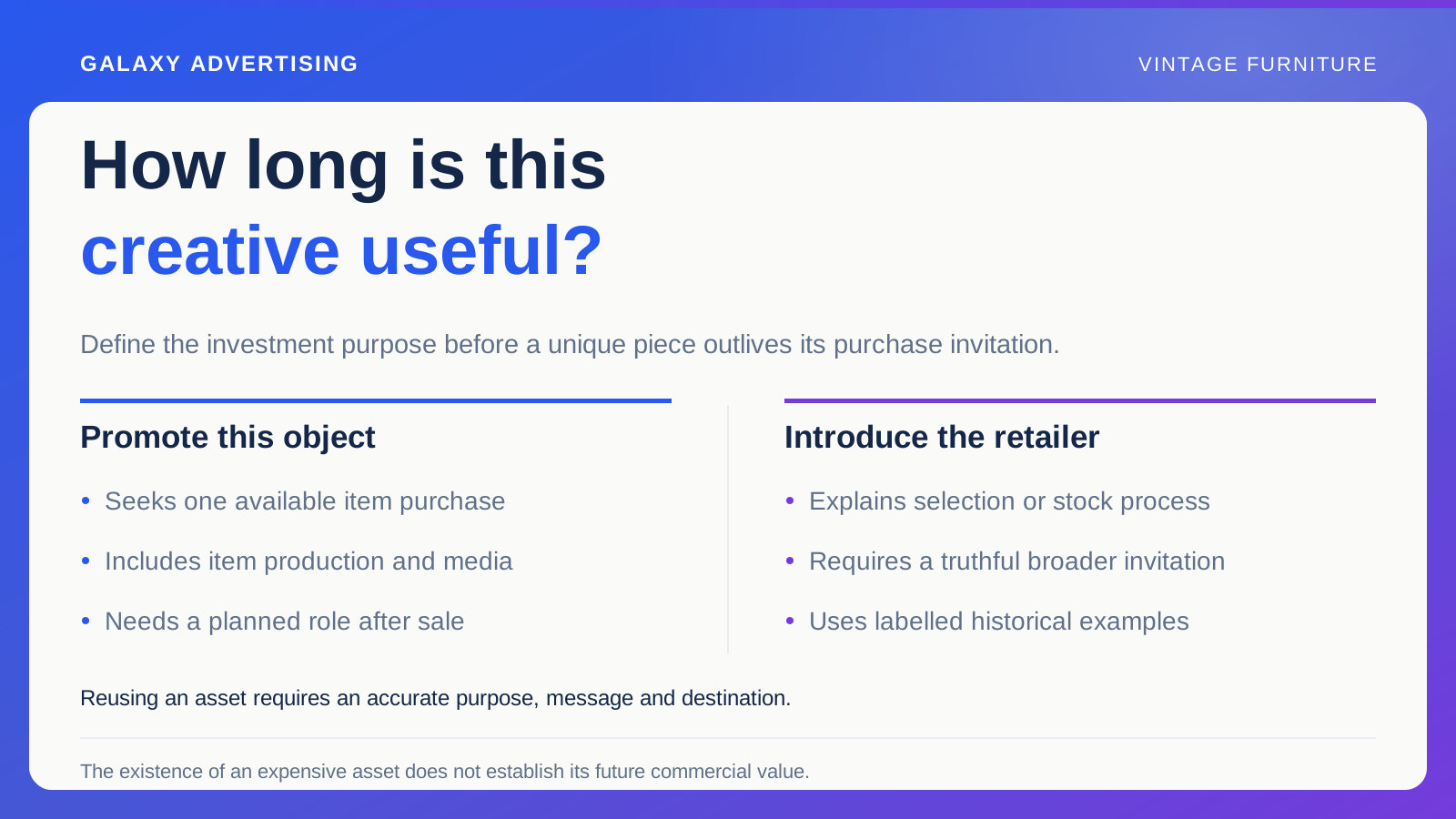
Let that task guide the creative argument and destination. It doesn't tell you exactly who will buy, or guarantee that a particular targeting setup can find them. Keep your marketing hypothesis separate from a claim to complete audience knowledge.
Avoid giving every object the same promise about character and craftsmanship. Those words can belong in your voice, but they don't explain why someone should inspect this particular piece instead of another available option. Make the reason specific enough to assess.
Compare what the sale could leave behind
Review relevant costs and expected contribution, the money remaining after the costs included in your calculation, using agreed business definitions. Similar headline prices can conceal different preparation and fulfilment costs. Those differences can materially change the value of a sale.
Show where you're estimating. You may not have enough precision to rank every item mathematically. You still need enough understanding to spot differences that would change the investment decision. An honest limit is more useful than a ranking that implies certainty you don't have.
Don't automatically favour the highest price. An expensive object with substantial unresolved obligations may be less ready than a more modest one with a clear offer. You're pursuing worthwhile sales, rather than assembling a campaign whose advertised prices look impressive together.
Check what happens after someone responds
Ask operations what completing a suitable sale would require. Understand delivery, handling and likely customer questions before buying more attention. These are part of readiness, even though they aren't visible in the creative asset.
If individual clarification is necessary, make that route usable and give it an owner. An enquiry requirement isn't necessarily a fault with unique stock. An unanswered or poorly routed enquiry can, however, undermine an otherwise accurate listing. Somebody needs to carry the question forward.
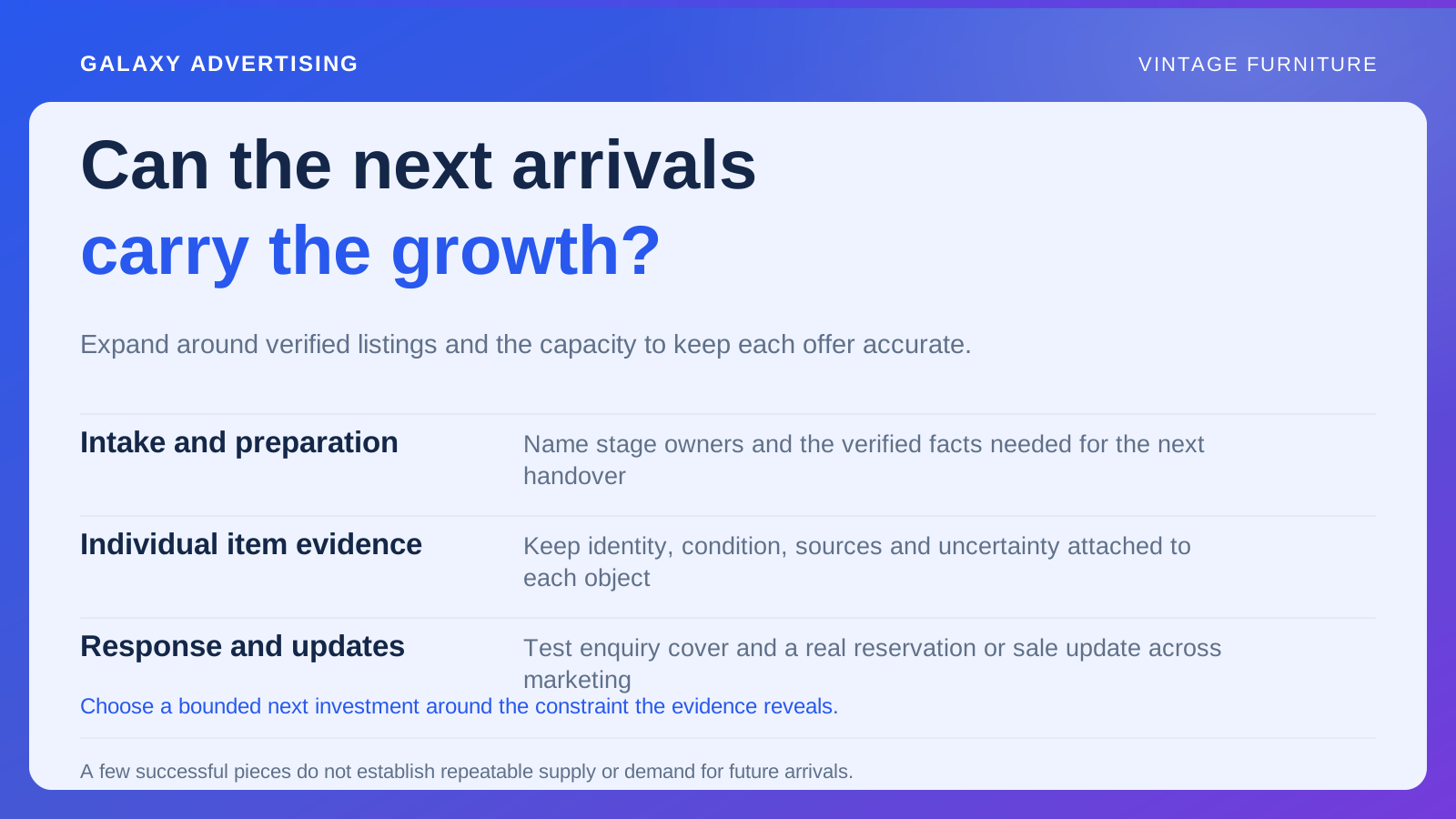
Check that your team can support the demand you're inviting. A small retailer may sensibly promote fewer pieces so staff can provide the required individual responses. Readiness includes the work after the click, as well as the photograph before it.
Give promising but incomplete pieces a way forward
Distinguish unsuitable investment candidates from promising objects needing specific work. A missing internal measurement can be taken. An unsupported attribution may need different wording. An unresolved commercial issue needs a buying or operating decision. These aren't the same kind of obstacle.
Record the task, its owner and the condition for reconsidering promotion. Otherwise a strong piece can disappear indefinitely because it wasn't ready at one selection meeting. Preparation should create a route back into consideration, rather than a vague waiting list.
Keep the work proportionate to the opportunity. Not every arrival needs elaborate room production. Accurate photographs and a clear condition explanation may address the real gap. Let that evidence guide the budget rather than applying a fixed production package to every item.
Include the person handling customer responses in the final selection. They can identify whether answers to likely practical questions are ready. Better to uncover the gaps here than once the campaign has started generating enquiries the team cannot yet answer.
Keep the selection connected to changing stock
Maintain a current promoted inventory list and compare it with the underlying status record. When a piece sells, its campaign role changes. Decide deliberately what the associated adverts or destinations need to do. A good initial selection doesn't maintain itself.
Use results to improve future choices. Perhaps a question repeatedly delays certain objects, or a type of preparation makes listings easier to understand. Preserve that learning without assuming every future piece in the category will behave identically.
The buyer knows the object. The marketer needs a useful route for the customer. Bring those views together and paid attention goes to pieces whose promise you can explain and fulfil. The unfinished opportunities stay visible as work to do, rather than being forgotten while the most photogenic arrival decides the programme.