What if your vintage sideboard sells, then nobody can establish which condition detail was visible when the customer reviewed it? You may have the facts somewhere among messages and photographs. That isn't quite the same as having a coherent record of the offer.
A compelling description and fresh images don't solve that gap on their own. Treat the sales page as a presentation of an underlying item record. Keep verified observations, relevant sources and current status together, then make them usable for a new customer without losing the distinctions that matter to the purchase.
Give this object a reference that stays with it
Assign an item reference consistent across inspection, photography, listing and promotion. It should identify the particular piece, rather than a general style that could describe several arrivals. Everyone needs a dependable way to know which object a fact belongs to.
Use it in filenames and internal conversations. “Cabinet final” becomes less helpful once another cabinet has a final image too. Stock changes. A stable identity helps prevent accurate information being attached to the wrong piece when somebody is working from a busy folder.
Keep older versions traceable where they matter to the offer. If condition wording or a restoration record changes, retain what was revised and why. The aim is a usable commercial record. An elaborate archive nobody can maintain wouldn't serve that purpose well.
Distinguish what you can see from what you attribute
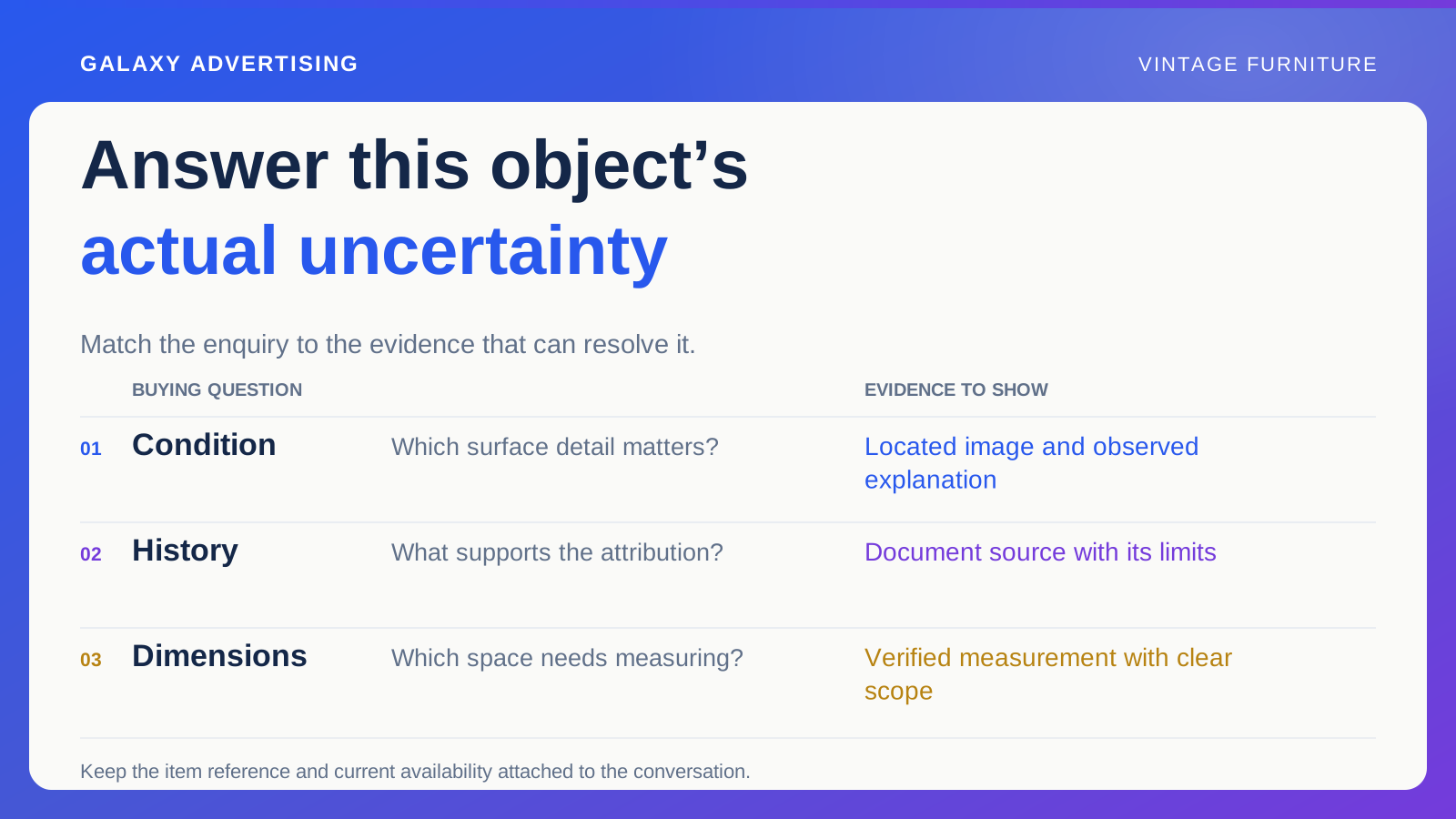
Record direct observations, documented information and interpretation separately. Material appearance, a visible mark and a maker attribution don't necessarily share the same evidential basis. They shouldn't acquire equal certainty just because they sit together in the item description.
Carry that distinction into the public page. You can offer a reasonable stylistic interpretation with its limits. Don't present it as an established fact merely because more confident sales copy sounds better. The wording needs to stay connected to what supports it.
If a claim depends on a document or marking, keep the reference with the record. Someone making a future advert should be able to understand the source without reconstructing a conversation with the original buyer. That context needs to survive the handover.
Make condition details easy to locate
Create a condition record for the actual piece. Combine images and wording so a customer can identify the area being described. Broad labels such as good or excellent cannot do all the work when a particular detail matters to someone's decision.
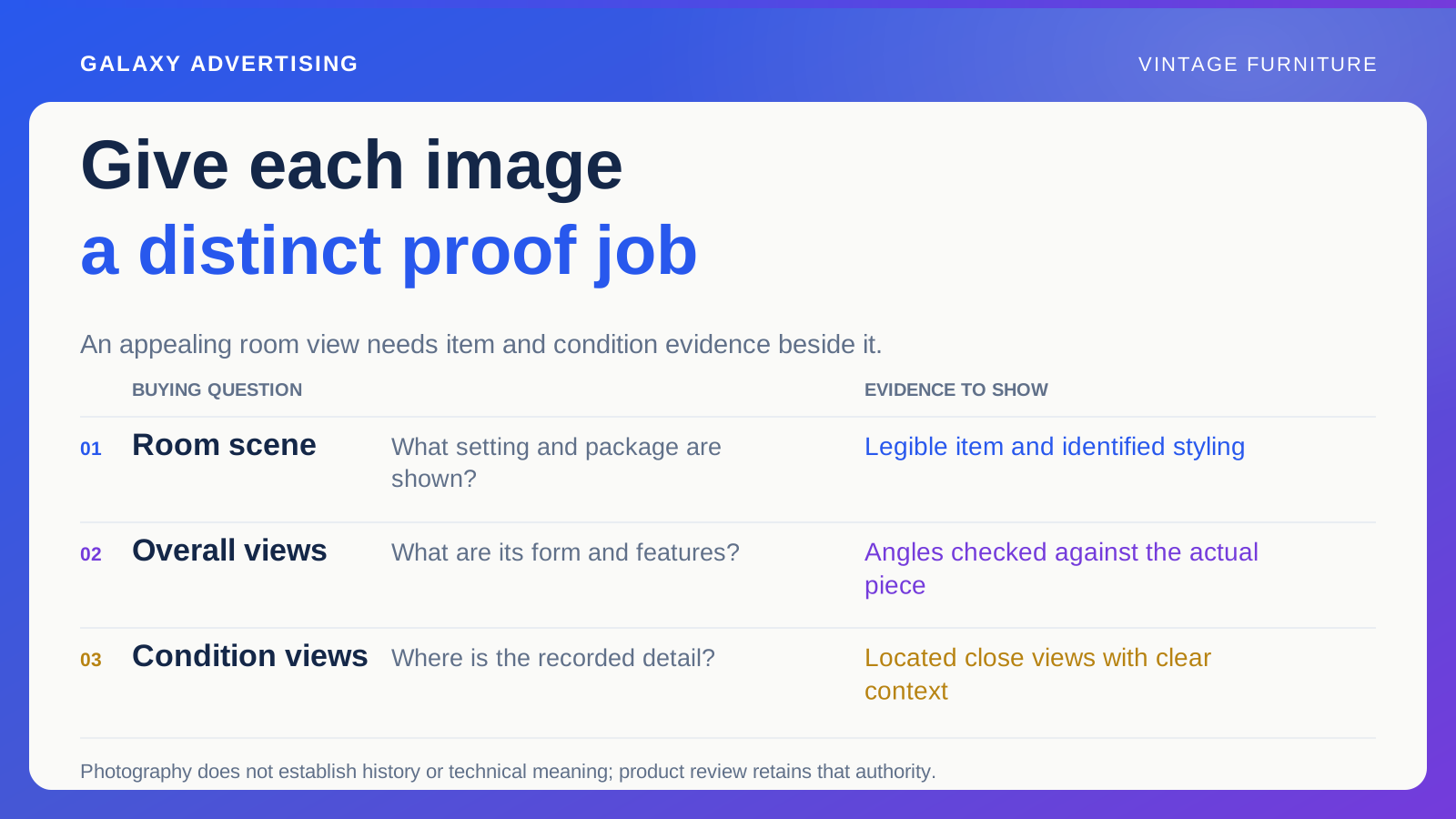
Connect overall views with detail photographs. The overall image helps someone understand the object; the close view supports an observation. A close image without context can be as confusing as a lovely room scene that hides the relevant surface. The connection matters.
Avoid treating every visible mark either as a dramatic defect or as character everybody must appreciate. Give an accurate basis for judgement. Different people can reasonably reach different purchase decisions from the same well presented evidence. The record doesn't need to decide their preference for them.
Record restoration without completing an unknown history
Identify work you can verify and explain its relevance to the current object. If earlier work is uncertain, retain the uncertainty. Appearance alone isn't enough to write a comprehensive restoration story, however plausible that story might feel.
Keep terms consistent between the item record and public listing. A brief promotional phrase shouldn't imply more extensive intervention than the detailed evidence supports. Pay particular attention when shortening copy, because qualifications can disappear while the confident claim remains.
When a customer asks for technical information beyond the verified record, send the question to someone able to inspect or establish it. Resolve the specific need. Don't improvise reassurance simply because the customer seems ready to buy and an answer would keep things moving.
Label measurements by what they describe
Provide relevant documented dimensions and explain their scope. Overall measurements may not answer questions about internal storage, working surface or a particular opening. A figure is useful only when the customer knows which decision it can support.
For a hypothetical cabinet, someone may need the space inside one compartment. Record that separately if measured, identifying any approximation. A convenient rounded figure mustn't become an exact specification through repeated use. Keep the status of the information visible.
Add new verified measurements to the item record. An answer given during one enquiry can improve the listing for the next customer. That deepens information efficiently because the extra detail follows a real buying question, rather than a general instruction to write more copy.
Keep availability inside the information process
Show current status accurately and agree who updates it when the piece is reserved or sold. Unique stock can't remain presented as continuously purchasable while marketing catches up. The status is part of the offer, rather than a separate administrative detail.
Review active promotions and related links when it changes. A correct sold label on the product page doesn't automatically make every connected advert accurate. Follow the wider route deliberately rather than assuming the page correction completes the job.
If you retain the historical page, preserve useful information while making the purchase position clear. Customers shouldn't need to infer availability from a missing button or an old caption elsewhere. Tell them what the current status means.
Review image order too. A relevant condition detail may be present yet effectively disconnected if the reader can't identify its location. The record and presentation need to work together. Merely containing the same files doesn't establish that they communicate the same thing.
Check the presented offer against the record
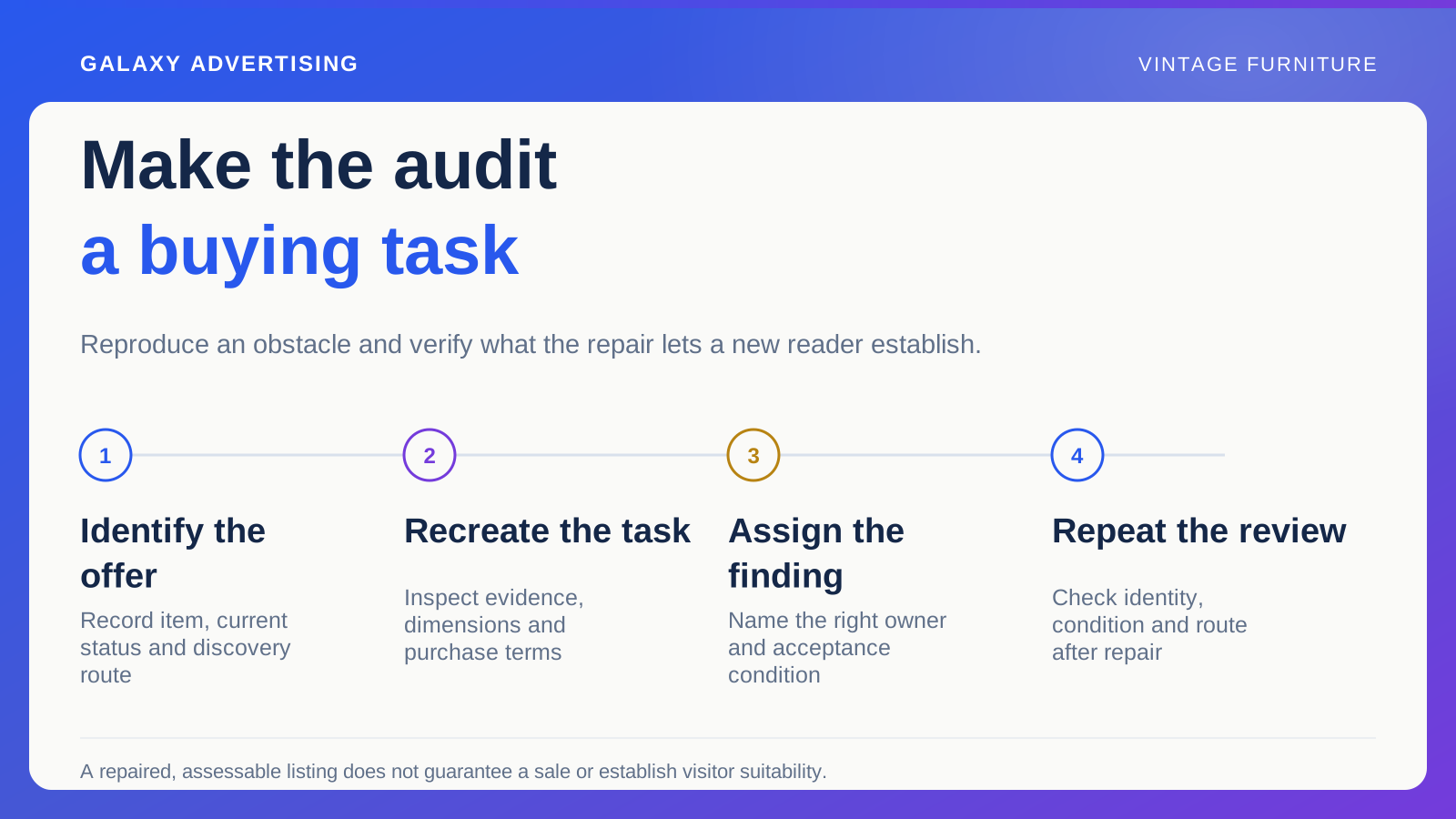
Compare the draft page with the underlying record and, where necessary, the actual piece. Images, dimensions, condition wording and relevant sources should concern the same object and version. Check that connection before treating the listing as ready for promotion.
Ask an unfamiliar reviewer what they understand to be known, uncertain and included in the purchase. Their interpretation can reveal an implication the production team missed. Correct that gap before the page becomes campaign ready.
A dependable listing can stay concise while being detailed where it counts. Its credibility comes from the record behind it. When the presentation stays connected to that record, customers have firmer ground for their questions and expectations than any amount of attractive but untraceable description can provide.