 ChatGPT Ads
A coffee equipment concept lands in front of you looking like an assistant response recommending your brand. It feels familiar in a conversational setting. But that familiarity creates the problem: the paid message appears to belong to the answer, rather than to your business.
Keep the advertiser visible. Your brief needs a useful reason for someone to investigate, supported by the product destination. You can make an honestly identified offer relevant and understandable without disguising the sales message as advice from somebody else.
Give the asset one clear job
Describe the decision you want a suitable customer to make. A hypothetical coffee equipment offer might help someone compare machines for a small kitchen while understanding which equipment comes with the purchase.
That's more useful than asking for awareness or high engagement. It tells your writer which product difference matters, and gives the reviewer something concrete to judge. Does the asset communicate that difference?
Choose a main argument. Compactness, professional performance, easy maintenance, low cost and prestige in one brief can easily become a string of unsupported adjectives. You can develop further arguments later. Each asset still needs a job the team can explain without reading out a list of ambitions.
Make it clear that the retailer is speaking
Write as your business introducing its own offer. A paid placement doesn't establish that ChatGPT has selected, approved or independently endorsed you. Neither the language nor the visual should suggest that relationship.
OpenAI's advertising policies require advertisements to be distinguishable from the product experience and prohibit misleading affiliations. Treat that as a boundary for both copy and imagery. Imitating a chat interface isn't necessary to make your proposition relevant to a conversation.
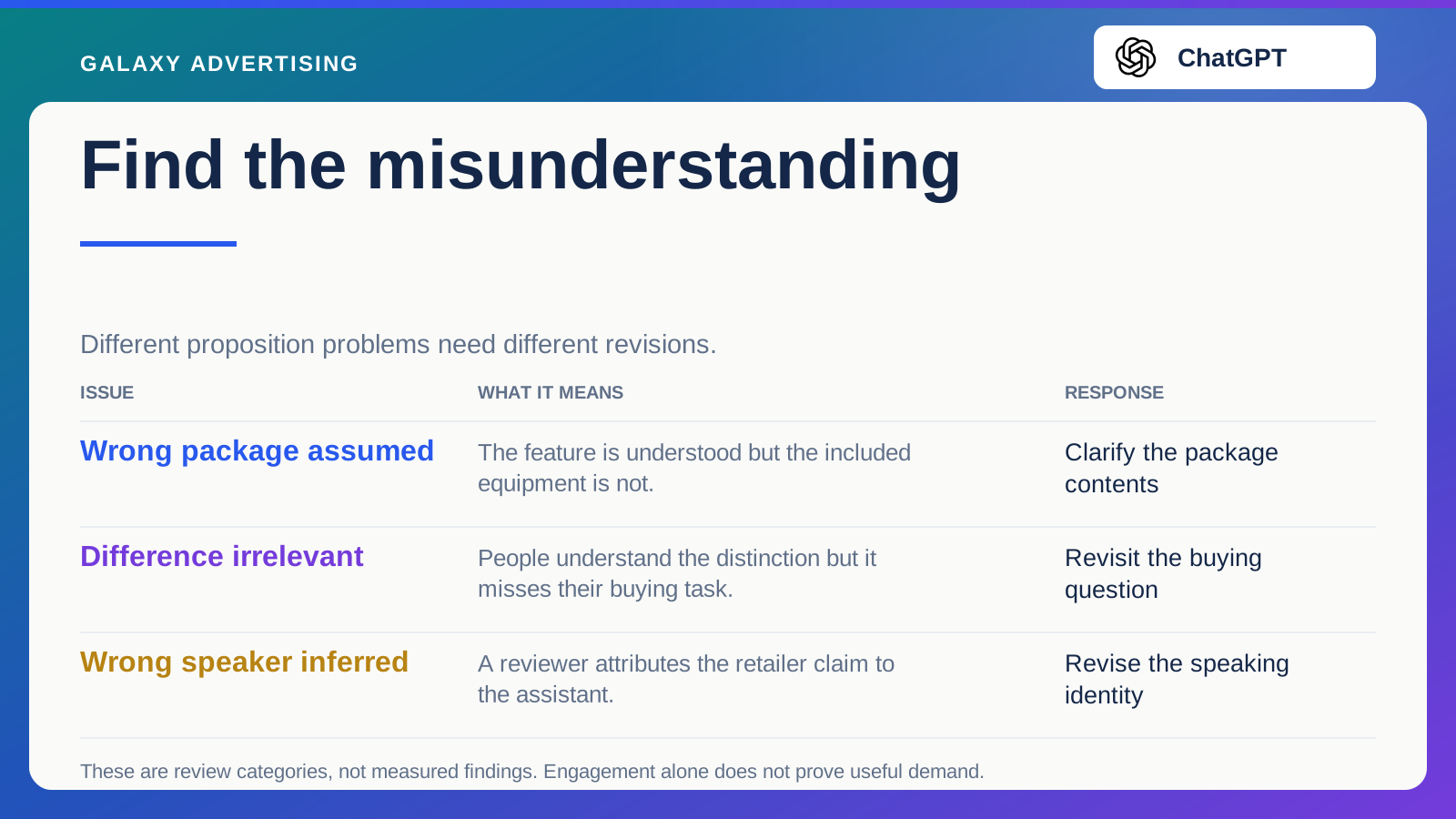
Ask an unfamiliar reviewer who they think is speaking. If they attribute the claim to the assistant, revise the concept. This is a clarity check you can do before a single campaign result exists. You don't need performance data to discover that the wrong speaker is being understood.
Put a supported difference at the centre
Identify the fact that makes the offer worth a closer look. For the coffee machine, that could be documented dimensions, supplied equipment or an accurately described maintenance arrangement. Give the message something firmer than praise to stand on.
Connect the fact to its practical consequence. A compact footprint matters when space is limited. But the customer still needs actual measurements and relevant operating clearance information from the proper source. “Space saving” cannot do the job of those facts.
Keep qualifications that change the meaning. If the picture shows an optional grinder, the package mustn't imply it comes included. Prevent that contradiction in the brief. Don't leave an editor trying to repair the overall impression with small text afterwards.
Ask the image to explain, too
Choose imagery that identifies the advertised model and its relevant difference. A lifestyle scene can provide context. It shouldn't obscure the product or give an unrealistic impression of scale or use.
Supply approved product references. Specify which components, materials and controls must stay accurate if the image is retouched or placed in another scene. Judge the result against those references. Looking convincing isn't proof that it depicts what you sell.
Confirm the asset requirements available to your actual advertiser account. A format familiar from another platform might be unavailable or inappropriate here. Your account manager needs to confirm the intended output before production commits to a composition you may not be able to use.
Put the destination inside the creative brief
Name the page and say what the customer should find. Someone attracted by the compact machine should be able to identify it and inspect the measurements without searching your entire catalogue. The brief should make that expectation explicit.
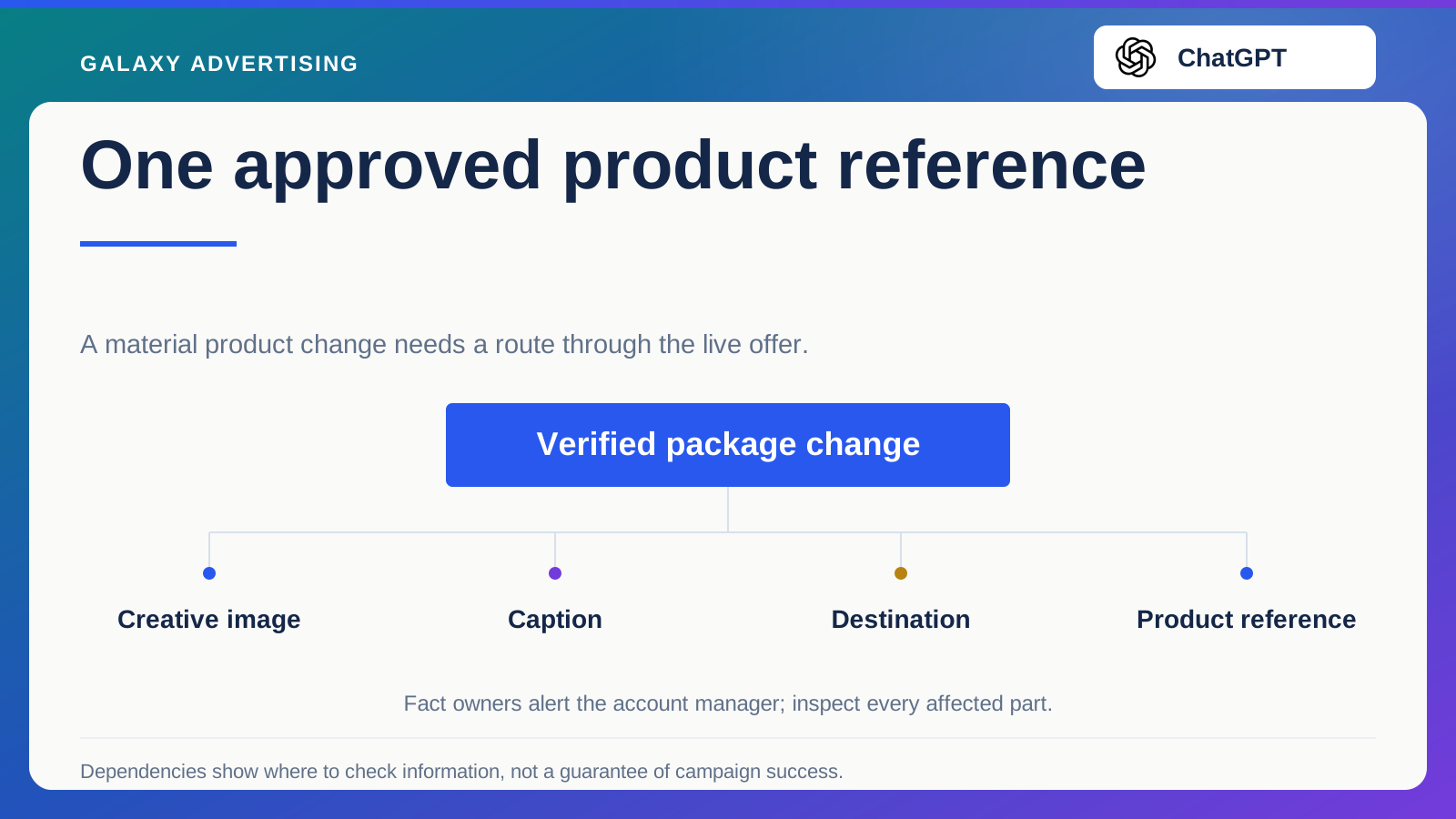
Check title, description, image and page together. Each should describe the same offer, even when someone sees only some elements before clicking. A headline about one benefit, a photograph of another model and a general sale destination don't form a coherent asset.
Give the visitor a useful next step. They might need to compare configurations, the available product arrangements, or get a specific answer before ordering. Support that research while retaining a clear commercial route. Not every visit needs forcing straight towards checkout.
Approve understanding before decorative changes
Show the draft to someone who didn't write it. Ask what is offered, why they might investigate and what they expect after clicking. Listen for ambiguity without coaching them into the intended answer.
Resolve that ambiguity before more decorative work. A prettier image cannot fix a misunderstood package. A shorter headline isn't automatically better if the removed words contain a qualification essential to the offer.
Record the approved version and its factual references. Another writer can then adapt the execution without accidentally changing the promise or introducing a claim the original brief never supported.
Keep rejected interpretations, too. If a draft repeatedly looks like an assistant recommendation, note the exact visual or phrase causing that impression. Give the next creator a concrete boundary, rather than the vague request to be less confusing.
That lets them preserve useful parts of the composition while removing the particular element that changed who the viewer believed was speaking. It's a more workable production instruction than asking everyone to remember an earlier discussion.
Make the next production decision explainable
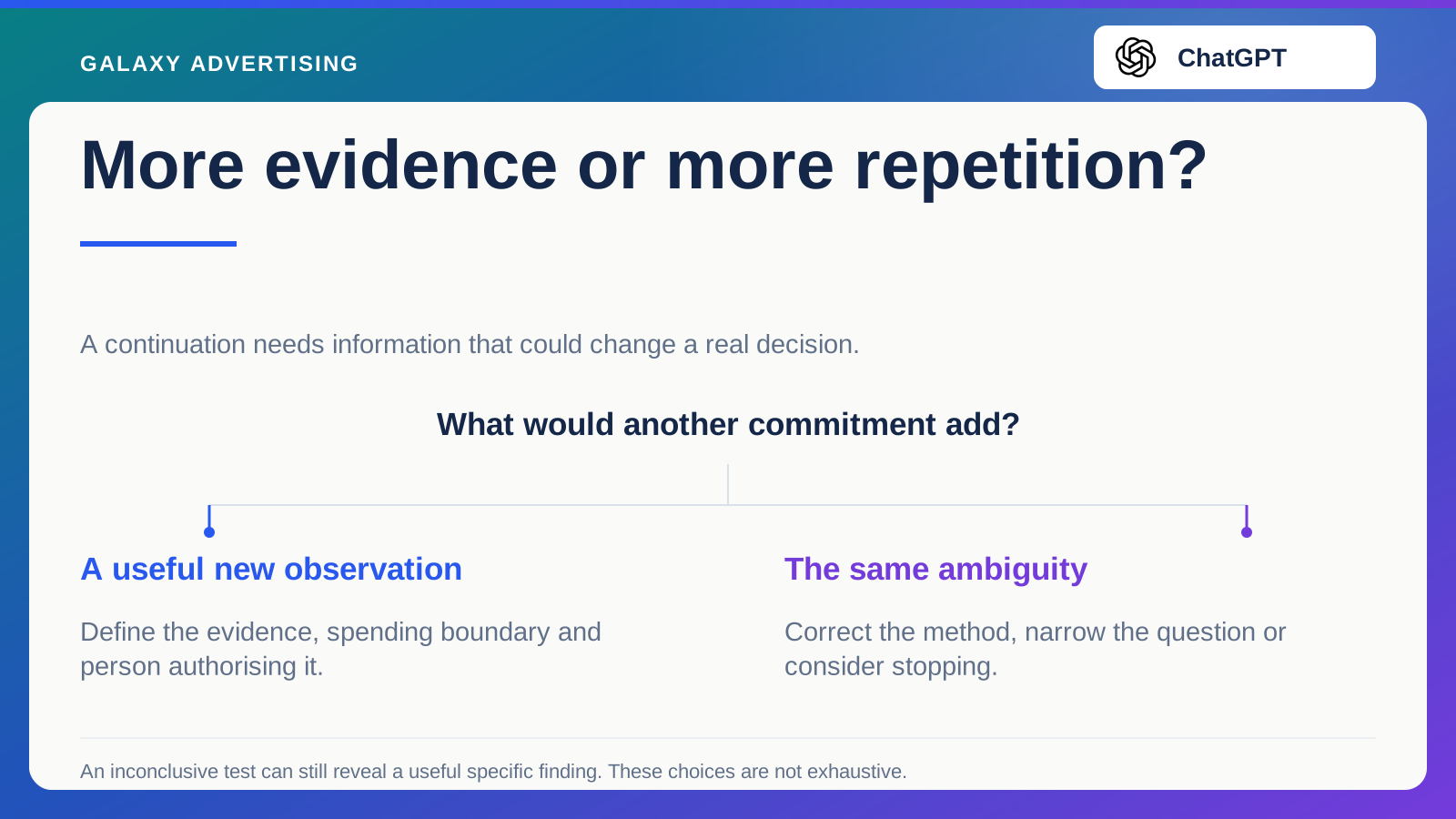
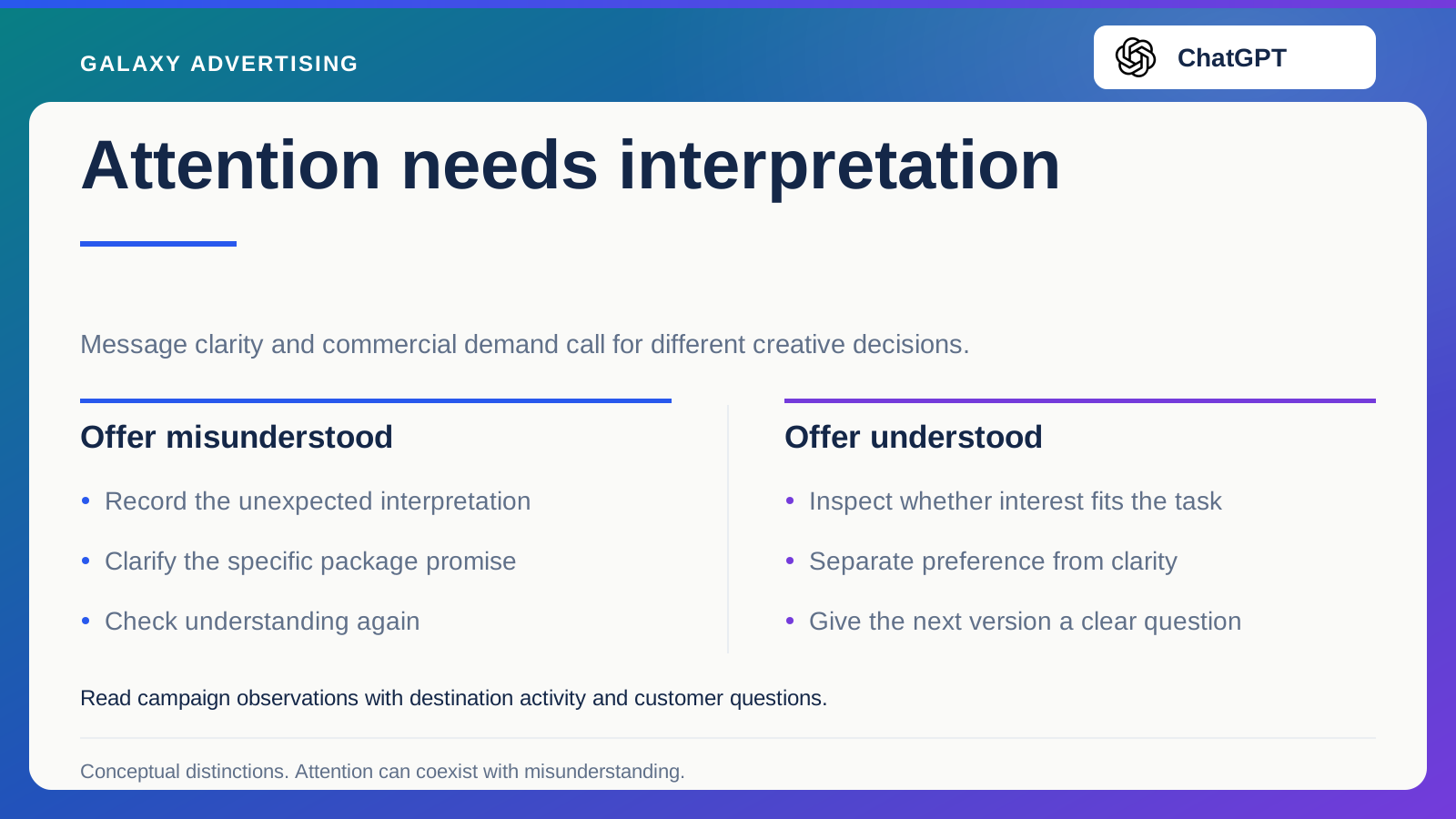
Once the asset is used, review available campaign observations alongside destination activity and customer questions. Did the interest fit the intended task? Then separate message clarity from commercial demand.
People can understand the offer and still prefer something else. Strong attention can also coexist with misunderstanding. Those outcomes call for different changes, so don't collapse them into one verdict on the creative.
Retain what the asset attempted, what you observed and what is uncertain. Let the next version answer a specific question, such as clarifying included equipment. Each advert then remains a statement your retailer can account for, rather than a simulation of a recommendation someone else never made.