 ChatGPT Ads
Can a customer look at your comparison page and tell which differences matter in their room? A projector retailer can list five models, brightness figures, connection labels and prices, yet leave that question unanswered. Supplying data and helping someone decide aren't the same job.
Start with the practical requirement. Explain the differences that change suitability, identify your technical sources and be clear that the retailer is selling the products. You can help someone choose without pretending to deliver an independent verdict on the whole market.
Tell the reader what you're comparing
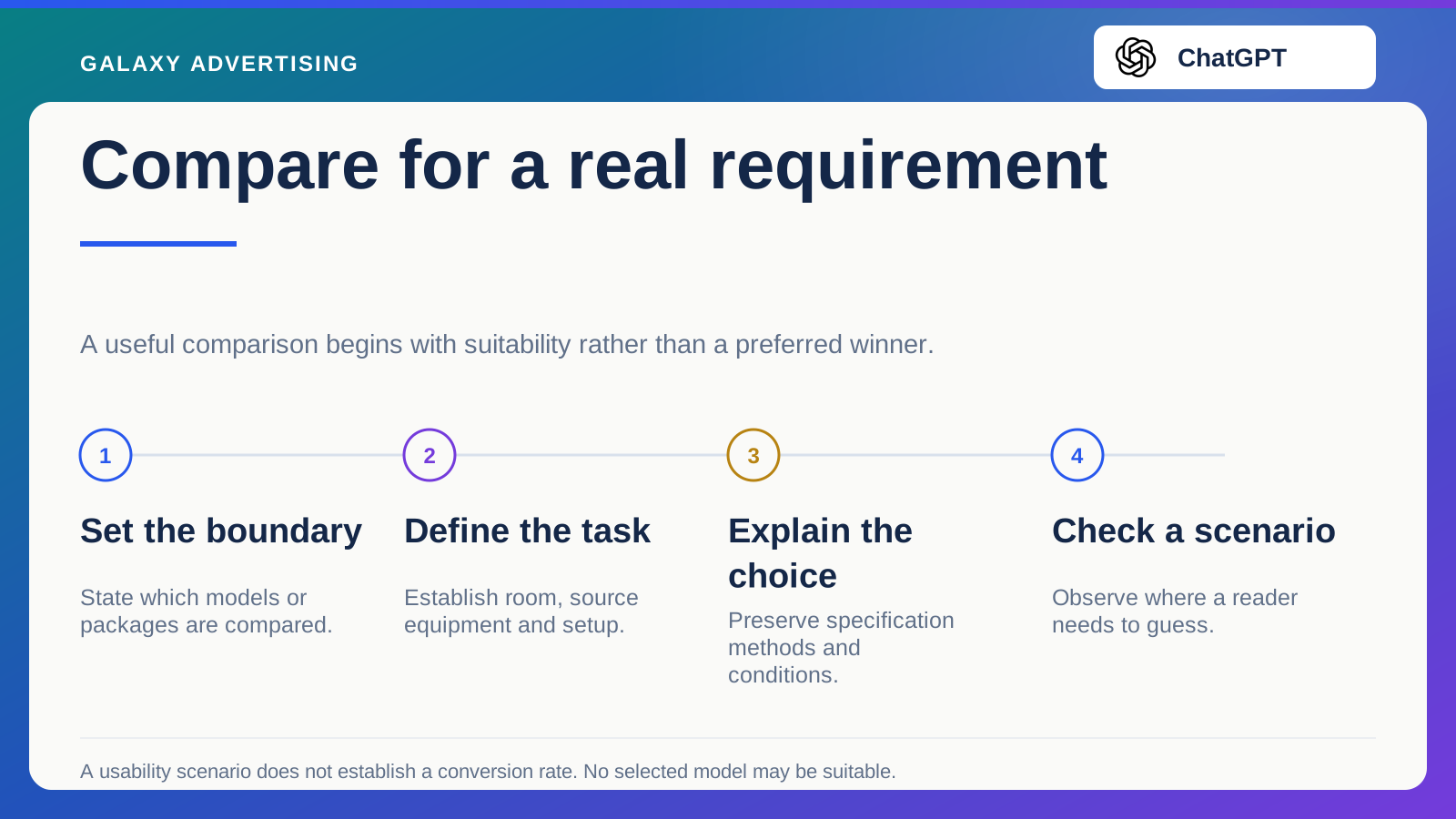
Decide the boundary: models in your range, configurations of one product, or the contents of different packages. A configuration is an available arrangement of options. State that boundary near the start, so someone knows what the selection includes.
If you have considered only stocked products, don't imply comprehensive market coverage. A limited comparison can still be valuable. Its usefulness depends on being honest about its purpose and explaining meaningful distinctions carefully.
For a hypothetical projector range, you might compare three models for different room arrangements. That is a manageable task. Adding unrelated televisions and audio packages makes the page bigger, but can make the original question harder to answer. More choice on the page isn't automatically more help.
Begin with the room and equipment
List what someone needs to establish before comparing. Available space, intended source equipment and the setup they want could all matter. Use manufacturer guidance for technical requirements. Don't replace it with invented universal rules.
Explain the consequence of each requirement. A connection label helps only when someone can relate it to the equipment they intend to use. Define a dimension clearly enough that the reader knows what was actually measured.
Keep specialist advice within your expertise. If suitability needs a more detailed assessment, offer a clear enquiry route and say which information would help. Wanting an immediate answer doesn't make a customer's circumstances simple enough to justify false certainty on the page.
Turn specifications into useful distinctions
For every important difference, explain what it could change in use. The biggest quoted number isn't automatically the best product. A difference that matters greatly to one customer can be irrelevant to another.
Preserve the conditions and definitions in your source. Two similar-looking figures might come from different measurement methods or settings. If you haven't established equivalence, say so. An apparently precise ranking can be less honest than a clearly explained limit.
Choose a small number of useful distinctions for the main comparison. A table containing every available field can overwhelm the reader and hide the differences that affect the decision. Keep supporting detail accessible without asking every technical fact to compete for attention at the top.
Compare what someone would actually buy
Identify the exact model, included accessories and optional equipment. A lower product price doesn't establish a cheaper complete setup when additional components are needed. The package needs to be visible in the comparison, not discovered later.
Keep delivery, installation and support accurate for each offer. Don't paste a general service promise into every row when arrangements differ. Help customers separate differences between products from differences in your packages.
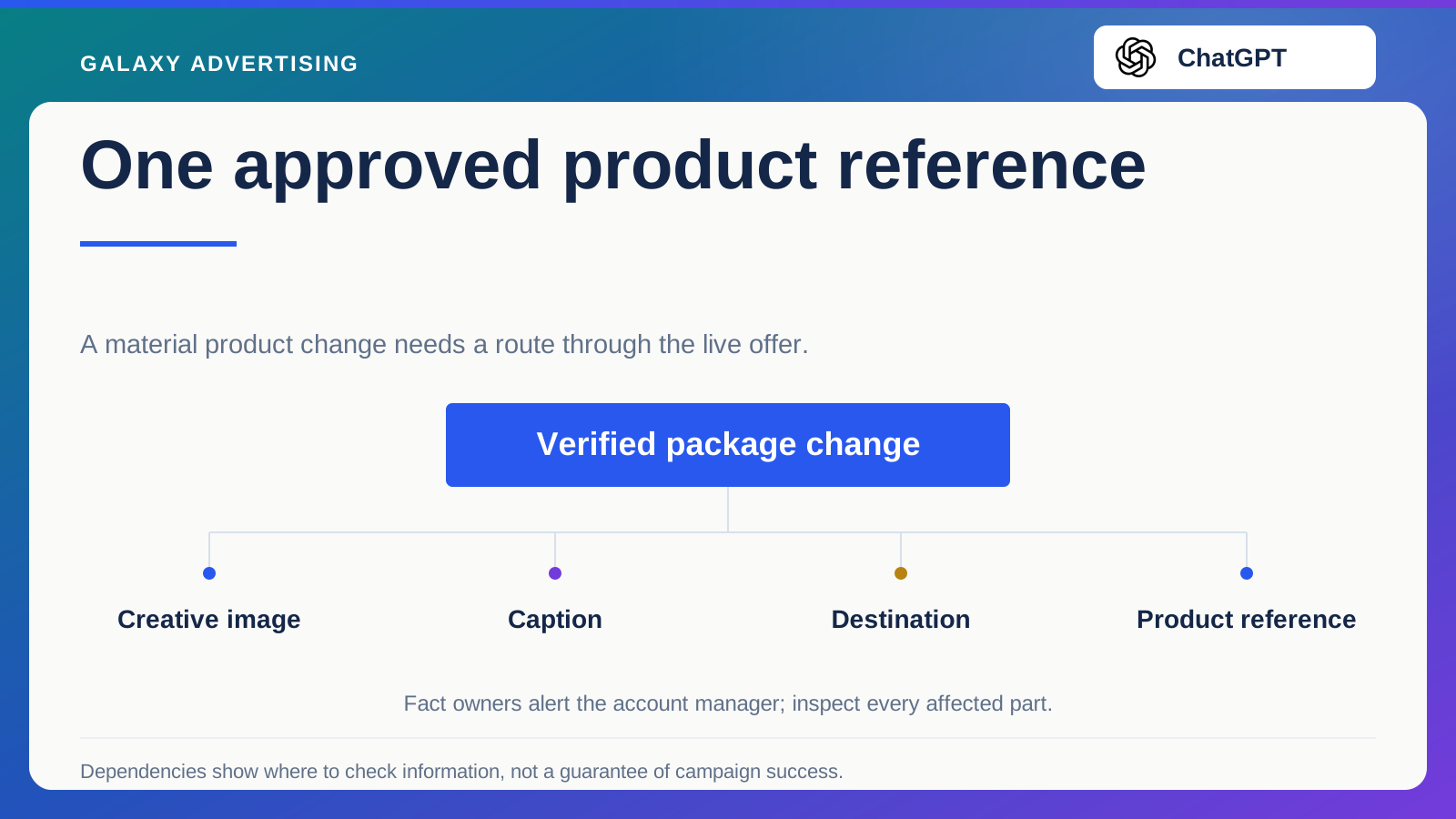
If price or availability changes, have the person responsible for the source update the comparison promptly. A thoughtful explanation loses usefulness when it points people to an arrangement they cannot buy as described. The maintenance responsibility belongs with the page from the beginning.
Keep the advert and comparison on the same task
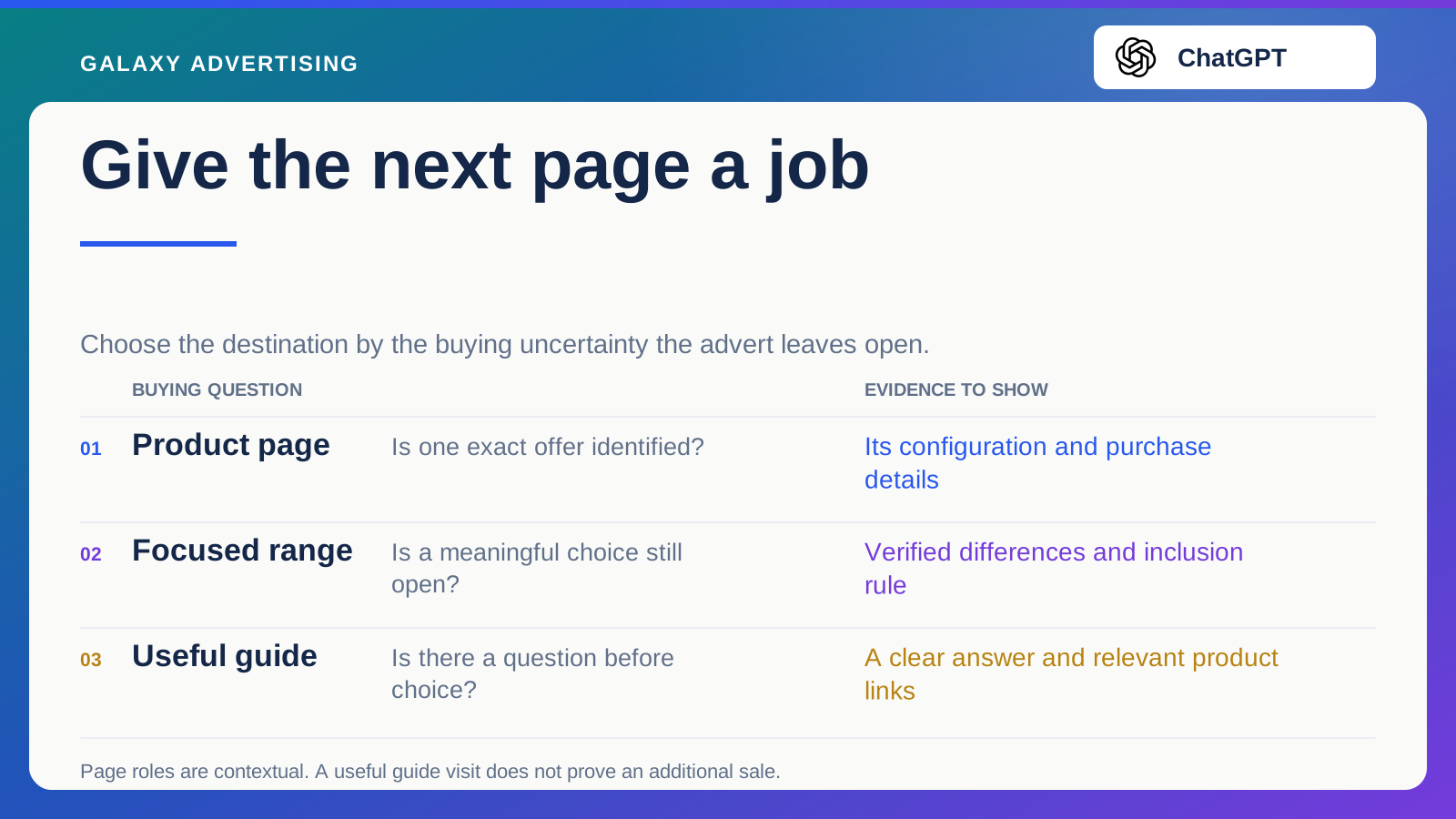
Your advert should describe the comparison accurately. If it promises help choosing compact projectors, open the destination with that task. A generic collection introduction makes the reader find the argument again.
Keep your identity as the retailer clear. You can offer considered guidance and sell the products. There's no need to imitate an independent editorial publication or imply ChatGPT has endorsed the comparison.
Place product links where you explain the relevant distinction. Once someone identifies a suitable model, let them inspect the complete information without searching for a disconnected product grid. Useful guidance and a commercial route can support each other when that route follows the reader's reasoning.
Watch someone try to use the page
Ask somebody unfamiliar with the range to work through a defined scenario. In the hypothetical projector example, give them a room arrangement and source device. Ask what they would need to check before choosing.
Watch where the page supports their reasoning and where it encourages guessing. That doesn't establish a conversion rate or prove all visitors behave alike. It reveals whether your explanation is usable for a plausible task. Keep the conclusion at that level.
Bring recurring questions back to the product team. If people cannot distinguish two models, missing information might be the problem. Correcting the source beats inventing a sharper comparison line that the specifications don't support.
Include an unsuitable scenario. Sometimes the useful conclusion is that none of the selected models meets the requirement. If every route recommends the most expensive option, inspect whether you are explaining differences or disguising an upsell. Helping prevent an unsuitable order can be commercially useful too.
Judge the quality of the next step
After launch, examine available product exploration, enquiries and orders alongside campaign reporting. Define the page's role before judging it only on immediate purchases. A comparison can support a longer decision than a direct product offer.
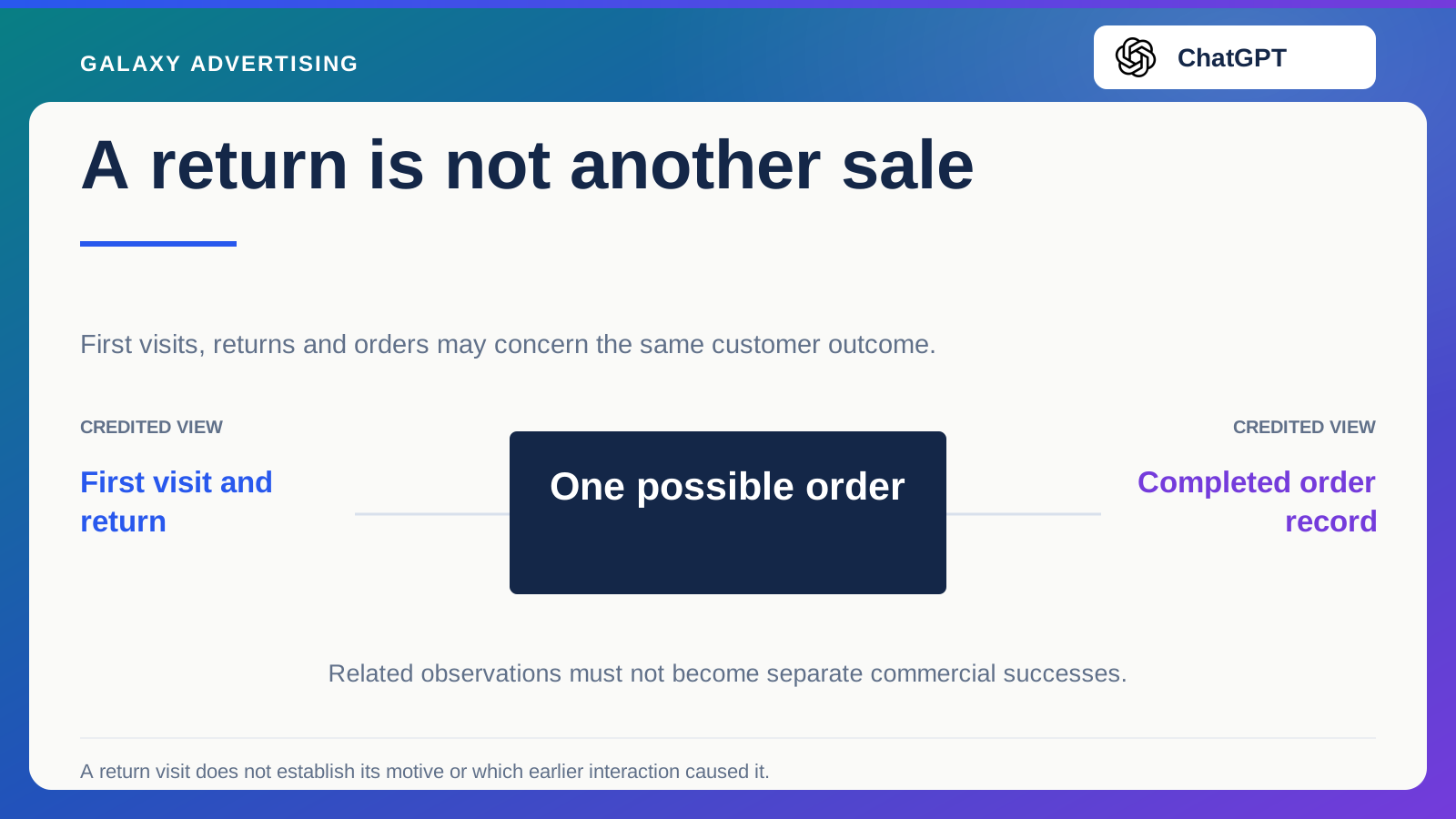
Don't give it credit for every later sale without a defensible measurement basis. Equally, a useful technical enquiry isn't a failure simply because nobody ordered in the first session.
A relevant model, a better informed question or recognition that the range is unsuitable: each can represent a clearer decision. A table declaring one product best without explaining the conditions gives you a weaker foundation for trust and campaign learning. Let the comparison help the customer make the distinction, rather than merely display your preferred answer.