 ChatGPT Ads
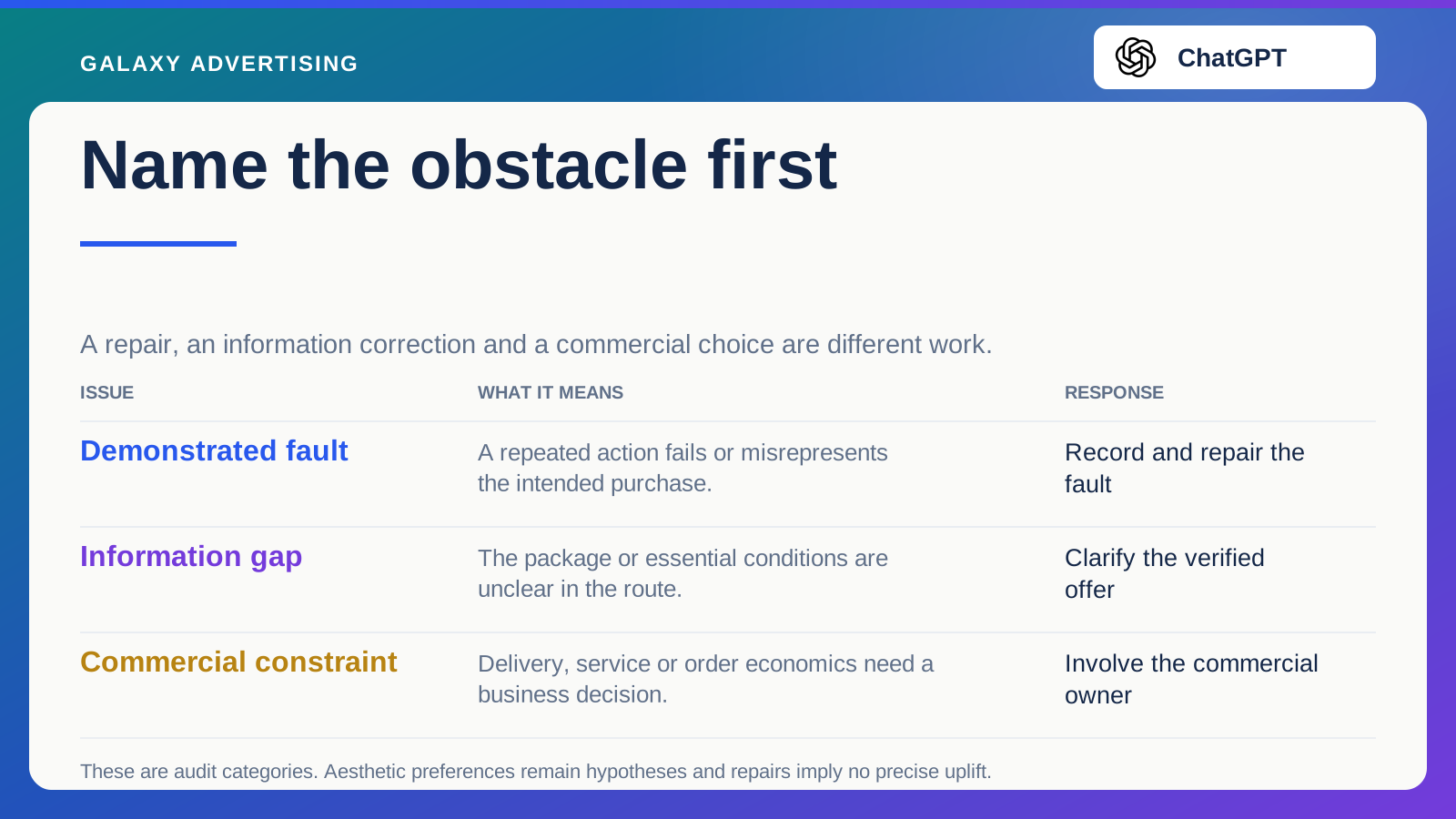
What if your outdoor kitchen advert shows a package you cannot confidently verify? The photograph has a different worktop and extra storage, the caption follows a supplier brochure, and the destination uses a newer description. Everyone has used a plausible reference. Together, they have created an uncertain offer.
Proofreading comes too late to fix the underlying process. Agree the product facts and who owns changes before production. When you're exploring a new channel, that helps keep avoidable information problems separate from evidence about whether the channel is commercially suitable.
Name the exact arrangement you're offering
Identify the product, configuration and package the campaign will introduce. A configuration is the selected arrangement of options. A range name isn't enough when options change the dimensions, included equipment or price. Retain the internal reference alongside the customer-facing name.
For a hypothetical outdoor kitchen, record the modules shown, worktop option and supplied appliances. Identify objects used as styling props. Your creative team shouldn't have to decide whether the photograph represents the advertised price.
Be equally precise about the destination. If it opens on a collection, explain how someone reaches the package shown. Resolve an unclear route before approving the message. A working URL doesn't establish that a customer can identify the offer.
Separate verified facts from attractive assumptions
Build a concise reference around facts that can materially change a purchase. These might include dimensions, documented materials, package contents, options and the service included. Keep the reference focused enough to use.
Put the source beside each important fact. Manufacturer documentation could support a specification. Your operations team needs to verify your delivery arrangements. Copying another retailer's statement isn't a substitute for either source.
Mark unresolved points plainly. A looming creative deadline isn't a reason to fill a missing specification with an appealing assumption. Narrow the proposition to something supported, rather than create a different product in the customer's mind through confident wording.
Read the image as part of the information
Compare every proposed image with the product reference. Check components, controls, proportions and finish. A convincing composition can still imply included equipment that is optional, or show a configuration you cannot supply.
For illustrative scenes, say what they demonstrate and what they cannot establish. A room scene could help explain scale. A generated layout mustn't become the source for an exact dimension. The documented product information remains your reference.
Ask a product specialist to inspect the image before reading its caption. What package do they think it shows? Compare that answer with the written offer. This can expose a contradiction that a spelling and grammar review would pass straight over.
Give changing information a dependable route
Separate relatively stable facts from frequently changing ones. Model dimensions might stay stable while price, stock and lead time move as you trade. The campaign needs a practical route for those material updates.
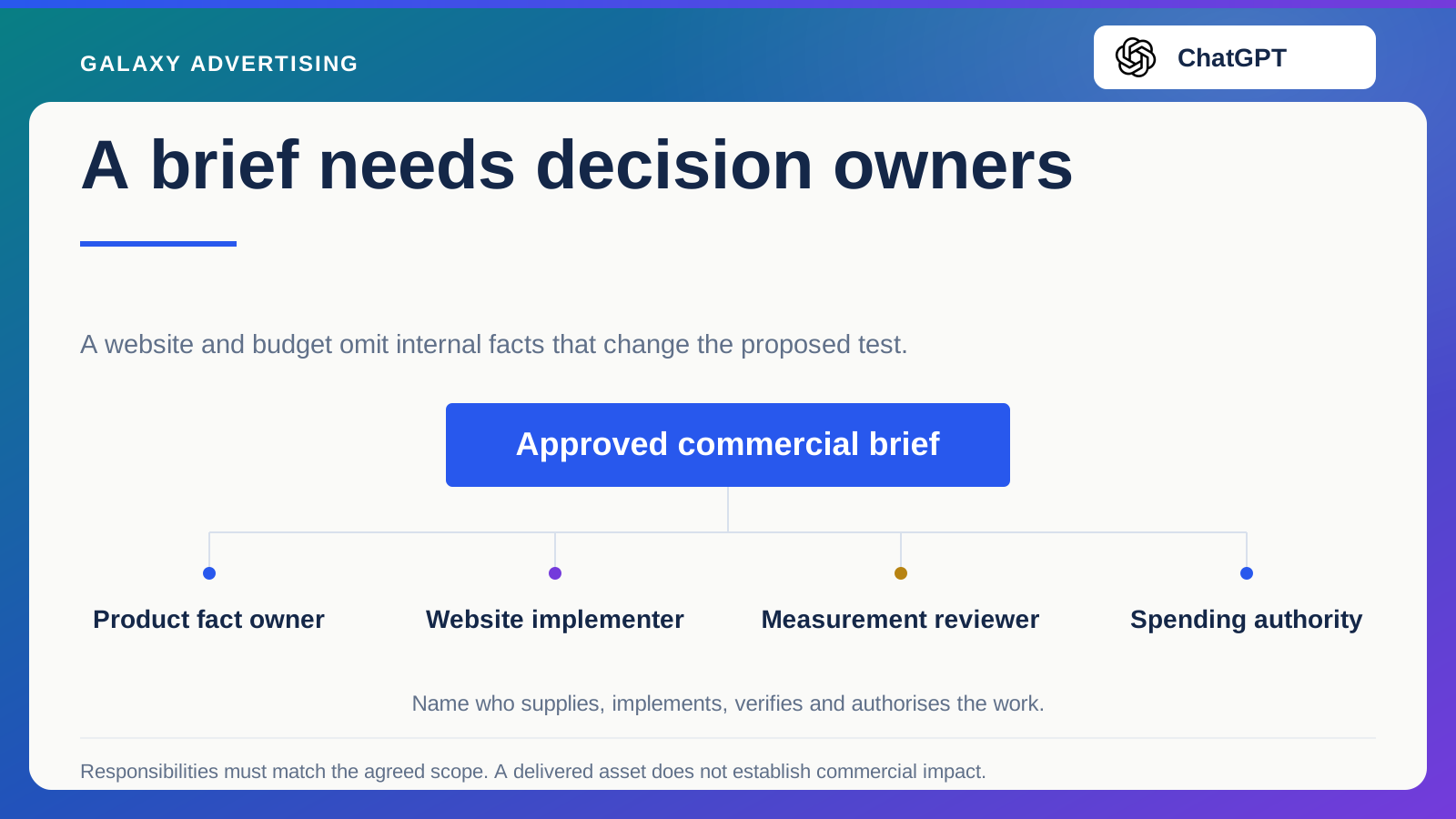
Name the person or system responsible for each changing fact. Agree who tells the account manager when the package is unavailable or the delivery promise changes. Informal messages passed through several people, with no clear recipient, leave too much to chance.
Keep the checks proportionate. A small range might support manual review. A large catalogue needs a maintained source and exception process. The objective is an accurate live offer, rather than a beautifully completed document that goes out of date the moment somebody edits the store.
Follow the facts on a phone
Open the proposed destination on a phone. Do the name, selected option, photograph, price and essential conditions describe one coherent purchase? Where option changes matter, select another option and check again.
For the outdoor kitchen, someone needs to distinguish the advertised arrangement from a larger installation. What is supplied, and what needs a separate conversation, should make sense before they submit an enquiry.
Not every missing detail requires another page. A clearer option label, accurate package diagram or short explanation beside the selector might be the right fix. Put the answer where it helps the decision instead of making customers search for it.
Approve a version everyone can find
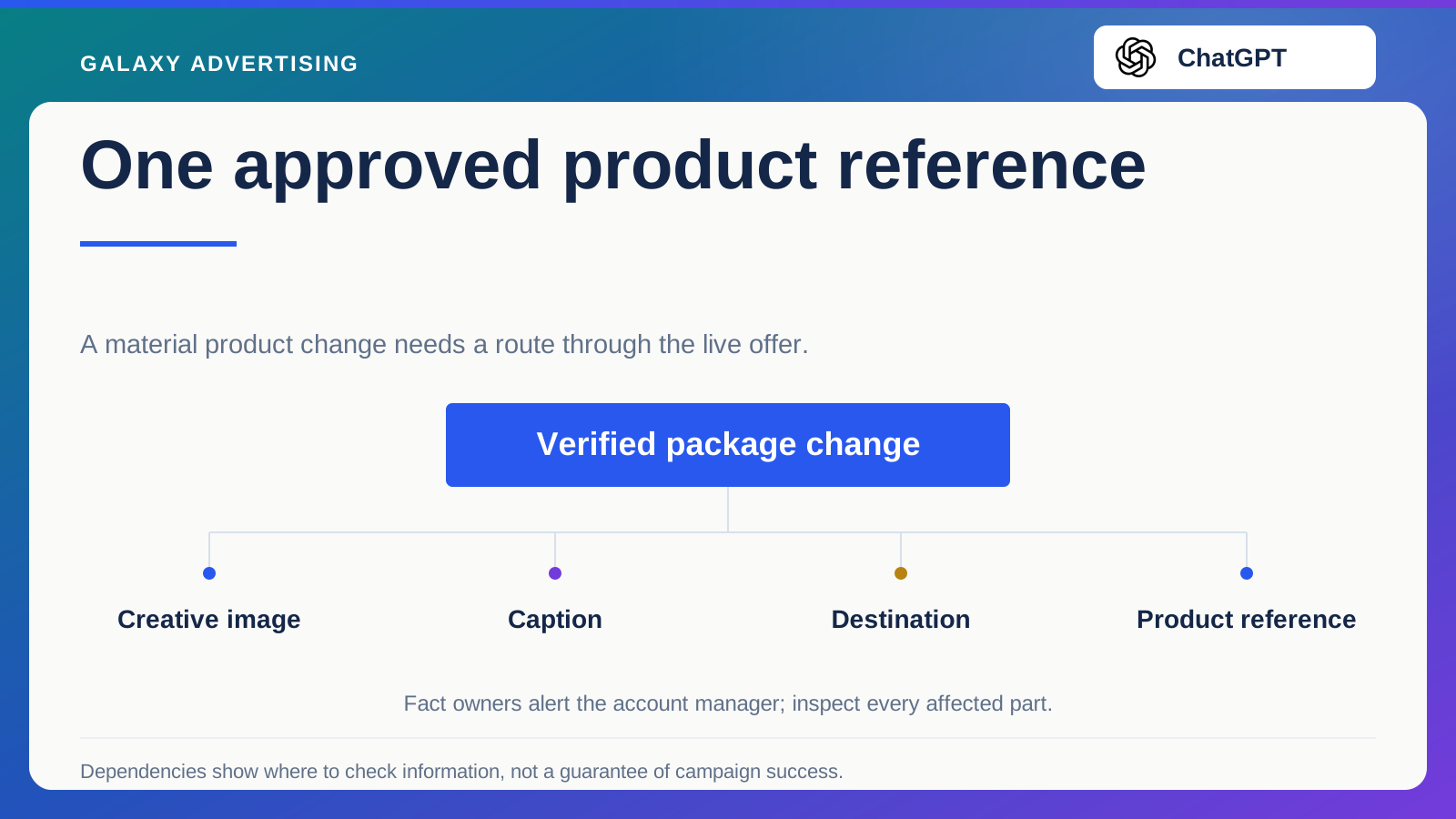
Save the approved creative, caption, destination and product reference together. Approval should identify what is being released. A general view that the concept seems sensible isn't approval of a particular version.
When a material fact changes, inspect the affected parts of the route. A replacement image could imply a different configuration beneath an unchanged caption. A new price could mean the advertised package needs checking again.
Keep a correction record another team member can understand. Note what was wrong, where the source changed and how you verified the customer route afterwards. The next production brief can then start from a resolved issue rather than rediscover it.
Think about absence as well. Another authorised person should be able to find the current package reference and distinguish earlier versions without reading a private conversation. You don't want an accurate offer to depend on one person's memory.
That clarity can help you withdraw only an affected asset when a configuration changes. Otherwise, you could end up pausing a whole range simply because nobody can identify which promise has become unreliable.
Let information faults improve the process
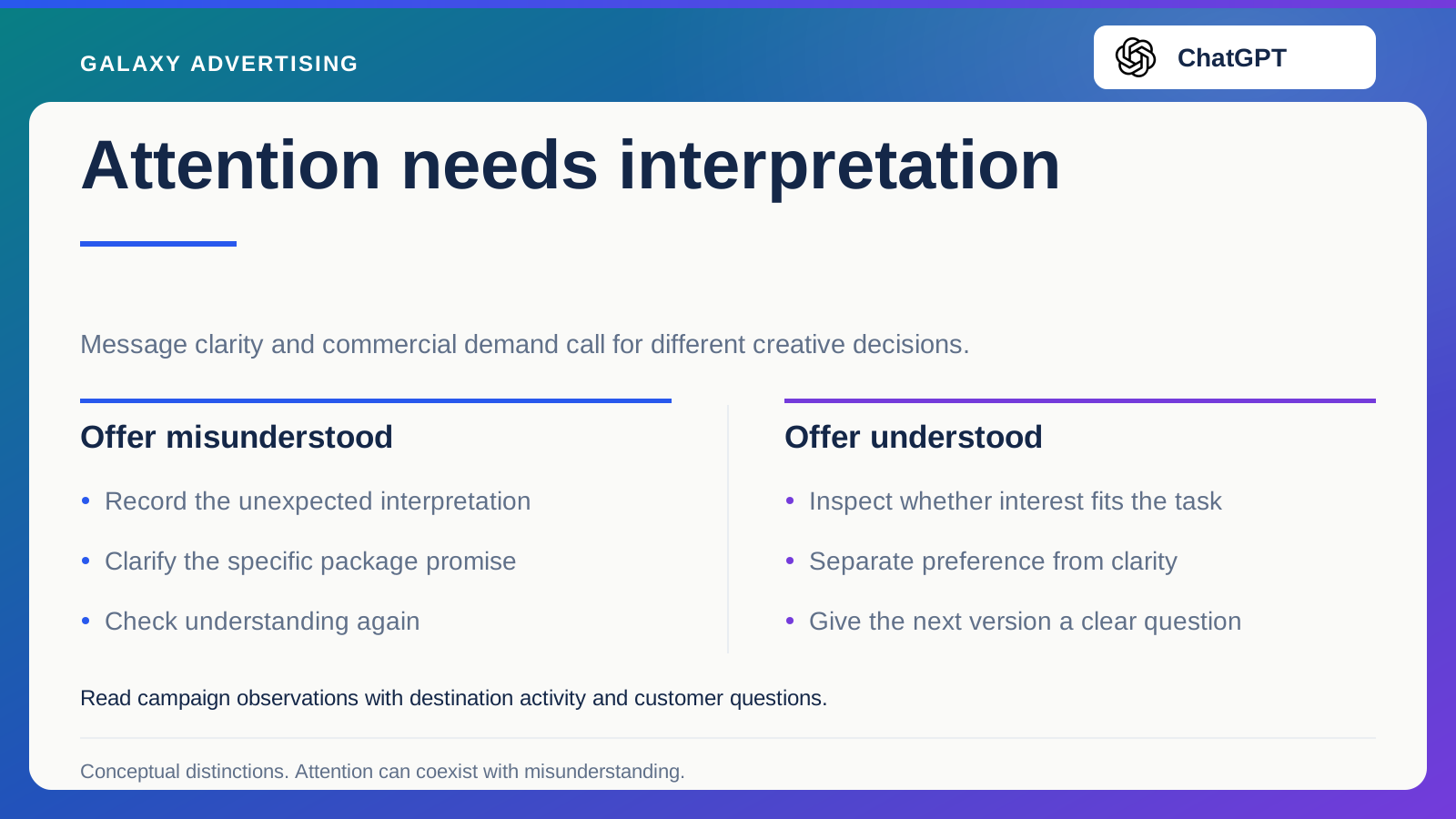
After launch, separate enquiries caused by unclear information from questions that reasonably need human help. If customers repeatedly ask whether an appliance is included, inspect the package presentation before calling the enquiries poor quality.
Share the findings with merchandising and customer service. Advertising can expose information problems that affect other acquisition routes too. Correcting the source can be more useful than attaching a longer disclaimer to the advert.
An approved product reference won't guarantee a successful ChatGPT Ads campaign. It establishes that you're testing an actual offer you can support. Then the commercial learning has a firmer basis, and your team can spend less time debating which version of the kitchen the customer was supposed to understand.