 ChatGPT Ads
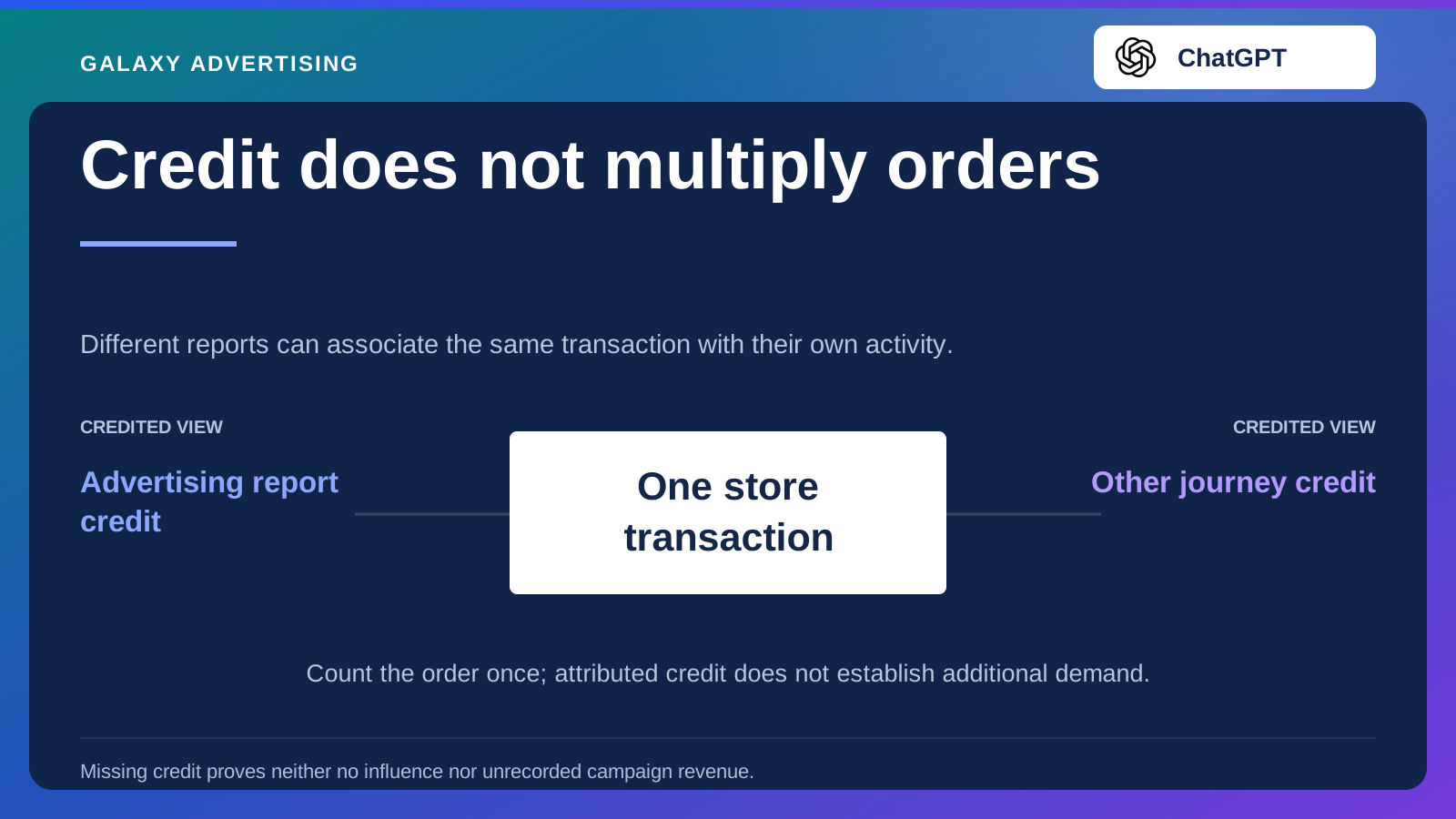
A second product visit is not a second commercial success on its own. Someone discovers an outdoor sofa, checks its measurements and leaves. They may return through a saved link after talking to another household member, while your advertising report captures only part of what happened.
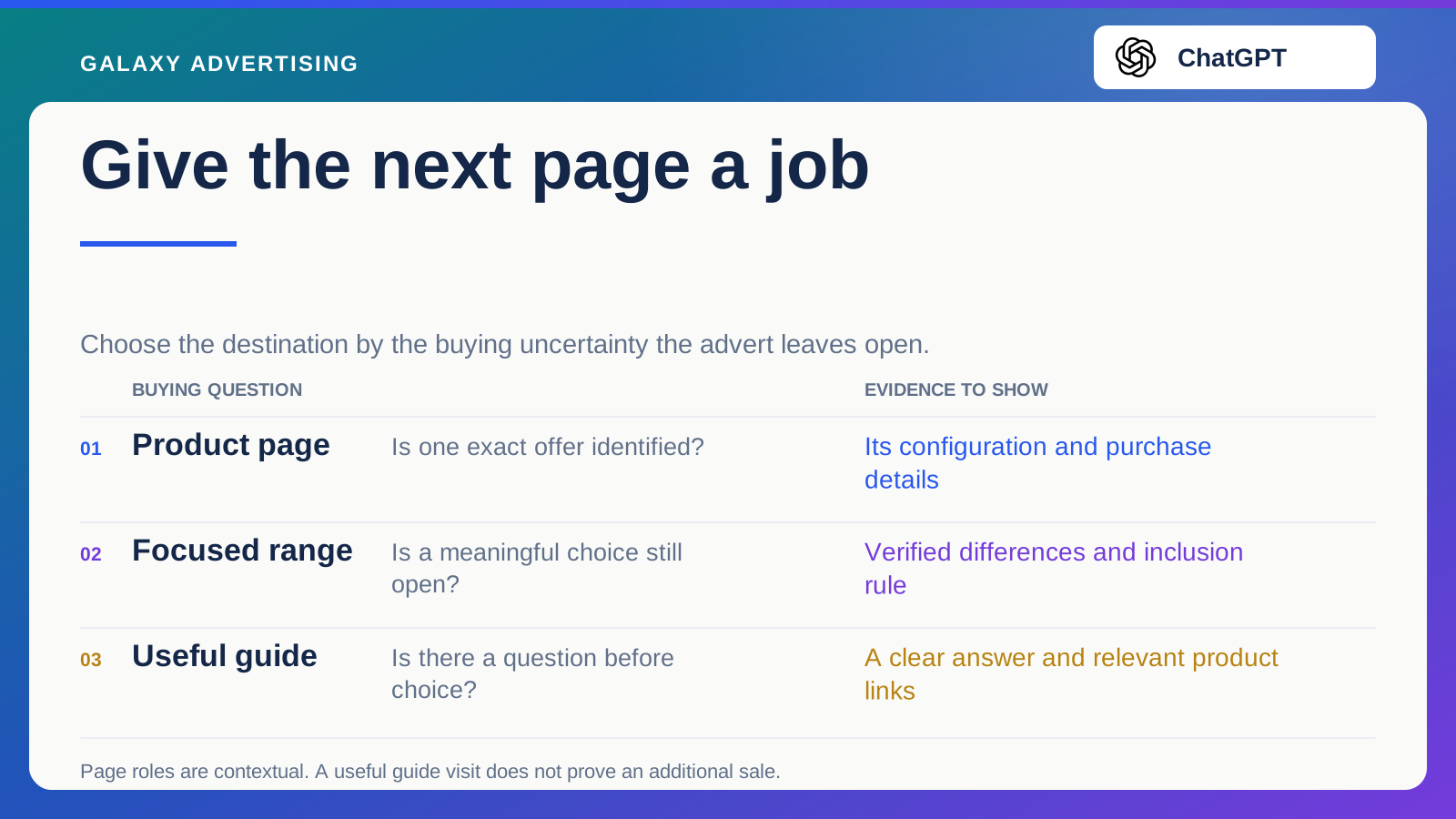
You can still make that return more useful. Plan around the unresolved buying question, the website and follow up you can actually provide. That doesn't require assuming a particular retargeting feature exists in your advertiser account. It requires a route worth continuing.
Be realistic about what the first visit can settle
Map the information a suitable shopper needs before committing. For the hypothetical outdoor sofa, that could mean dimensions, available configurations, materials, cushion storage and delivery arrangements. Configurations are the different arrangements or options available.
Decide what the advertising destination should answer immediately and what might need more consideration. Someone may need household agreement or time to check the space. A visit that supports those tasks isn't automatically wasted because it ends without an order.
Use recurring enquiries and observations from your business to identify plausible needs. Avoid inventing an elaborate sequence for every visitor. You're making the buying route more useful, rather than writing a fictional biography for everyone who opens the page.
Make the offer recognisable when they come back
Keep names, model references and configuration labels consistent between advert and page. A returning visitor shouldn't have to identify a sofa from their memory of a lifestyle photograph. Give them the same clear product identity to work with.
Use stable, intelligible links to the relevant offer. If selecting an option changes the product shown, check that the chosen arrangement is clear. A generic range link could lose the very distinction that attracted the visitor.
Consider what someone might share with another decision maker. An accurate package summary and measurements can support that conversation. Hiding essential facts behind a sales form can make it harder for a suitable customer to get agreement before contacting you. The information needs to travel well beyond the first visit.
Publish answers that don't need another conversation
Review common questions about the promoted item. When an answer is stable and broadly useful, put it where people can find it. Routine information doesn't need to become a reason to demand another interaction.
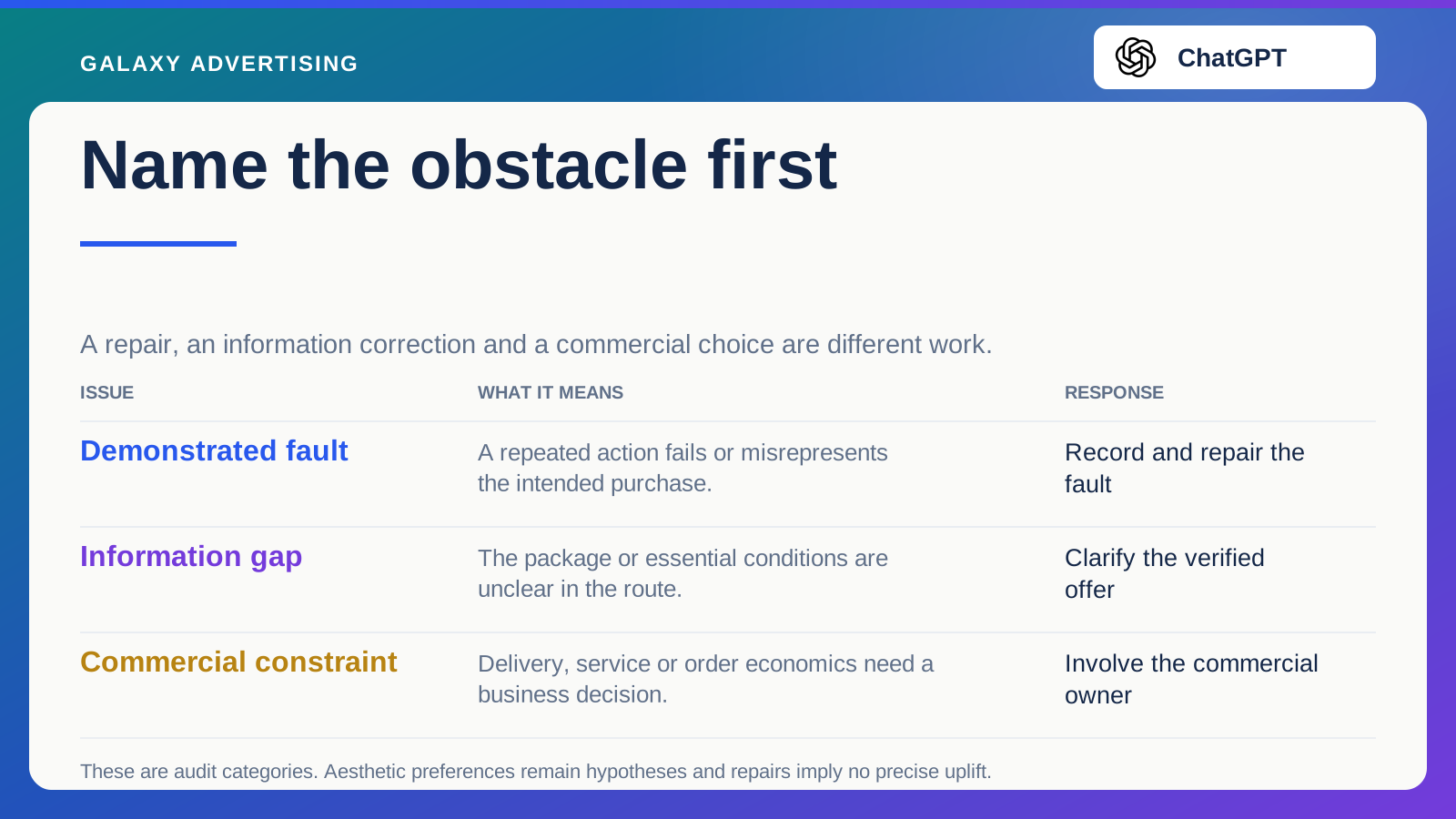
For the sofa, a configuration diagram might resolve more uncertainty than a generic invitation to speak to your team. Use verified dimensions and identify what's included. An attractive but ambiguous room image cannot substitute for that information.
Keep human help available for personal or complex suitability questions. Publish reliable general facts first, then make enquiries useful for matters a standard paragraph cannot responsibly settle. You don't need to force both types of question through the same route.
Let follow up address the unfinished task
Where you have an appropriate basis and permission for a particular communication, address the customer's question. Repeating a generic sales message doesn't move that question along. Have the people responsible for privacy and communication permissions verify the actual process.
An access enquiry may need an explanation of the delivery service and the information you require. A finish enquiry may need an accurate reference, or the sampling route your business actually offers. Let the unresolved task determine what is useful.
Don't infer private conversation details from the advertising source. You can use information a customer voluntarily provides through your enquiry route, subject to your controls. The campaign hasn't supplied a transcript of the discussion before the click, and the follow up shouldn't pretend otherwise.
Show what has changed since the first visit
Someone might return after the price or stock position changes. Make the current offer clear. Don't leave the page relying on a cached promotional message your operations team can no longer support.
If a configuration is unavailable, show an honest status and useful alternatives where suitable ones exist. Avoid silent substitution. Don't imply two products are equivalent unless your business has checked that equivalence.
Retain the original identity where it helps explain the change. Someone who saved a particular arrangement needs to understand why conditions are now different. Clear information matters even when you cannot fulfil the original offer. A return visit should explain the change, rather than leave the customer wondering whether they remembered the product incorrectly.
Observe the return without inventing the motive
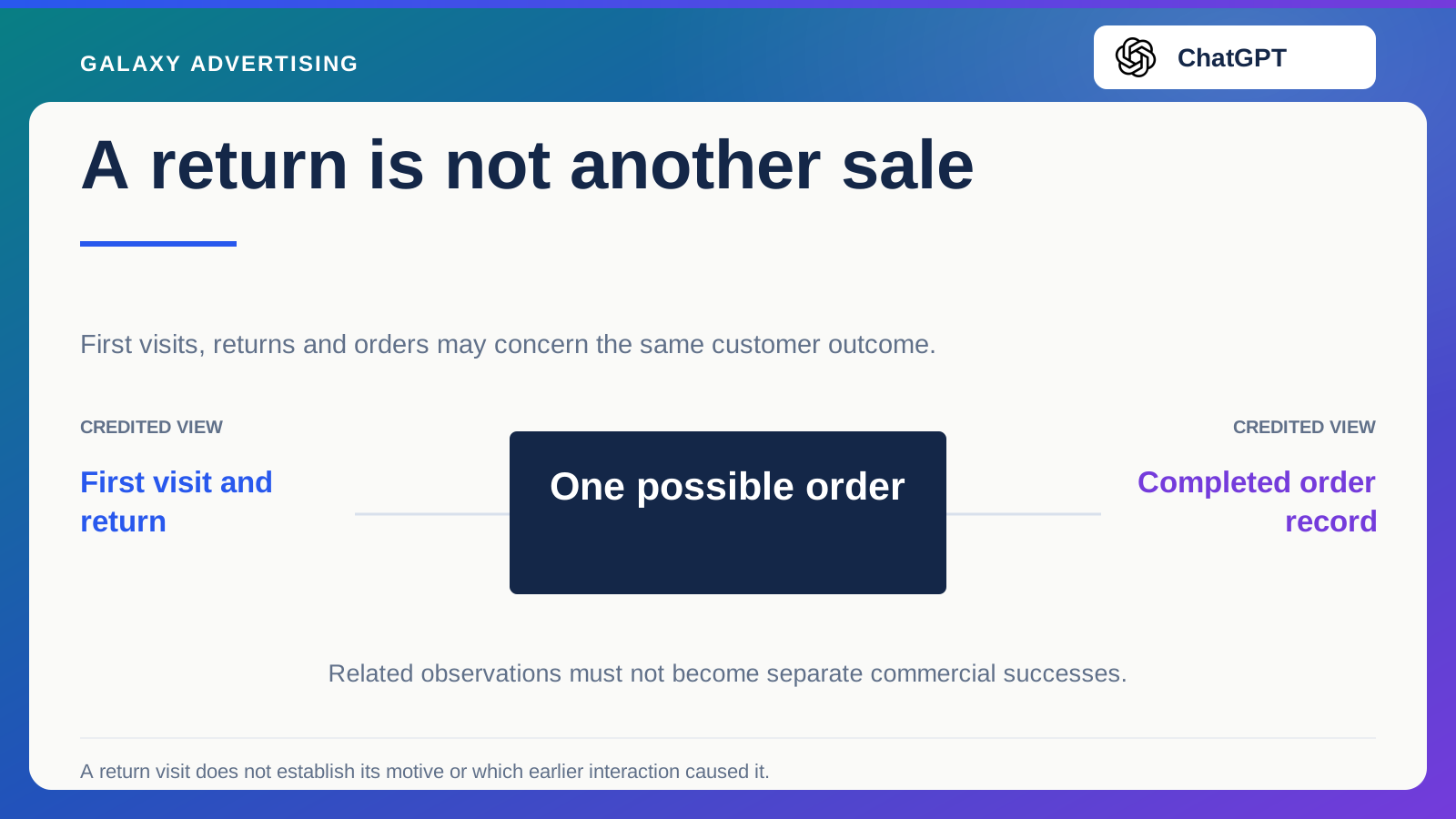
Inspect the route using the website and order evidence your business has. A later product visit can show continued investigation. It doesn't disclose every reason for the return or establish which earlier interaction caused it.
Define first-visit activity, return visits and completed orders as related observations. Don't report them as three separate commercial successes when they could concern the same customer and order. Otherwise, the account can appear to have produced more commercial outcomes than the records establish.
Review examples with customer service. Did published information reduce repeated questions? Did follow up help people assess suitability? These observations can guide improvements even when campaign attribution, the assignment of outcomes to interactions, cannot confidently describe the whole sequence.
Choose the uncertainty you'll remove next
Make one specific correction from the evidence. Perhaps you need a better configuration summary, clearer stock updates or a more useful response to delivery questions. Give somebody ownership and verify the customer route after the change.
Keep that work separate from a request for more advertising. If suitable visitors repeatedly return to the same unanswered question, more acquisition can enlarge the problem. A clear route, on the other hand, could justify investigating whether you can obtain more suitable demand.
A considered purchase needs room to continue. Preserve the product story, answer reasonable questions and give the returning customer something useful for the decision still ahead. You can do that without claiming perfect knowledge of intent or promising a targeting control your account doesn't have.